




Economy, Trucking to Get Boost from Sandy
The economic recovery is progressing at a normal pace, and rebuilding from "superstorm" Sandy will be a boon for some sectors of the economy, including flatbed truckers, according to trucking economist Noel Perry
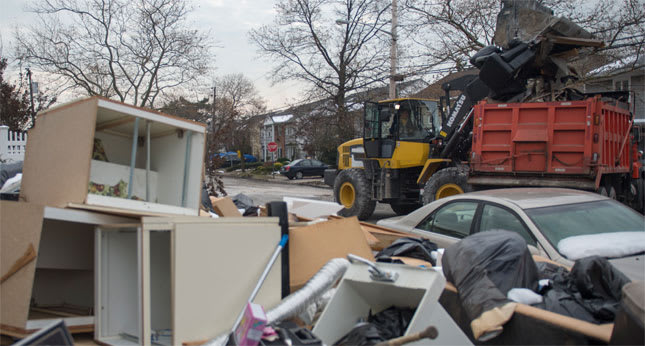
Debris and clean-up operations continue in Long Beach, New York. (FEMA photo)
The economic recovery is progressing at a normal pace, and rebuilding from "superstorm" Sandy will be a boon for some sectors of the economy, including flatbed truckers, according to trucking economist Noel Perry.
Perry, principal of Pennsylvania-based Transport Fundamentals and senior consultant for transportation forecast firm FTR Associates, spoke to investors and others on a conference call last week.
Some economic indicators have been mixed lately. The Institute of Supply Managers' manufacturing index, a survey regarded as an important measure of the demand for manufactured goods, accelerated rapidly out of the downturn, but recently these numbers have been falling. However, Perry said, it frequently turns back up again during economic recoveries. Similarly, durable goods new orders has been down, although the latest numbers from last week are up a little bit.
"What this reflects is people have been ordering capital goods, and to some extent consumer goods, in a very conservative way," Perry said.
The number of jobs created, however, went up in the last report. "The unemployment rate went up in the last report, but that was because more people were looking for jobs," Perry explained, who previously had given up looking because the situation was so bad.
"This is very similar to the economy of the '30s," Perry sad. "The economy is creating jobs at historically normal rates. The problem was there was a step-function reduction in employment on the way down. We're going to have to work off this surplus of people slowly over the next decade.
"I urge you as businesspeople to tune out some of the negative commentary you get on employment, because it understates the health of this economy."
The best news is that housing is slowly moving up again. Especially encouraging for the flatbed market, as existing housing numbers approach normal territory, new housing starts are increasing.
"The housing market is a lot smaller than it used to be, but it's quite healthy, and that's helping the economy," Perry said.
In addition, auto sales are almost back to normal. "If you went back two years ago, almost no one was forecasting the market would be this healthy."
The "overwhelming consensus" of economists, Perry said, is that in 2013, the economy is going to revert to a relatively normal state not s strong as it was in the '80s and '90s, but still relatively normal, and we should see 2.5% GDP growth by the end of the year.
While that's not hitting the 3% and over mark that many economists say we need to make a significant dent in unemployment, it is a good number for trucking, Perry said. Showing a chart comparing GDP growth with truck tonnage growth, he noted, "When GDP gets below 2% as it did in 2011, tonnage tends to fall. When GDP gets above 2%, tonnage grows pretty rapidly. 2% seems to be kind of a magic number for use in transportation."
Rates also are expected to rise. Fleets continue to be extremely conservative in buying new equipment, Perry said. "We are buying half the number of discretionary new tractors we did after the last downturn" in the early 2000s, he said. That may not be great news for truck makers, but it is keeping capacity tight, which will drive up truckload rates up 7% in the fourth quarter of 2013 compared to the current fourth quarter.
Another factor in capacity is the need for drivers, and government regulations are going to affect that. By the end of 2013, if various regulations go into effect as scheduled, FTR forecasts regulatory changes will require an additional 100,000 drivers. Those numbers accelerate over the next few years, especially with the effect of driver health regulations and training requirements.
The numbers Perry cited do not include the expected effects of Sandy, the hurricane-turned-Frankenstorm that has devastated the heavily populated Northeast.
Hurricane Katrina, he said, was an $83 billion to $85 billion event. This looks more like $100 billion.
"Natural disasters in highly developed economies are good things for the economy," Perry said. "People really get organized to fix things and spend money they wouldnt have spent otherwise."
Trucking companies that are involved in transporting construction materials, such as flatbedders, will get a big boost as the area rebuilds.
A storm like this is good news for trucking revenues, Perry says, "because not only are you doing extra work, but you're also doing extra hard work everything is rushed, out of normal route, and people are willing to pay more, and willing to help industry overcome the productivity effects."
Perry predicts the storm will generate $15 billion in additional revenue for trucking over the next three or four quarters. The peak may come next spring, as the end of winter weather paves the way for serious construction work.
There are, of course, what economists call "downside risks" wild-card factors that could drive the actual economic numbers lower than that projection.
Perhaps the biggest one, and certainly the most immediate, is the "fiscal cliff."
In addition, Noel notes, a collapse of the EuroZone could drop U.S. economic growth to less than 1% or even drive it into recession. The Chinese economy also has not been growing as rapidly as in the past. And the third thing is the U.S. debt.
"All the politicians are really hesitant to let [the fiscal cliff] happen, because it could put us into recession," Perry said. "On the other hand, that fiscal cliff was designed to force us to cut the budget." At some point, Perry said, probably by the middle of the decade, if the government does not address the debt issue, lenders will raise the rates they charge the U.S. for loans. That's what happened in troubled European countries such as Greece. It could cause a recession if it happens to the U.S., Perry said.
Even without that problem, Perry said, the normal cyclical nature of the economy would seem to suggest a slowdown in about 2014 or 2015. Getting our debt under control could reduce the severity of such an event.
More Fleet Management
AUCTION OF EQUITY INTEREST IN HEAVY HAUL TRUCKING COMPANY!!
Mark your calendar: June 30, 2026 (10:00 a.m. PDT). MagnaTrans, LLC, a California limited liability company doing business as Magna Transportation Group is going to auction! Bid on a 37.5% ownership interest in this Rancho Cucamonga-based heavy haul and over-dimensional trucking company operating across California, Oregon, and Arizona. The equity interest will be sold to the highest bidder or bidders under Article 9 of the Uniform Commercial Code at 10:00 a.m. PDT.
Read More →
Volvo Trucks Adds Unattended Over-the-Air Software Update Capabilities
The latest evolution of Volvo’s over-the-air update technology allows software updates to run while trucks are parked, helping fleets keep vehicles current without disrupting operations.
Read More →
How Waste Connections is Using Data, Telematics, and AI
How do you manage and maintain more than 18,000 connected trucks? Data. Lots of it.
Read More →
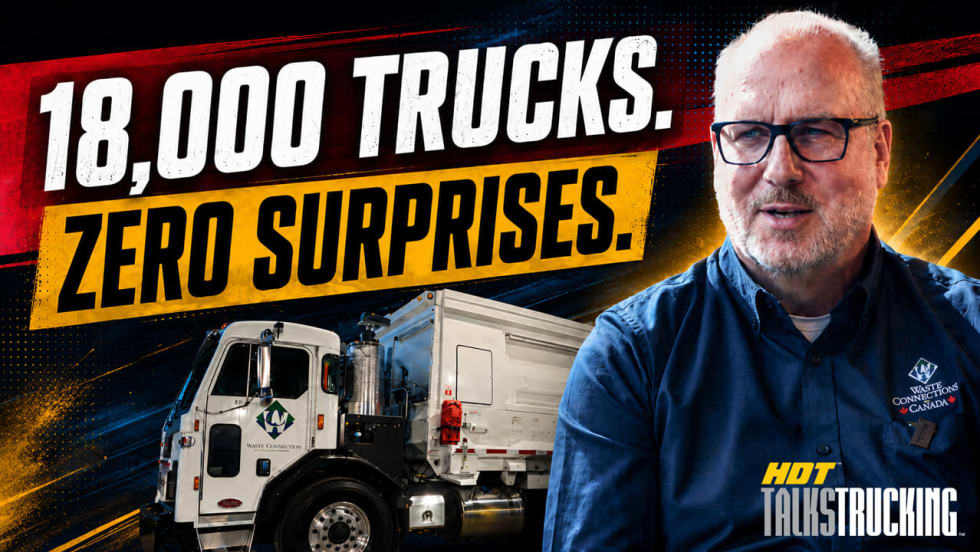
Why Fleet Data Matters More Than Ever at Waste Connections [Watch]
Waste Connections' Chuck Palmer explains how telematics, predictive maintenance, safety analytics, and AI help keep vehicles on the road and drivers safe in this episode of HDT Talks Trucking.
Read More →
NMFTA Launches Free, Anonymous Cybersecurity Threat Report Portal
Organizations are encouraged to anonymously report freight fraud, cargo crime, and cyber threats while gaining visibility into incidents reported across the transportation sector.
Read More →
AI Can Optimize a Fleet. Can It Replace Human Judgment?
Fleets fear falling behind if they don’t adopt AI quickly enough. They also fear what happens if the technology makes the wrong decision.
Read More →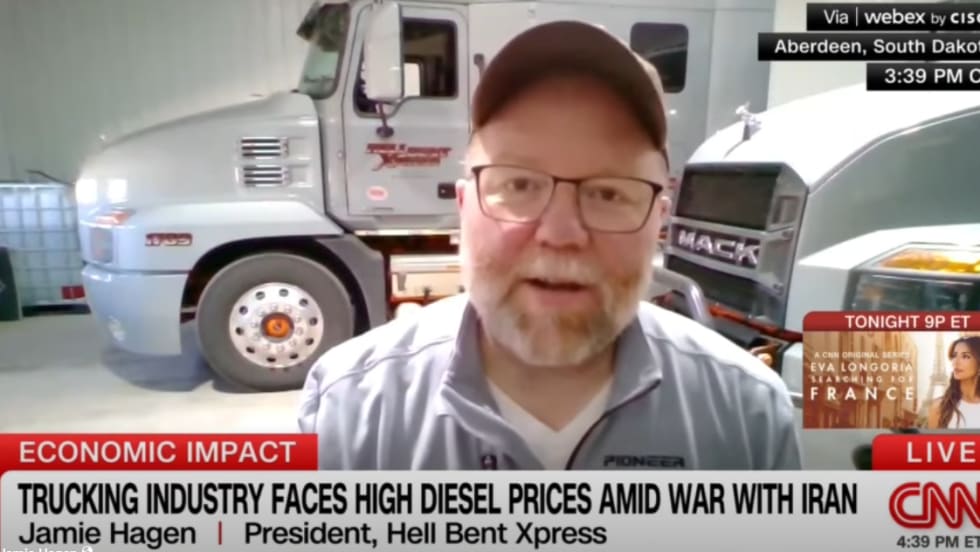
Jamie Hagen Gets Real About Running a Small Fleet in an Uncertain Economy
Small fleet owner Jamie Hagen says new legal risks, volatile fuel prices, and a changing freight market are forcing small carriers to rethink how they operate — and what they can afford.
Read More →
Jamie Hagen Gets Real About Freight, Fuel Prices, Safety, and Small-Fleet Survival
Running a small trucking fleet right now isn’t easy, especially right now. And Jamie Hagen doesn’t sugarcoat it.
Read More →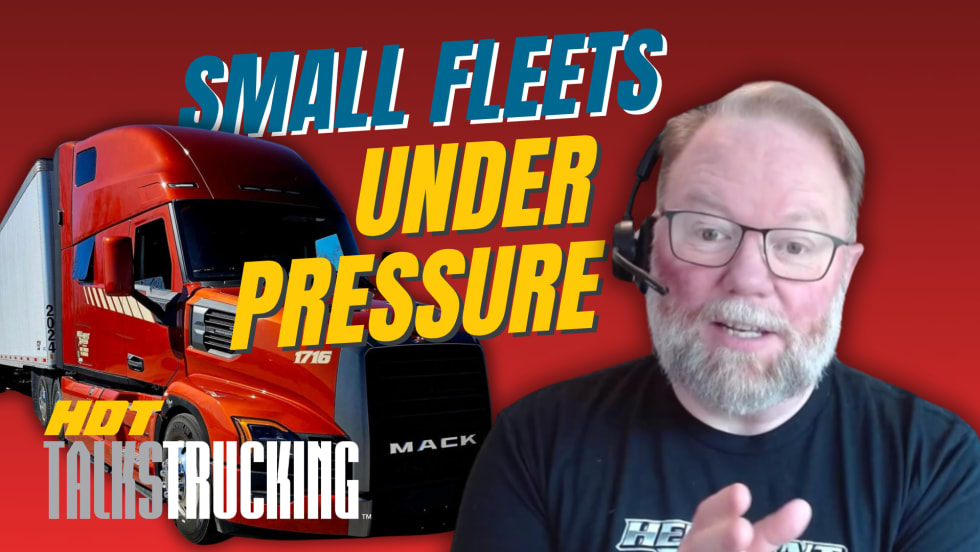
Jamie Hagen Gets Real About Freight, Fuel Prices, Safety, and Small-Fleet Survival
Running a small trucking fleet right now isn’t easy, especially right now. And Jamie Hagen doesn’t sugarcoat it.
Read More →
Data Lock‑In or Integration Lock‑Out?
Data fragmentation is costing dealerships, OEMs, fleets, and upfitters millions. Here’s why interoperability may be the fix the trucking industry needs.
Read More →