




A Vision Fulfilled: Kevin Knight, Chairman/CEO, Knight Transportation
We are in the "Mother of all Recessions," Kevin Knight agrees, but he's optimistic. His company, Phoenix-based Knight Transportation, was conceived and bred to succeed in the toughest of times
We are in the "Mother of all Recessions," Kevin Knight agrees, but he's optimistic. His company, Phoenix-based Knight Transportation, was conceived and bred to succeed in the toughest of times.
From the day the Knight family opened its doors for business - during the recession of 1990-91, by the way - it has focused on couple of core principles.
"We wanted to operate a business with very low amounts of debt," Knight says. "We felt that could be a strategic advantage. It really felt like we could start our business and operate in the low 80s (operating ratio) and then take that same type of business to a new city and link it all together and make it work."
It sounds straightforward, but it's a difficult concept to execute, which is why there are so few trucking companies in Knight Transportation's rarified company.
With annual revenues over $766 million last year, Knight ranks among the top 10 or so truckload carriers. More to the point, however, is the company's tradition of excellent performance. Year after year, it is among the very few fleets that keep their operating ratio - expenses divided by revenues - in the low 80s. And last fall, for the 14th year in a row, Knight won a place among Forbes' 200 Best Small Companies.
Kevin attributes this to "an energy second to none." He founded the company with his brother, Keith, and cousins Gary and Randy in 1990. They each had an advanced degree in trucking from their previous employer, Swift Transportation.
"For being the age that we were (Kevin was 34), we had an enormous amount of experience [working] for one of the truckload greats of all time, Jerry Moyes, a very entrepreneurial leader."
It probably did not seem that way at the time, but looking back, Kevin sees another advantage: They did not have the "tailwind" of deregulation to push them along.
They launched Knight a decade after the Motor Carrier Act of 1980 had lifted regulatory restrictions and freed truckload carriers to build a new industry.
"We were forced to be more competitive early on," Kevin said. "Our big competitors had already been in business for at least 15 years. We were a little bit behind. It's probably what helped make us become the company that we are."
From the beginning, the Knights' collective ambition was to build the best truckload company in the industry. By "best" they meant an extended list of superlatives - safety, service, developing people, developing services that customers need. "A company that can not only offer it profitably but that can grow at a rate higher than the others . . . that is exceptional at equipment operation and maintenance.. . . that is exceptional operationally," Kevin says.
"From an employer perspective, it's opportunity in conjunction with security. From a customer perspective, it's service in conjunction with taking care of the growing needs of the supply chain. I think we've done that."
Of course any fleet that competes at Knight's level is going to have high energy. The company's operational differentiator is its business model of using regional service centers. It now has 29 centers for its dry van business, six for its refrigerated business and 12 brokerage branches.
"It's a difficult model to execute, because you have to rely on the alignment and the energy of so many people that are really spread across the U.S.," Kevin says. "I would say that in some ways it's made building our business more difficult, but certainly once we've gotten there it's a key strategic advantage. It's who we are today."
It takes a high order of management expertise to make this model work. "You definitely need the right people on the ground, and they pretty much have to be developed from the ground up," Kevin explains. "Then you have the challenge of keeping everything aligned in a very irregular network - each of our service centers is trying to balance an enormous amount of irregular activity every day, in conjunction with all those other service centers."
Another advantage of the model is that it is adjustable. Knight, for example, has managed to reduce its average length of haul over the past year, a critical positioning move in an industry whose key long-term challenge is the availability of drivers. In 2008, Knight reduced average length of haul by more than 9 percent, to just under 500 miles.
The model also provides a platform for growth, once the economy reverses course and begins to grow again. According to a recent analysis by John Larkin of Stifel Nicolaus, Knight has identified enough business opportunity to support as many as 55 dry van service centers, 15 refrigerated centers and 70 brokerage centers.
"So even in the face of this extremely challenging freight environment, the company continues to refine its strategic game plan to put itself in a unique position to develop growth opportunities that will pay dividends when supply and demand once again tighten in the nation's freight markets," Larkin wrote.
Knight has not been unscathed by the recession. In the fourth period of 2007 its operating ratio rose to 85.3 percent. But even that slip from Knight's typical performance in the low 80s left the truckload hauler in an enviable position in an industry where an operating ratio in the 90s is common. And by the closing quarter of last year, the company was back down to what Larkin described as a more "Knight-like" 81.2 percent.
The company has had to make adjustments for this economic environment - "the most challenging we have ever seen," Kevin says. "I don't remember it being so difficult. Even though we haven't seen as many bankruptcies as we did in 2000 and 2001, I think the companies that have closed have been larger. If this thing doesn't start to improve in the next quarter or two, I think we are going to see a lot more."
The company downsized in the last quarter of 2007 and the first of 2008, and then brought capacity back - only to sideline up to 100 trucks late last year after Wall Street began to unravel.
"You probably won't see as many (service center) openings out of us this year," he says. "We've typically opened four, five or six service centers (a year) in the past few years, but this year we may be lucky to open one or two, if even that."
But the economy has not stopped Knight from rolling out a fourth line of business. The company recently began drayage operations at the ports of Los Angeles and Long Beach in California.
Kevin points out that Knight has been in the port business for quite some time, serving steamship lines on an interstate business. But the focus on drayage is new. It came about as a result of LA and Long Beach requesting high-end carriers to step in and help with their plan to phase out the older, dirty-exhaust tractors that have been serving the ports.
"The drayage system really has not allowed the truck operator to make the required investment in order to stay current with clean air advancements over the past 10 or 15 years," Kevin says. "LA-Long Beach reached out to us and said, hey, we need some help. We were asked to the dance, so to speak, and we responded favorably."
He describes it as "an interesting opportunity, not without challenges," but adds that he expects the business to grow at other ports, as well. "We're hoping that it becomes a more meaningful part of our business."
From where Kevin Knight sits, this recession is something to be endured - it will pass.
"We may have been delayed, but we have not been derailed," he says. "I'm glad to be a trucker right now. I think it's a business that will continue to be necessary. When the dust settles from this storm, I think we are going to have come through about as good as anybody. Maybe better. I'm not talking about Knight only, I am talking about our industry - at least the companies that have done a good job of managing their balance sheets."
From the March 2009 issue of Heavy Duty Trucking.
More Fleet Management
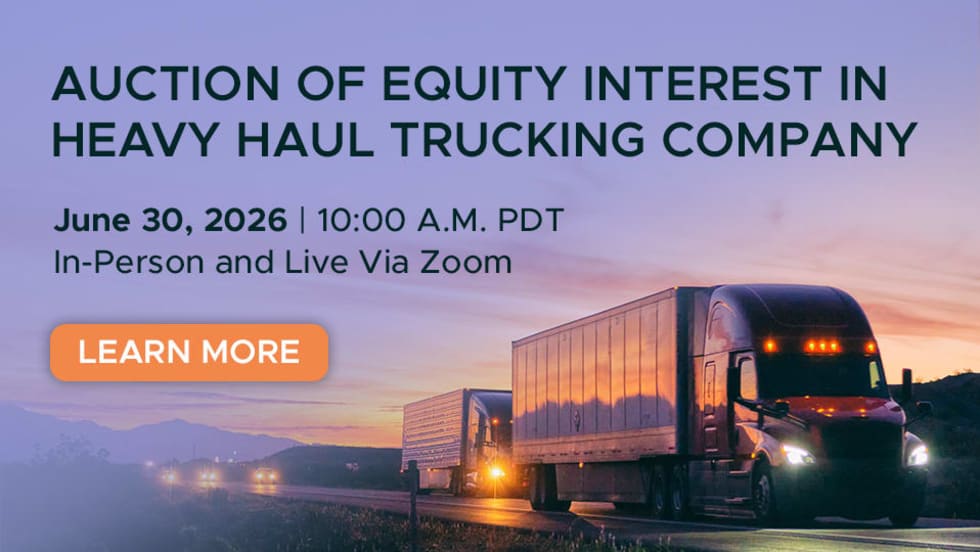
AUCTION OF EQUITY INTEREST IN HEAVY HAUL TRUCKING COMPANY!!
Mark your calendar: June 30, 2026 (10:00 a.m. PDT). MagnaTrans, LLC, a California limited liability company doing business as Magna Transportation Group is going to auction! Bid on a 37.5% ownership interest in this Rancho Cucamonga-based heavy haul and over-dimensional trucking company operating across California, Oregon, and Arizona. The equity interest will be sold to the highest bidder or bidders under Article 9 of the Uniform Commercial Code at 10:00 a.m. PDT.
Read More →
Volvo Trucks Adds Unattended Over-the-Air Software Update Capabilities
The latest evolution of Volvo’s over-the-air update technology allows software updates to run while trucks are parked, helping fleets keep vehicles current without disrupting operations.
Read More →
How Waste Connections is Using Data, Telematics, and AI
How do you manage and maintain more than 18,000 connected trucks? Data. Lots of it.
Read More →
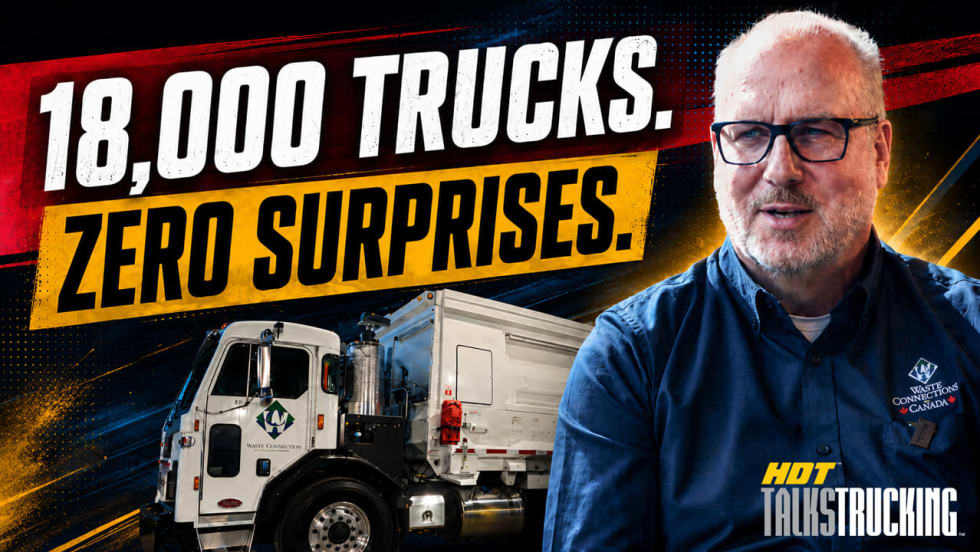
Why Fleet Data Matters More Than Ever at Waste Connections [Watch]
Waste Connections' Chuck Palmer explains how telematics, predictive maintenance, safety analytics, and AI help keep vehicles on the road and drivers safe in this episode of HDT Talks Trucking.
Read More →
NMFTA Launches Free, Anonymous Cybersecurity Threat Report Portal
Organizations are encouraged to anonymously report freight fraud, cargo crime, and cyber threats while gaining visibility into incidents reported across the transportation sector.
Read More →
AI Can Optimize a Fleet. Can It Replace Human Judgment?
Fleets fear falling behind if they don’t adopt AI quickly enough. They also fear what happens if the technology makes the wrong decision.
Read More →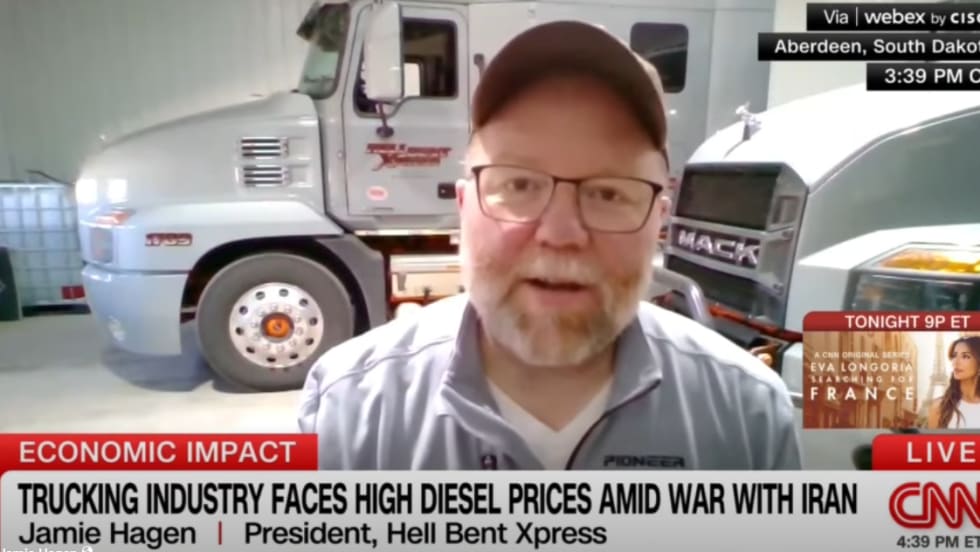
Jamie Hagen Gets Real About Running a Small Fleet in an Uncertain Economy
Small fleet owner Jamie Hagen says new legal risks, volatile fuel prices, and a changing freight market are forcing small carriers to rethink how they operate — and what they can afford.
Read More →
Jamie Hagen Gets Real About Freight, Fuel Prices, Safety, and Small-Fleet Survival
Running a small trucking fleet right now isn’t easy, especially right now. And Jamie Hagen doesn’t sugarcoat it.
Read More →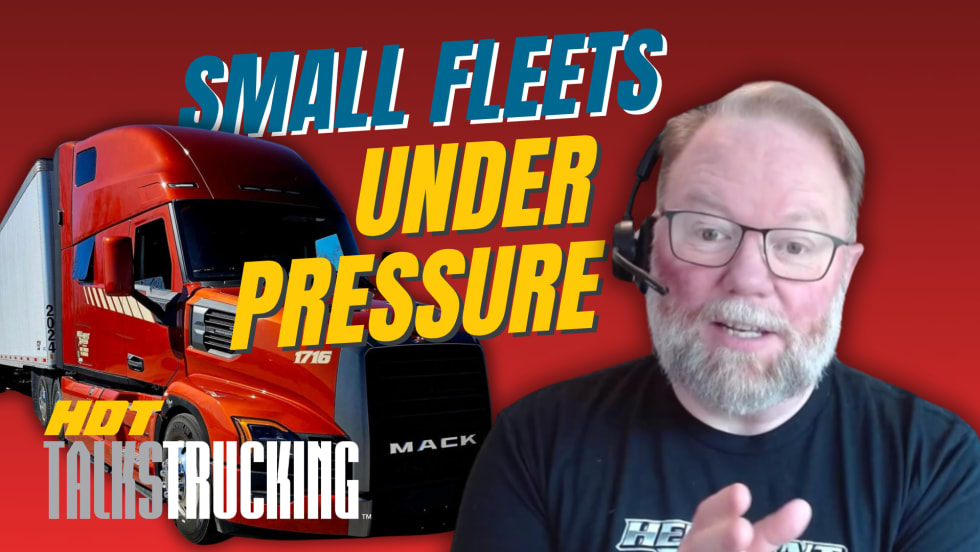
Jamie Hagen Gets Real About Freight, Fuel Prices, Safety, and Small-Fleet Survival
Running a small trucking fleet right now isn’t easy, especially right now. And Jamie Hagen doesn’t sugarcoat it.
Read More →
Data Lock‑In or Integration Lock‑Out?
Data fragmentation is costing dealerships, OEMs, fleets, and upfitters millions. Here’s why interoperability may be the fix the trucking industry needs.
Read More →