




Coming Soon: No Defects Means No Driver Inspection Report
As soon as the Federal Motor Carrier Safety Administration publishes the final rule, probably on December 18, truck drivers will no longer have to file inspection reports when there are no defects in the truck.
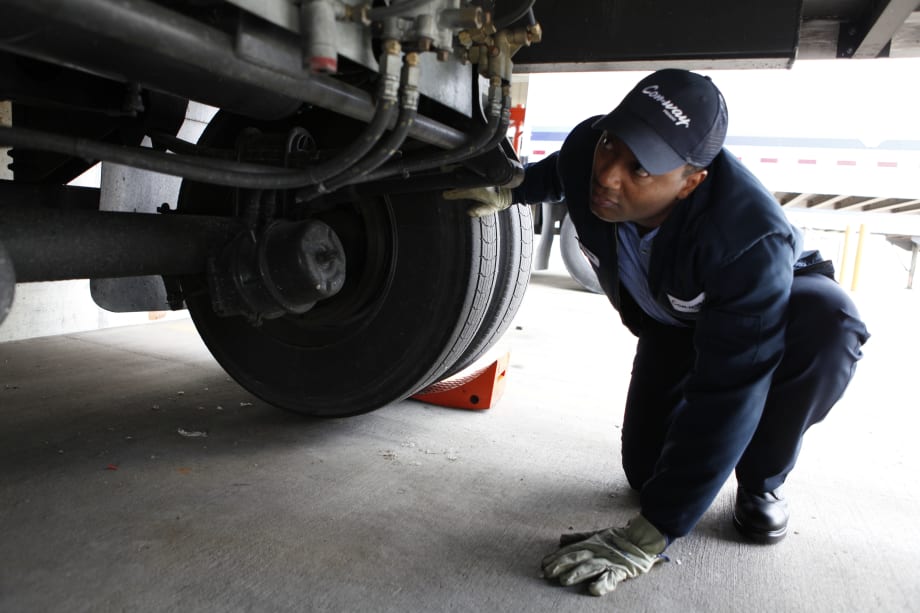
Photo: Con-way
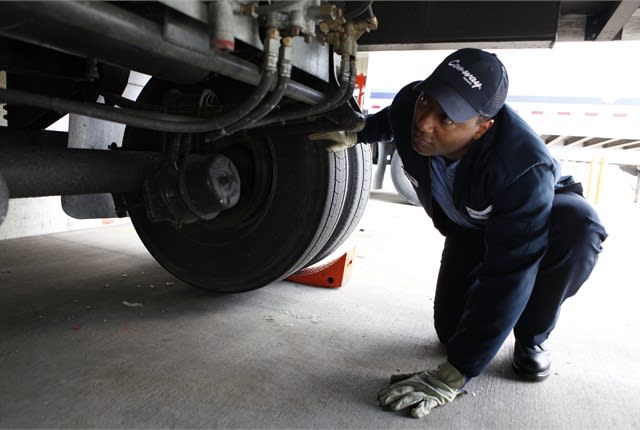
Photo: Con-way
As soon as the Federal Motor Carrier Safety Administration publishes the final rule, probably on December 18, truck drivers will no longer have to file inspection reports when there are no defects in the truck.
The agency has been pursuing this change for more than a year in response to President Obama’s call for federal agencies to cut bureaucratic red tape.
“America’s truckers should be able to focus more on getting their goods safely to store shelves, construction sites or wherever they need to be instead of spending countless hours on unnecessary paperwork that costs the industry nearly $2 billion each year,” said Transportation Secretary Anthony Foxx in a statement.
Drivers are now required to do pre-trip and post-trip inspections and file a report to the carrier even if there are no defects.
Under the new rule, no-defect reports will not be required. Drivers will still have to turn in reports of defects.
Acting FMCSA Administrator Scott Darling said the change takes the truck inspection paperwork burden from 19th highest to 79th highest across all federal agencies.
The agency got 41 comments on its proposal, most of them supporting the change. Among the supporters were American Trucking Associations, the California Trucking Association and the National Motor Freight Traffic Association.
ATA did contend that the agency overstated the paperwork savings achieved by the change, but FMCSA responded that it did not agree with the association’s method of calculating the savings.
The American Moving and Storage Association opposed the change, arguing that no-defect reports are an important part of its members’ maintenance programs. The mover group said many members will still have drivers submit the reports even when they are not required.
Also opposing the change were Advocates for Highway and Auto Safety and the National Transportation Safety Board, both arguing that no-defect reports promote good maintenance practices.
The agency replied: “The new rule would not change the requirement for … drivers to conduct pre- and post-trip vehicle inspections. Nor does it change the requirement for … drivers to report defects or deficiencies that were found by or reported to them. No commenters provided data or information to support their predictions of reduced safety.”
More Drivers

Truck Drivers Need More Than Another Alert
Fleets have more visibility into truck health, safety events, and driver activity than ever. The next challenge is turning all that information into useful guidance for the person who has to decide what to do next.
Read More →
FMCSA Removes 110 Truck Driver Training Schools from Certified ELDT List
Federal regulators also are targeting more than 160 additional training providers and launching a nationwide audit of third-party CDL skills testers as part of a broader crackdown on trucking fraud.
Read More →
Hours of Service Pilot Programs: FMCSA Readies for 2027 Rollout
Two pilot programs could eventually reshape hours-of-service rules, giving truck drivers options to pause their 14-hour clock or use longer split sleeper rest periods.
Read More →
Medical Cards, English Proficiency Reshape Roadcheck Violations
Medical-card violations jumped to the top of the driver out-of-service list during CVSA’s 2026 International Roadcheck, while English-language proficiency violations appeared among the leading violations for the first time.
Read More →
Driver Trust Can Make or Break the Success of Fleet Safety Technology
New Teletrac Navman research suggests that onboarding, transparency about driver data, and positive feedback can play a significant role in how commercial drivers respond to safety and coaching technology.
Read More →
EEOC Sues KLLM Over Alleged Sex Discrimination in Driver Training
KLLM is facing a federal sex-discrimination lawsuit over policies the EEOC alleges put female truck driver trainees at a disadvantage.
Read More →
FMCSA Moves to Codify English Language Requirements for Commercial Drivers
By changing regulations on English-language proficiency requirements for commercial drivers, rather than relying on a guidance memo, the FMCSA said future administrations won't be able to walk back the Trump administration's stricter enforcement with just a memo.
Read More →
Drivers Put Western Star Trucks to the Test at Star Nation Experience
Watch to get an inside look at the Western Star trucks, technology, and community behind the Star Nation Experience 2026!
Read More →
Trump Administration Looks to Put More Veterans Behind the Wheel
The Freedom Haulers program pulls together existing and expanded programs at several federal agencies to recruit veterans to drive commercial heavy-duty trucks and cut the red tape for them to get a CDL, training, and employment.
Read More →
Putting Mack’s Command Steer to the Test
A test drive of Mack’s Command Steer active steering system evaluates how it can make truck driving easier and less tiring.
Read More →