




Ferro Responds to Critics of Zero Truck Fatality Goal During TRB
Is the Federal Motor Carrier Safety Administration’s goal of zero truck-related fatalities an ideology or an appropriate aspiration?


FMCSA Administrator Anne Ferro. (File photo by Jim Park)
Is the Federal Motor Carrier Safety Administration’s goal of zero truck-related fatalities an ideology or an appropriate aspiration?
Rep. Richard Hanna, R-N.Y., says it’s an ideology that leads to poor regulation.
Accidents are inevitable and there is no point in trying to drive the truck-related fatality rate down to zero, he says.
“If the goal is to reduce all deaths to zero, then we would close all our highways and park all our trucks.” This was in response to a question at a November hearing on the 34-hour restart provision of the hours of service rule.
“(Zero deaths is) an unrealistic, impractical goal that burdens the industry and is philosophically based, not reality based,” he said.
FMCSA Chief Anne Ferro has a different take.
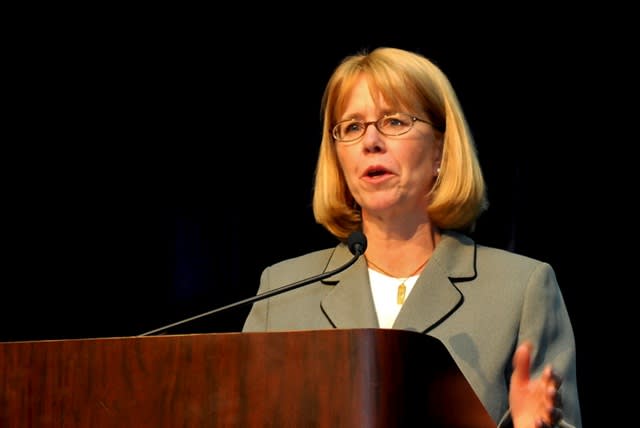
FMCSA Administrator Anne Ferro. (File photo by Jim Park)
“Zero is the right goal,” she said Tuesday in response to a question at a forum on FMCSA research projects. The forum was held in conjunction with the annual meeting of the Transportation Research Board in Washington, D.C.
“At the end of the day I wouldn’t call it ideology. I think it’s appropriate to call it a stretch goal, an aspirational goal, because we really shouldn’t suggest that we can explain and justify the fatalities and serious injury crashes that happen today.”
Ferro added that the agency should strive to eliminate crashes because drivers want to get home safely and employers want their employees to be safe and successful.
“So, it is absolute that we need to continue to strive towards crash-free environment and absolutely zero fatalities.”
Aviation achieves this goal, and it is within reach for the bus industry, she said. And trucking can strive for significant improvements even if zero fatalities is not on the near horizon.
“To do otherwise is to question each other’s motives and incentives,” Ferro said.
“Aspirational? Absolutely. Ideological? Not at all,” she said, drawing applause from many in the audience at the forum.
In practical terms, and by law, regulations have to meet cost-benefit standards.
“We have to find a balance,” observed Ron Knipling, a noted truck safety scientist and author of a seminal book on the issue, Safety for the Long Haul.
It’s also important to recognize the limitations of FMCSA’s reach, noted Rob Abbott, vice president of safety policy at American Trucking Associations.
For instance, the majority of car-truck crashes begin with a mistake by the car driver, he said.
“We have to evaluate if it’s … within (the agency’s) capability to impact every truck-related crash, knowing that 70% to 75% of crashes are the other motorist’s fault,” he said.
It is true that truck drivers cannot account for what other drivers will do, Knipling observes in his book. But that’s not the end of the matter, he adds.
“Motor carriers can do relatively little to prevent foolish and irresponsible acts by the public, but they can educate, monitor and control most aspects of their own safety operations. Truck drivers are professionals, driving amidst amateurs.”
More Drivers

Truck Drivers Need More Than Another Alert
Fleets have more visibility into truck health, safety events, and driver activity than ever. The next challenge is turning all that information into useful guidance for the person who has to decide what to do next.
Read More →
FMCSA Removes 110 Truck Driver Training Schools from Certified ELDT List
Federal regulators also are targeting more than 160 additional training providers and launching a nationwide audit of third-party CDL skills testers as part of a broader crackdown on trucking fraud.
Read More →
Hours of Service Pilot Programs: FMCSA Readies for 2027 Rollout
Two pilot programs could eventually reshape hours-of-service rules, giving truck drivers options to pause their 14-hour clock or use longer split sleeper rest periods.
Read More →
Medical Cards, English Proficiency Reshape Roadcheck Violations
Medical-card violations jumped to the top of the driver out-of-service list during CVSA’s 2026 International Roadcheck, while English-language proficiency violations appeared among the leading violations for the first time.
Read More →
Driver Trust Can Make or Break the Success of Fleet Safety Technology
New Teletrac Navman research suggests that onboarding, transparency about driver data, and positive feedback can play a significant role in how commercial drivers respond to safety and coaching technology.
Read More →
EEOC Sues KLLM Over Alleged Sex Discrimination in Driver Training
KLLM is facing a federal sex-discrimination lawsuit over policies the EEOC alleges put female truck driver trainees at a disadvantage.
Read More →
FMCSA Moves to Codify English Language Requirements for Commercial Drivers
By changing regulations on English-language proficiency requirements for commercial drivers, rather than relying on a guidance memo, the FMCSA said future administrations won't be able to walk back the Trump administration's stricter enforcement with just a memo.
Read More →
Drivers Put Western Star Trucks to the Test at Star Nation Experience
Watch to get an inside look at the Western Star trucks, technology, and community behind the Star Nation Experience 2026!
Read More →
Trump Administration Looks to Put More Veterans Behind the Wheel
The Freedom Haulers program pulls together existing and expanded programs at several federal agencies to recruit veterans to drive commercial heavy-duty trucks and cut the red tape for them to get a CDL, training, and employment.
Read More →
Putting Mack’s Command Steer to the Test
A test drive of Mack’s Command Steer active steering system evaluates how it can make truck driving easier and less tiring.
Read More →