




The Peterbilt-Cummins SuperTruck Revealed
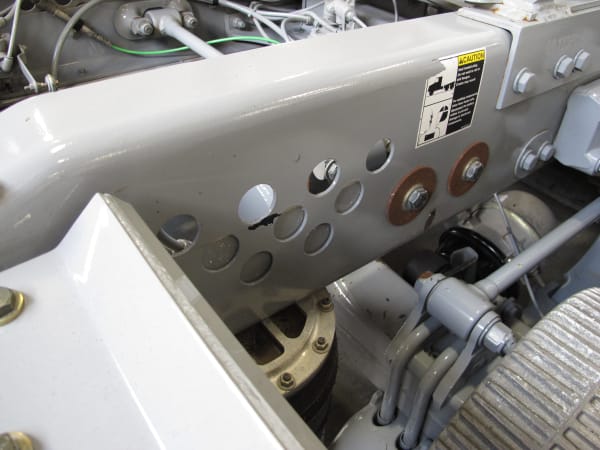
Variable gauge frame rails were used; thicker and reinforced where necessary, and thinner and even drilled out for weight savings where strength wasn't required.
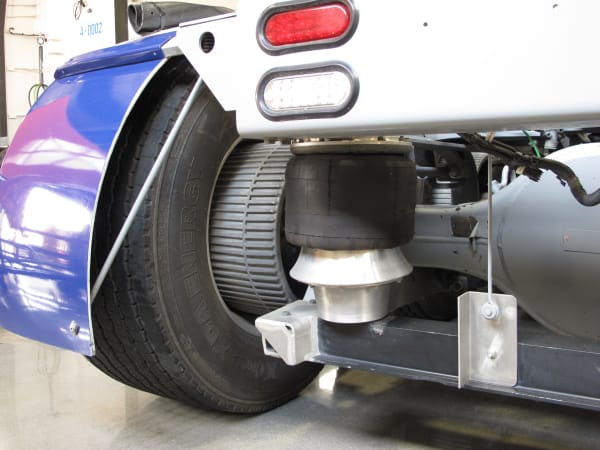
Lightweight components were used where possible, such as aluminum and magnesium crossmembers and aluminium-matrix brake drums. The brake drums are expensive but have excellent performance characteristics.
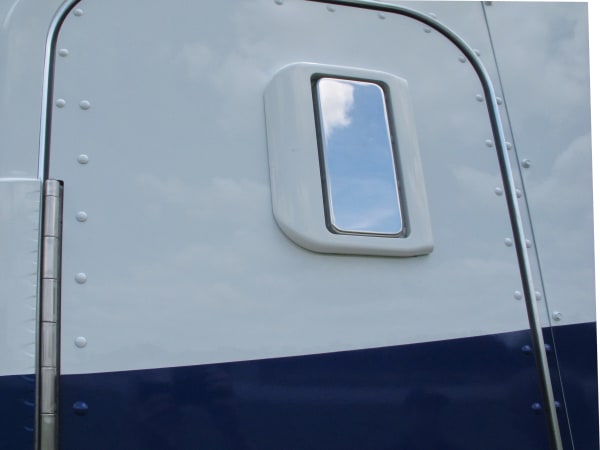
Fairings around the sleeper vents are an inexpensive addition that produce very small improvements, but every little bit helps.
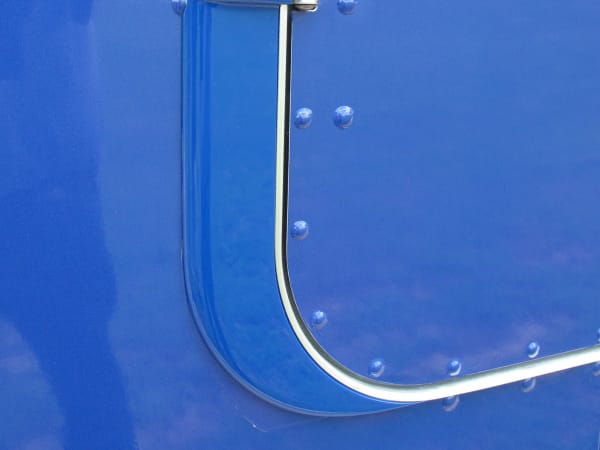
Engineers added sculpted fairings around the rain gutters on the sleeper door for an extra little aero benefit.
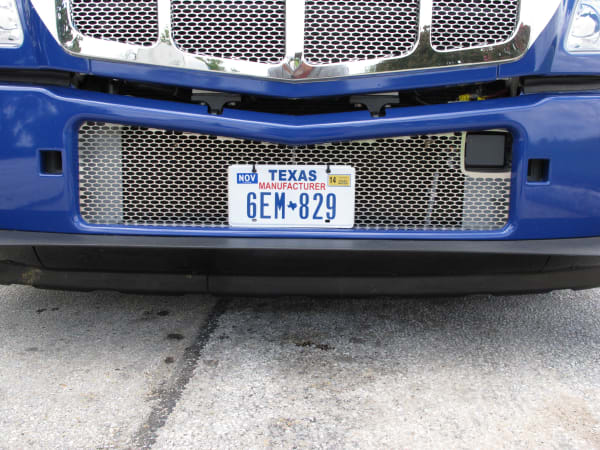
The bumper is opened up to permit ram air flow into the lower portions of the radiator. The air dam under the splitter foil smooths air flow under and around the truck.
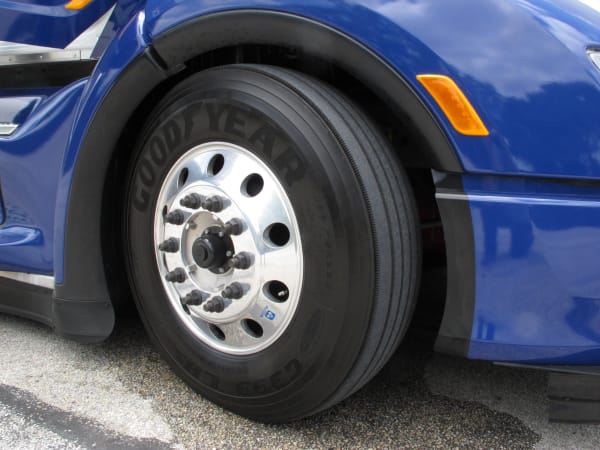
A molded rubber filler strip is mounted to the fender to close the gap between the tire and the fender. The rear edge of the strip contoured to smooth air flow coming off the tire and onto the side fairing.
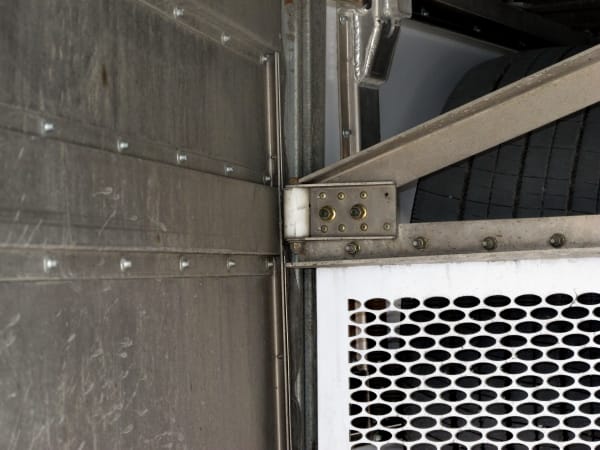
The white colored piece in the upper left is a roller that rolls agains the tapered fairing on the trailer to open it as the trailer bogies are slid rearward.
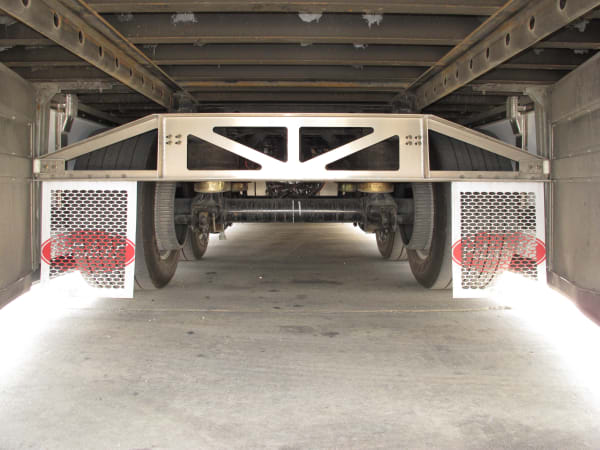
Light-weight components and flow-thru mud flaps contribute to the weight savings and aerodynamic efficiency of the trailer.
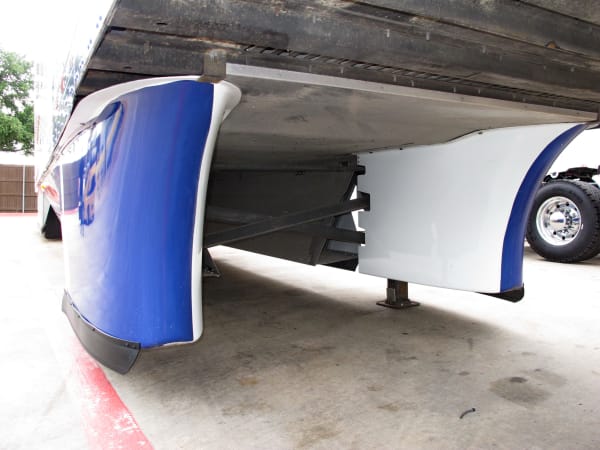
The trailer side skirts are three dimensional and shaped like an airfoil. The are the same width as the wide-single tires on the tractor to improve the transition of air from around the wheels to the trailer.
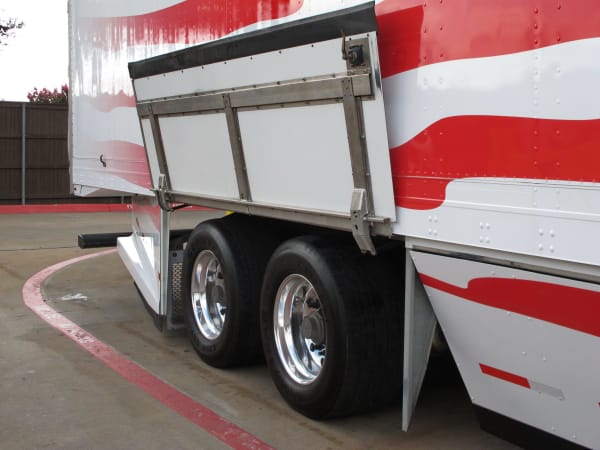
Fleets said they liked the idea of covering the trailer wheels for better aerodynamics, but asked for a swing-up panel for access to the wheels. It's easy to open thanks to two air springs. It latches into place in the down position.
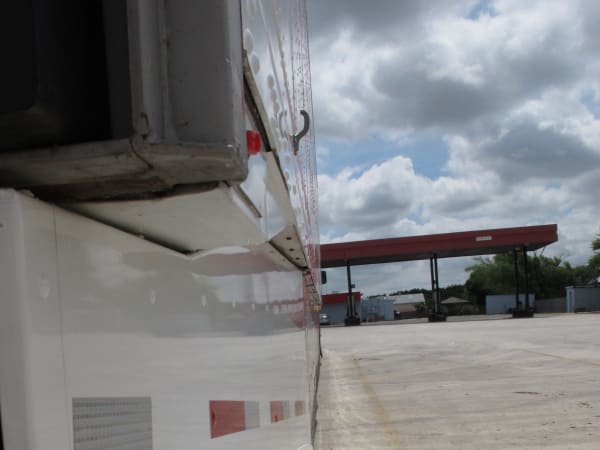
The tapered rear fairing is shown here in the 'open' position, with the trailer bogies slid all the way to the back. A roller mounted on the bogey pushes the fairing outward as it moves back.
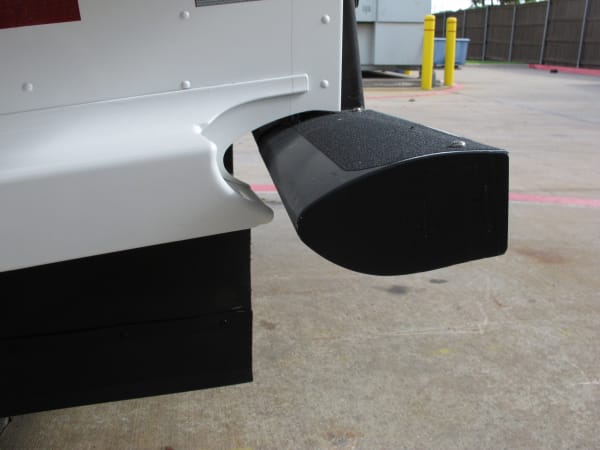
The rear bumper has been shaped to improve aerodynamics. The tapered rear part of the trailer fairing fits around the leading edge of the bumper optimize aerodynamics.
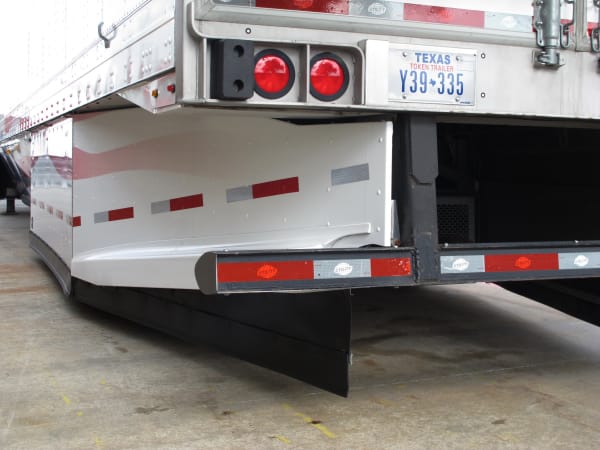
The rear section of the trailer side skirt is tapered inward, roughly matching the profile of the not-seen trailer boat tail. It's mounted on a hinge so that when the trailer bogies are slid backwards the fairings open outward.
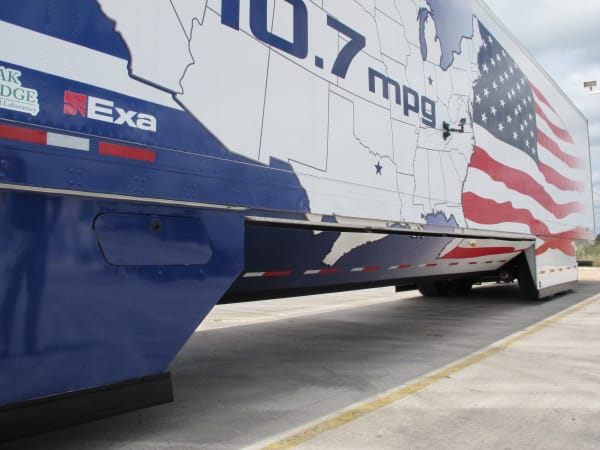
When in the deployed position, the rubber lower edges of the side skirts are just four inches above the pavement. The fairing is retractable. It's manual on this unit, but Peterbilt says it can be automatically controlled using a wheel speed sensor. At slow speeds it would automatically retract.
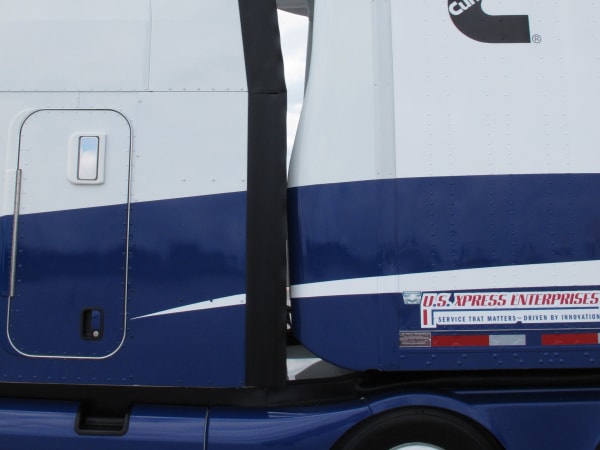
The gap between the tractor and trailer is as small as it can be. The upper portion smooths the air flow from the sleeper roof to the trailer. The side section keep wind out of the gap. The rubber fairing extenders protect the the metal fairings from damage.
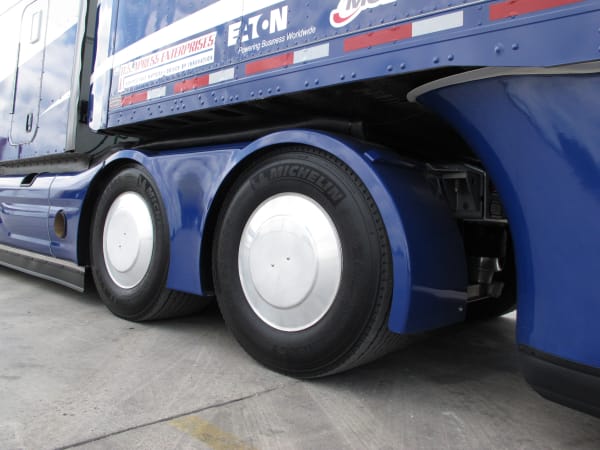
The rear section of the tractor treated to improve air flow between the tractor and the trailer. The rounded and tapered leading edge of the trailer fairing is seen to the right of the image.
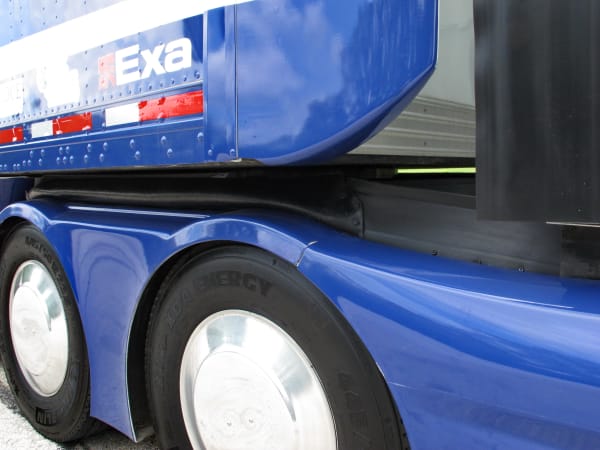
Looking back at the trailer nose pieve from beside the tractor. Notice the rubber gap filler atop the fender and at the bottom of the opening between the tractor and the trailer.

On the outside it looks much like an off-the-shelf Model 579. A closer inspection reveals the aerodynamic enhancements.
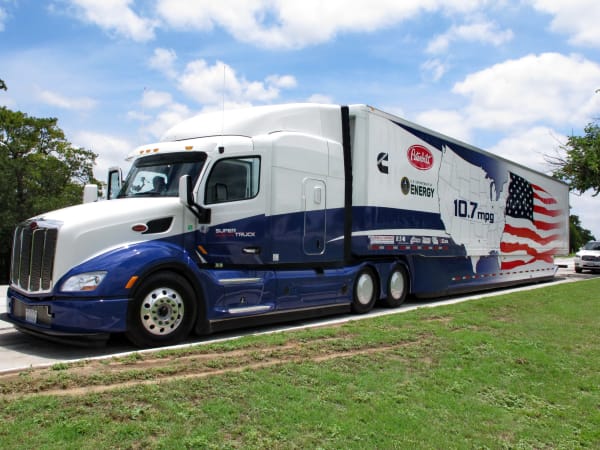
A complete shot of the Cummins Peterbilt SuperTruck at a rest area on the test route near Bowie, Texas.
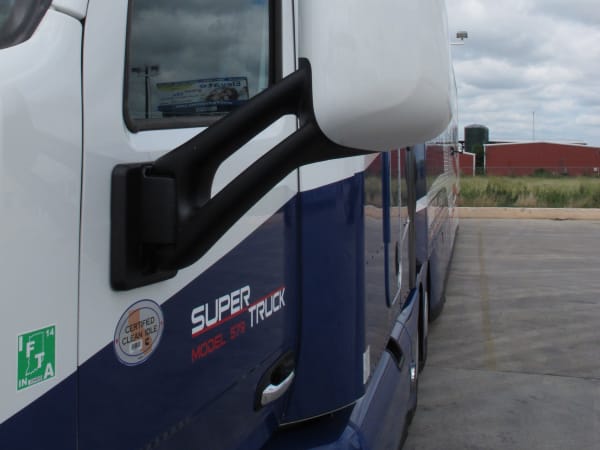
The mirrors are about 4 inches shorter than standard mirrrors, and the convex section has been enlarged. Peterbilts says they meet federal requirements while reducing aero drag. Visibility does not suffer at all.
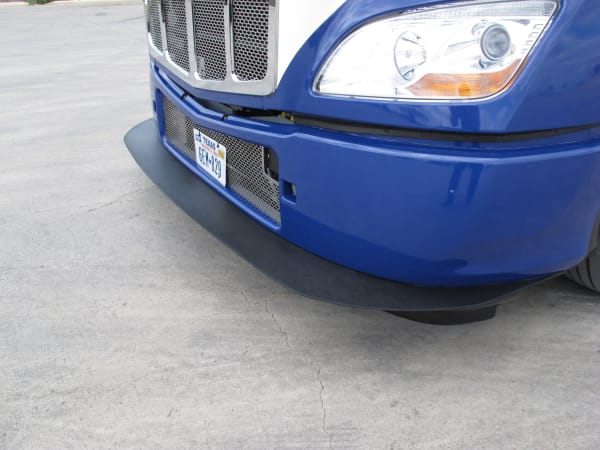
The splitter foil improves air flow through the rad by separating the air stream moving around or under the bumper. Air striking above the foil goes through the rad.
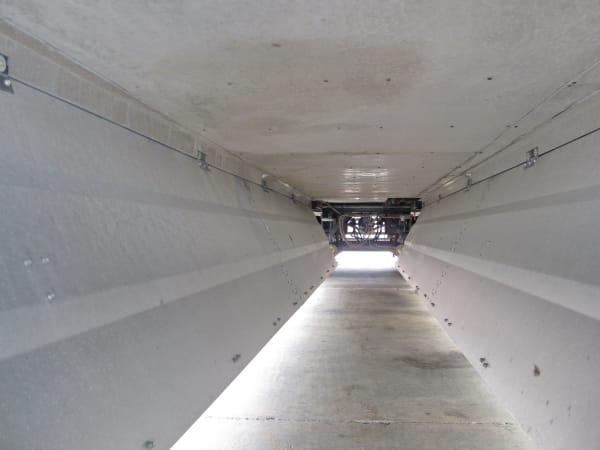
The trailer cross members are covered, and the inner side of the trailer side fairings is as smooth as the outside. The fairing is shown here in a partially retracted position.
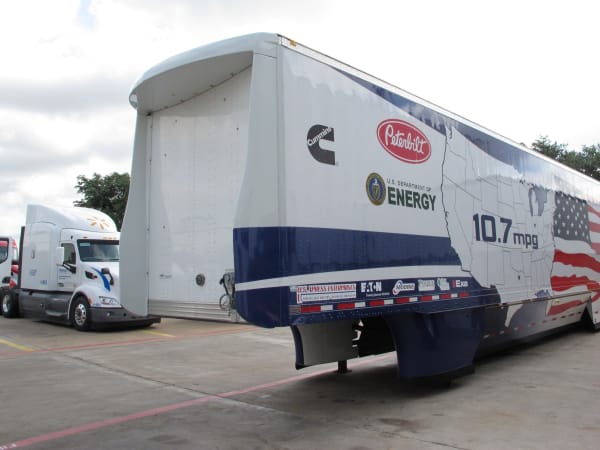
Peterbilt describes the fit between the tractor and the trailer as a ball and socket. The tractor is the ball, the trailer is the socket.
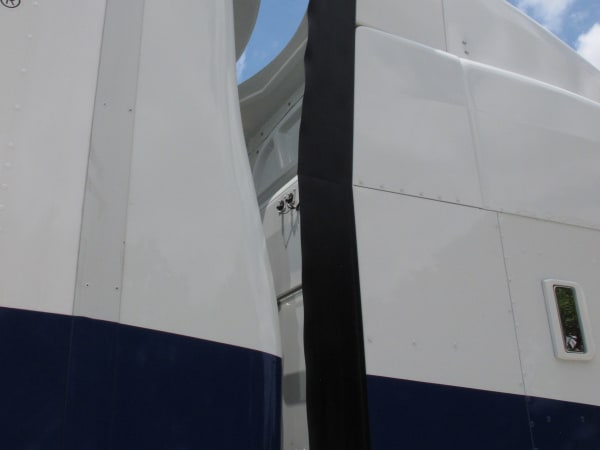
The upper sections of the trailer nose fairing and the sleeper side fairings are opened to permit the truck to operate on uneven ground without damage to the fairings.
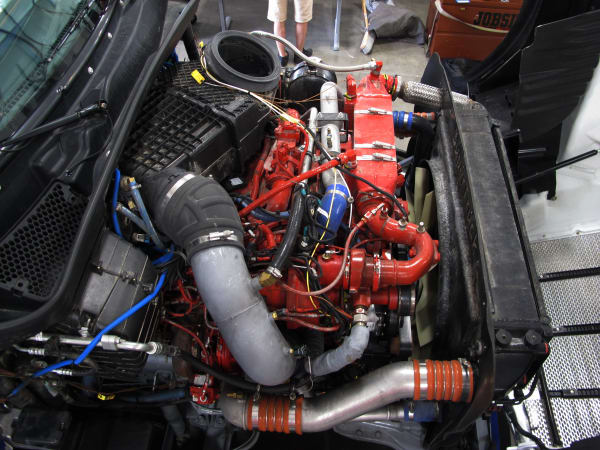
Beneath this hitherto unseen hardware lies the Cummins ISX 15. The additional bits are parts of the waste heat recovery system. Cummins says this is the first time a WHR system has been successfuly installed in a moving vehicle. It's still very much a prototype, hence the hose clamps and test leads all over the engine.