




Meritor's Brake Testing Program
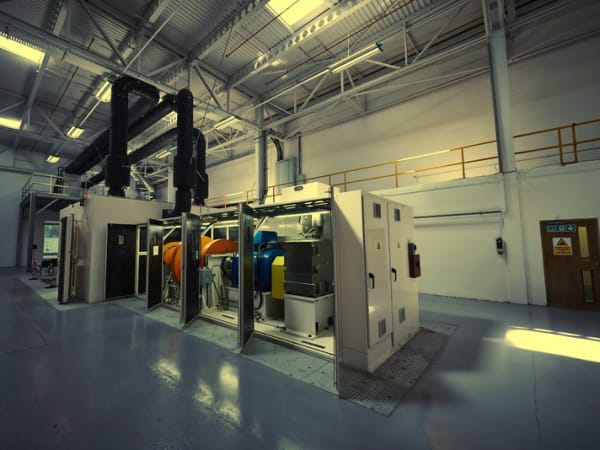
Meritor's new state-of-the-art brake dyno weighs a modest 75 tons, and is the most advanced machine of its kind in the world. The $300,000 investment gives engineers data that helps them predict performance on brakes expected to make up to 5 million cycles over a 10-15 year lifespan. All of Meritor's brake dynos -- Wales, Italy, India and the U.S. -- run the same control systems so data can be easily exchanged with any test center.
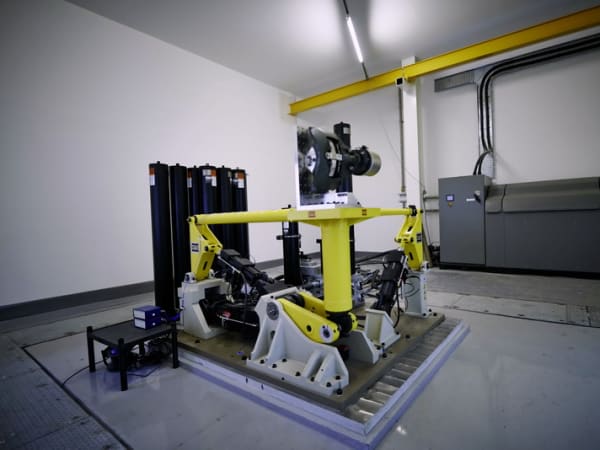
This three-axis shaker rig does vibration testing for the full brake assembly. The computer is loaded with road and load profiles gathered from field tests, where trucks record the bumps and jolts they get out on the road. Those bumps and jolts are played back by computer-controlled hydraulic actuators. The brake is bolted to an 'axle' to simulate real-world conditions. The computer amps ups the frequency and amplitude of the vibration to accelerate the actual wear on the brake. A day-long trip can be simulated in less than a hour.
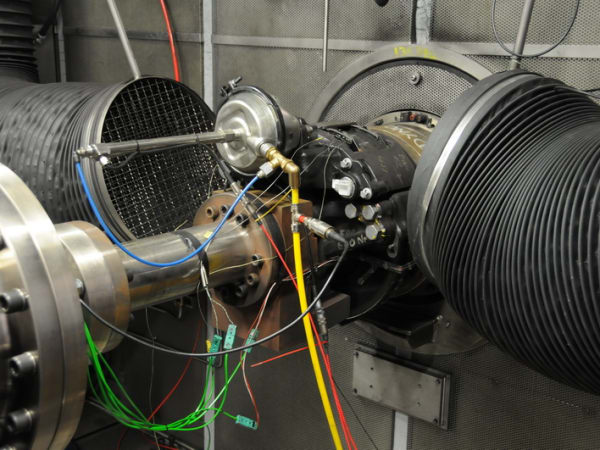
The noise, vibration and harshness (NVH) dyno measures how the brake reacts to its use by charting and recording noise, vibration and more. Customers now have zero tolerance for noisy brakes, so eliminating brake noise has become one of the biggest challenges for brake makers. The NVH dyno is in a near soundproof room where microphones can pick up the sound of the caliper moving during a brake application.
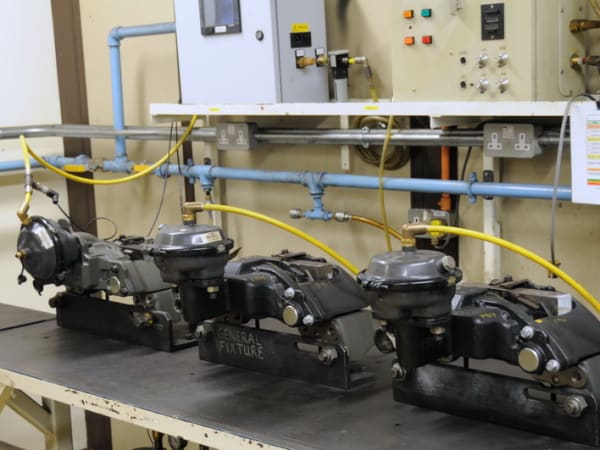
Less dramatic tests include simple actuation tests. It used to take three months to do a 1-million-application durability test, but newer technology has cut the test time by stopping the actual application once the brake has reached a certain amount of torque force. Test durations have been cut from 13 weeks to 6 weeks. Air disc brakes on buses, for example, require 5 million application test cycles. A 50% cut in test duration can make a big difference in development time.
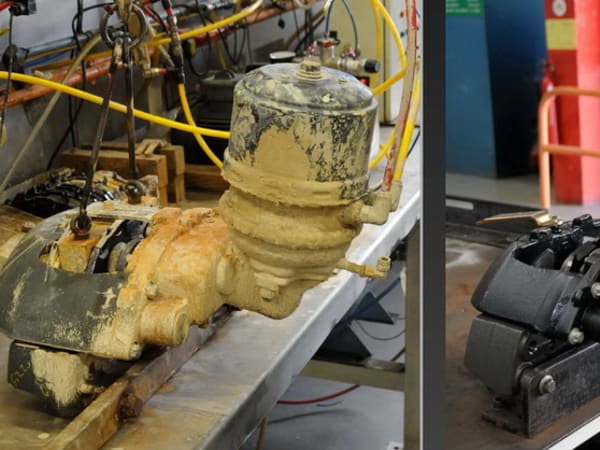
Environmental testing dunks a disc brake in a salt brine and mud slurry solution for 13 weeks and 1 million application cycles. This test simulates five years of in-service operation on a typical truck. Testing can be tailored for different environments, such as high humidity, dust and sand, etc. The brake in the left is in post-test condition.
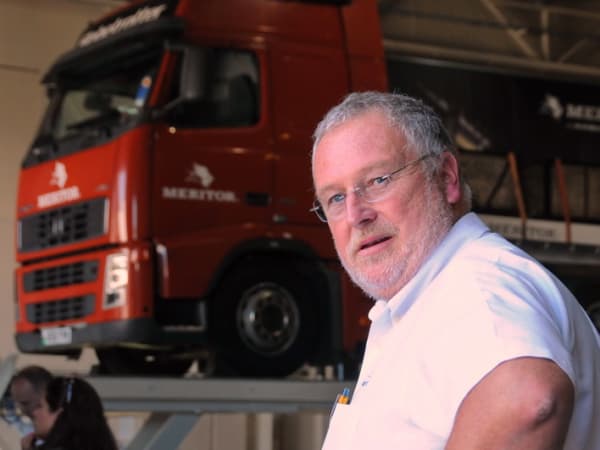
Dietmar Knoop is the man behind Meritor's engineering and testing program at Cwmbran. As the Director of Engineering for Brakes in Europe, he conceives, designs and executes the testing programs. "We have to design tests that will simulate the brake performance and durability over the expected life of the vehicle," he says. "It's a layered process where we test individual components in the brake, then the brake as a whole. Next we test the brake on an axle on a dynamometer and finally on a truck in field before beginning in-service tests with OEs and fleet customers."
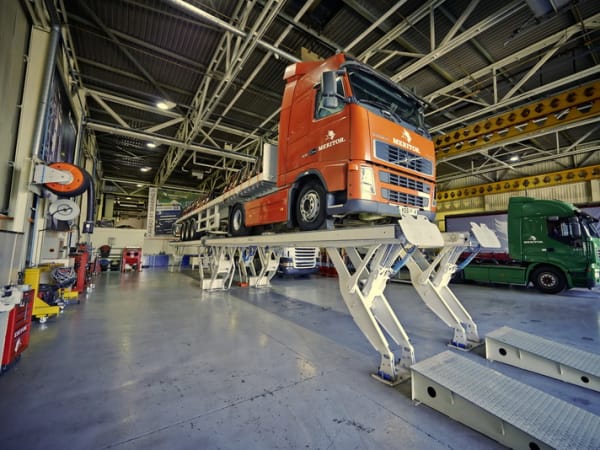
By the time a new brake is fitted to a truck for field tests, it has been through several years of engineering and development. Meritor's field test program at Cwmbran begins in the garage where mechanics and technician inspect and gather data before and after every test run. High-speed lifts get the technicians closer to the trucks faster and more safely.
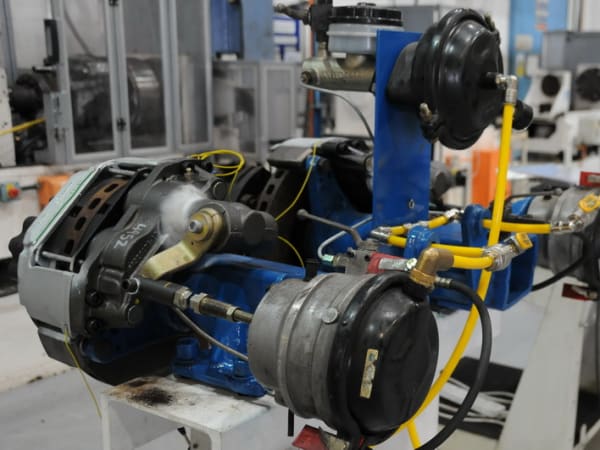
Meritor performs more than 14 individual tests in performance clusters: function, performance and friction coupling, service life, as well as the noise, vibration and harshness tests and environmental tests. Other testing includes ease of maintenance and repair, structural integrity and more.
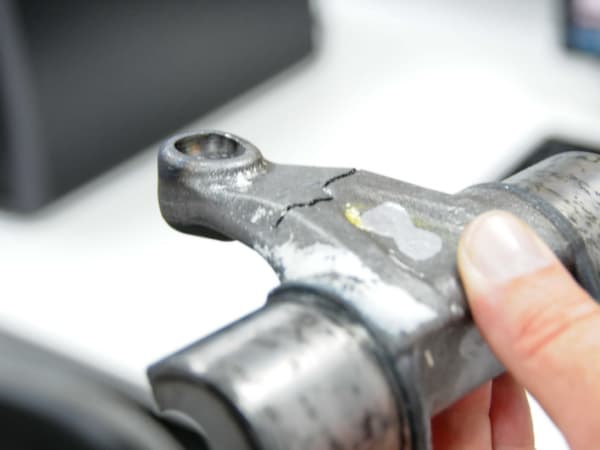
Some components are tested to failure under various loads and conditions. This gives engineers insight into the physical demands on a part. It allows parts to be designed for specific applications and lets engineers remove material from a part to conserve weight if it can be proven robust enough for its job.
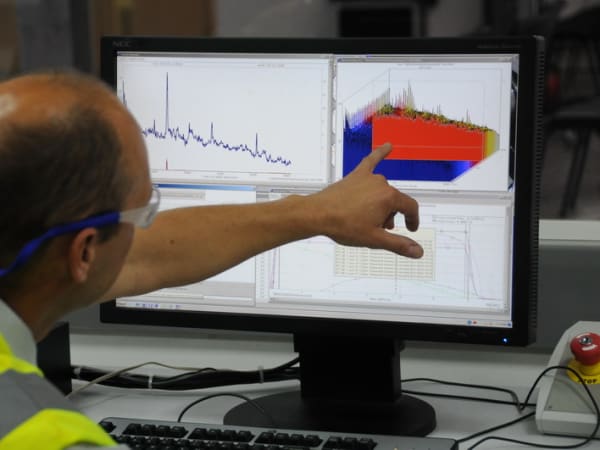
Advanced data acquisition and test controls give technicians and engineers real-time insight into how a test is proceeding. They can watch and see what torque values are applied, and how that force affects components of the brake and ultimately its performance over time.
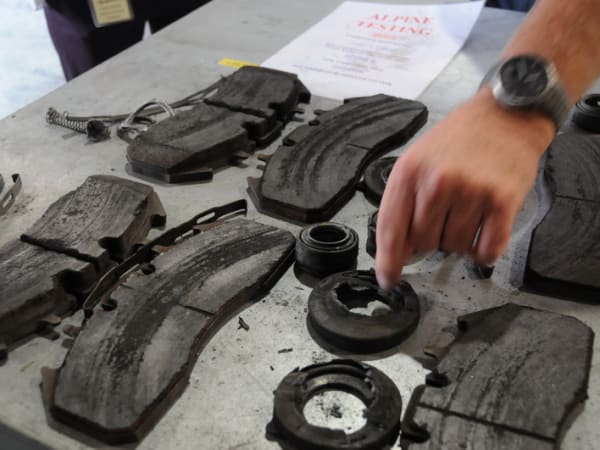
These beaten and battered brake pads are fresh from the field, having been removed from test vehicles on recent alpine test runs. Engineers can see firsthand how heat affects pad wear as well as the life of the rubber boots and seals on the brake.