




Daimler's Electric Trucks Come in Three Sizes [Photos]
Daimler has developed prototype electric trucks in three sizes, from the Fuso eCanter, medium-duty eM2 and the Class 8 eCascadia and is working with partners to get these vehicles out on the road in regular use. There are already 100 Fuso eCanters operating in the U.S., and the company just delivered its first eM2 to its partner Penske with plans for nine more. The eCascadia will be delivered later this year with plans for 10 trucks as well. Photos: Jim Park
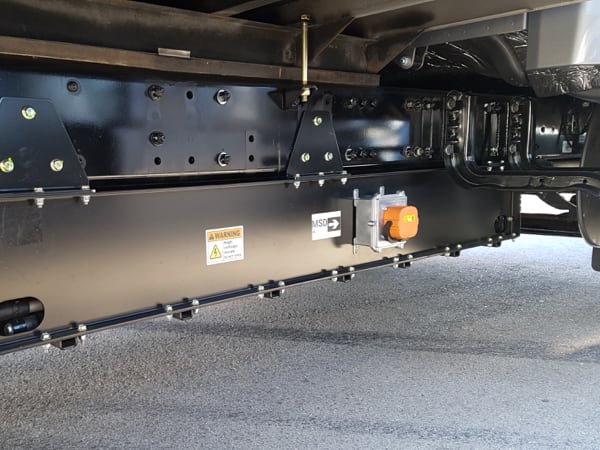
Being prototypes, not production trucks, the battery box containing, in this case, three batteries, is bolted to the underside of the frame. Production specs could see the batteries placed between the frame rails.
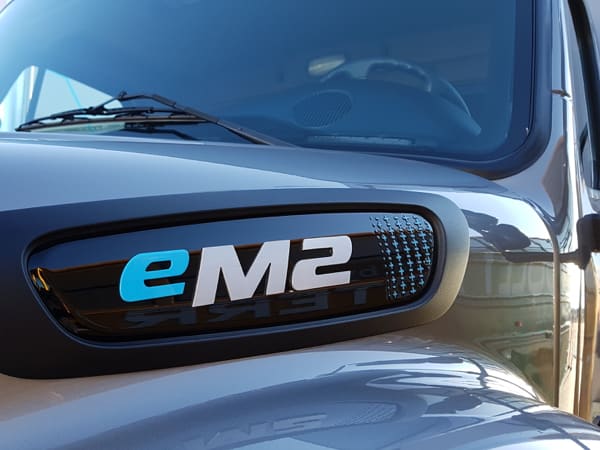
Daimler had two eM2 trucks at the event in Las Vegas. This one was the customer demo truck. The other was one of the units Penske will take for in-service customer trails. In all, Penske will get 10 of the eM2 chassis.
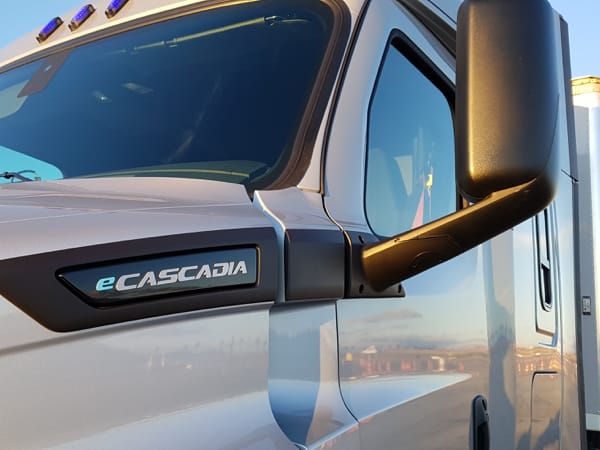
Daimler’s battery-powered eCascadia. This Class 8 has a range of about 250 miles with 550 kw of battery storage. Ten such trucks will soon going into field trials in a drayage operation in day-cab configuration with a smaller battery pack that provide a 160-mile range.
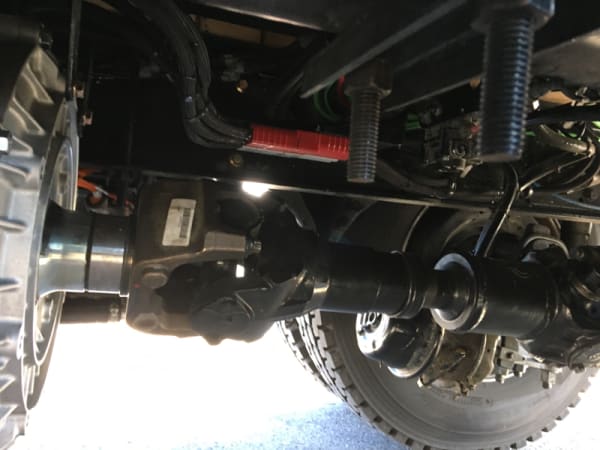
The drive motor on this prototype eM2 is located just forward of the drive axle. Daimler is looking at axle-mounted motors or possibly hub motors, but it’s early days and there’s still a lot of evaluation required before a final configuration is decided upon.
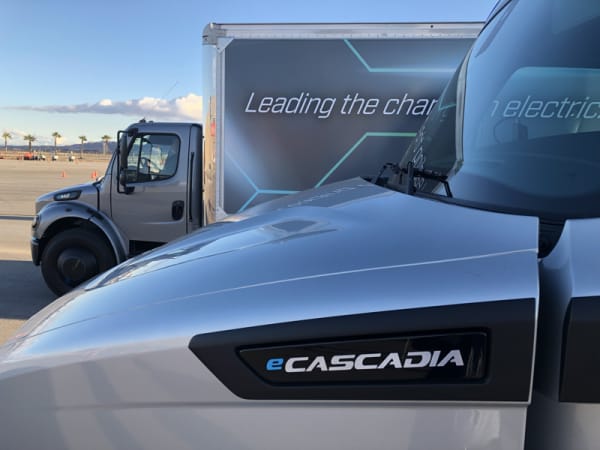
Daimler’s Innovation Fleet will include 10 eCascadias and 10 eM2 medium-duty trucks. Development and testing will continue while the trucks are in customer hands.
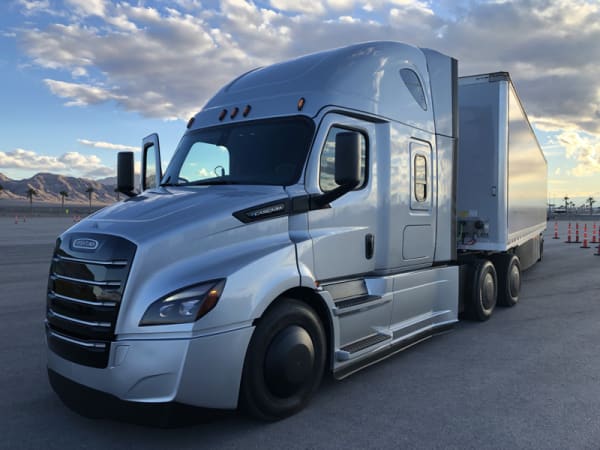
Daimler will not be building any eCascadias with sleepers for a while. The company believes short-haul heavy-weight loads common to drayage segment are the most appropriate applications for Class 8 BEVs at the moment, and thus will be focusing on day-cabs for the early days of development. This sleeper cab has passenger seats in the back for demo rides.
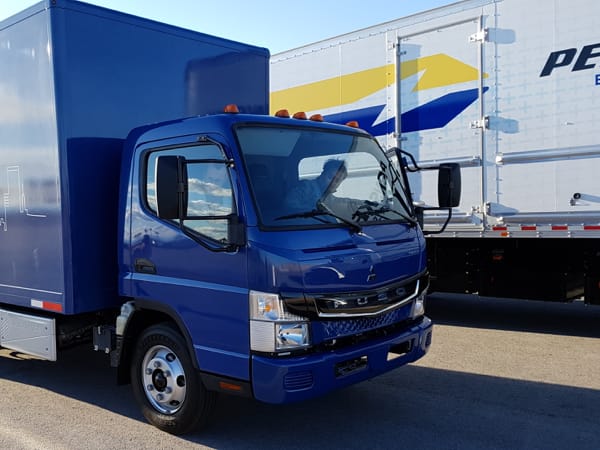
The Fuso eCanter is Daimler's first all-electric production truck. It was unveiled in New York City in 2017. There are now about 100 of these trucks operating in the U.S.
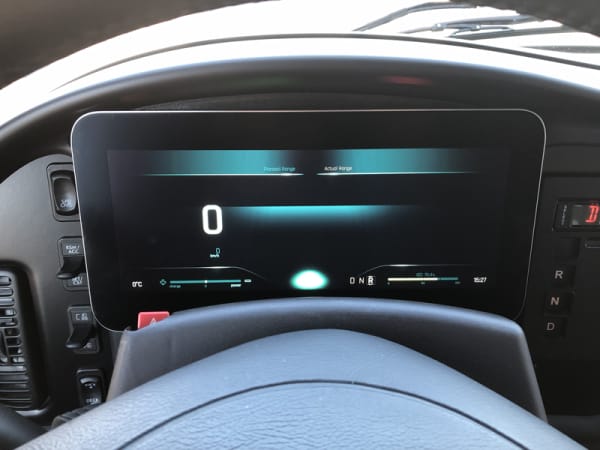
The new driver panel in the eM2 features a 12.3-inch display with all the traditional dash info. Added to the display is information about state of charge, expected range and charge and drive phase displayed to encourage drivers to coast and use regenerative braking to charge the batteries.
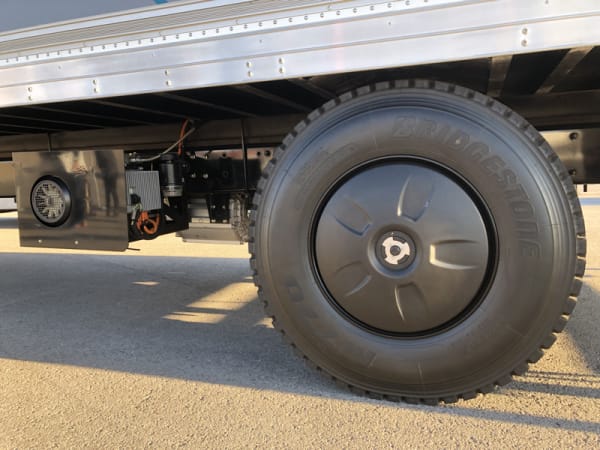
Most of what used to be under the hood can now be placed elsewhere on the chassis. This opens up opportunities for a front end redesign that could improve maneuverability and servicability.
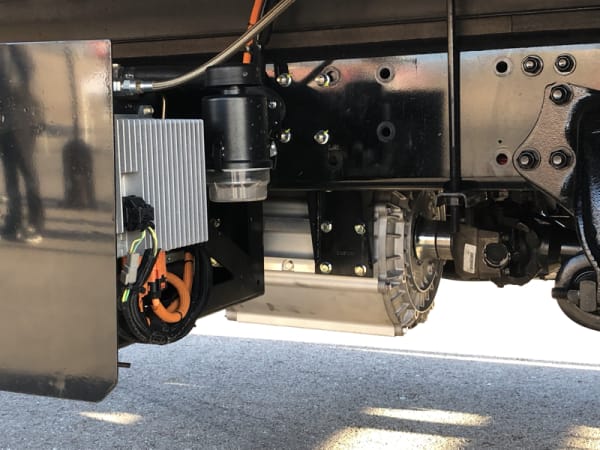
The 270-hp motor is located close to the drive axle, resulting in a very short driveshaft. That frees up space between the frame rails for batteries, cable and the associated electronics packages.
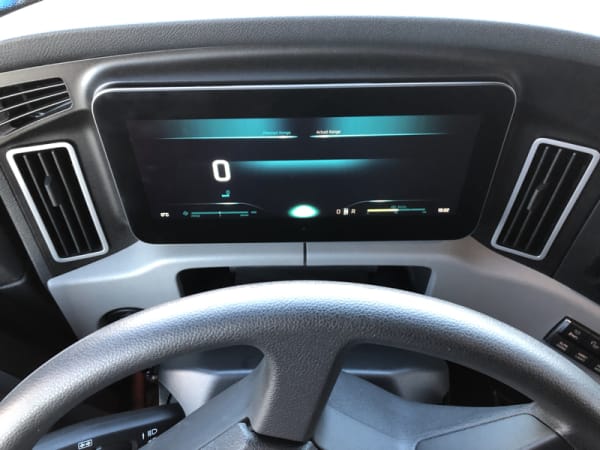
The new dash panel in a production-intent eM2 cab. It’s still a work in progress.
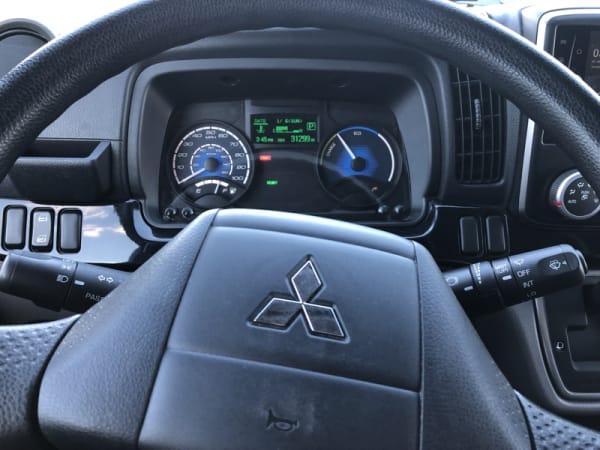
The dashboard A-panel from the Fuso eCanter displays battery charge and voltage draw to help encourage drivers to operate more economically and use regeneration braking when possible.
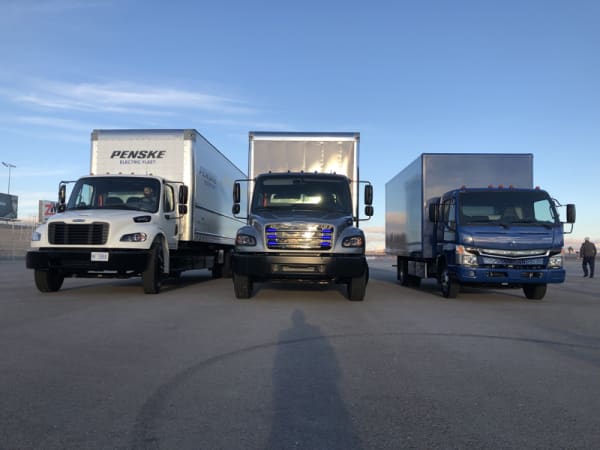
Daimler believes the medium-duty market segment is the most viable application for battery-electric vehicles and is therefore focusing its engineering efforts to bring these trucks to market as quickly as possible.
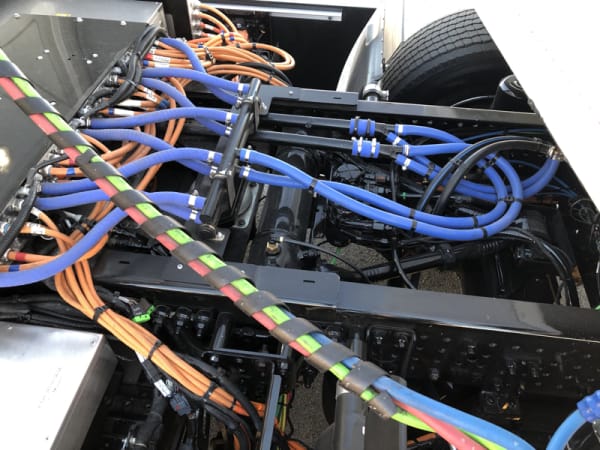
The eCascadia looks a bit intimidating, but Daimler stressed it was a prototype truck, not a production-intent chassis. Still, this gives you an idea of the complexity of a BEV. It’s not simply a case of switching the diesel engine out for an electric motor and a few batteries.