




Cummins Heritage Gallery [Photos]
Historic Building 46 of the Cummins Engine Company's complex in Columbus, Indiana, formerly housed the assembly line for the ISX 15 engine before production was moved to Jamestown, New York, in 2002. Today it's called the History Restoration Center, with archives and memorabilia from the company's early years.
Cummins opened the doors to journalists on a recent trip to Columbus, Indiana, and Jim Park and Jack Roberts shared these photos.
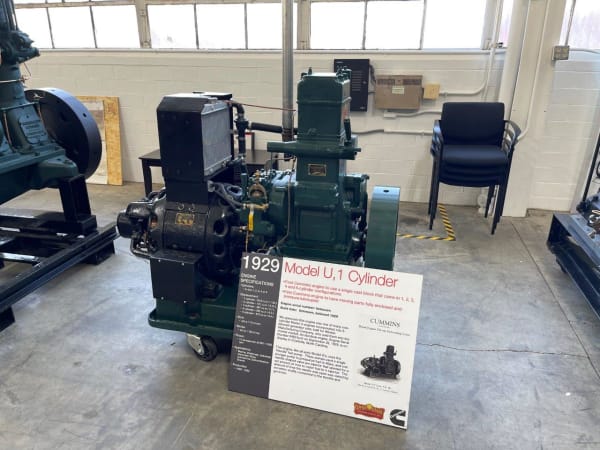
The Model U was the first Cummins engine to have moving parts fully enclosed and pressure-lubricated. In 1931, Clessie Cummins drove a Marion truck equipped with a Model U from New York to Los Angeles in only 97 hours.
Learn More [video]
Photo: Jack Roberts
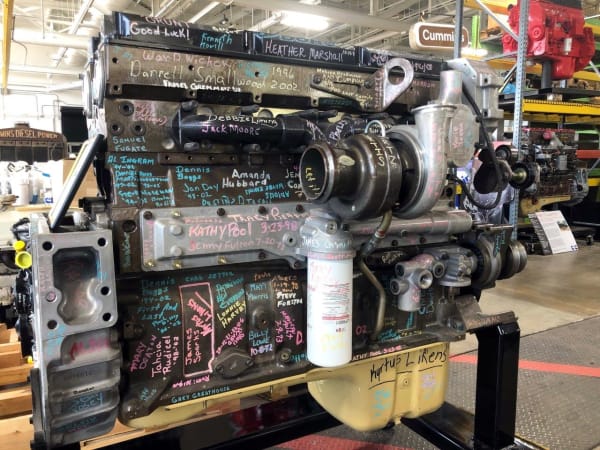
The last ISX 15. This engine was the last ISX 15 produced on Cummins' Columbus, Ind. assembly line. As a show of respect, all the workers on the line signed the engine as it passed their work stations. Production of the ISX 15 was moved to Jamestown NY where it remains to this day.
Photo: Jim Park
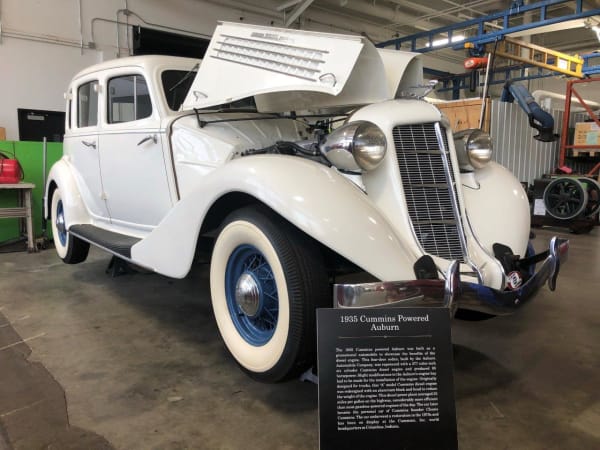
This 1935 Auburn featured an specially built aluminum 377-cu-in. Model A Cummins diesel. It's produced 85 hp and managed 35 miles per gallon -- considered very good at the time. It was built to promote the benefits of diesel engines, but turned out to be a bit too heavy. It eventually became one of founder Clessie Cummins personal cars.
Photo: Jim Park
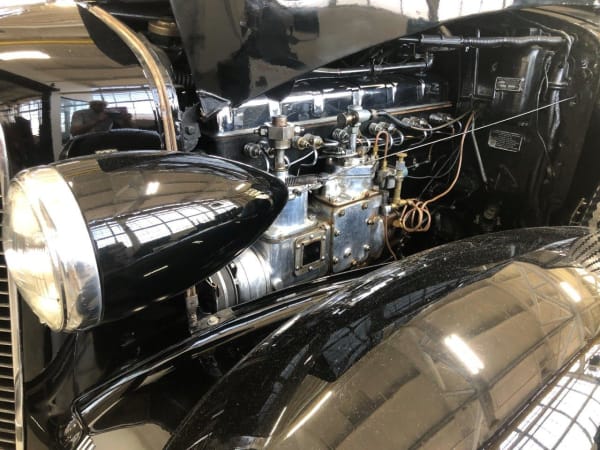
The engine in the Caddy is cast iron, but interestingly it has an aluminum fuel pump. The white Auburn has an aluminum block, but a cast iron fuel pump. Experts at Cummins Heritage center believe the two fuel pumps might have been mixed up some time in the past. Both the cars are still operable.
Photo: Jim Park
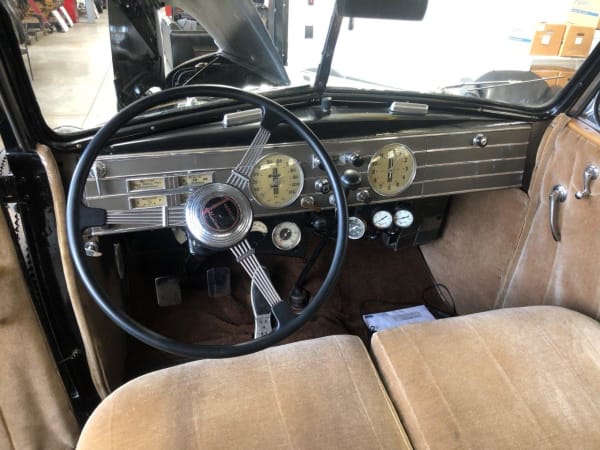
Inside one of Clessie Cummins' personal cars, a 1936 diesel-powered Cadillac.
Photo: Jim Park
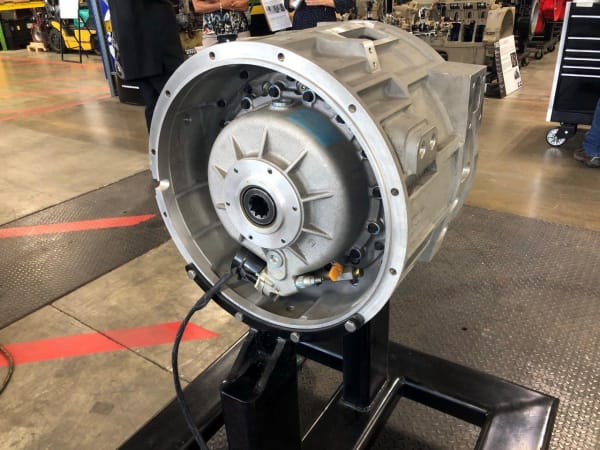
One of the newer items in the unofficial collection is a prototype electric motor/generator. A special housing was designed that fit between the engine and the transmission. This is the view from the transmission side. Cummins was experimenting with electric powertrains for heavy trucks around 2007.
Photo: Jim Park
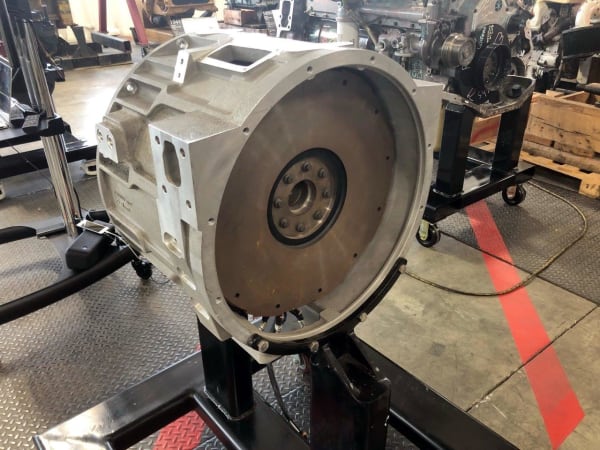
This photo is of the same electric motor/generator assembly, taken from engine side. It was an early version of a regenerative braking system that offered fuel-saving power launch assist to the engine to save fuel. It wasn't in development as a stand-alone source of motive power.
Photo: Jim Park
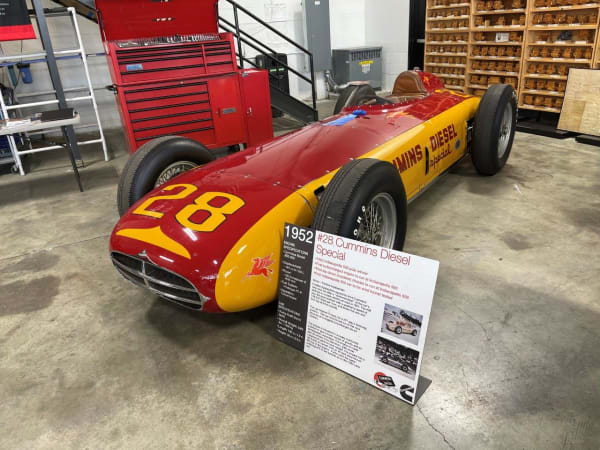
The No. 28 Cummins Diesel Special was the first turbocharged engine to run at the Indianapolis 500, powered by a Model JBS-600 6.6L engine producing 430 hp at 4,500 rpm. While it won the pole position and broke the one- and four-lap all-time records, it was forced out of the race after 72 laps because of a clogged turbocharger.
Photo: Jack Roberts
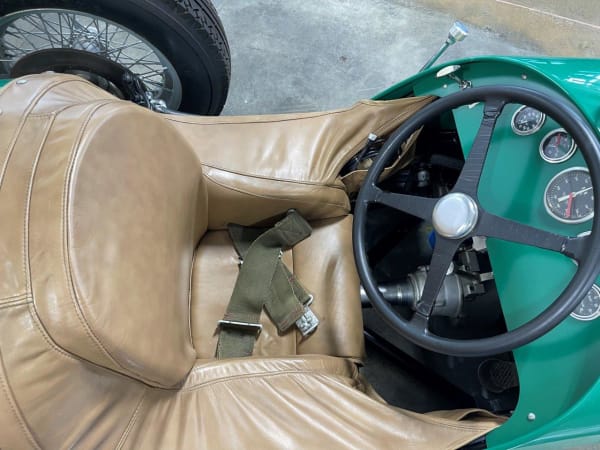
The interior of the “Green Hornet.”
Photo: Jack Roberts
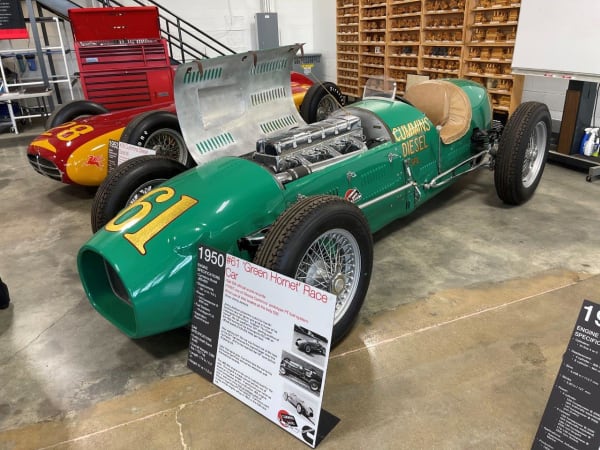
The No. 61 “Green Hornet” race car from 1950 was powered by a Cummins 6.6L engine producing 340 hp at 4,000 rpm. It was the first use of Clessie Cummins’ prototype PT fuel system and first use of disc brakes at the Indy 500.
Photo: Jack Roberts
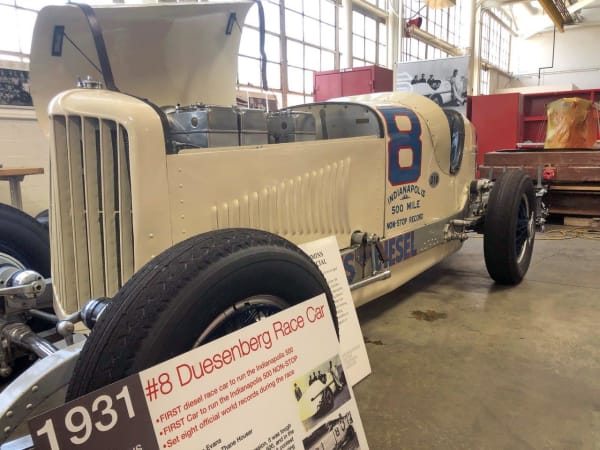
Cummins #8 Duesenberg Race Car. in 1931, this car was the first diesel-powered race car to run the Indianapolis 500. It was also the first car ever to run the Indy 500 non-stop, and it set eight official world records during the race. It's powered by a Cummins Model U four-cylinder 6.3 L engine producing a whopping 85 hp at 1800 rpm.
Photo: Jim Park
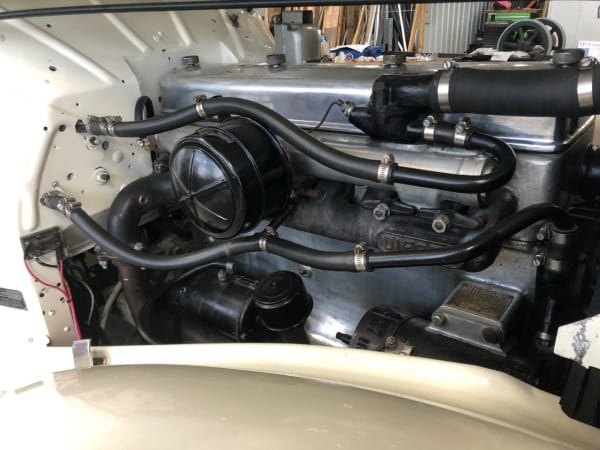
Close up showing the Auburn's aluminum engine.
Photo: Jim Park
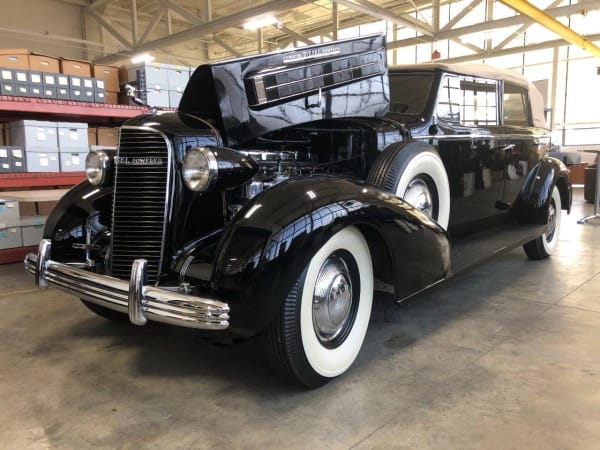
Clessie Cummins diesel-powered 1936 Cadillac. This was said to be the family car in which Clessie took the family on vacation in Florida among destinations.
Photo: Jim Park