




A Change in Aerodynamics
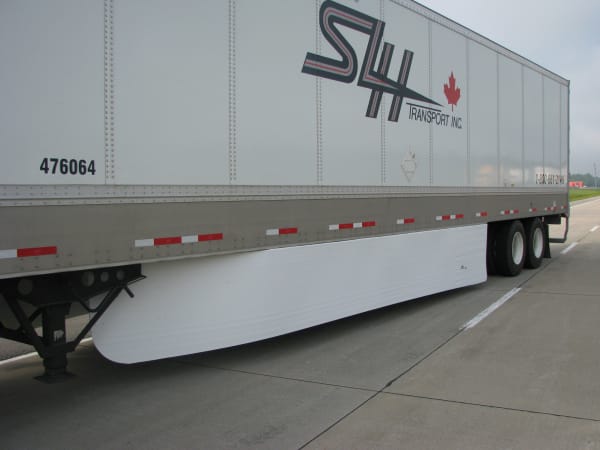
Trailer side skirts or side fairings prevent air from becoming trapped beneath the trailer and bumping against the undercarriage. Some manufacturers claim they can improve fuel economy by up to 8%. Their effectiveness is highly dependent on how they are installed and how close to the ground and the undercarriage they get. Obviously, maintenance has to be considered when choosing such a product.
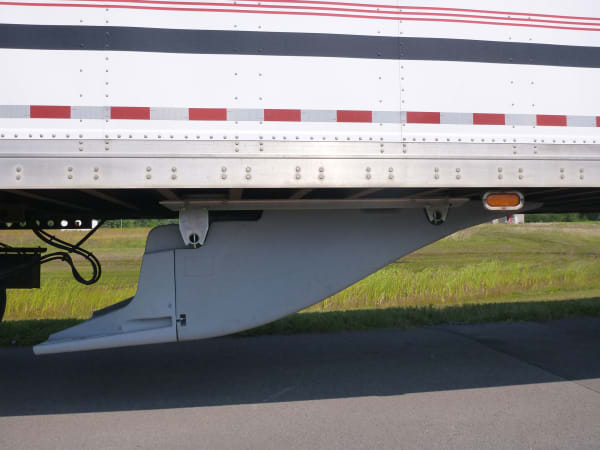
This trailer undertray device actually acts as a trailer end fairing. The manufacturer claims it redirects airflow from beneath the trailer up into the area of low pressure that forms behind the trailer when the vehicle is in motion, thus reducing the pressure differential and the aerodynamic drag produced by that partial vacuum. The manufacturer claims a 5.5% improvement in fuel economy.
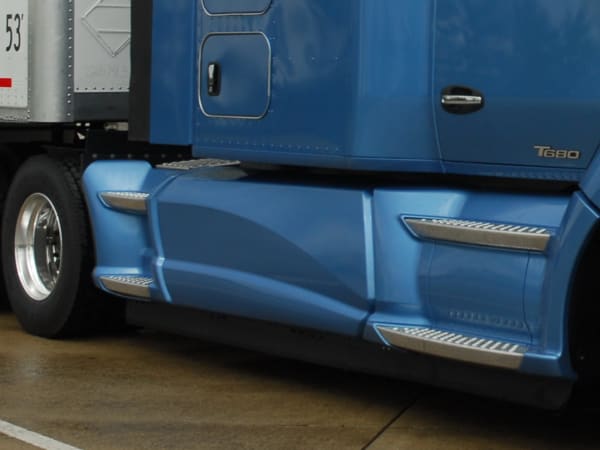
Sculpted sideskirts and rounded body panels tailor airflow around the truck to optimize airflow around the vehicle. Access steps are necessary, but don't have to be aero-killers.
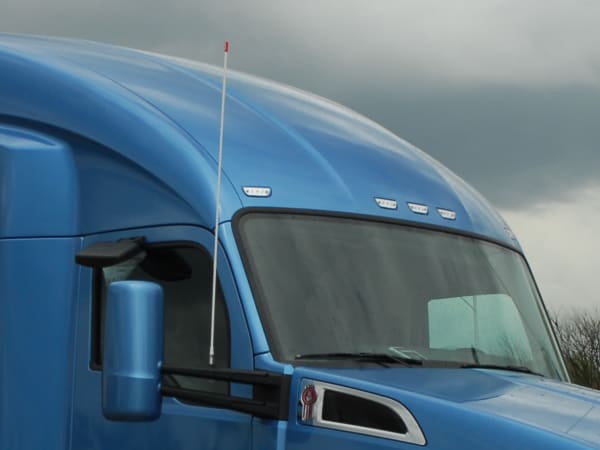
Kenworth has stripped away the sunvisor and rounded the transition from the windshield to the roof fairing, leaving a smooth and uninterrupted surface for the air to follow.
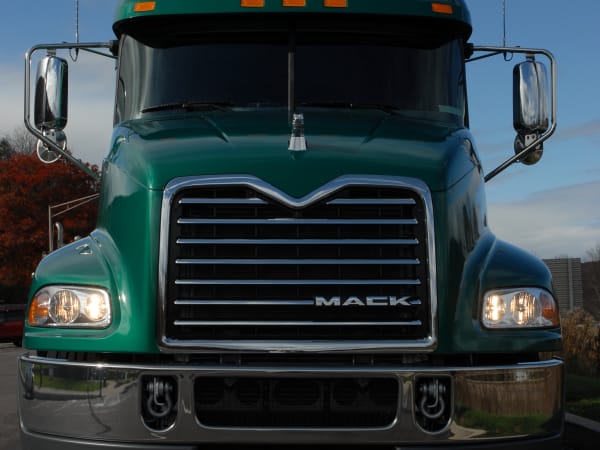
What the wind sees. The smoother and rounder the front profile is, the better the airflow around, over and under the vehicle. Some things, like Mack's ubiquitous Bulldog, will never disappear. Even if they stick out into the wind just a little, they are brand signatures.

Minimizing the tractor/trailer gap is an effective drag-reduction strategy. Twenty-four to 28 inches is said to be optimal, while still leaving clearance for trailer swing. Tractor side fairings, fenders and trailer skirts smooth out the side profile of the vehicle for improved airflow around the body.
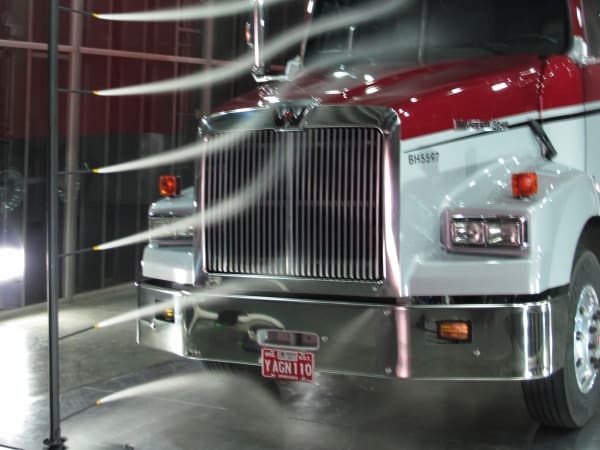
Manufacturers use wind tunnel testing to optimize aerodynamic drag while maintaining brand identity. Smoothing out the square surfaces makes a significant improvement without compromising styling. An absolutely optimized tractor frontal profile would look like an egg, and you'd never be able to tell one brand from another.
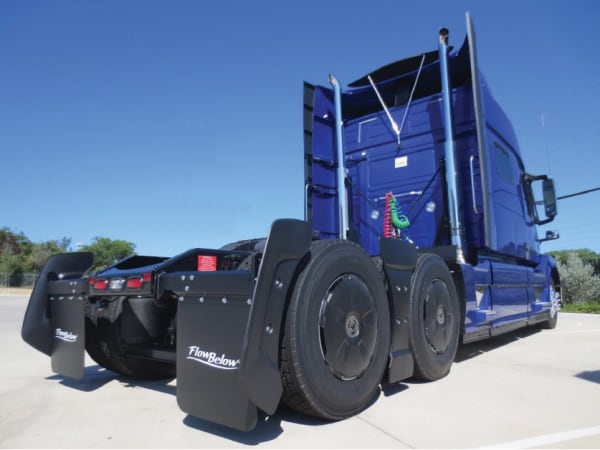
The first of its kind, the FlowBelow Tractor AeroKit consists of aerodynamic wheel covers and tractor tandem fairings that sculpt airflow over and around the drive axles. The manufacturer claims a 9-month payback and only 75 extra pounds.
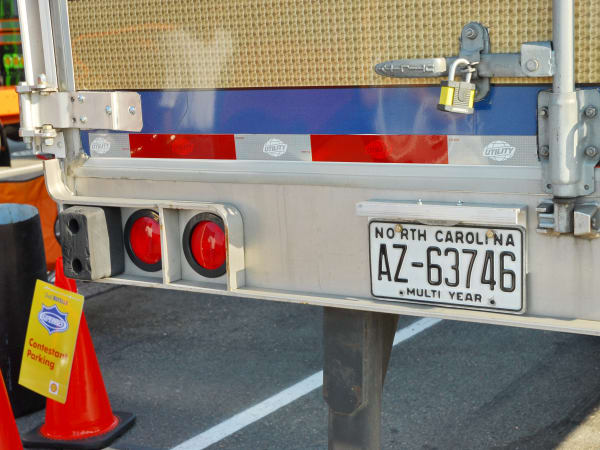
Can you guess what the aero-enhancement is in this photo? It's nothing more complicated than moving the license plate up out of the air stream and mounting it to the rear of the trailer body rather than have it dangle in the wind from the bottom of the tail light assembly. It may not make or break you, but given what it costs to execute, why not?
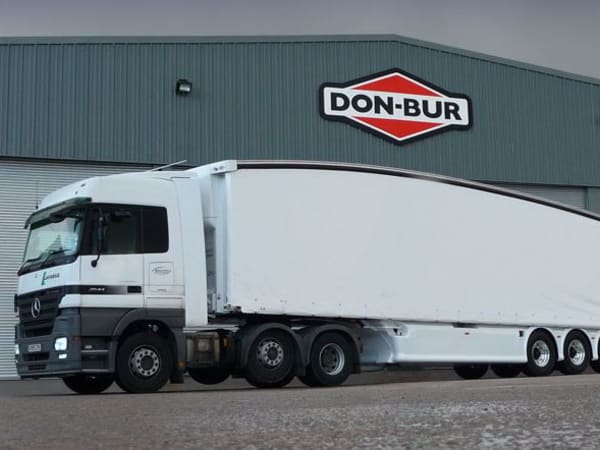
This radical trailer design comes from Don-Bur (Bodies & Trailers) Ltd. of Staffordshire, U.K. It boasts a 10- to 11-percent improvement in fuel efficiency. The curved roof improves airflow over the body, while the fairing package underneath minimizes disruption from the undercarriage and cross members. Sure it's expensive, but with fuel in the U.K. running at about $8.00 a gallon in U.S. dollars, there's still tremendous savings to be had.
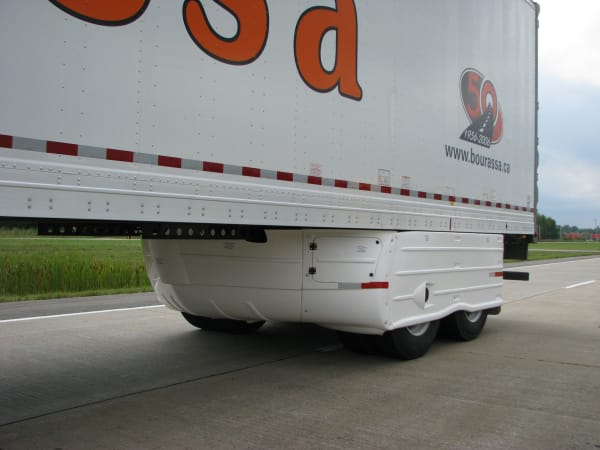
Trailer bogey fairings smooth airflow around the trailer undercarriage. Manufacturers of various devices claim a 4-8.5% improvement in fuel economy.
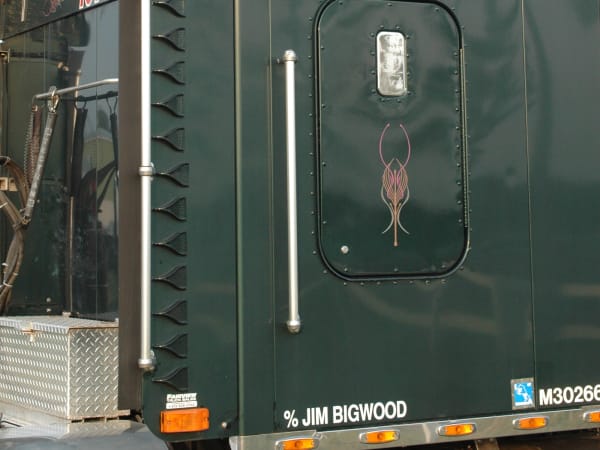
Vortex generators are said to be effective in smoothing airflow around gaps and around the back of the trailer. Improvements are relative to the cost of the product. They are inexpensive but are reported to produce measureable results.
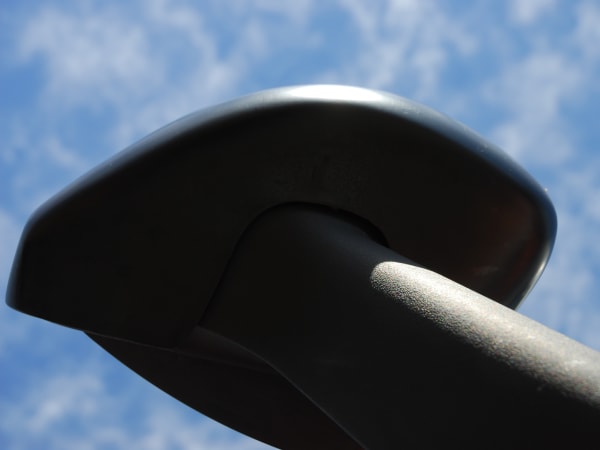
This photo is the underside of a Cascadia aerodynamic mirror, looking skyward (front at the top). Note the three distinct frontal curves to the leading edge of the mirror. Freightliner says the mirror was several months in design and testing, trying to achieve minimum aerodynamic obstruction while not increasing wind noise in the cab or creating a vacuum behind the mirror that would cause road spray to cling to the glass.
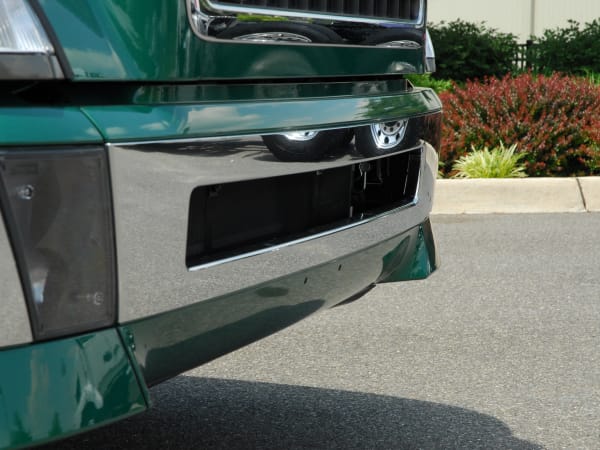
Volvo's approach to the same challenge involves two opposing angles to the lower edge of the bumper. The corner sections are flared out to sculpt airflow around the wheel and the fender opening, while the center section is tapered inward to move the air more smoothly under the engine compartment.
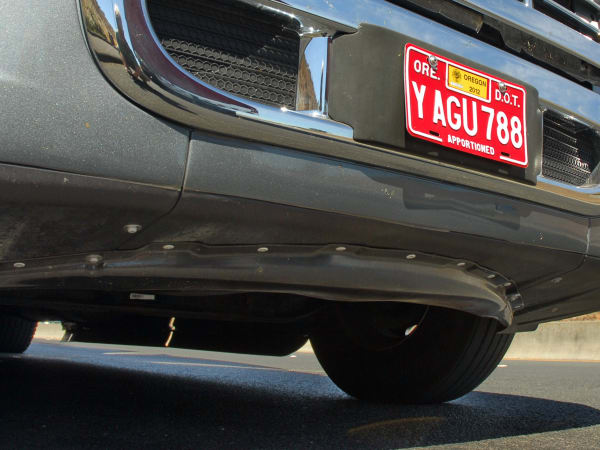
The ridge under the bumper on Freightliner's Cascadia is an air dam designed to improve air flow under the truck. Notice how small it is, relative to the frontal profile of the truck? It's not what you'd call a dramatic change, but every little bit helps these days.
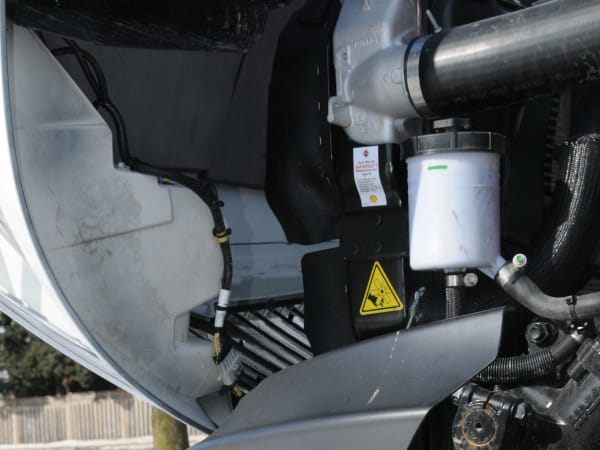
You see variations on this theme on a number of different trucks. The black plastic fixture is a gap filler between the top of the bumper and the bottom of the hood on Navistar's ProStar+ models. Air that manages to enter the engine compartment through the gap between the bumper and the hood causes unnecessary drag. Eliminating that source drag is as simple--relatively speaking--as closing the gap.
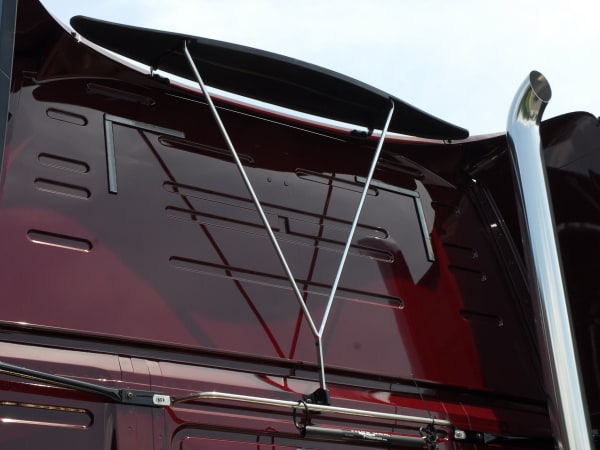
Air flow over the top of the tractor can still become trapped in the gap between the trailer. Volvo offers an adjustable trim-tab to optimize airflow between the sleeper roof and the trailer.
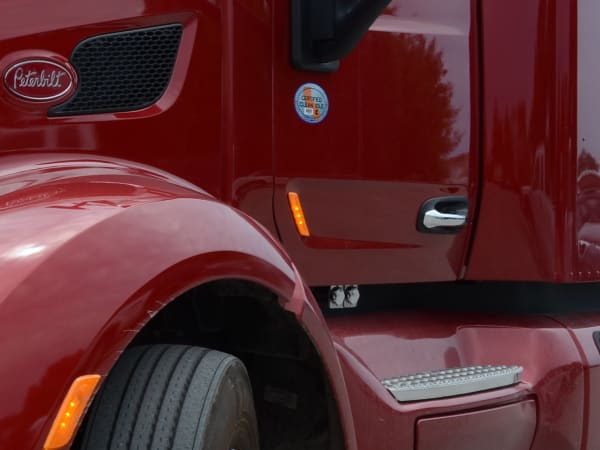
The use of transition panels and recessed door handles is common now, as manufactures seek to smooth the frontal and side profiles of their vehicles. The old external air filter canisters have all but disappeared, replaced by stylish intake vents on the hood. Signal and marker lamps are integrated into body panels and big square battery and tool boxes now sit beneath rounded body panels.
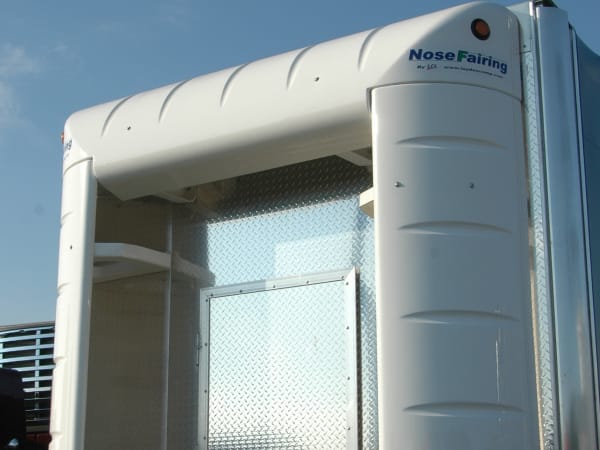
Trailer nose fairings help fill the gap between the tractor and trailer. Often ignored and a major source of aerodynamic drag, the nose fairings are said to be most effective in crosswind situations.
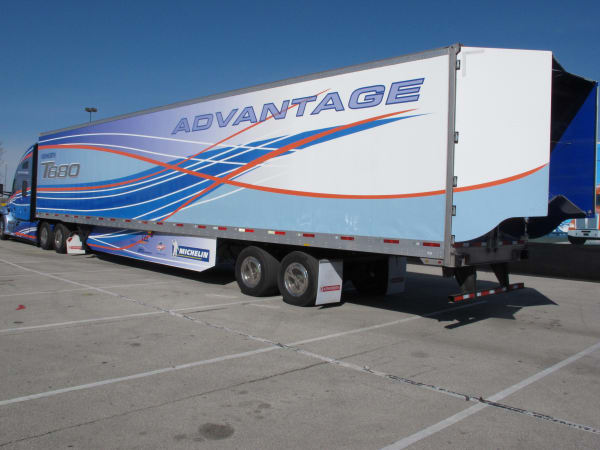
Kenworth's Advantage tractor-trailer is a working concept vehicle engineered to produce optimum aerodynamics. This photo shows three enhancements to the basic vehicle design: wheel covers, trailer side skirts and an advanced drag reduction device called a "boat tail" from ATDynamics. Stacking certain technologies often produces better results, but the total improvement achieved won't necessarily be the sum advertised by the product suppliers.