




A Mack Snow Plow Built for the Frozen North [Photos]
Down in the lower 48, we've had a pretty tough winter, but way up in Alaska cold temperatures and heavy snow are a fact of life. Equipment Editor Jim Park shares more photos from Valdez, Alaska, where he got a front row seat to a documentary shoot of a Mack Granite snowplow specially built for Alaska's tough winters. Photos: Jim Park
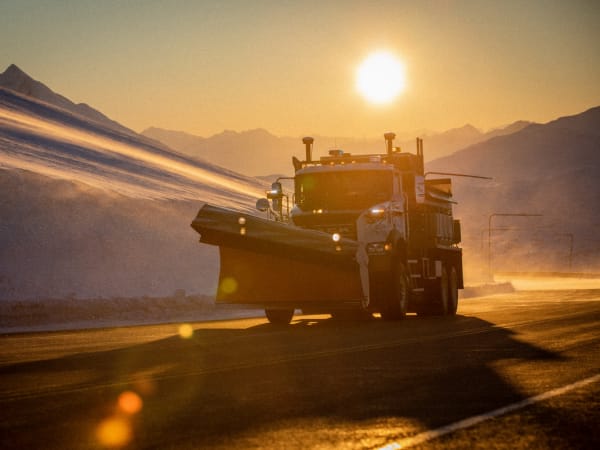
One of the Mack Granite plows driving over Thompson Pass at sunrise.
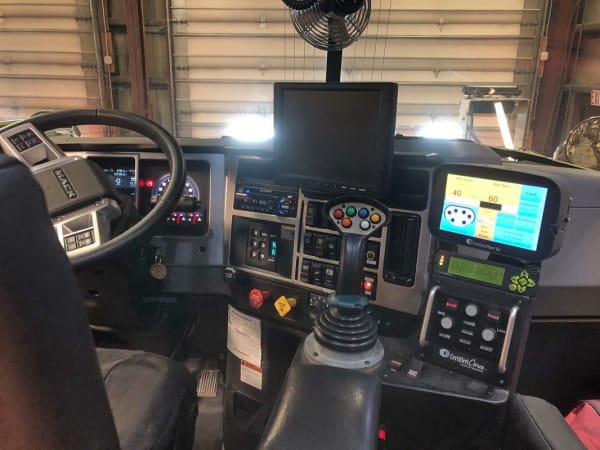
The control consoles inside the Granite cab. The GPS controls are on the lower right, the joystick controls the plow blades and the sand spreader.
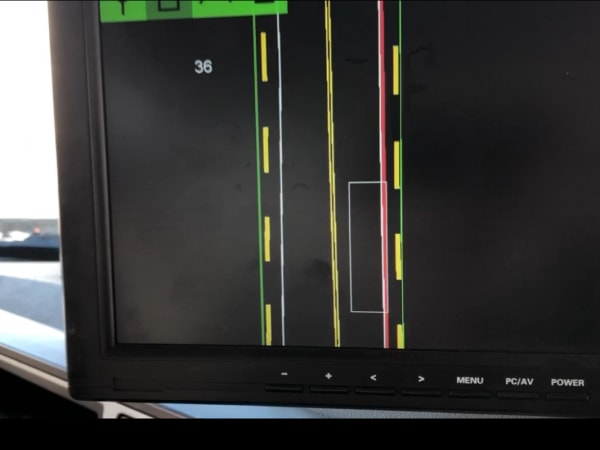
This is the display the driver sees from the GPS devices. The white box represents the truck. The dotted yellow lines are the outside lane markers and the solid yellow line is the center line of the road. The red line indicates the driver has strayed over the right-hand lane marker.

Alaska DOT snow plow driver, Tavis Chaffin. "It only takes 30 minutes to make a lap [around the pass], but there's anywhere from an inch to six inches on the road by the time you get back to where you started. Sometimes we battle upwards of 10 inches an hour and that's when it gets fun."
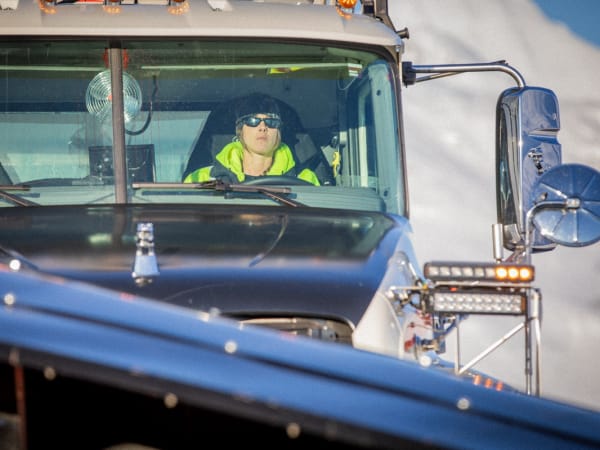
Moana Bradshaw at the wheel of the DOT's newest Mack Granite snowplow.
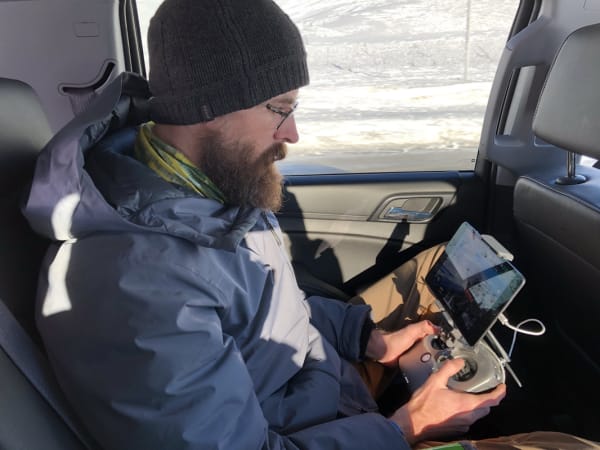
Drone pilot and audio technician, Michael McQueen, steers the drone from the warmth of the chase car. Outside temps that day were about -15 F.
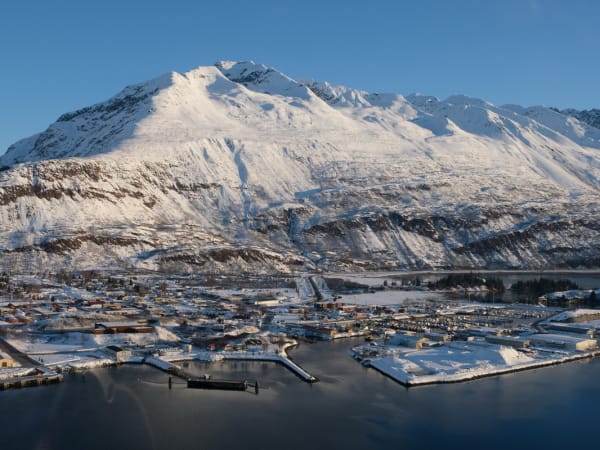
The town of Valdez, as seen from the air. A former Gold Rush town, Valdez is located at the head of a fjord on the eastern side of Prince William Sound -- the northernmost port in North America that is ice-free year-round. Today, it's a commercial fishing port, freight terminal and the southern terminus of the Trans-Alaska Pipeline System. The town is surrounded by the heavily glaciated Chugach Mountains and sits at 61-degrees north latitude.
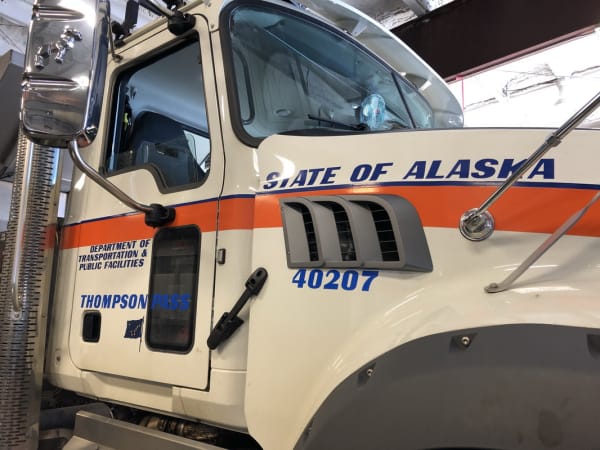
Down in the lower 48, we've had a pretty tough winter, but way up in Alaska its a fact of life. Equipment Editor Jim Park shares more photos from Valdez, Alaska, where he got a front row demonstration of a Mack Granite snowplow specially built for Alaska's tough snowy season.
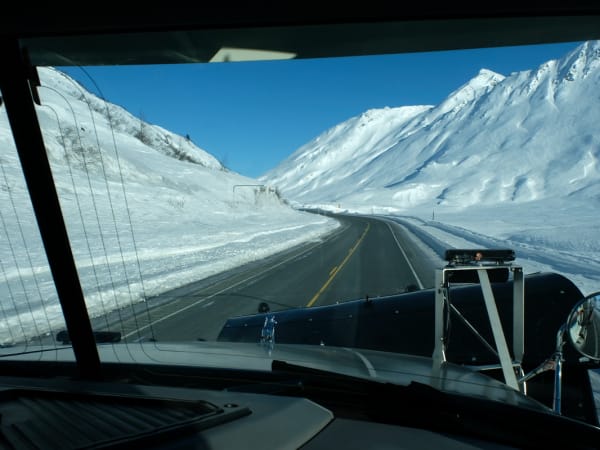
The view from the right-hand seat. The driver's view of the right-front side of the truck is limited, but they manage to run the plow just inches from the guard rails. Those folks are good.
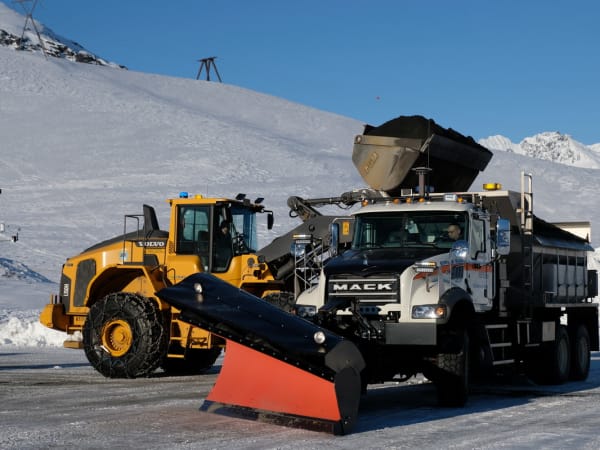
The trucks carry a brine de-icer and a mix of sand and salt. It's about 3% salt and that's just to keep the sand from freezing into a giant lump.
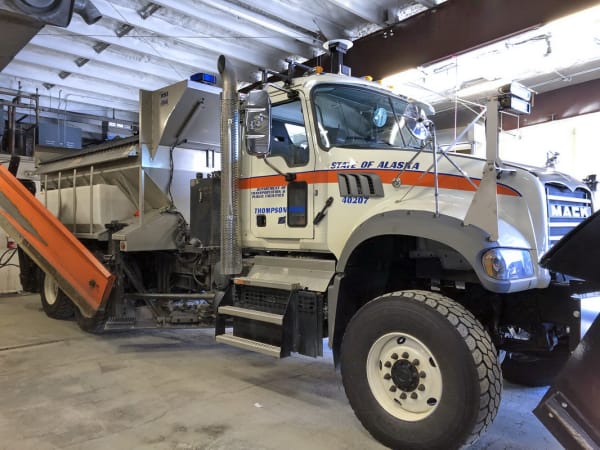
While difficult to see in the photo, this truck is equipped with a belly blade as well as the main plow and a wing. Getting the belly blade onto the truck took a lot of extra engineering because of the placement of the transfer case for the front-wheel drive.
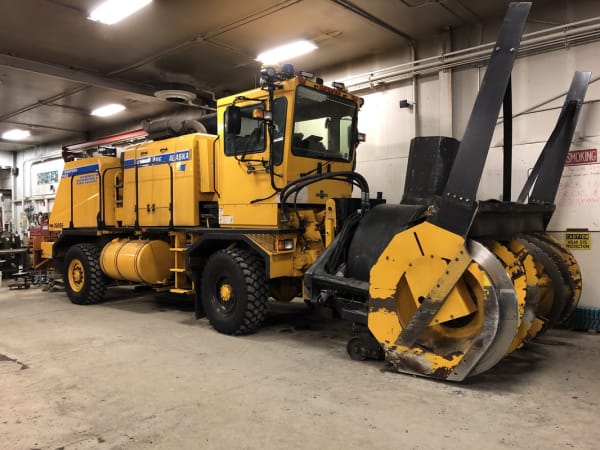
The snow-blowers are used to clear snow banks dig into areas where the plows can't go. This machine has a 600-hp engine to drive just the auger and impeller. They are the most expensive pieces of equipment to operate. Trucks are the most efficient.

Alaska DOT snow plow driver, Moana Bradshaw. "There are usually two of us on shift at night, and we go out in the trucks. One of usually goes one direction, one of us goes the other. We have 60 miles of [road] to take care of, and we usually overlap in the center, in the gap, because that is where all the action happens."
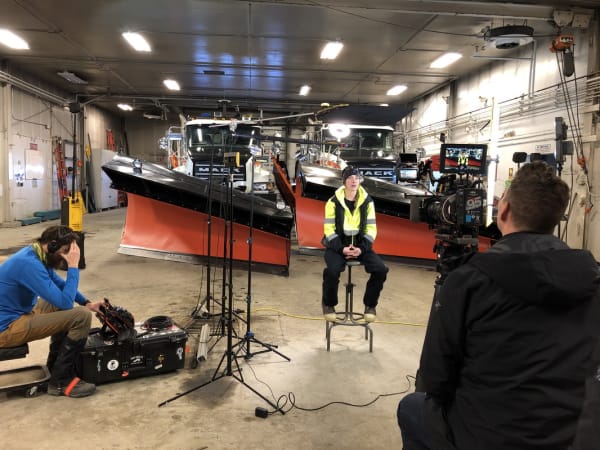
The Mack video crew is set up in the DOT garage to interview snow plow driver, Moana Bradshaw.
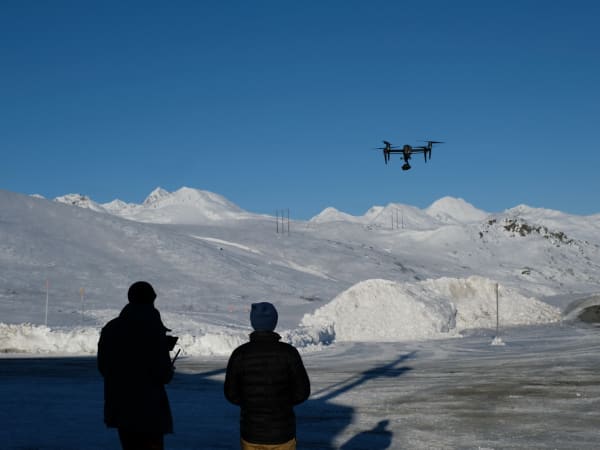
Flying the camera drone is a four-handed operation. One operator keeps the drone where it's supposed to be while the other pans, tilts and focuses the on-board camera.
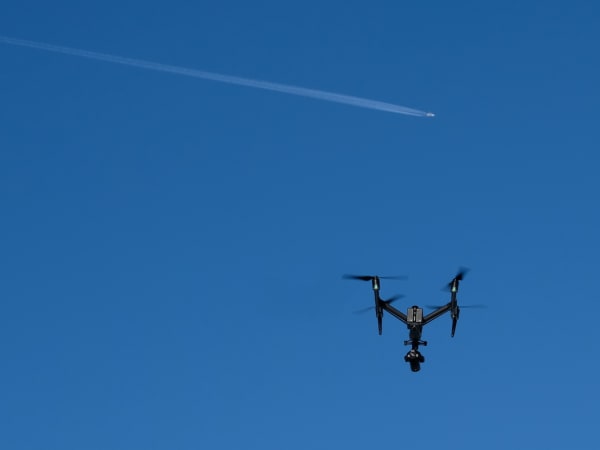
While camera drone hovers over the truck, an international flight soars overhead. These flights are to and from Japan, Korea, China/North America. Alaska is about equidistant from New York, Frankfurt and Tokyo. There are three or four flights every hour going east and west bound.
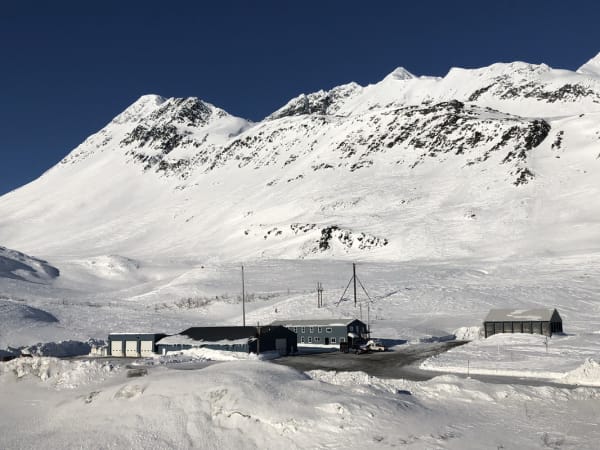
The Alaska DOT maintenance shed at Thompson Pass is nestled in a valley a few hundred yards off the highway. Thompson Pass is a 2,700 foot-high gap in the Chugach Mountains northeast of Valdez. It is the snowiest place in Alaska, recording 500 inches of snow per year on average. In the winter of 1952–1953, 974.1 inches of snow fell—the most ever recorded in one season at one location in Alaska.