




The Many Trucks of CES 2019 [Photos]
While CES in Las Vegas is anything but a truck show, there’s a growing presence of automotive and transportation-related technology on display. There were literally dozens of self-driving cars and perhaps a hundred vendors of related technology at the show, there were just a handful of trucks. Still, there attracted their share of attention — from a curious public and from associated engineering and tech people. It’s safe to say trucking has broken the ice at CES. I’ll be we see a lot more wheels on the ground there in coming years. Photos: Jim Park
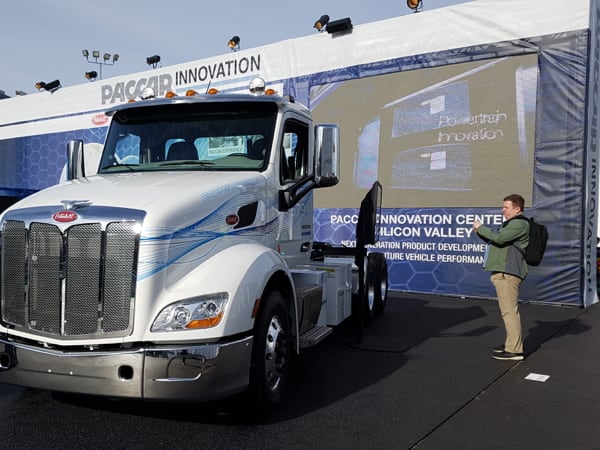
Peterbilt's Model 579EV features a mid-ship motor rated for 240 kW continuous output with peak power of 320 kW. The curb weight of the truck is between 10,000 and 20,000 pounds, depending on the battery capacity, and has a range of 130 miles and charging time of four hours.
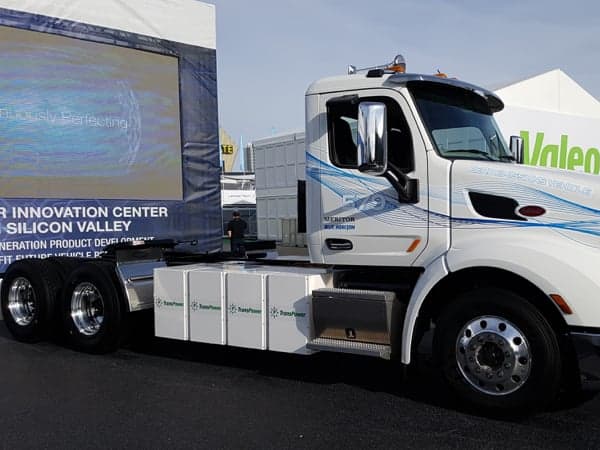
Peterbilt's Model 579EV is powered by lithium nickel manganese cobalt batteries with 320 kWh storage capacity. Power for the subsystems such as power steering, air compressor and 12-volt accessories come from the main batteries.
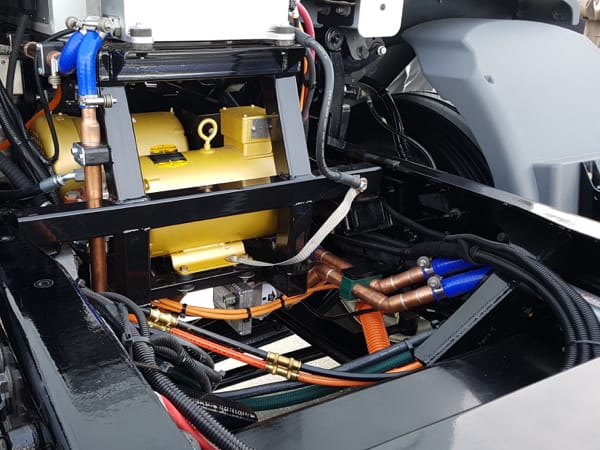
Space formerly occupied by the engine on the Model 220 EV now houses electric motors for the air compressor, power steering pumps and other subsystems.
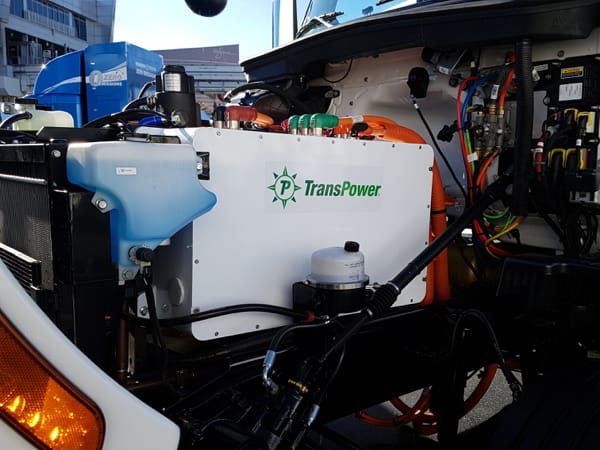
Under the hood of the Peterbilt Model 579EV sits the TransPower power electronics system controllers and some of the components you'd expect to find under the hood, such as a power steering pump, windshield washer bottle, etc. Two drive motors sit under/aft of the cab and are mated to an automated manual transmission. It uses conventional drive axles.
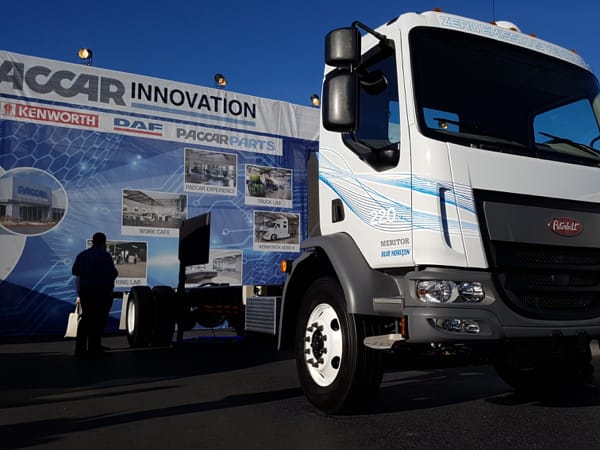
Peterbilt's Model 220EV has a GVWR of 26,000 pounds and is driven by a 250 kW motor. It has an estimated operating range of 100 miles and 148 kWh of energy storage capacity. Curb weight is between 10,000 and 20,000 pounds depending on the battery capacity and recharge time to 80% is one hour.
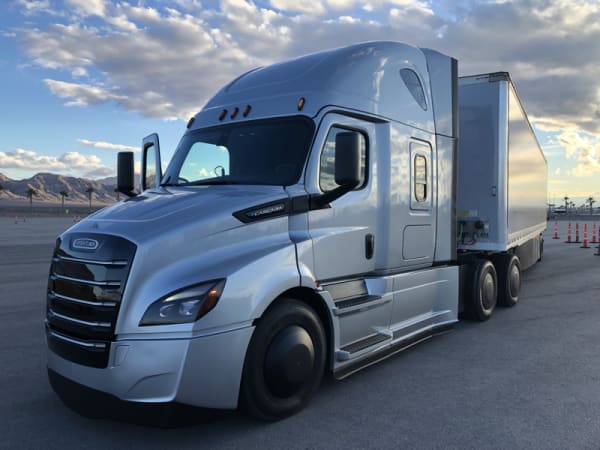
Known now as the eCascadia, Daimler's first offering to the Class 8 BEV market features a 550-kW motor with peak output of 730 hp. It has a charging time of 90 minutes to 80% and an advertised range of 250 miles. Daimler's first production units will be day cabs put into field testing in a port drayage operation.
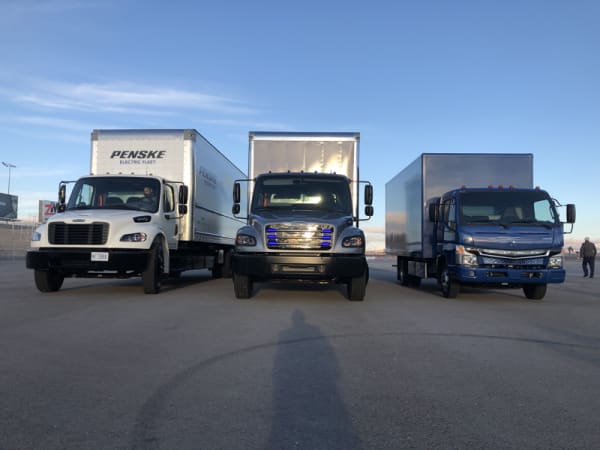
Daimler's Innovation Fleet included battery electric versions of the M2, Fuso Canter and Cascadia models. The company says medium-duty will lead the roll-out of BEV because the application is best suited to battery storage capacity and operating range.
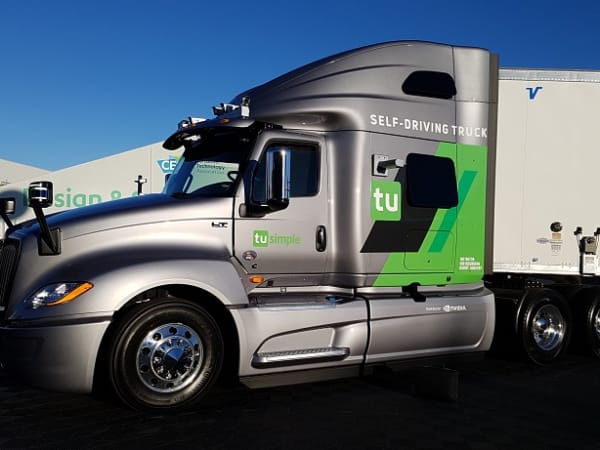
Startup autonomous vehicle developer TuSimple had one of its test fleet trucks on display at CES. The company already has several trucks in revenue service. It currently operates at the equivalent of SAE Level 4, but for development purposes there's a driver in the seat at all times.
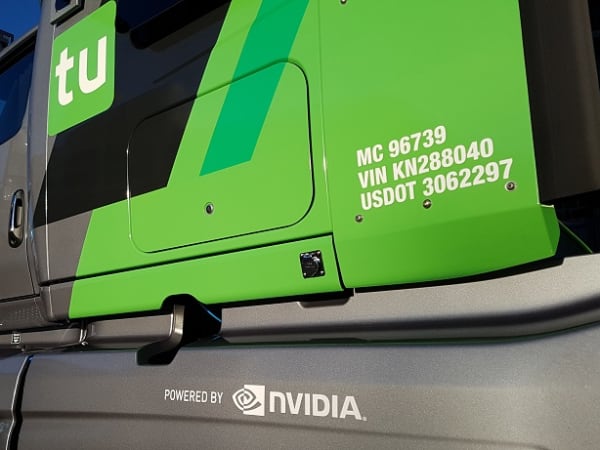
TuSimple says its autonomous truck is capable of navigating secondary roads and making left turns, meaning it can operate from distribution centers located close to highways.
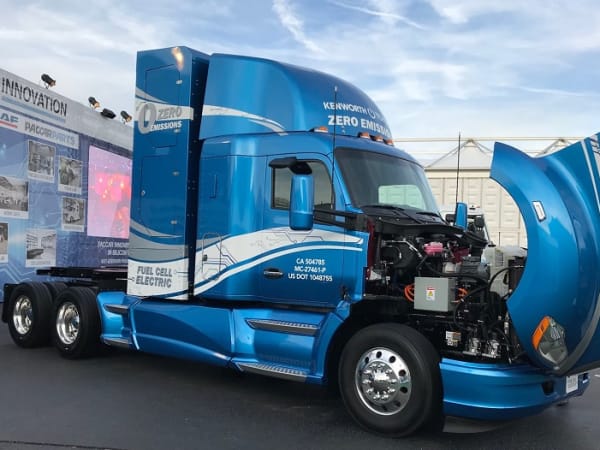
The Kenworth truck uses two Toyota Mirai fuel cell stacks and a battery generating enough energy for the truck’s electric drive system to deliver 670 horsepower and 1,325 pound-feet of torque. (Previously, Kenworth had demonstrated a hydrogen fuel cell truck powered by a Ballard fuel cell.)
Photo courtesy Kenworth
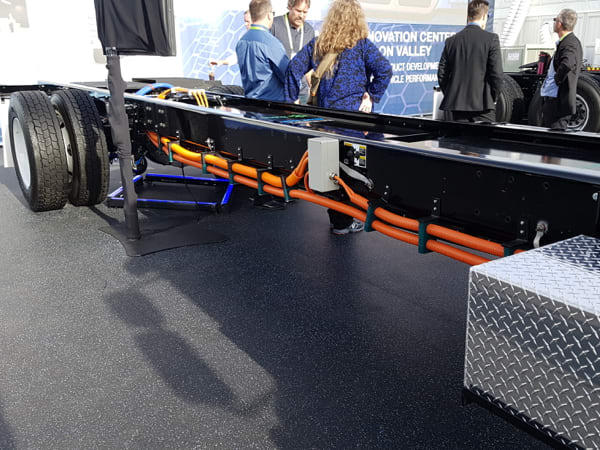
High-voltage cable supplies power from the frame-mounted batteries to the axle-mounted motors on the Peterbilt Model 220 EV. The frame and back of cab are "clean" so body builders will not have to make any adjustments to their installation processes.
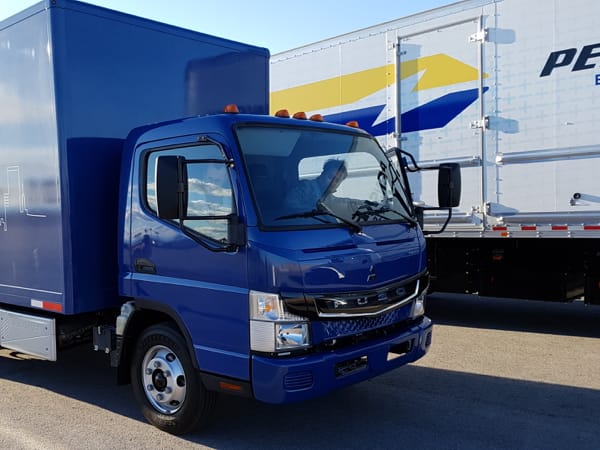
The Fuso eCanter is Daimler's first all-electric production truck. It was unveiled in New York City in 2017. There are now about 100 of these trucks operating in the U.S.
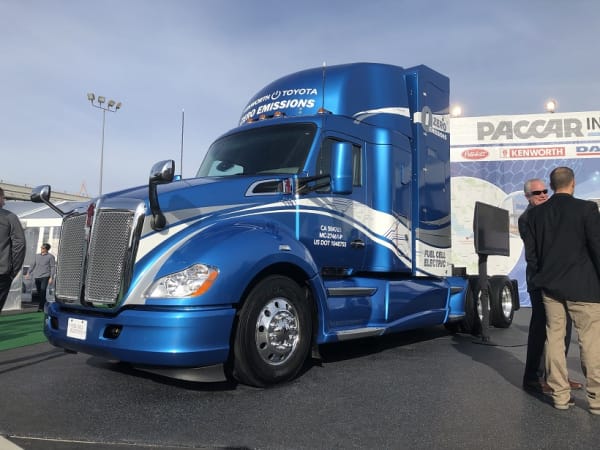
Kenworth and Toyota are collaborating to develop 10 zero-emission Kenworth T680s powered by Toyota hydrogen fuel cell electric powertrains. This collaboration is part of a $41 million Zero and Near-Zero Emissions Freight Facilities grant preliminarily awarded by the California Air Resources Board (CARB), with the Port of Los Angeles as the prime applicant.