




Take a Photo Tour of an LNG LIquifaction Plant
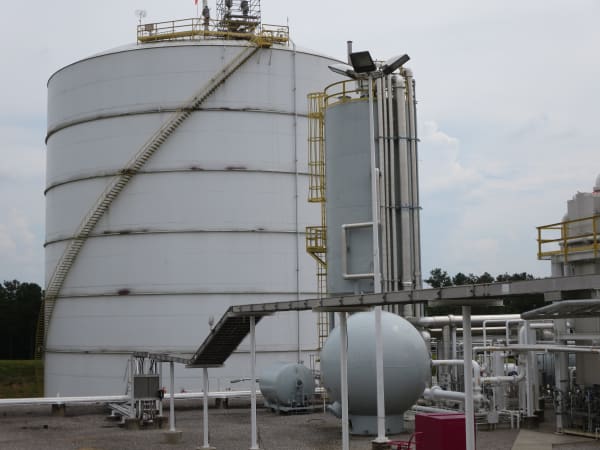
Pivotal LNG's Trussville, Ala., facility can hold nearly 5 million gallons of LNG. There are 151 steps to the top. Photo by Deborah Lockridge
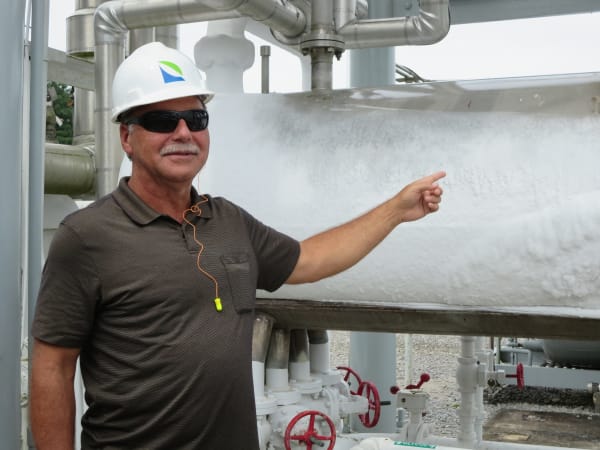
Plant Manager Ed Davis explains the final step in the liquifaction process. This tank is frosted even when the ambient temps are in the 90s. Photo by Deborah Lockridge
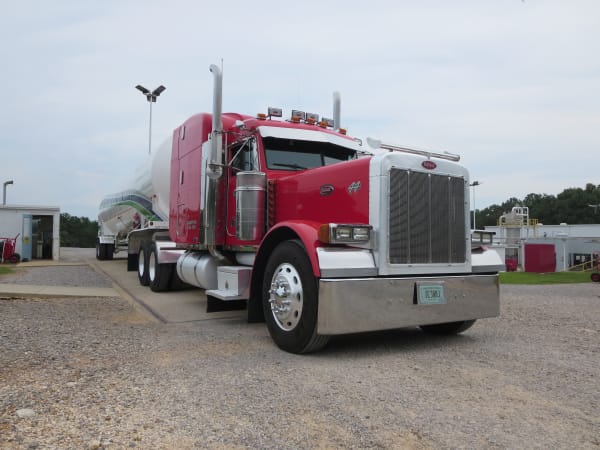
Trucks are weighed coming and going. Pivotal uses several different carriers; this one belongs to Georgia-based Gooch Trucking, which has about 30 trucks. Photo by Deborah Lockridge
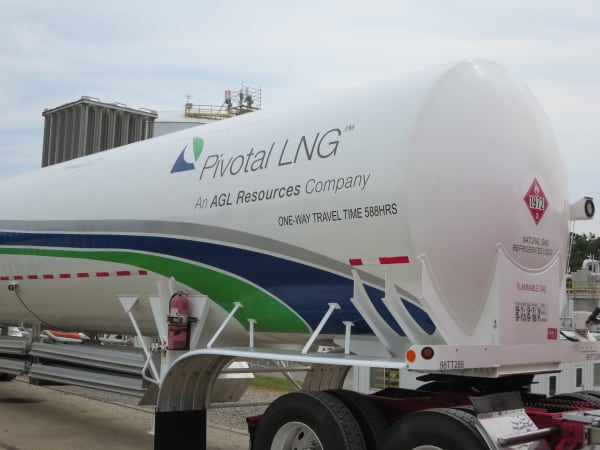
The special cryogenic tankers will keep the LNG liquified for a maximum one-hour travel time of 588 hours. Photo by Deborah Lockridge
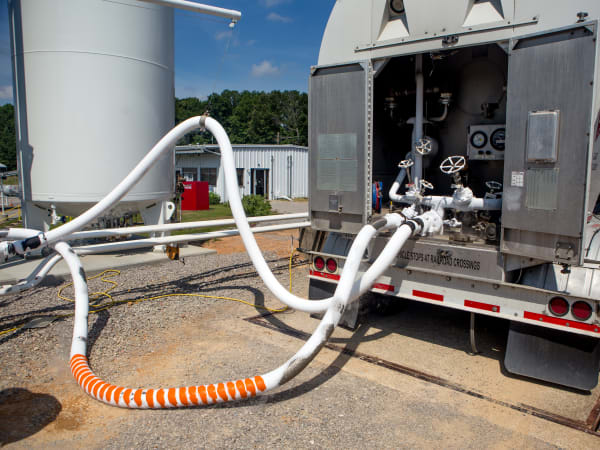
It takes about 80-90 minutes for the entire loading process, including hooking up the hoses, pressurizing, weighing the trailer, etc. Photo by Pivotal LNG
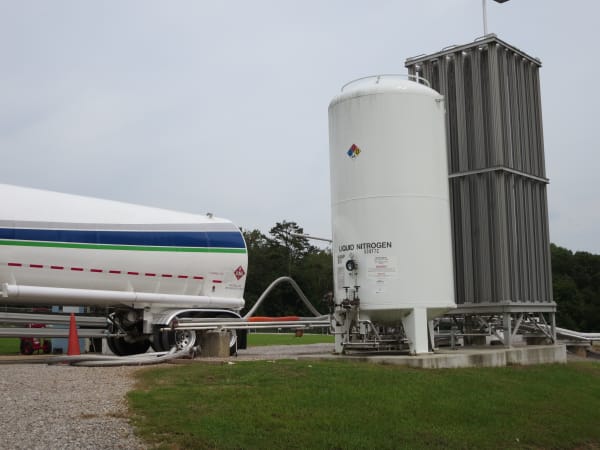
The tank of liquid nitrogen and vaporizer are used during the last stage of loading to push the last bit of LNG into the trailer. Photo by Deborah Lockridge
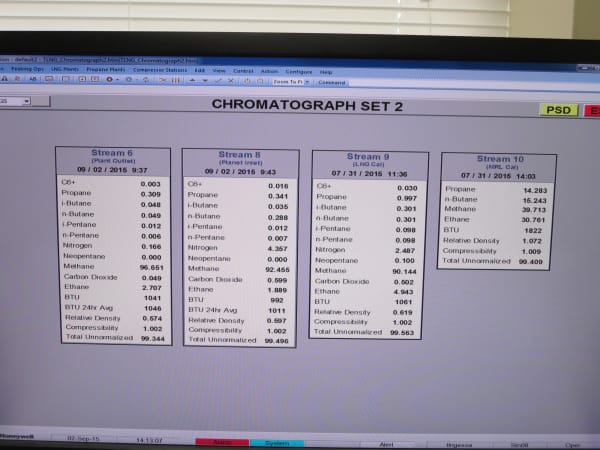
The process of liquifaction removes impurities that come along with pipeline gas, such as moisture, propane, and heavy hydrocarbons such as hexane. Photo by Deborah Lockridge
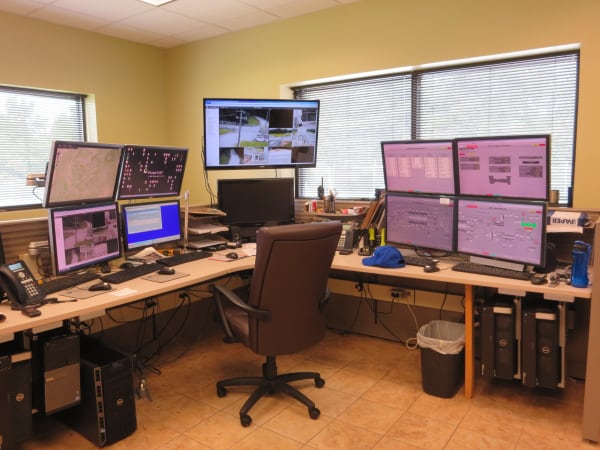
Operations at the Trussville plant are overseen with the help of sophisticated computer equipment. Photo by Deborah Lockridge
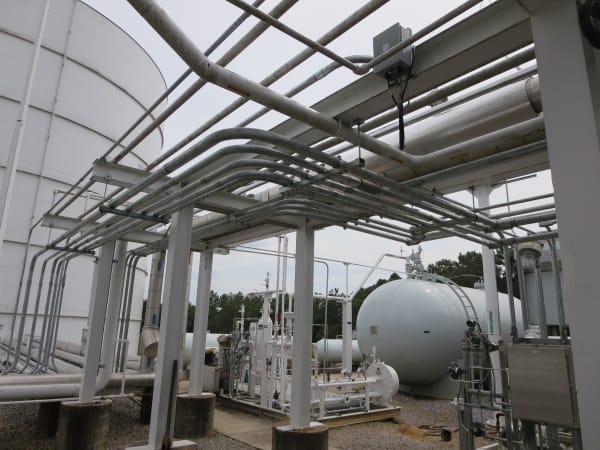
Pivotal's LNG plant strips out contaminants such as CO2 and heavy hydrocarbons through a process similar to distillation. Photo by Deborah Lockridge
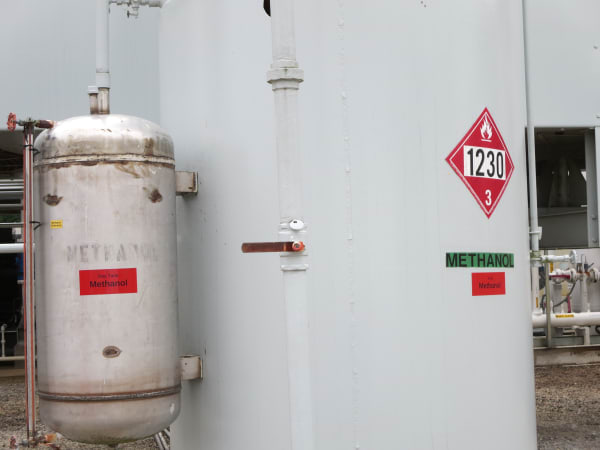
Methanol is added to the pipeline gas to absorb moisture. Then the gas is refrigerated to 115 below zero, a temperature where the heavy hydrocarbons turn into liquid and just drop out. The gases left go out the top and get cooled to 185 below. Photo by Deborah Lockridge
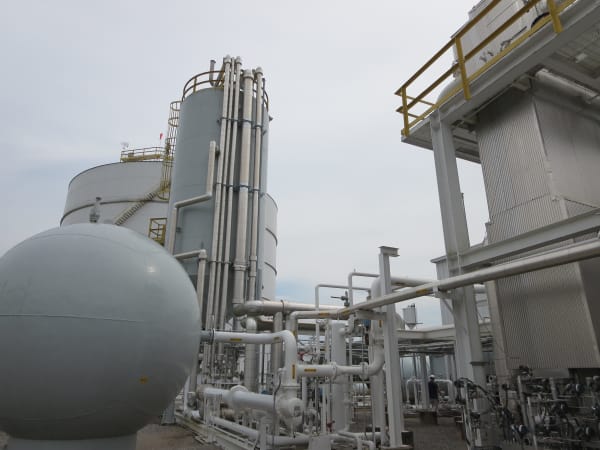
The tall vessel near the center of the photo is the final step in the liquifaction process, putting the natural gas under 400 pounds of pressure and turning it to liquid. Photo by Deborah Lockridge
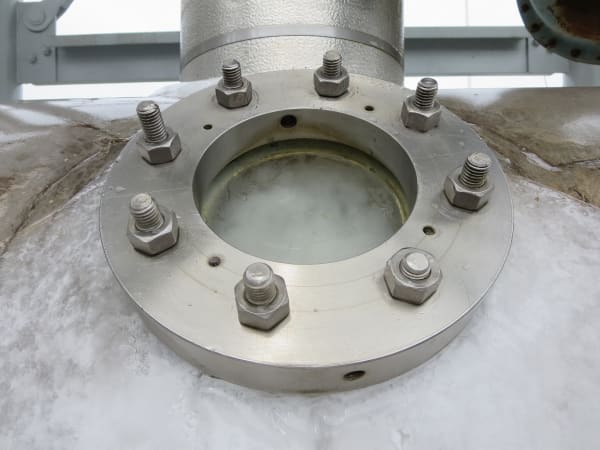
At the bottom of that tall vessel, the carbon dioxide settles to the bottom like snow (which could be seen through this viewport) and gets turned into vapor. Photo by Deborah Lockridge
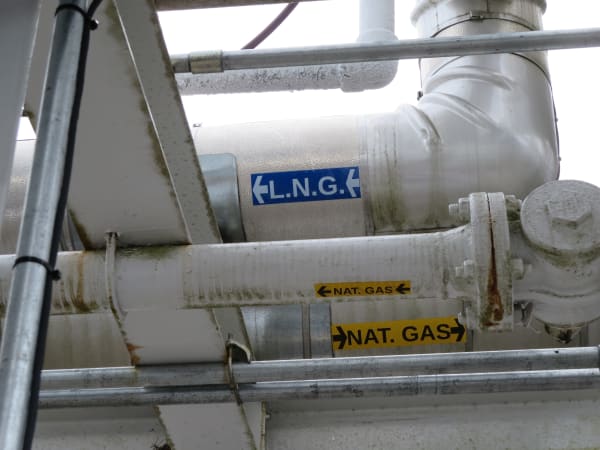
The LNG is then pumped into the big storage tank. Photo by Deborah Lockridge
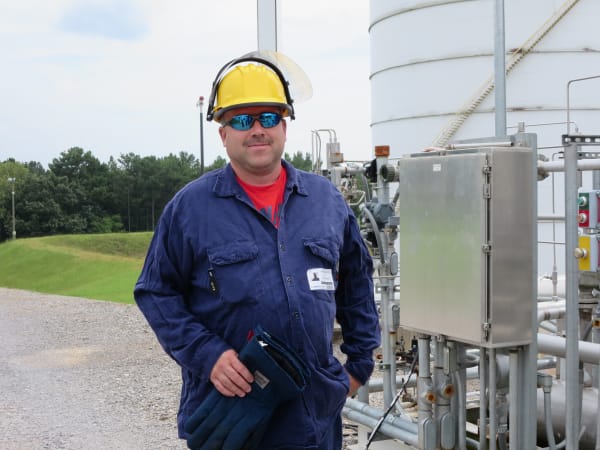
Nathan Wilcox, a driver for Gooch Trucking in Blairsville, Ga., wears the protective equipment he uses to handle LNG: face protection, gloves and a coverall. Photo by Deborah Lockridge
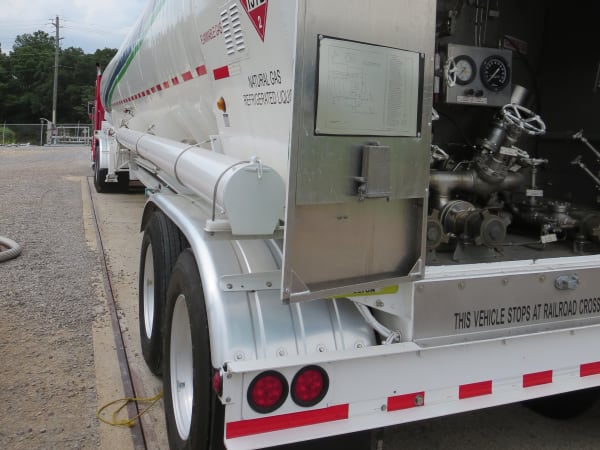
The cryogenic trailer actually consists of two tanks, much like a Thermos bottle. The inner one is made up of at least 9% nickel stainless steel, which is actually harder at 260 degrees below zero than it is at 70. Photo by Deborah Lockridge.
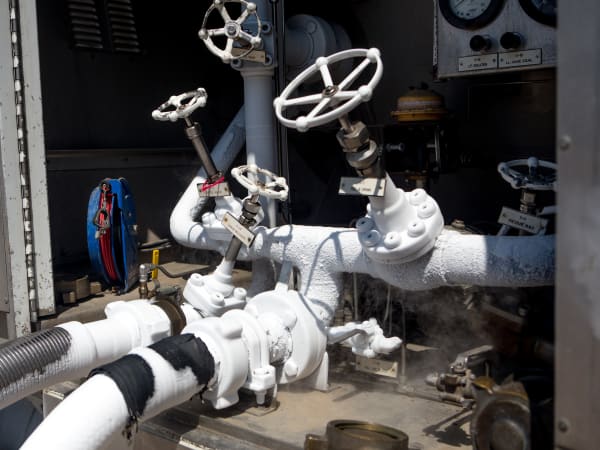
One of Pivotal's six LNG trailers being loaded. Some carriers have their own trailers. Photo by Pivotal LNG
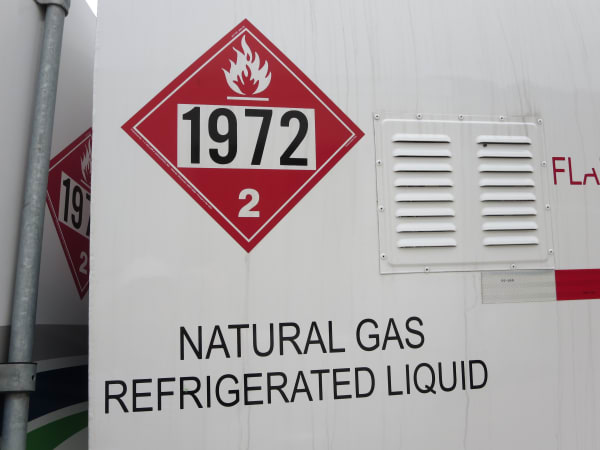
The cryogenic tankers have many safety features. Photo by Deborah Lockridge
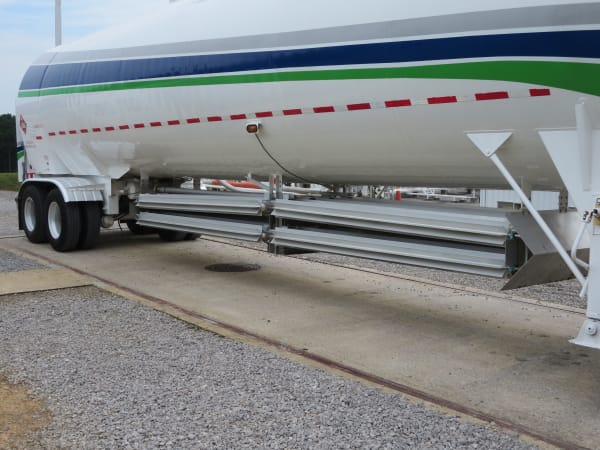
The coils under the trailer are used in offloading. Photo by Deborah Lockridge