




How a Volvo VN is Built
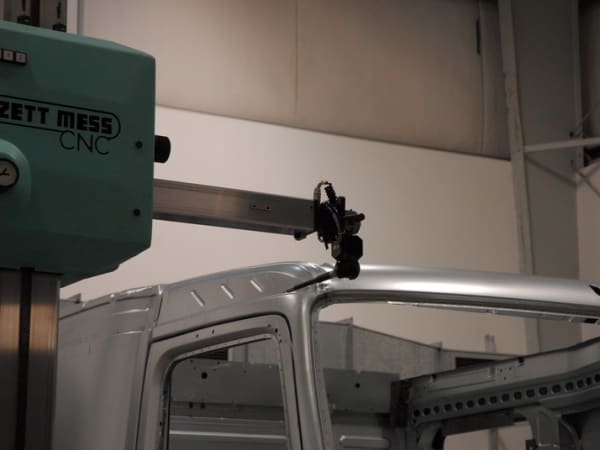
3. For quality control purposes, every so many cab assemblies are pulled from the line and measured by instruments to ensure consistency in the process. The probes measure to the millimeter.
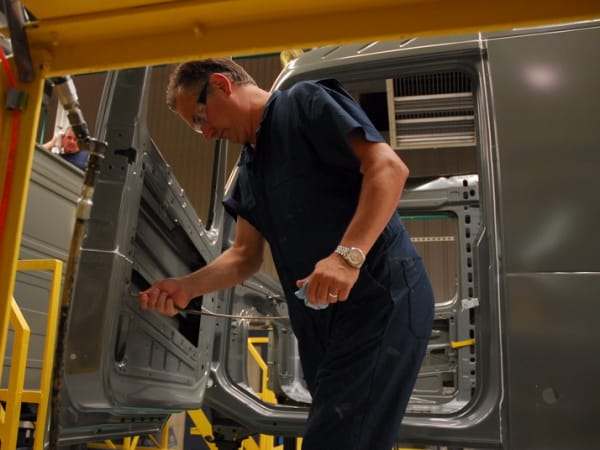
4. After the basic cab is assemble, workers fit up some interior structures and panel before the cab is primed and painted.
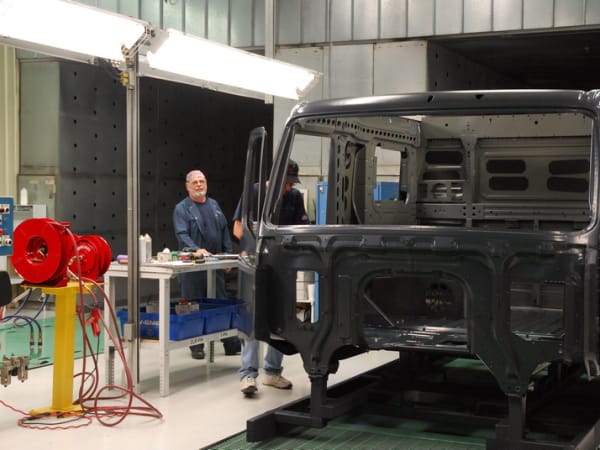
5. Workers add more interior and exterior body panels to the primed cab before it is sent to the paint booth.
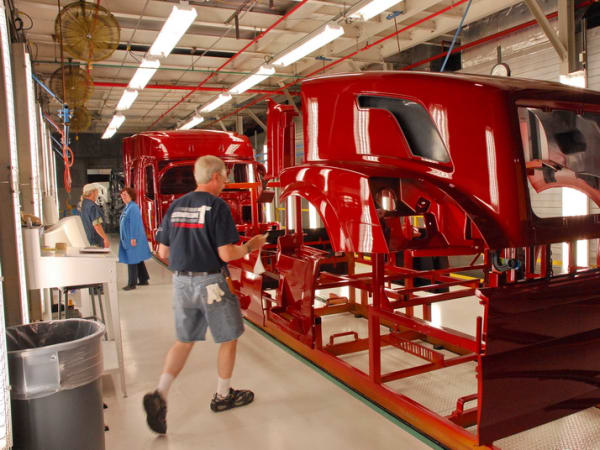
6. All the painted parts that will eventually become a single truck go through the paint booth at the same time to ensure consistency in the color. Panels are fitted onto a jig that leads the cab through the robotic paint sprayers.
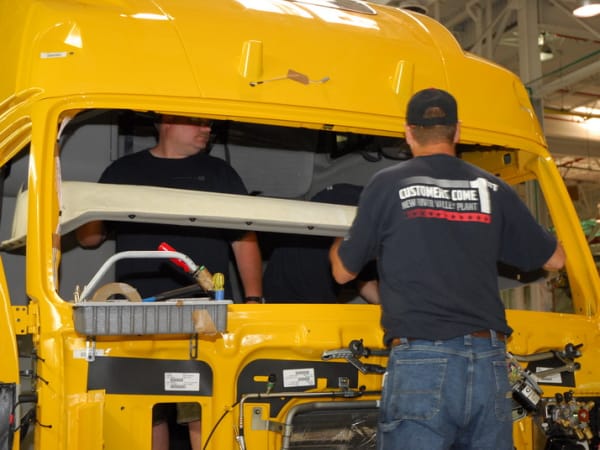
7. The structurally complete cab makes several stops where workers add interior and exterior components, roof linings, cabinets, etc.
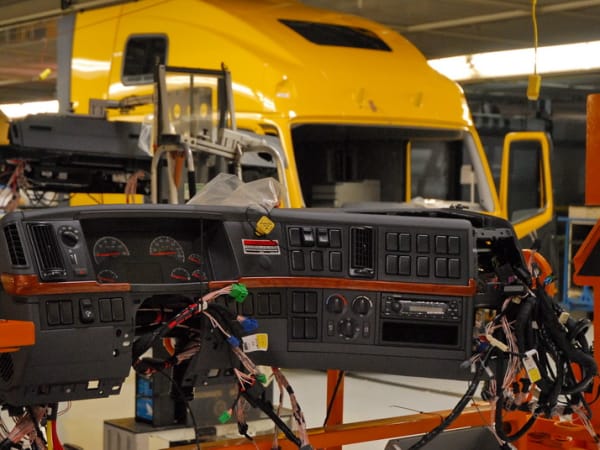
8. Dashboard assemblies that are pre-wired and configured to the customer's specifications are matched to the cab they ordered and installed before the windshield and other bit go in.
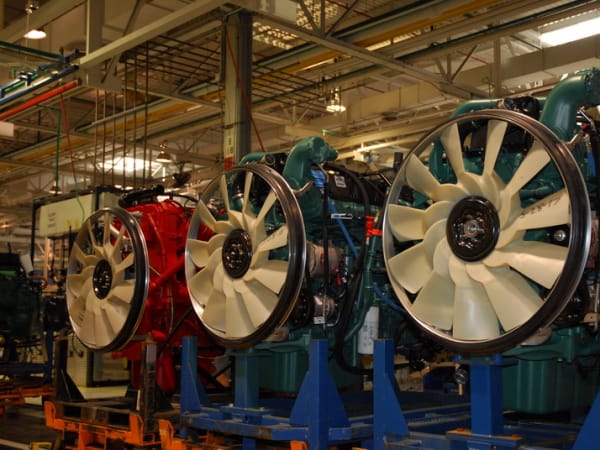
12. Prepped engines are staged and ready to drop into designated chassis, which will soon be united with their cabs.
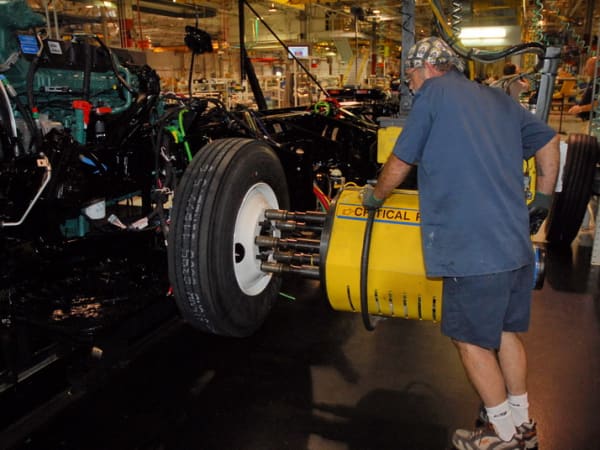
13. Wheels are installed and electronically torqued to the proper tightness by tools that measure torque and record the setting for quality control purposes. Most of the hoisting of heavy parts is done by machine to prevent worker injuries.
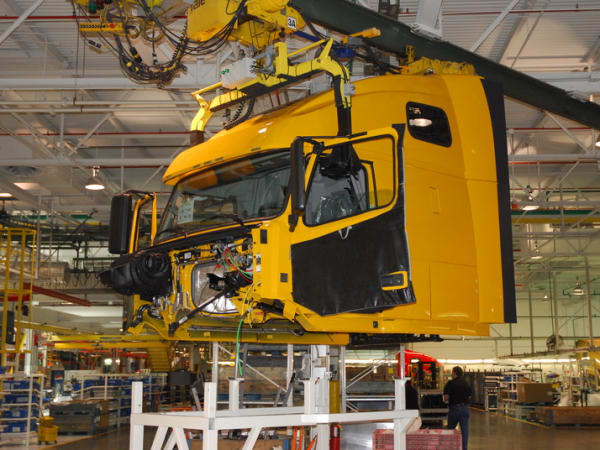
14. At a point where the two assembly lines merge, the cab is hoisted in the air and set gently down on the frame and is bolted in place. Electrical, air and liquid fittings are connected as the cab becomes one with the chassis.
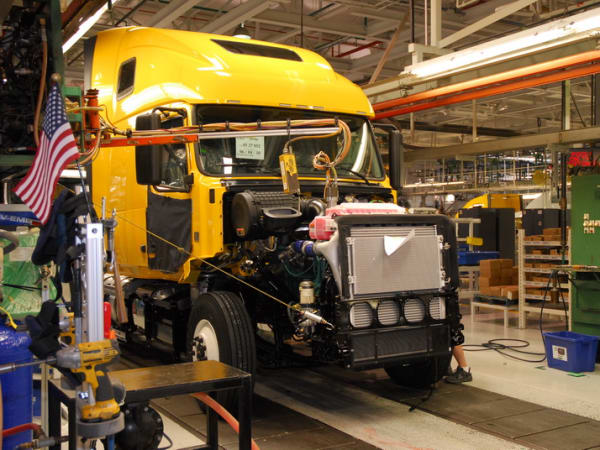
15. With the truck now rolling on its own wheels, tugged along by track-mounted dollies, fluids are added, final wiring and plumbing is done, and the engine is started for the first time.
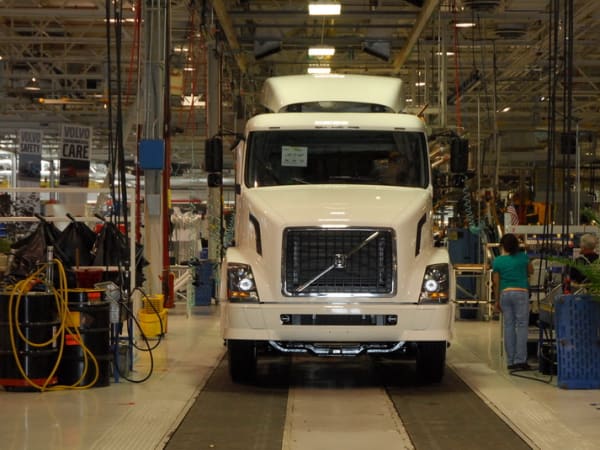
17. A finished truck is ready to drive off the assembly line under its own power and out onto the pre-delivery lot for staging and eventual delivery to the customer.
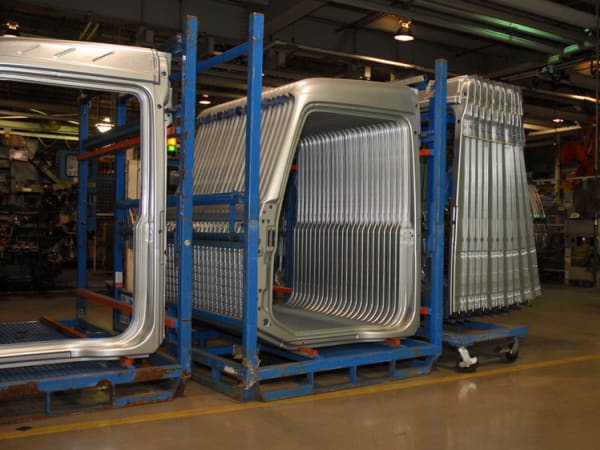
1. Body panels such as roofs, door surrounds, firewalls, back and side walls, etc. are staged at the beginning of the assembly line.
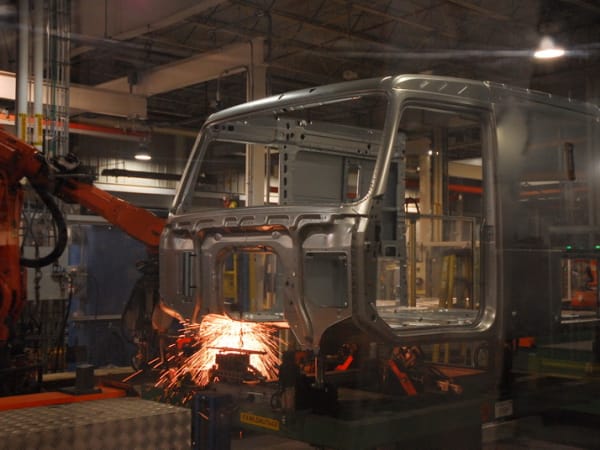
2. The basic cab structure is hand-mounted on a jig and sent into the welding area where to body panels are robotically spot-welded to the subframe of the cab.
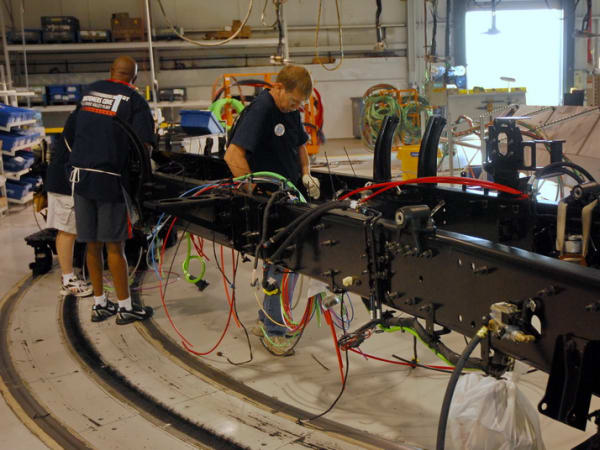
9. Way off in another part of the plant, workers begin assembling the chassis, beginning with a pair of frame rails and a few crossmembers Along the way, air and electrical lines woven into place, frame brackets are installed and the frame is prepped for painting.
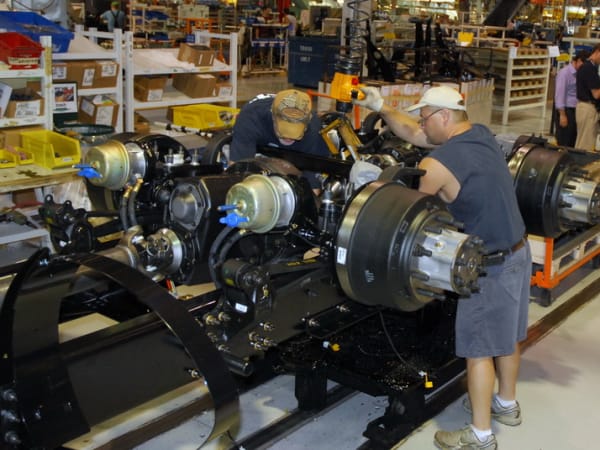
10. The axles and suspension are installed with the frame upside down so workers have better access to the parts they have to install and tighten down.
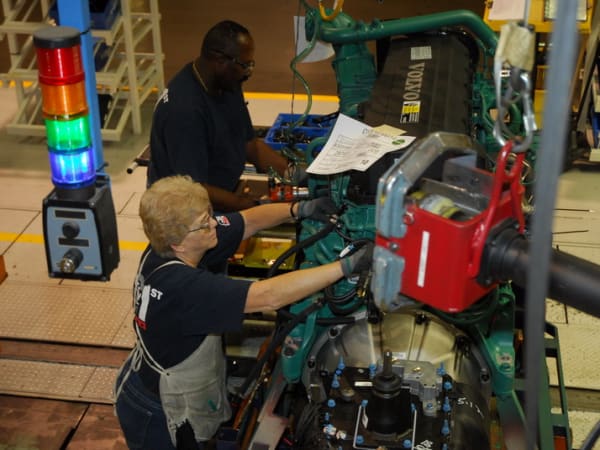
11. In yet another part of the plant, workers dress and prep the engines which are shipped in from Volvo's Hagerstown, MD engine plant or from Cummins in Jamestown NY.
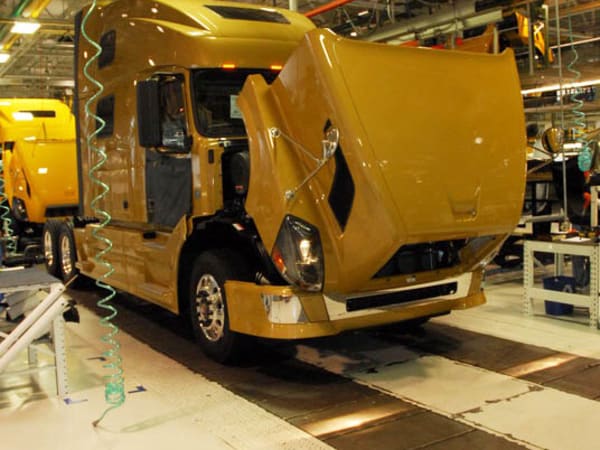
16. At the final inspection area, with the truck now about 98% complete, all systems are inspected and tested. If everything checks out, it turns left. If something isn't correct, it turns right and heads back into the plant for a remedy.