




States Agree to Remove 'Friction' From I-10 Corridor
Transportation leaders from California, Texas, Arizona and New Mexico have created a coalition supporting innovation along the Interstate 10 corridor to improve the safety and efficiency of the vital transportation route.
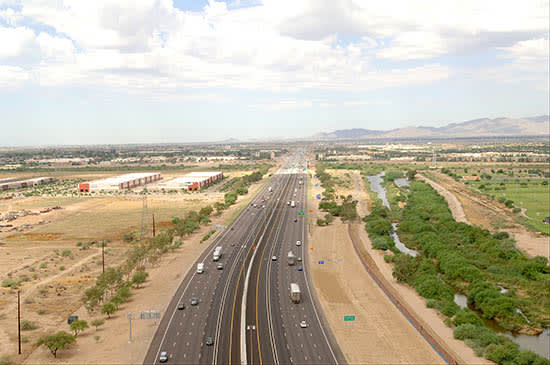
Photo: Arizona DOT
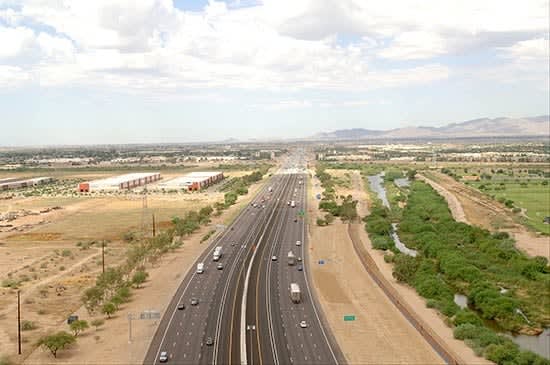
Photo: Arizona DOT
Transportation leaders from California, Texas, Arizona and New Mexico have created a coalition supporting innovation along the Interstate 10 corridor to improve the safety and efficiency of the vital transportation route.
An agreement establishing the voluntary I-10 Corridor Coalition, proposed by Arizona Department of Transportation director John Halikowski, was signed June 2. The initiative is modeled after a coalition involving 15 states that govern Interstate 95 that runs the length of the East Coast.
“The efficient flow of commerce in Arizona drives our state’s economic vitality,” said Halikowski. “This agreement with our transportation partners in California, New Mexico and Texas will work to build a reliable, friction-free I-10 corridor to support Arizona’s businesses and export industries.”
The partnership is designed to remove what transportation officials refer to as “friction” from the corridor, such as the variety of commercial vehicle permitting and inspection practices in each state along I-10. These different policies and regulations restrict the movement of goods, creating transportation inefficiencies.
The coalition will employ the transportation knowledge of each state collectively to enable resource sharing, joint testing and economies of scale. It will apply best practices to improve safety and efficiency along the corridor, improve freight movement, expand and coordinate the use of technology along the corridor and promote cooperative planning.
Interstate 10 is a major trucking route from the Ports of Long Beach and Los Angeles in Southern California to the rest of the U.S., transporting goods coming to the country from Asian markets all the way through Central Texas.
“We want to see the day when a truck or a non-commercial vehicle can travel the 1,700 miles between Los Angeles ports and Houston ports– safely, efficiently and without delay,” said Halikowski. “Someday we want the I-10 Corridor to be filled with truck platoons and connected vehicles, weigh-in-motion sensors and automated truck parking lots.”
More Fleet Management

Kodiak Lines Up Fleets for Driverless Trucking
An agreement for 75 trucks, a new Texas freight lane, and progress on safety validation move Kodiak closer to its planned driverless highway launch.
Read More →
ITS Logistics Settles Religious Harassment Case
The Nevada-based logistics firm agreed to pay more than $396,000 to settle a religious harassment charge involving an employee's Jewish identity.
Read More →
Your Trucks Are Busy. That Doesn’t Mean They’re Winning.
High utilization doesn’t always mean strong margins. Looking beyond the current load can help fleets make better dispatch decisions and get more value from each truck’s time.
Read More →
Why This Trucking Recovery Is Different
Freight demand remains sluggish, but rising costs and tougher enforcement have taken enough capacity out of the market to change the outlook for motor carriers.
Read More →
Platform Science Adds Dispatch and Safety Tools
Four additions to PS Fleet help fleets monitor loads, manage driver coaching, share truck locations and adjust video system settings.
Read More →
PrePass Intelligence Mines Fleet Bypass, Toll and Safety Data
PrePass Intelligence helps fleets measure bypass savings, flag potential toll overcharges, and spot suspicious transactions by combining data from separate systems.
Read More →
Motive Adds AI Agents for Fleet Operations
New tools automate follow-up on fleet data, from maintenance work orders to driver alerts, with two-way voice conversations planned for later this year.
Read More →
Can You Beat Our Trucking Trivia Challenge?
Test your truck knowledge with 19 trivia questions from Heavy Duty Trucking Exchange. Can you keep up with the fleet pros?
Read More →
BeyondTrucks Adds Rules Checks to Dispatch
New Compatibility Engine checks driver qualifications, equipment requirements and fleet policies before loads are dispatched.
Read More →
Diesel Prices Hijack Trucking’s Worry List
ATRI’s annual survey finds cautious optimism about freight, but diesel costs, litigation, and insurance continue to squeeze fleets. Drivers have different priorities on several issues.
Read More →