




Truck Weight-Limit Hike Rejected by House
An amendment that would have liberalized truck-weight limits was rejected on Nov. 3 by a vote of 187-236 during floor consideration of the highway bill by the House of Representatives.


An amendment to the House highway bill that would have let states set a 91,000-pound weight limit on highway rigs fitted with a sixth axle, similar to this truck built for operation in Maine, was voted down on Nov. 3.
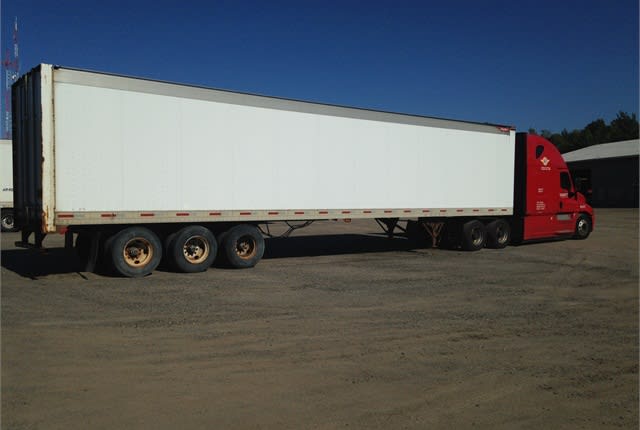
An amendment to the House highway bill that would have let states set a 91,000-pound weight limit on highway rigs fitted with a sixth axle, similar to this truck built for operation in Maine, was voted down on Nov. 3.
An amendment that would have liberalized truck-weight limits was rejected on Nov. 3 by a vote of 187-236 during floor consideration of the highway bill by the House of Representatives.
The measure would have allowed individual states to increase the federal vehicle weight limit to 91,000 pounds for tractor-trailers equipped with a sixth axle.
The amendment had been proposed by Rep. Reid Ribble (R-WI). It was based on the Safe, Flexible, and Efficient (SAFE) Trucking Act that he had introduced in September. The bipartisan amendment was co-sponsored by Reps. Collin Peterson (D-MN), David Rouzer (R-NC) and Kurt Schrader (D-OR).
According to Ribble, even though his amendment would have added up to 11,000 pounds to a truck’s GCW limit, the resulting vehicle would operate more safely because its mandated sixth axle would provide it with “stopping power equal to or better than that of a five-axle truck."
Ribble had noted when the SAFE Act was introduced that his proposal was written based on DOT safety and road wear data “to ensure that truck stopping times and pavement wear are as good or better than our current trucks.”
The Coalition for Transportation Productivity, which represents nearly 200 manufacturers, shippers, carriers and allied associations, blamed the amendment’s failure on intense lobbying by the railroad industry.
“The rail industry’s campaign to block truck productivity at any cost carried the day, as members of Congress were confronted with an astounding amount of misinformation about the SAFE Trucking Act,” CTP Executive Director John Runyan said in a Nov. 4 statement.
He added that the amendment’s defeat was “a loss for American manufacturers, which will continue to struggle to get goods to market efficiently, and for motorists, who would have benefitted from safer, less congested highways. CTP and our member organizations will continue looking for ways to safely improve truck productivity because the facts are on our side.”
The National Private Truck Council, a member of CTP, had separately stated its support of the SAFE Act early last month in a letter to the House Transportation and Infrastructure Committee. NPTC contended that Ribble’s measure would give states the “flexibility to safely confront highway capacity issues” by letting carriers run heavier, six-axle trucks on Interstate highways.
“H.R. 3488 would improve options for enhancing productivity,” wrote Gary Petty, president and CEO of NPTC. He stressed that the association “would not support this legislation if our members thought that it might diminish safety or harm highway or bridge infrastructure.”
However, Ribble’s SAFE Act never gained traction with other trucking industry associations. Back in September, the Truckload Carriers Association came out string against the proposal in a letter sent to Rep. Ribble. Recognizing that the bill “attempts to improve trucking productivity on our highways,” TCA stated in the letter that it opposes the measure because “it clearly would only benefit a minority of the industry.”
TCA argued that the cost to properly equip trailers and tractors to take advantage of the higher weight limit would not be compensated by rate increases, yet carriers would be compelled by customers to invest in the more costly equipment.
The association said it could cost “anywhere between $8,000 and $24,800, per tractor-trailer” to upgrade equipment to haul the additional 11,000 pounds that would become allowable if the bill had passed. What’s more, TCA noted, the extra weight of the third axle would actually reduce the additional weight allotment to between 8,000 and 8,500 pounds.
The Trucking Alliance, a coalition of trucking businesses that lobbies for safety improvements, also did not support Ribble’s bill. “This legislation wasn't written to benefit trucking companies, because it would drive up operating costs, drive down truck driver wages and curtail investments in safety technologies,” Lane Kidd, the Alliance’s Managing Director, told HDT.
And when asked by HDT if the American Trucking Associations had any reaction to the SAFE Act when it was introduced, ATA spokesperson Sean McNally had replied, “No, we don’t.”
More Fleet Management

Color Match Smarter: Tools That Restore & Perform
For fleet managers and collision repair professionals keeping heavy-duty trucks on the road, getting the color right the first time isn't just about appearance — it's about efficiency, turnaround time, and bottom-line results. Discover how today's digital color tools are transforming the repair process from guesswork to precision.
Read More →
FMCSA Pauses Biennial-Update Enforcement Amid Motus Transition
Carriers whose updates were due on or after June 1 have more time, while FMCSA works to stabilize its new registration system and warns of phishing sites impersonating its new carrier registration system, Motus.
Read More →
2026 Blueprint for Countering Smarter Supply Chain Theft
Cargo theft is no longer just the cost of doing business. It's a multi-billion-dollar criminal enterprise exploiting vulnerabilities across your fleet, drivers, and supply chain.
Read More →


How Telematics Improves Visibility, Control, and Performance in Refrigerated Fleets
Explore how telematics help refrigerated fleets improve visibility, uptime, efficiency, compliance, and cargo protection across connected cold chain operations.
Read More →
What the U.S.-Canada Trade War Means for Trucking
Escalating U.S.-Canada tariffs could disrupt cross-border freight, reduce truck volumes, raise costs, and create new uncertainty for carriers on both sides of the border.
Read More →
What Are Trucking’s Top Concerns for 2026?
The American Transportation Research Institute wants to know what's worrying trucking fleet managers, drivers, and other stakeholders in its annual Industry Issues survey.
Read More →
American Trucking Associations Looks for a New Leader
ATA President and CEO Chris Spear abruptly left his job at the association on August 21, at a pivotal time for the trucking industry.
Read More →
Public Wi-Fi Cybersecurity Risks: How Truck Drivers and Fleets Can Protect Their Data
Public Wi-Fi can expose truck drivers and fleets to credential theft, malware, and other cyber threats. Here’s how to reduce the risk on the road.
Read More →
For Nicky Cupp, Fleet Innovation Starts With Frustration
HDT Truck Fleet Innovator Nicky Cupp turns everyday pain points at Fraley & Schilling into opportunities for better technology and smarter processes.
Read More →
Adam Buttgenbach’s Approach to Electric Trucks: Start With Where They Fit
HDT Truck Fleet Innovator Adam Buttgenbach helped PepsiCo build one of North America’s largest EV fleets by focusing on where electric trucks make operational sense.
Read More →