




Republicans Will Take Charge of Senate Transportation Committees
The Republican sweep in the mid-term elections changes the players, but it is too soon to know how it will affect transportation policy.

UPDATED -- The Republican sweep in the mid-term elections changes the players but it is too soon to know how it will affect transportation policy.
Republicans strengthened their hold on the House with a projected 244 seats out of 435. The key change there is the defeat of Nick Rahall of West Virginia by Republican Evan Jenkins.
Rahall, a 30-year veteran of Congress, is the ranking Democrat on the House Transportation and Infrastructure Committee and has played a leadership role in transportation policy. Next in line for the ranking post is Rep. Peter DeFazio of Oregon.
The major changes will come in the Senate. When Republicans take control there next year they will assert leadership of the key transportation committees. The next highway bill, due in May, will be drafted in the Senate by four committees: Environment and Public Works, Commerce, Banking and Finance. At EPW, Sen. James Inhofe, R-Okla., will replace Sen. Barbara Boxer, D-Calif.
EPW’s Transportation and Infrastructure Subcommittee is now chaired by Sen. Tom Carper, D-Del., a strong champion for the Highway Trust Fund. The ranking Republican on the panel is Sen. John Barrasso of Wyoming.
In line to chair Commerce, which is responsible for truck safety among other concerns, is Sen. John Thune of South Dakota, replacing Sen. Jay Rockefeller of West Virginia.
The key subcommittee in Commerce is Surface Transportation, now led by Sen. Richard Blumenthal of Connecticut. The ranking Republican is Sen. Roy Blunt of Missouri, who recently championed American Trucking Associations' push to suspend the 34-hour restart provision of the hours of service rule.
Banking, which is responsible for the transit portion of the highway bill, has been chaired by Sen. Tim Johnson of South Dakota. The Ranking Republican is Sen. Mike Crapo of Idaho. Sen. Jerry Moran of Kansas is in line to chair Banking’s transportation subcommittee, replacing Sen. Robert Menendez of New Jersey.
The Finance Committee’s job is to come up with the money to pay for a highway bill. In line to replace chairman Sen. Ron Wyden of Oregon is Sen. Orrin Hatch of Utah.
Highway Funding, 34-Hour Restart
It is not yet clear how these changes will affect the ongoing debate over transportation funding. Much will depend on how Speaker John Boehner of the House and incoming Senate Majority Leader Mitch McConnell exercise their leadership.
Polls indicate that voters supported Republicans in hopes that a change would end the gridlock in Washington. This election gives the Republican leaders a chance to show that they can get something done and maybe earn voters’ allegiance in the 2016 election cycle. McConnell said he wants to look for areas of agreement with President Obama.
“The American people have spoken,” he said at a news conference Wednesday at the University of Louisville. “They’ve given us divided government. The question for both the president and the speaker and myself and our members is, what are you going to do with it? I want to first look for areas we can agree on.”
McConnell specifically mentioned trade agreements and tax reform as areas where cooperation is possible. Immigration and infrastructure also have been mentioned as possibilities.
There has been discussion of a possible bid for a highway bill during the lame duck period before the new Senate leadership takes office, but McConnell said he would be focused on a Continuing Resolution for the 2015 budget, and possibly some tax reform measures.
The incoming Republican majority may provide a more welcome environment for ATA’s move to suspend the 34-hour restart provision. The Senate Appropriations Committee voted to attach a suspension amendment to its funding bill last summer but debate was halted due to a procedural disagreement.
Dave Osiecki, executive vice president and chief of national advocacy for ATA, has said the association will continue to try and attach the suspension to the appropriations process.
State Initiatives
Transportation funding initiatives shared the ballot in a number of states, and the results indicated voter interest in reinvestment in highways.
In Wisconsin, voters approved a constitutional amendment to stop transportation funds from being spent on other uses such as education or health care.
Maryland voters approved a constitutional amendment that puts road money in a “lockbox” that prevents diversion unless there is an emergency or the funds are released by a supermajority of the legislature.
And in Texas, voters approved a $500 million increase in transportation spending. The money will come from the state’s oil and gas tax revenue that is now set aside as “rainy day” funds.
Update clarifies that Sen. Inhofe is in line to chair Senate EPW Committee.
More Fleet Management

How Telematics Improves Visibility, Control, and Performance in Refrigerated Fleets
Explore how telematics help refrigerated fleets improve visibility, uptime, efficiency, compliance, and cargo protection across connected cold chain operations.
Read More →
What the U.S.-Canada Trade War Means for Trucking
Escalating U.S.-Canada tariffs could disrupt cross-border freight, reduce truck volumes, raise costs, and create new uncertainty for carriers on both sides of the border.
Read More →
What Are Trucking’s Top Concerns for 2026?
The American Transportation Research Institute wants to know what's worrying trucking fleet managers, drivers, and other stakeholders in its annual Industry Issues survey.
Read More →

American Trucking Associations Looks for a New Leader
ATA President and CEO Chris Spear abruptly left his job at the association on August 21, at a pivotal time for the trucking industry.
Read More →
Public Wi-Fi Cybersecurity Risks: How Truck Drivers and Fleets Can Protect Their Data
Public Wi-Fi can expose truck drivers and fleets to credential theft, malware, and other cyber threats. Here’s how to reduce the risk on the road.
Read More →
For Nicky Cupp, Fleet Innovation Starts With Frustration
HDT Truck Fleet Innovator Nicky Cupp turns everyday pain points at Fraley & Schilling into opportunities for better technology and smarter processes.
Read More →
Adam Buttgenbach’s Approach to Electric Trucks: Start With Where They Fit
HDT Truck Fleet Innovator Adam Buttgenbach helped PepsiCo build one of North America’s largest EV fleets by focusing on where electric trucks make operational sense.
Read More →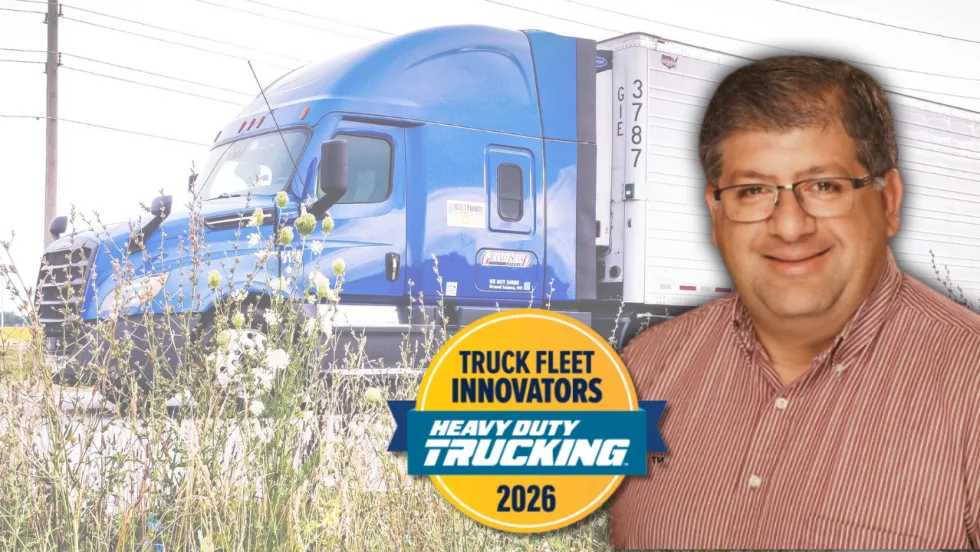
Deen Albert: Let Automation Do the Math, People Make the Decisions
HDT Truck Fleet Innovator Deen Albert makes sure people are still at the heart of operations at Grand Island Express, even while adopting artificial intelligence tools. AI-assisted dispatch helped boost revenue 25% with the same number of trucks.
Read More →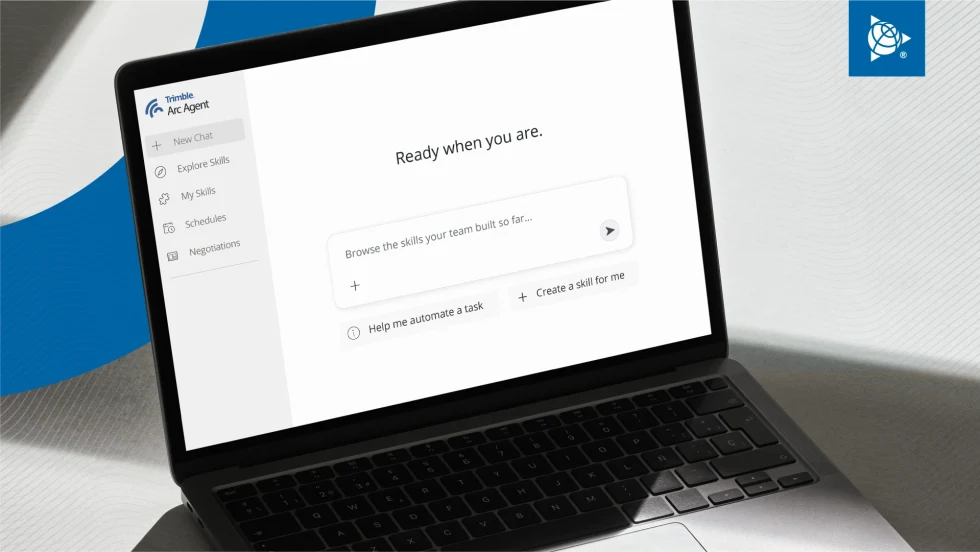
Trimble’s New AI Agent Takes Aim at Fleet Back-Office Busywork
Arc Agent works across Trimble TMS products to automate repetitive tasks such as freight orders, maintenance, invoices, fuel costs and more.
Read More →
How HDT’s 2026 Truck Fleet Innovators Are Rethinking Fleet Operations
Meet five trucking leaders who are challenging assumptions, solving operational problems, and putting innovative ideas to work.
Read More →