




Port of L.A. Breaks Ground on $137.7 million Project
Los Angeles Mayor Antonio Villaraigosa and Port of Los Angeles officials broke ground on a new intermodal storage railyard that will improve a vital link in the national freight network. The new yard will function as a critical link between the Port of Los Angeles and the Alameda Corridor, providing staging and storage for trains using the corridor.
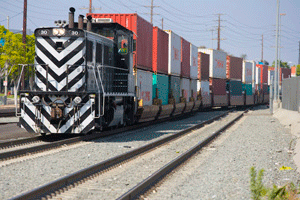
Los Angeles Mayor Antonio Villaraigosa and Port of Los Angeles officials broke ground on a new intermodal storage railyard that will improve a vital link in the national freight network. The new yard will function as a critical link between the Port of Los Angeles and the Alameda Corridor, providing staging and storage for trains using the corridor.
Construction of the $137.7 million rail project at Berth 200, also known as the West Basin Railyard, will generate about 2,000 direct and indirect jobs. When completed, the new yard will move cargo more safely and efficiently, reduce truck traffic on roads and freeways and improve regional air quality while strengthening the Port of Los Angeles' position as the nation's No. 1 trade gateway.
The Berth 200 railyard project also enables track space at the TraPac container terminal to serve as TraPac's future on-dock rail facility. With completion of the $365 million in rail, roadway and terminal improvements at TraPac over the next three years, TraPac will join the other seven container terminals at the Port of Los Angeles that offer shippers the speed-to-market advantage of on-dock rail.
The railyard will be constructed with $16 million in federal grant money from the U.S. Department of Transportation's highly competitive Transportation Investment Generating Economic Recovery program known as the TIGER Discretionary Grant program. The Port secured $51.2 million from the State Proposition 1B Trade Corridors Improvement Fund Grant that is administered by Caltrans and $22.1 million from METRO-awarded federal funds. The Port is investing $48.37 million from its Harbor Revenue funds for the project.
Project benefits include:
- Creating approximately 2,000 direct construction and indirect jobs.
- Maximizing use of on-dock rail shifts container transport from trucks to on-dock rail, reducing harmful emissions by 593,955 tons over a 20-year period.
- Improving safety via truck trip reductions on I-710, which has the highest accident rate in California, and via the removal of two at-grade rail-roadway crossings that are impediments between the community and the waterfront area.
- The new yard is projected to generate $1 billion in annual state revenues by 2030.
- When completed, the railyard will eliminate 2,300 daily truck trips from the Long Beach (710) and Harbor (110) freeways.
- Using the most up-to-date green and clean Tier IV construction equipment.
The project will be built in two phases. Phase I includes construction of the new yard, support tracks for the TraPac and China Shipping/West Basin Container terminals, double-track connections to the Alameda Corridor and national rail network, and access road improvements.
Phase II is due to begin construction in 2013 and includes final rail network connections and vehicle overpasses to eliminate at-grade crossings for safer, more efficient flow of truck and commuter traffic. Both phases are due to be completed in summer 2014.
Construction of the rail project begins on the heels of completion of the Harry Bridges Boulevard Roadway Improvements, a $22 million project also built with federal stimulus dollars.
More Fleet Management
AUCTION OF EQUITY INTEREST IN HEAVY HAUL TRUCKING COMPANY!!
Mark your calendar: June 30, 2026 (10:00 a.m. PDT). MagnaTrans, LLC, a California limited liability company doing business as Magna Transportation Group is going to auction! Bid on a 37.5% ownership interest in this Rancho Cucamonga-based heavy haul and over-dimensional trucking company operating across California, Oregon, and Arizona. The equity interest will be sold to the highest bidder or bidders under Article 9 of the Uniform Commercial Code at 10:00 a.m. PDT.
Read More →
Volvo Trucks Adds Unattended Over-the-Air Software Update Capabilities
The latest evolution of Volvo’s over-the-air update technology allows software updates to run while trucks are parked, helping fleets keep vehicles current without disrupting operations.
Read More →
How Waste Connections is Using Data, Telematics, and AI
How do you manage and maintain more than 18,000 connected trucks? Data. Lots of it.
Read More →
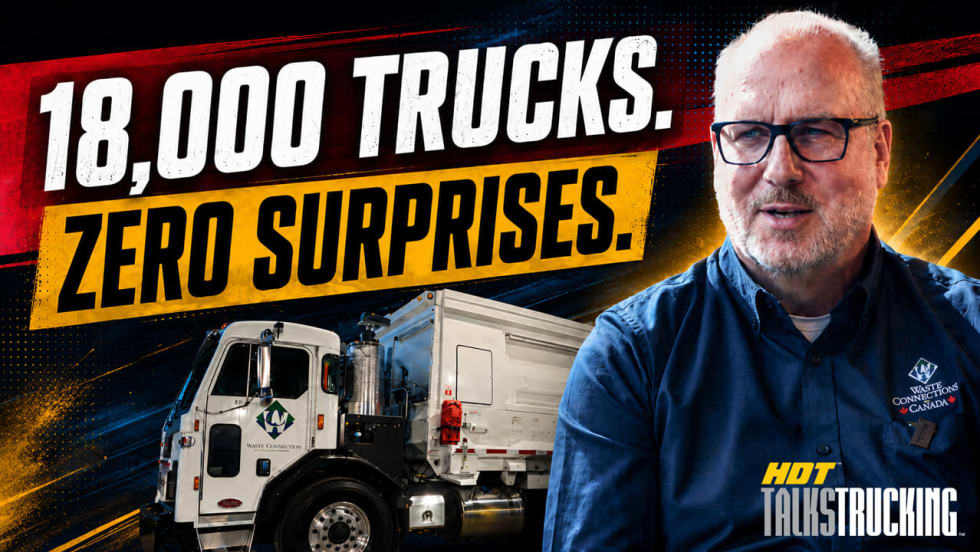
Why Fleet Data Matters More Than Ever at Waste Connections [Watch]
Waste Connections' Chuck Palmer explains how telematics, predictive maintenance, safety analytics, and AI help keep vehicles on the road and drivers safe in this episode of HDT Talks Trucking.
Read More →
NMFTA Launches Free, Anonymous Cybersecurity Threat Report Portal
Organizations are encouraged to anonymously report freight fraud, cargo crime, and cyber threats while gaining visibility into incidents reported across the transportation sector.
Read More →
AI Can Optimize a Fleet. Can It Replace Human Judgment?
Fleets fear falling behind if they don’t adopt AI quickly enough. They also fear what happens if the technology makes the wrong decision.
Read More →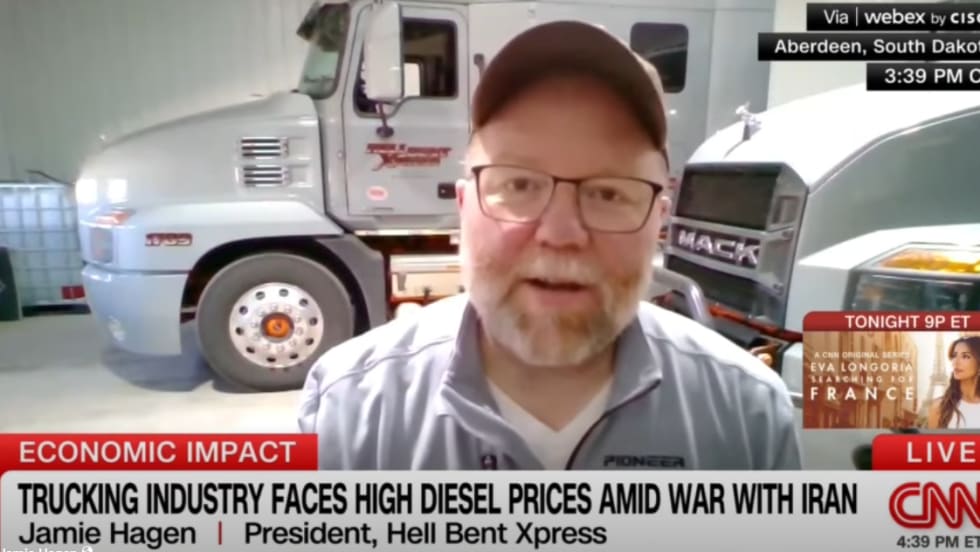
Jamie Hagen Gets Real About Running a Small Fleet in an Uncertain Economy
Small fleet owner Jamie Hagen says new legal risks, volatile fuel prices, and a changing freight market are forcing small carriers to rethink how they operate — and what they can afford.
Read More →
Jamie Hagen Gets Real About Freight, Fuel Prices, Safety, and Small-Fleet Survival
Running a small trucking fleet right now isn’t easy, especially right now. And Jamie Hagen doesn’t sugarcoat it.
Read More →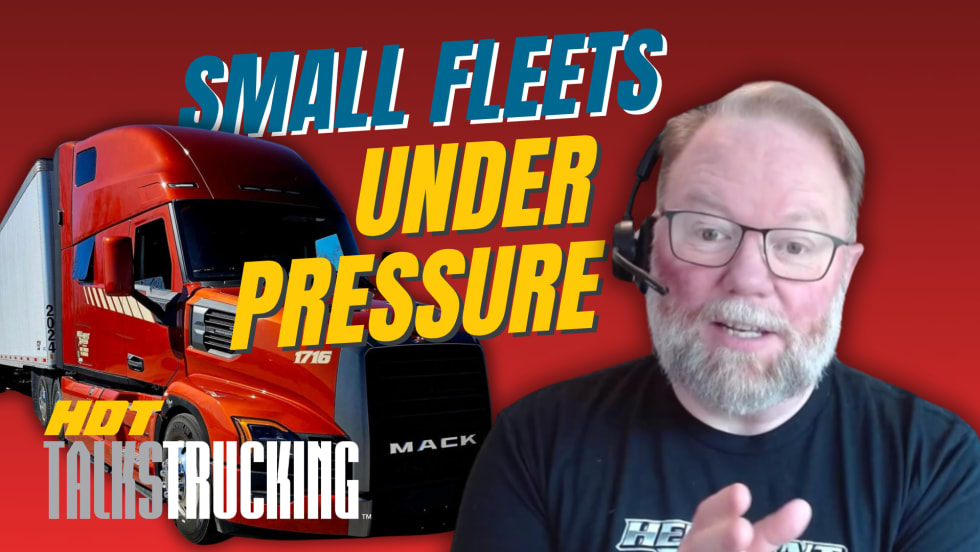
Jamie Hagen Gets Real About Freight, Fuel Prices, Safety, and Small-Fleet Survival
Running a small trucking fleet right now isn’t easy, especially right now. And Jamie Hagen doesn’t sugarcoat it.
Read More →
Data Lock‑In or Integration Lock‑Out?
Data fragmentation is costing dealerships, OEMs, fleets, and upfitters millions. Here’s why interoperability may be the fix the trucking industry needs.
Read More →