




Safety Aspects of Highway Bill Could Include New-Carrier Training, Reincarnated Carriers, Changes to Drug Testing
As Congress last week held hearings that offer some insight into what a transportation reauthorization might look like, Sen. Frank Lautenberg, D-N.J., opened discussions on what will likely be included in the safety portion of the Senate's reauthorization bill. Lautenberg, who chairs the Surface Transportation Subcommittee, said he plans to introduce a bill soon
As Congress last week held hearings that offer some insight into what a transportation reauthorization might look like, Sen. Frank Lautenberg, D-N.J., opened discussions on what will likely be included in the safety portion of the Senate's reauthorization bill. Lautenberg, who chairs the Surface Transportation Subcommittee, said he plans to introduce a bill soon.
Among other things, the bill will require more training for new carriers before issuance of a license and mandatory electronic onboard recorders for driver hours of service. It also will target carriers that "reincarnate" themselves under a different identity after having been sanctioned for safety violations, he said.
These initiatives already are under way in various stages of the rulemaking process at the Federal Motor Carrier Safety Administration.
Testifying on behalf of American Trucking Associations, Dan England, chairman of C.R. England, told the Senators that FMCSA needs to strengthen new-entrant requirements.
New entrants should have to complete on-line training on FMCSA regulations before they get a certificate, and they should undergo a safety audit within six months, rather than the 18 months that the rules now require.
England repeated ATA's longstanding support for a drug and alcohol test clearinghouse, which the agency is scheduled to propose next year.
He also called for giving carriers access to the Driver Safety Measurement System so they could screen driver applicants on the basis of their comparative safety performance.
And England called on the senators to push DOT to work with the Department of Health and Human Services to develop standards for using hair analysis as a screening mechanism drug abuse, as well as urinalysis.
"Motor carriers are increasingly relying on hair testing as a means to identify unsafe drivers who make drug use part of their lifestyles," he said. "These carriers have found that hair is far superior to the only currently accepted specimen -- urine -- in its ability to reveal drug use."
In response to questions from Sen. Mark Pryor, D-Ark., England said his company has found air testing to be much more reliable than urinalysis. The drug violation rate when using urinalysis is around 2%, compared to 9% for hair analysis, he said.
Joe Rajkovacz, director of regulatory affairs for the Owner-Operator Independent Drivers Association, said the key safety issue from the perspective of independent drivers is detention time.
"Detention is the 800-pound gorilla in safety," he said. "While truck drivers certainly should be held accountable for their actions, the same should be true for the stakeholders who often have more control over truckers' schedules and activities than the drivers themselves."
Rajkovacz supports a bill in the House that would require drivers to be paid if they are detained past a specified period. "It would be good to have a contract regarding detention time, because small carriers don't have marketplace power," he said.
But England, questioned on this point by Sen. Roger Wicker, R-Miss., said such a requirement would constitute economic rather than safety regulation. His company pays drivers for their time, and these arrangements should remain between the company and the customer, he said.
He also contended that the detention problem can be addressed by mandatory electronic onboard recorders. With the recorders, DOT will be able to tell if a driver is not reporting his time properly, he said. "The electronic log is a tremendous tool in making that happen," he said.
FMCSA Administrator Anne Ferro told the panel that the Motor Carrier Safety Advisory Committee, a panel representing the interests of carriers, independents, labor, safety advocates and insurers, is looking into the detention issue.
The hearing also offered an exchange between Sen. Olympia Snowe, R-Maine, and Jacqueline Gillan, vice president of Advocates for Highway and Auto Safety.
Snowe asked Gillan if there is any way to reconcile Maine's desire for limited use of heavier trucks on some of its Interstates with the safety advocacy community's opposition to the heavier vehicles.
Snowe cited the 2009-10 pilot program in Maine and Vermont that granted an exemption so 100,000-pound trucks could go on Interstates in order to keep them off of secondary roads. Twenty-seven states have exemptions, she said. "It is not fair to Maine to not have the exemption. What could we do to get to mutual agreement?"
Gillen had nothing to give on the point. "We may have to agree to disagree," she said.
Lautenberg backed Gillen, saying that the bigger trucks are not safe and he does not want to encourage them.
More Safety & Compliance
How Waste Connections is Using Data, Telematics, and AI
How do you manage and maintain more than 18,000 connected trucks? Data. Lots of it.
Read More →
Fleet Advantage: Top Logistics Fleets Outperform National Safety Benchmarks
Fleet Advantage's latest TRUST Safety Index found leading logistics fleets maintained significantly lower out-of-service rates and stronger safety scores than national averages, while highlighting persistent challenges related to tires, brakes, and unsafe driving behaviors.
Read More →
Why Fleet Data Matters More Than Ever at Waste Connections [Watch]
Waste Connections' Chuck Palmer explains how telematics, predictive maintenance, safety analytics, and AI help keep vehicles on the road and drivers safe in this episode of HDT Talks Trucking.
Read More →
Short Takes: How K&B is Using AI
Fleets need to "get on board the train" with AI, says Lance Evans of K&B Transportation in this HDT Talks Trucking Short Takes episode.
Read More →
Short Takes: Inside K&B’s Truck Safety Tech
Listen to learn how K&B Transportation uses cellphone-blocking technology, speed management systems, weather geofencing, bridge avoidance tools, and more to improve driver safety.
Read More →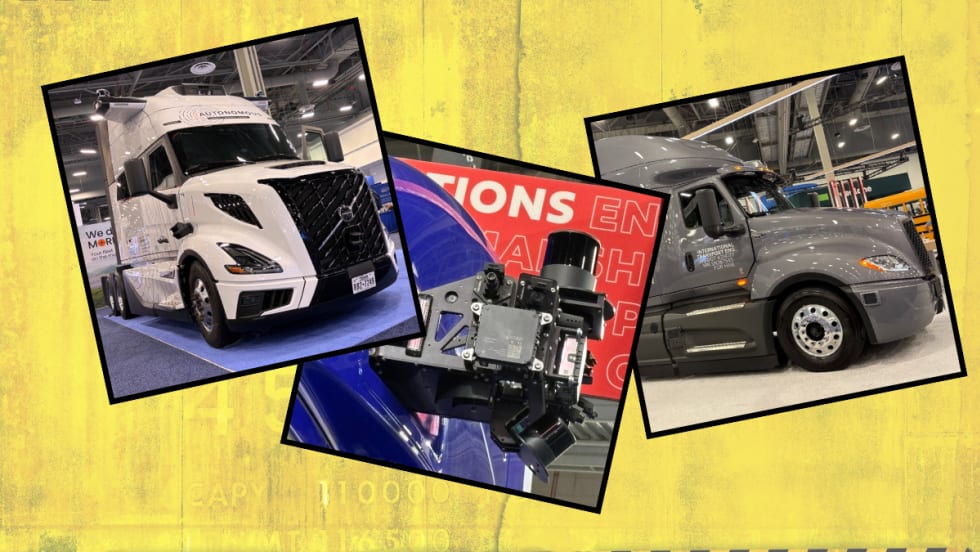
The Biggest Gap in Driverless Trucking Isn’t Tech. It’s Safety Validation
Nauto’s Stefan Heck says autonomous trucks are advancing quickly but proving they’re safe enough for large-scale deployment may be the industry’s hardest challenge.
Read More →
Truck Crash Rates Are Down. So Why Do Insurance Costs Keep Rising?
ATRI’s latest research points to litigation, social inflation, and soaring claims costs as key drivers behind record-high liability premiums for trucking fleets. But there are things motor carriers can do.
Read More →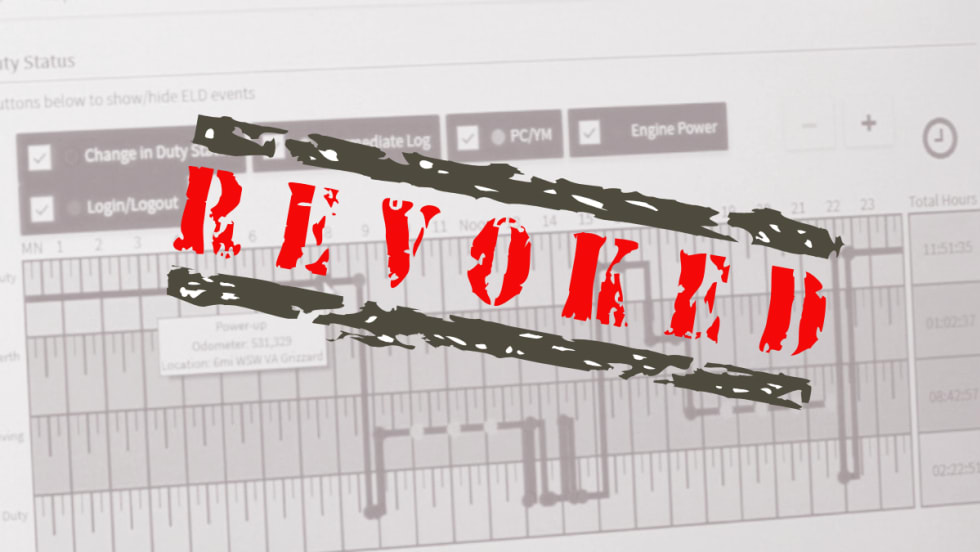
FMCSA Removes More Than a Dozen ELDs from Registered List
The FMCSA continues its efforts to fight electronic logging devices that don't meet federal requirements, removing more than a dozen from the registered ELD list in May.
Read More →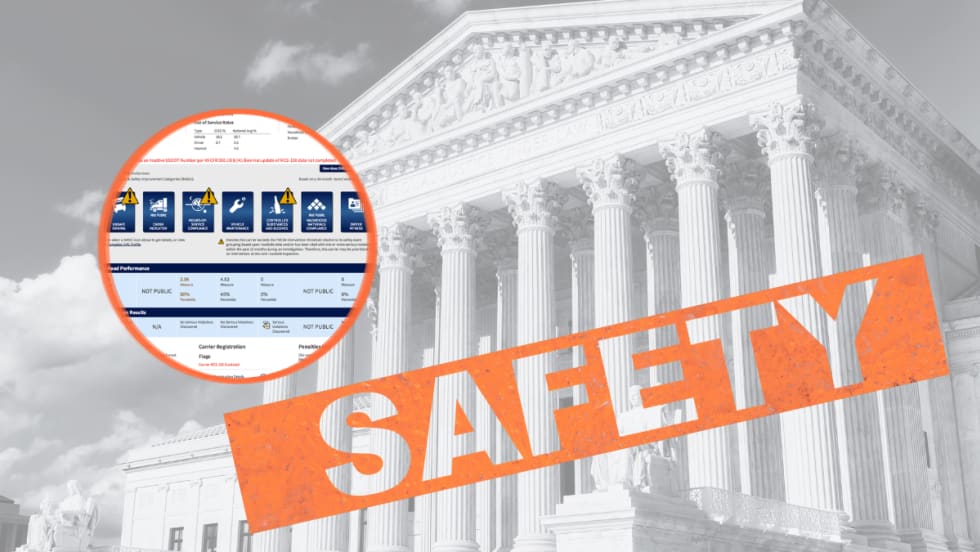
How the Supreme Court Broker Liability Ruling Could Reshape Trucking’s Safety Landscape
The Supreme Court’s May 11 broker-liability ruling may not radically rewrite transportation law overnight. But industry experts say it will intensify pressure on brokers, carriers, and shippers to prove they are prioritizing safety.
Read More →
Recall of Fontaine Fusion Flatbeds Warns Owners Not to Use the Trailers
Some Fontaine Fusion flatbed trailer manufactured between February 2025, and March 2026 could have mainbeams weakened by hydrogen embrittlement because of a problem in the galvanizing process.
Read More →