




Truck Industry Safety Performance Reached Record Levels in 2009
The rate of truck-involved fatalities on U.S. highways fell to 1.17 per 100 million miles in 2009 - making that year the trucking industry's safest since the federal government began keeping track in 1975. But American Trucking Associations representatives say more can be done, and called for the government to look at incentive-based programs to drive safety technology
The rate of truck-involved fatalities on U.S. highways fell to 1.17 per 100 million miles in 2009 - making that year the trucking industry's safest since the federal government began keeping track in 1975. But American Trucking Associations representatives say more can be done, and called for the government to look at incentive-based programs to drive safety technology.
The rate fell 14.1 percent from the revised fatality rate of 1.37 in 2008, according to an analysis of data released by the Federal Highway Administration and the National Highway Traffic Safety Administration.
"Dedication to safety is a core value of ATA and the trucking industry," said American Trucking Associations Chairman Barbara Windsor, president and CEO of Hahn Transportation, New Market, Md.. "We've expressed that with our 18-point progressive safety agenda and programs like Share the Road and America's Road Team. These figures are the fruits of those efforts."
In addition to the fatality rate, the truck occupant fatality rate fell more than 17 percent to 0.17 per 100 million miles traveled.
In 2009, NHTSA recorded 3,380 fatalities in 2,987 crashes, both down from the 4,245 fatalities and 3,754 crashes reported the previous year. FHWA reported that in 2009 trucks traveled more than 288 billion miles - down from 310.7 billion the previous year, though the agency significantly increased its historical truck mileage figures prior to publishing their 2009 data.
"These improvements are a testament to the commitment to safety made by the trucking industry, the federal government, and trucking's law enforcement partners," ATA President and CEO Bill Graves said. "All in all it is a culture that has really been embraced by a lot of the large fleets."
At a press conference on Monday, Graves and Windsor along with ATA vice president of affairs, Dave Osiecki, agreed that while these new numbers are very good news, the battle to make our highways as safe as possible is not over. While more government regulations are to be expected in the future, Osiecki said the real key to continue increasing safety is government incentives for technology and the addition of nationally accessible safety tools.
"Mandates take longer over time than do incentive-based programs for voluntary adoption," Osiecki said, noting that regulations can take many years to develop. "We have to move to a safety management model."
A safety management model might include, among other things, tax incentives for new safety equipment, a national clearing house for drug and alcohol test results and advanced notification systems for drivers having problems on the road.
As trucking rebounds from the recessions, some have asked whether fatalities might rise again. Oseicki insisted that numbers the safety gain was made not just in actual numbers, but in the rate of fatalities, and that historically rates have not gone up during periods of economic recovery.
More Safety & Compliance

How Waste Connections is Using Data, Telematics, and AI
How do you manage and maintain more than 18,000 connected trucks? Data. Lots of it.
Read More →
Fleet Advantage: Top Logistics Fleets Outperform National Safety Benchmarks
Fleet Advantage's latest TRUST Safety Index found leading logistics fleets maintained significantly lower out-of-service rates and stronger safety scores than national averages, while highlighting persistent challenges related to tires, brakes, and unsafe driving behaviors.
Read More →
Why Fleet Data Matters More Than Ever at Waste Connections [Watch]
Waste Connections' Chuck Palmer explains how telematics, predictive maintenance, safety analytics, and AI help keep vehicles on the road and drivers safe in this episode of HDT Talks Trucking.
Read More →
Short Takes: How K&B is Using AI
Fleets need to "get on board the train" with AI, says Lance Evans of K&B Transportation in this HDT Talks Trucking Short Takes episode.
Read More →
Short Takes: Inside K&B’s Truck Safety Tech
Listen to learn how K&B Transportation uses cellphone-blocking technology, speed management systems, weather geofencing, bridge avoidance tools, and more to improve driver safety.
Read More →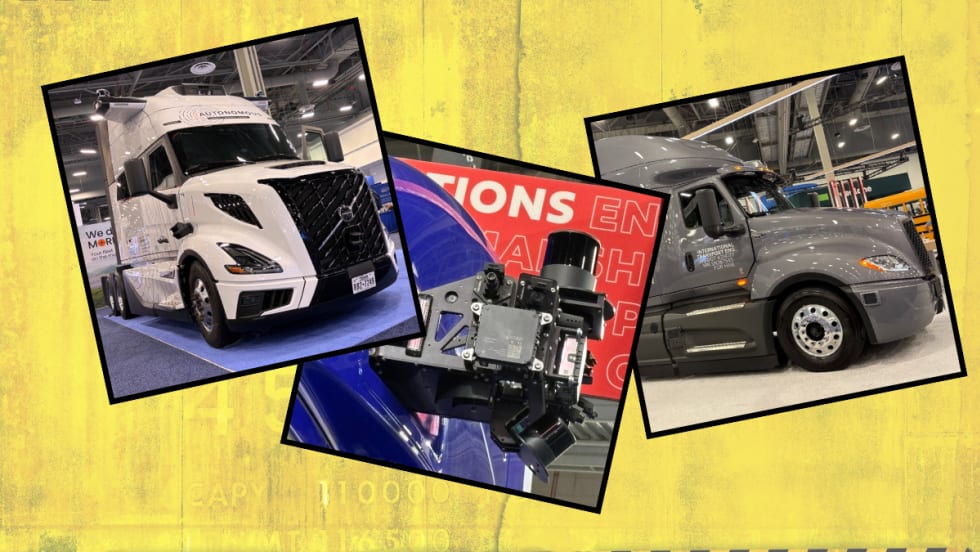
The Biggest Gap in Driverless Trucking Isn’t Tech. It’s Safety Validation
Nauto’s Stefan Heck says autonomous trucks are advancing quickly but proving they’re safe enough for large-scale deployment may be the industry’s hardest challenge.
Read More →
Truck Crash Rates Are Down. So Why Do Insurance Costs Keep Rising?
ATRI’s latest research points to litigation, social inflation, and soaring claims costs as key drivers behind record-high liability premiums for trucking fleets. But there are things motor carriers can do.
Read More →
FMCSA Removes More Than a Dozen ELDs from Registered List
The FMCSA continues its efforts to fight electronic logging devices that don't meet federal requirements, removing more than a dozen from the registered ELD list in May.
Read More →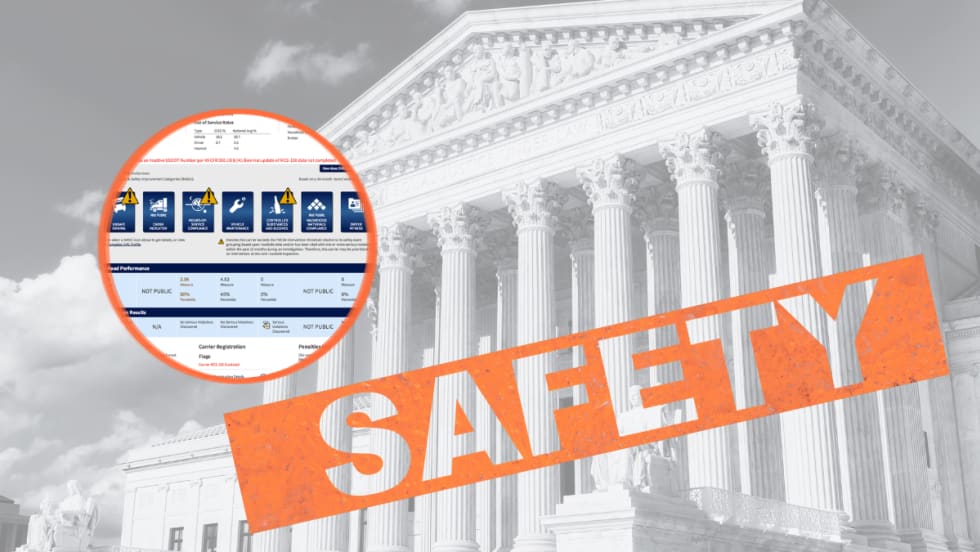
How the Supreme Court Broker Liability Ruling Could Reshape Trucking’s Safety Landscape
The Supreme Court’s May 11 broker-liability ruling may not radically rewrite transportation law overnight. But industry experts say it will intensify pressure on brokers, carriers, and shippers to prove they are prioritizing safety.
Read More →
Recall of Fontaine Fusion Flatbeds Warns Owners Not to Use the Trailers
Some Fontaine Fusion flatbed trailer manufactured between February 2025, and March 2026 could have mainbeams weakened by hydrogen embrittlement because of a problem in the galvanizing process.
Read More →