




Driving With the Wingman Collision Avoidance System
Think of any rear-end accident you've ever seen or heard of, where a truck slams into a stopped or slower-moving vehicle. What was its cost in injuries, lives and property damage

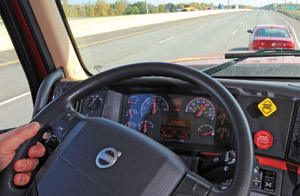
An arc of red lights along the top of the speedometer and an audible beeping alert the driver when something's too close up ahead. (Photo by Volvo)
Think of any rear-end accident you've ever seen or heard of, where a truck slams into a stopped or slower-moving vehicle. What was its cost in injuries, lives and property damage?
Chances are it was far, far more than the $2,100 or so that truck builders charge for optional active/adaptive cruise control - the type that modulates the throttle as required by traffic just ahead and applies brakes when a collision is likely. This technology could prevent many such wrecks and reduce the severity of others.
Most truck original equipment manufacturers offer this technology. International, Kenworth, Peterbilt, Mack and Volvo offer Bendix's Wingman. This piggybacks onto a truck or tractor's electronic anti-lock braking and anti-rollover systems. By federal regulation, ABS is standard, and anti-rollover is either optional or standard, depending on the OEM. Volvo and Mack road tractors are standard with Bendix Roll Stability Control, and the next step is the Wingman option.
Volvo calls it Volvo Enhanced Cruise, and I tried it out recently on a VNL tractor on North Carolina Interstates. A front-facing radar antenna sent microwaves into our travel lane to "see" traffic. A microprocessor took the return signals and judged whether we were closing on any objects up ahead.
It didn't save me from a wreck, because I was awake and alert enough to slow down when needed, but I got a good look at how it works. This trip near Greensboro, N.C., was led by Ed Saxman, Volvo's powertrain expert who was instructing me on the tractor's updated I-Shift automated mechanical transmission (a story for another time).
The Wingman system intervened several times when motorists cut in front of us, sounding a visual and audio alarm until they moved ahead. The visual alarm was an arc of red lights that lit up along the top of the speedometer, and the audible was a beep-beep-beeping that got my attention without annoying me.
Another time it applied the brakes. I had moved out of I-40's right lane to make room for traffic entering from a ramp. That put me on a collision course with a slow-moving pickup, whose driver was doing only about 55 to 60 in a 70-mph zone in the center lane. But Wingman saw the silver Chevy Silverado and braked us down to a matching speed while sounding and flashing the alarms. I waited for an opening in the right lane, swung back there, accelerated and went around him, and that was that.
Bendix Wingman will brake a truck almost to a halt if need be. I got to experience that a year earlier, during the Mid-America Trucking Show, in a Mack Vision tractor on I-65 and I-265 near the Kentucky fairgrounds. Adaptive Cruise Control, as Mack calls the system, slowed us to a near-stop on an off-ramp as we approached a Bendix-operated test car that purposely got in our way. Service brakes took us down to a crawling speed maintained by the engine as it idled through an Allison automatic transmission. To come to a full stop, I gently touched the brake pedal.
On this recent run in the Volvo, the I-Shift tranny changed its ratios to suit our cruising, slowing and speeding up as traffic and my foot's pressure on the accelerator dictated. Power would've cut off if I'd have pressed on the "gas" when something ahead was too close, which I didn't. But the dethrottling capability is there, along with the automatic braking function, to back up a driver who might be too tired or distracted to react appropriately to a situation.
Would Wingman or something like it have prevented that driver from rear-ending the car driven by a well-known congressman's wife on the Beltway outside Washington, D.C., a few months ago? Maybe. It happened in stop-and-go traffic when the truck's cruise control would probably have been switched off and its automatic braking deactivated. But the audio-visual alarms would've alerted the truck driver that he was about to hit the car, and he might've braked in time. If I ran the fleet that owned the truck, I'd be spec'ing active cruise control on my next order.
From the June 2010 issue of Heavy Duty Trucking.
More Safety & Compliance
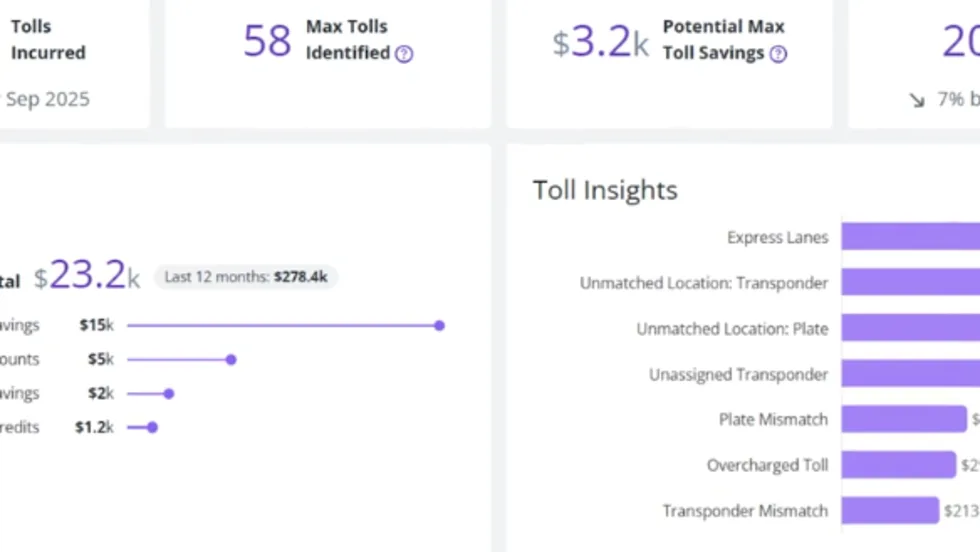
PrePass Intelligence Mines Fleet Bypass, Toll and Safety Data
PrePass Intelligence helps fleets measure bypass savings, flag potential toll overcharges, and spot suspicious transactions by combining data from separate systems.
Read More →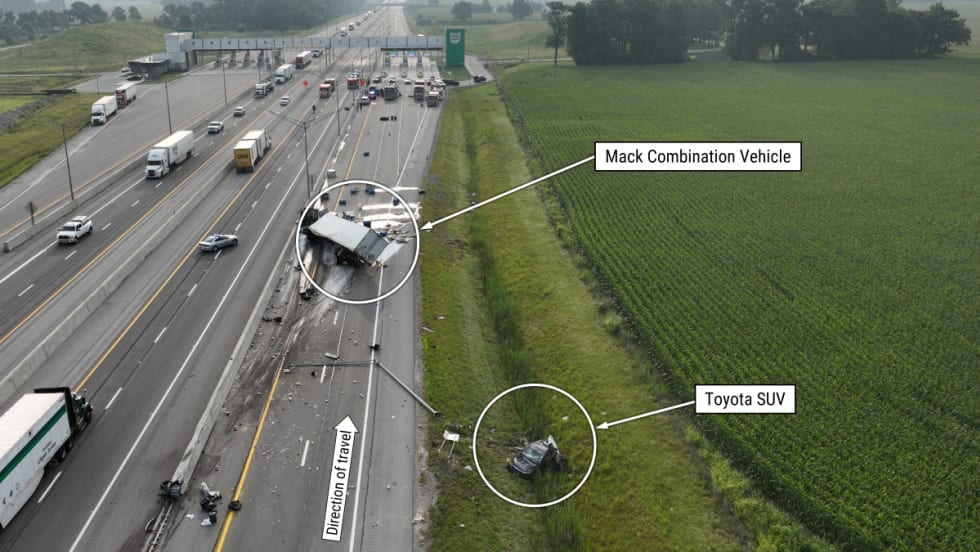
Fatal Crash Exposes Toll Plaza Risks
An NTSB investigation found that last-minute lane changes and large speed differences at an Ohio toll plaza created a hazard the truck driver couldn't avoid in time.
Read More →
When Language Stops the Truck: The Return of ELP Out-of-Service Orders
English language proficiency rules for commercial drivers aren’t new, but renewed out-of-service enforcement has raised the stakes. Here’s what carriers need to know before a driver reaches a roadside inspection.
Read More →

A Camera Isn't a Safety Program. Here's What Brokers Are Screening for Now
Footage alone may not be enough to pass broker vetting processes. Here's what counts as a defensible safety program now.
Read More →
Marijuana and Trucking’s Drug-Testing Dilemma
Marijuana is getting stronger, laws are changing, and drug tests still can’t reliably establish impairment. What does that mean for truck drivers and the fleets that employ them?
Read More →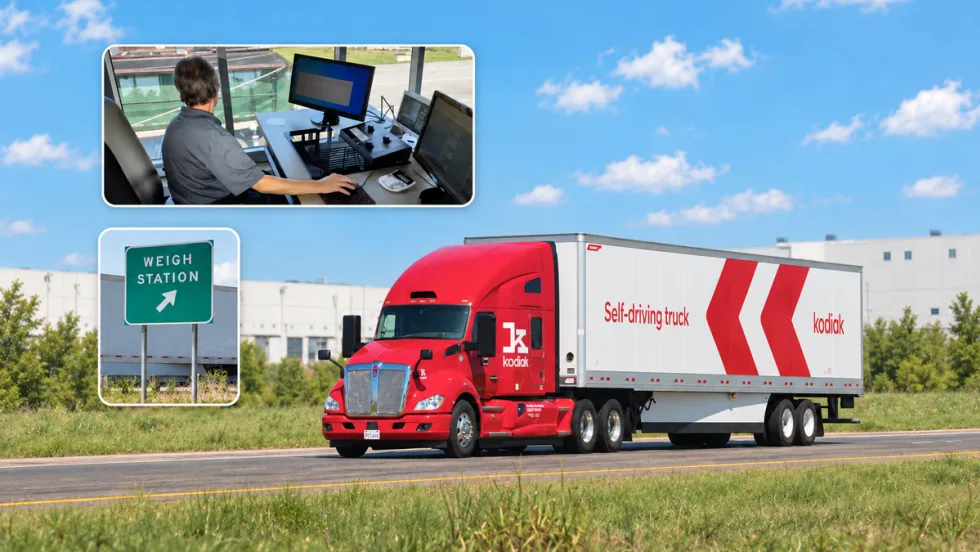
PrePass, Kodiak Connect Driverless Trucks to Roadside Enforcement
The system will allow enforcement agencies to verify Enhanced Inspection information and decide whether Kodiak’s autonomous trucks can bypass roadside screening sites.
Read More →
From One Generation to the Next: How Mentorship Builds Safer Truck Drivers
After three decades in trucking, Harold Perry shares what he's learned about driver safety, mentorship, and helping the next generation build confidence behind the wheel.
Read More →
FMCSA Pauses Biennial-Update Enforcement Amid Motus Transition
Carriers whose updates were due on or after June 1 have more time, while FMCSA works to stabilize its new registration system and warns of phishing sites impersonating its new carrier registration system, Motus.
Read More →
ZF Expands Commercial Vehicle Push in North America
ZF is expanding its North American commercial-vehicle presence with new transmission applications, electrification, trailer technology and autonomous-driving systems.
Read More →
Truck Drivers Need More Than Another Alert
Fleets have more visibility into truck health, safety events, and driver activity than ever. The next challenge is turning all that information into useful guidance for the person who has to decide what to do next.
Read More →