




Detroit’s New Hybrid Refuse Trucks Now on the Road
The City of Detroit took delivery of eight new hybrid refuse trucks with funding assistance from the Clean Energy Coalitions (CEC). CEC provided funding to cover the incremental cost of the hybrid system.
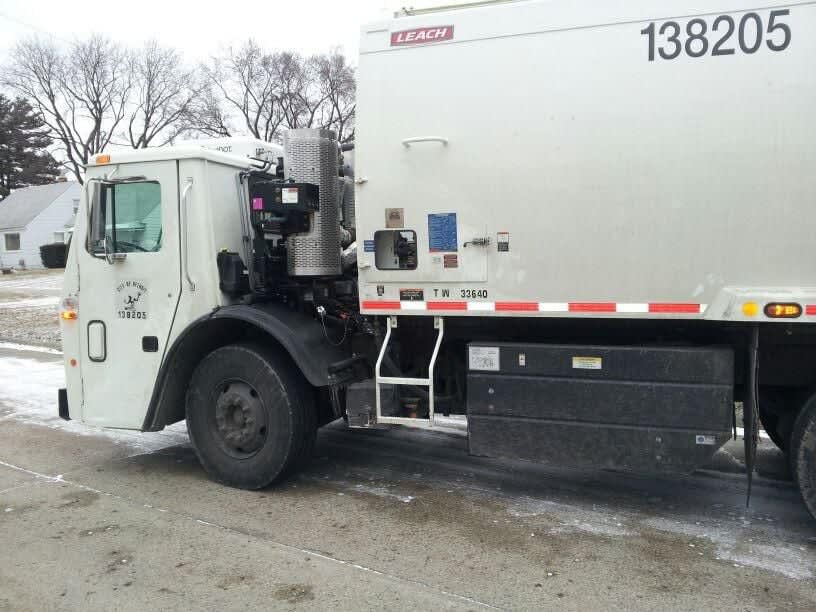
Detroit's new hybrid refuse trucks could reduce fuel costs by up to 25% in comparison to conventional refuse trucks. Photo courtesy of the Clean Energy Coalition.
Detroit's new hybrid refuse trucks could reduce fuel costs by up to 25% in comparison to conventional refuse trucks. Photo courtesy of the Clean Energy Coalition.
The City of Detroit in December 2012 took delivery of eight new hybrid refuse trucks with funding assistance from the Clean Energy Coalition’s (CEC) Michigan Green Fleets Program.
The base price of each truck is is $180,000. Clean Energy Coalition provided the City of Detroit with grant funding totaling $40,000 per truck, which covered the additional cost of the hybrid system. The trucks, Mack LEU chassis with Bosch Rexroth hybrid technology system, each cost $220,000.
The Bosch Rexroth hydrostatic regenerative braking (HRB) system installed in each truck operates in parallel with the vehicle’s engine. If there is a problem with the hydraulic system, the truck can still operate. According to Bosch, this could result in fuel savings of up to 25%.
A representative from the City of Detroit’s Department of Public Works said, “The vehicle is turned off while our workers are loading the truck and when the vehicle stops as a traffic light. We expect that a considerable amount of fuel will be saved with the idle-off capability and mileage will be increased.”
According to CEC Project Manager Aaron Champion, the CEC was awarded a Department of Energy grant for $15 million, with funding from the American Recovery and Reinvestment Act (ARRA). The CEC passed along this grant to 12 project partners for fleet greening implementation and alternative-fuel infrastructure construction; the City of Detroit is one of these partners. Western Michigan University is another partner, receiving funding for the installation of 15 electric vehicle charging stations and a solar array, and for the purchase of five electric and two hybrid vehicles.
Along with the grant funding, the CEC provides the City with assistance in the reimbursement process and instruction about how to provide vehicle data as required by the grant.
The CEC’s latest project beneficial to fleet managers is its “Michigan Fuel Forward” program. The DOE, using ARRA funding, awarded the CEC $500,000 to come up with alternative-fuel vehicle deployment plans for fleets. The CEC will provide no-charge consulting services to public agencies in Michigan looking to green their operations. The CEC will soon issue solicitations for interested parties.
*This article was updated 2/12/13 at 9 a.m. to correct the cost of the trucks. The base price of each truck is $180,000; the hybrid system added an additional $40,000 to the price of each truck.
More Fuel Smarts

Calstart Becomes Catalyst Mobility, Reflecting Broader Focus
Calstart is now Catalyst Mobility, reflecting the nonprofit’s growing national role in clean transportation, including zero-emission trucks, infrastructure and incentive programs.
Read More →
Record Diesel Prices Squeeze Trucking Fleets
Average U.S. diesel prices have climbed to nearly $6 a gallon, surpassing the 2022 record as tight refinery capacity and Middle East disruptions keep fuel costs elevated.
Read More →
How Fuel Delivery Shapes Engine Performance
Fuel delivery depends on more than what happens at the injector. For fleet, maintenance and technical professionals, looking at the full path from pump to injector can provide useful context for understanding engine performance.
Read More →

East Coast Port Launches $45M Electric Truck Push
The Port Authority of New York and New Jersey announced millions in incentives for zero-emission drayage trucks, yard tractors, and new charging hubs near the port.
Read More →
California Bill Could Shed Light on Electric Truck Prices
Why do battery-electric Class 8 trucks remain so expensive? A California bill headed to Gov. Gavin Newsom would give fleets and state agencies more visibility into what manufacturers charge.
Read More →
Detroit Opens Orders for EPA 2027 Engines
Detroit isn’t starting from scratch to meet EPA 2027 diesel emissions standards. Its Gen 6 DD13 and DD15 engines keep much of today’s platform while updating the fuel and aftertreatment systems.
Read More →
Zero-Emission Truck Corridor Planned for West Coast
California, Oregon, Washington, British Columbia and Baja California are coordinating plans for truck charging and hydrogen fueling from Canada to Mexico.
Read More →
A Closer Look at Kenworth’s Electric T880E Vocational Truck [Video]
Learn more about Kenworth's T880E battery-electric vocational truck at the Paccar Technical Center, including its range, applications, upfitting considerations, and PTO options, in this HDT Spotlight video.
Read More →
Kenworth T880E Brings EV Power to Vocational Trucks
A closer look at the Kenworth T880E’s range, charging, powertrain and upfit options — and where fleets are showing the most interest.
Read More →
Jennie Abarca Is Proving Electric Trucks Can Do the Job
HDT Truck Fleet Innovator Jennie Abarca is building confidence in fleet electrification one load at a time while openly sharing the challenges she encounters along the way as a small-fleet owner.
Read More →