





Related: Sensing a Disruption
Disruption is the Latest Technology Buzzword
The key disrupter in recent years has been the Internet, which has changed the way a number of industries operate. In trucking, e-commerce has profoundly affected trucking operations, especially those that serve retailers.
June 19, 2015
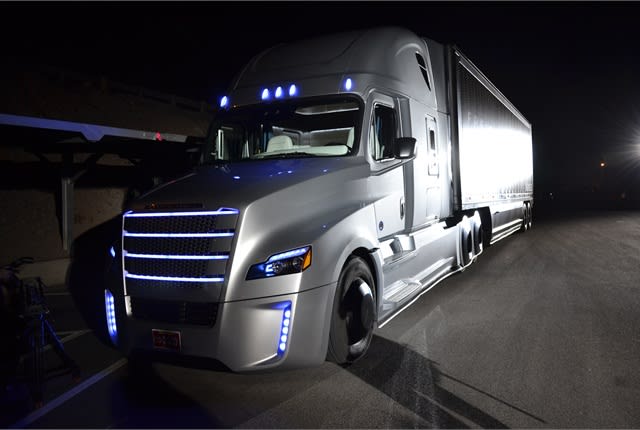
The Freightliner Inspiration Truck at it's Hoover Dam introduction. Photo: Stephane Babcock
2 min to read

A term has been buzzing around industry meetings recently: disruption. This generally refers to technologies that “disrupt” the way business is done.
The key disrupter in recent years has been the Internet, which has changed the way a number of industries operate. In trucking, e-commerce has profoundly affected trucking operations, especially those that serve retailers. Fewer goods are moving from distribution/warehouse centers to retail stores, with more moving from the warehouses directly to the end consumer. The emergence of e-commerce giants such as Amazon and next-day or same-day delivery promises create an entirely new set of delivery and routing problems. (Not to mention Amazon’s interest in delivery drones.)
The recent unveiling of Freightliner’s “Inspiration Truck” autonomous vehicle was also described as a disruptive technology that holds promise for entirely new business models in freight movement.
The phrase was also used by a Daimler Trucks North America executive during the ALK Transportation Technology Summit in Princeton, N.J., in May. Matthew Pfaffenbach, director of telematics, said OEM powertrain integration would “positively disrupt the telematics industry.” Currently, most vehicles are equipped with third-party telematics hardware after customers have taken delivery. Fleets contract with a telematics service provider to gather, transmit, store and analyze vehicle and other data while the trucks are on the road.
But just as OEMs are increasingly providing vertically integrated powertrains, Pfaffenbach made the case for them to integrate telematics capabilities, as well.
Pfaffenbach said telematics service providers have long-established, integrated products that OEMs do not need to replicate. But OEMs can bring more to the telematics table. For example, the partnership between Daimler and Zonar to provide a remote diagnostic system using Zonar’s connectivity coupled with diagnostic data and fault codes generated by the vehicle’s powertrain.
“A lot of information that could be very useable comes from the powertrain,” he said.
The OEM focus should be on information truck customers can’t get anywhere else, and OEMs should develop connectivity solutions that complement those from telematics service providers.
Subscribe to Our Newsletter
More Fleet Management

Think Your Trucking Fleet Isn't Using Much AI? Think Again
Shadow AI — the use of unauthorized artificial intelligence tools at work — is becoming increasingly common, putting sensitive company data at risk. Learn how trucking fleets can protect sensitive data while embracing AI.
Read More →
ArcBest Consolidates Brands, Cuts Workforce
The company will bring three business units under the ArcBest brand, eliminate about 2% of positions, and expects the changes to generate $40 million in annual savings.
Read More →
Trucking Fleets Faced Record Operating Costs During Third Year of Freight Recession
ATRI's annual operational cost report shows carriers trimmed fleets, delayed equipment purchases, and ran older trucks as expenses continued to outpace freight rates.
Read More →
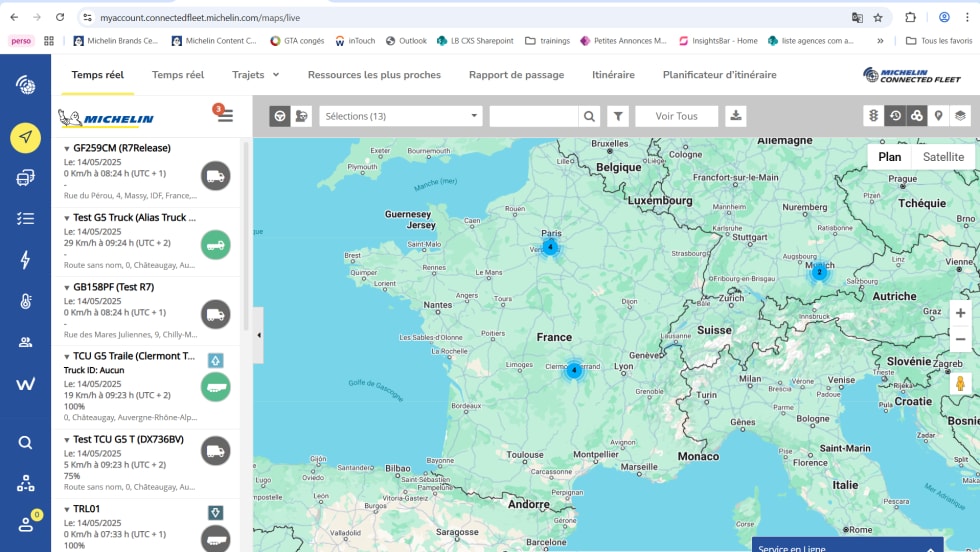
Michelin Adds AI Assistant to MyConnectedFleet Platform
Michelin’s new generative AI tool delivers instant fleet insights, helping managers analyze fuel use, tire maintenance, vehicle status, and operational performance without manually creating reports.
Read More →
LytxOne Platform Now Features AI, Compliance, and Asset Tracking Tools
New enhancements add AI-powered insights, asset tracking, compliance automation, and configurable privacy controls to Lytx's all-in-one fleet management platform.
Read More →
July Imports Poised to Set Container Record
The National Retail Federation projects July container imports will surpass the pandemic-era record as shippers frontload freight ahead of expected August tariff increases.
Read More →
HDT Announces 2026 Truck Fleet Innovator Finalists
From AI and fleet electrification to safety, operations, and leadership, these HDT Truck Fleet Innovator finalists are changing how trucking gets done.
Read More →
Van Spot Rates Top Contract Rates for First Time Since 2022
There’s more good economic news for the North American trucking industry according to the latest Truckload Volume Index report from DAT.
Read More →
Carrier Transicold Extends Refrigerated Trailer Life
Fleet Refresh enables refrigerated fleets to replace aging transport refrigeration units instead of entire trailers, while adding Lynx Fleet telematics and BluEdge service coverage.
Read More →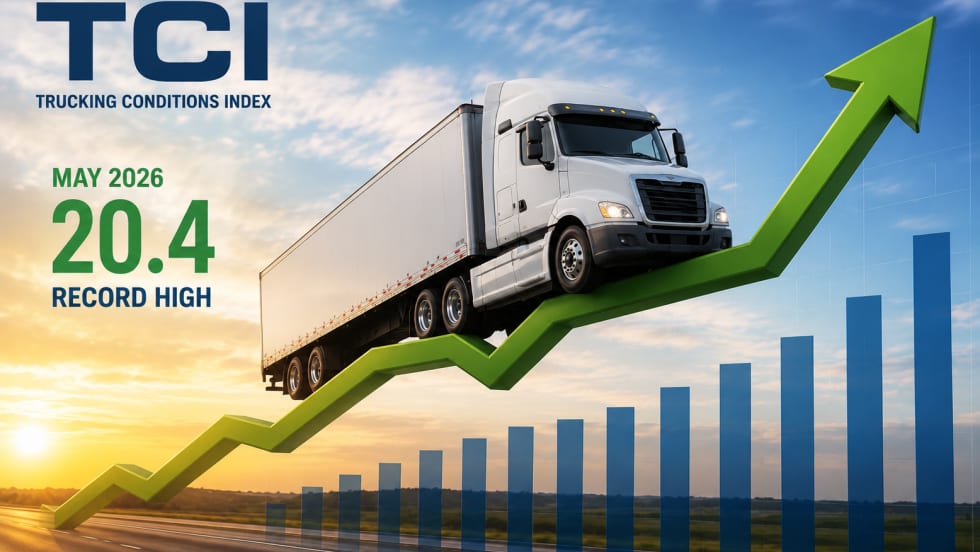
FTR Says Freight Rates Surged in May
FTR's Trucking Conditions Index surged to a record high in May, the analytics firm reports.
Read More →