




2010 Truck Fleet Innovators on Going Green
Heavy Duty Trucking's 2010 Truck Fleet Innovators talk about what their companies are doing to help the environment and their bottom line.
Heavy Duty Trucking's 2010 Truck Fleet Innovators talk about what their companies are doing to help the environment and their bottom line.
Ben Bauman, President and CEO, Bolt Express
Bolt Express is currently working towards becoming a U.S. EPA SmartWay Transport Partner. We see this as a very important and responsible initiative to helping reduce transportation-related emissions.
Some of the day-to-day practical green initiatives we have implemented are working on efficiencies such as efficient computing. We have upgraded servers and migrated to a Virtual Server Solution that allows us to reduce servers and energy usage. The company also has migrated to a paperless environment. From the driver's paperwork to all incoming faxes, all paperwork is converted to an electronic environment.
Doug Duncan, President and CEO (retired), FedEx Freight
FedEx's vehicle experts have participated in numerous industry conferences and gatherings to educate companies about the benefits of cleaner truck technology. "We have also championed the need for a smaller engine for application in hybrid vehicles following the 2007 EPA federal engine standard to replace the existing larger, less efficient engine," FedEx said in a statement.
To maximize fuel economy, the company has adopted engine idling standards, an automatic tire inflation system for trailers, wide-based tires for dollies, and driver education. The company is also testing hydrogen-powered drivetrain technology, more aerodynamic trailers and different biodiesels to determine their effectiveness.
Tom Voelkel, President/COO, Dupré Logistics
Some green strategies that we are going to improve on and/or implement in 2011 are:
* Increase the number of 2010 emissions tractors. Our fuel mileage on 2010 engines is up 3-5 percent.
* Better monitoring of mpg exceptions.
* Improve speed and idle management.
* Improve driver training in reference to progressive shifting to improve mpg. We are moving away from auto-shift transmissions back to manuals. Training will be required to maximize fuel efficiency.
* Exploring ways to further reduce oil change intervals. We recently moved our oil change interval up to 30,000 miles from 20,000 miles and are researching the ability to move to 35,000- or 40,000-mile intervals.
* Use more fuel efficient lubricants/oil/tires. We use synthetic oil with less viscosity which is improving mpg from 1 to 2.5 percent. We are using tires with minimal rolling resistance that are approved by SmartWay.
* Improve tire air pressure management.
* Use of aerodynamic devices. A combination of trailer side skirts/fairings/mud flaps/wheel discs will provide a 1 to 2 percent increase in mpg.
* Use lightweight options on tractors and trailers. We recently lightened our trucks by 480 pounds.
* Use APU idle control devices and research the ability to use an alternative fuel in our APUs.
We also are watching the results of natural gas fired engines and think that this has benefit in short haul/high density operations.
We will explore how to reduce used oil filter and used fuel filter disposal, reduce used paper towel disposal, reduce used container disposal and reduce the use and cleaning of soiled/cloth shop rags.
The green initiatives that we approach make economic sense and improve the environment.
Jim Burg, President/CEO, James Burg Trucking
When energy costs dramatically increased in 2006, we invested in our equipment with a fleet re-ratio to slow our engines down. Fuel economy increased and vehicle range was extended; future trucks can be spec'ed with smaller fuel tanks. Earlier models were employed with dash-mounted displays giving drivers instantaneous mpg data to help them make good fuel consumption decisions.
We are also running a pilot program to explore advanced trailer aerodynamics benefits. We have always invested in lightweight equipment and used X-One wide-based single tires since 2001.
We built our new facility in 2005. It includes motion sensor light switches in all rooms, energy-efficient appliances and the highest rated R-value insulation available. Office thermostats are set on a seven-day cycle. We have a waste oil furnace to burn our used engine oil, which reduces our shop heating costs to nearly zero. The shop also has an air circulatory system to reduce foul odors while minimizing heating costs. Our primary inspection bay door has an 'air lock' to keep the shop warm when pulling a truck inside during inclement weather.
Our customers' actions dramatically impact our operations and energy costs. We explained what drives our operating costs and asked for changes to their practices in order to increase our efficiency. Some have expanded their shipping/receiving hours. Others have allowed us to build their loads to our maximum payload. Through these efforts, we have saved thousands of gallons of fuel.
Many of the best practices employed at JBTC are also considered "green" initiatives. If my cost savings methods end up saving the planet, I'll be pleased with my decision to do so.
Jim Mickey, Co-owner and President, Coastal Pacific Xpress
Mickey turned this month's question over to Kevin Johnson, Director of Regulatory Compliance.
We are "going green" in all the customary areas, and of course most of these programs have some sort of ROI attached to them - high-efficiency fluorescent tubes, reduced lighting, programmable thermostats and double sided printing. CPX also is a member of the [EPA] SmartWay program and with our California operation we are CARB-complaint as well. A recent large trailer order will see more Smartway-approved equipment equipped with trailer side skirts and reduced weight options entering our fleet. Owner-operators must purchase Smartway-approved tractors and spec equipment below a certain weight to become or remain part of the CPX fleet.
We struggled to find a fuel management program that gave the drivers control over their results. Rather than focusing on increasing fuel mileage directly, we looked at what the driver could control and focused there. Speed, progressive shifting and long idle all impact fuel mileage and are controlled by the driver. We set up parameters in these areas and using the truck ECM data we monitor each driver's performance. A good driver can earn up to an extra nickel a mile in performance bonuses for staying within the parameters of the program. We quickly saw increased fuel mileage and reduced idling fleetwide.
I believe there are more "green" innovations on the horizon for CPX. We are currently looking closely at liquid natural gas vehicles and B20 biofuel to see if there is a fit in our operation.
From the October 2010 issue of Heavy Duty Trucking magazine.
More Fleet Management
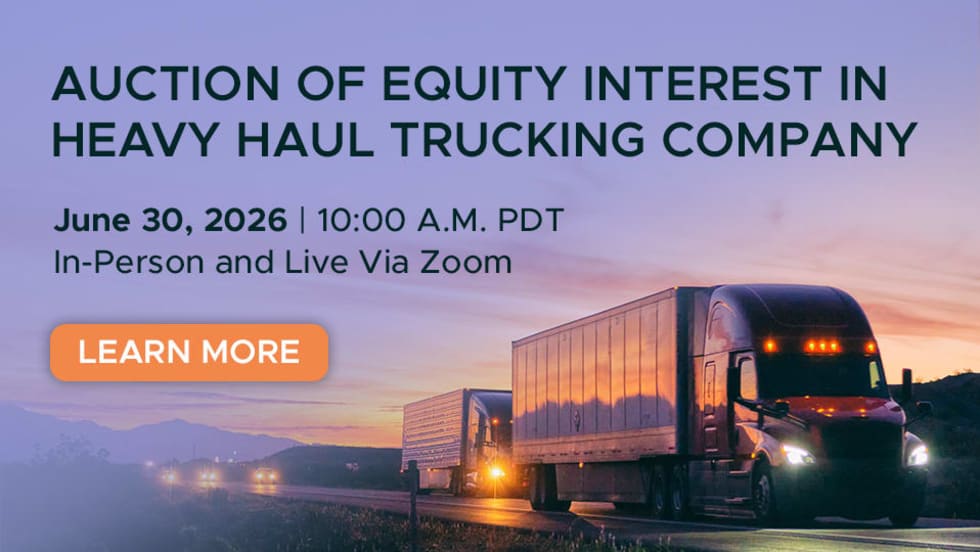
AUCTION OF EQUITY INTEREST IN HEAVY HAUL TRUCKING COMPANY!!
Mark your calendar: June 30, 2026 (10:00 a.m. PDT). MagnaTrans, LLC, a California limited liability company doing business as Magna Transportation Group is going to auction! Bid on a 37.5% ownership interest in this Rancho Cucamonga-based heavy haul and over-dimensional trucking company operating across California, Oregon, and Arizona. The equity interest will be sold to the highest bidder or bidders under Article 9 of the Uniform Commercial Code at 10:00 a.m. PDT.
Read More →
Volvo Trucks Adds Unattended Over-the-Air Software Update Capabilities
The latest evolution of Volvo’s over-the-air update technology allows software updates to run while trucks are parked, helping fleets keep vehicles current without disrupting operations.
Read More →
How Waste Connections is Using Data, Telematics, and AI
How do you manage and maintain more than 18,000 connected trucks? Data. Lots of it.
Read More →
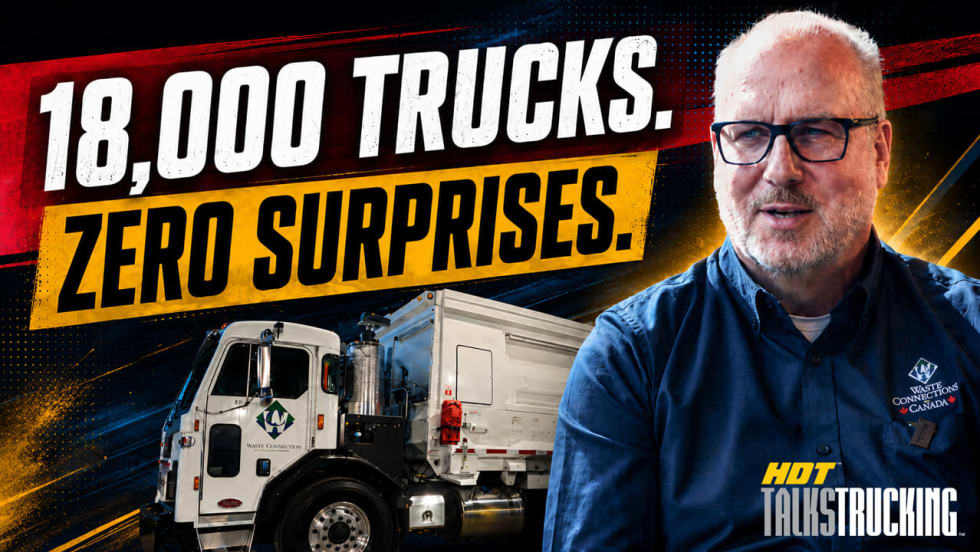
Why Fleet Data Matters More Than Ever at Waste Connections [Watch]
Waste Connections' Chuck Palmer explains how telematics, predictive maintenance, safety analytics, and AI help keep vehicles on the road and drivers safe in this episode of HDT Talks Trucking.
Read More →
NMFTA Launches Free, Anonymous Cybersecurity Threat Report Portal
Organizations are encouraged to anonymously report freight fraud, cargo crime, and cyber threats while gaining visibility into incidents reported across the transportation sector.
Read More →
AI Can Optimize a Fleet. Can It Replace Human Judgment?
Fleets fear falling behind if they don’t adopt AI quickly enough. They also fear what happens if the technology makes the wrong decision.
Read More →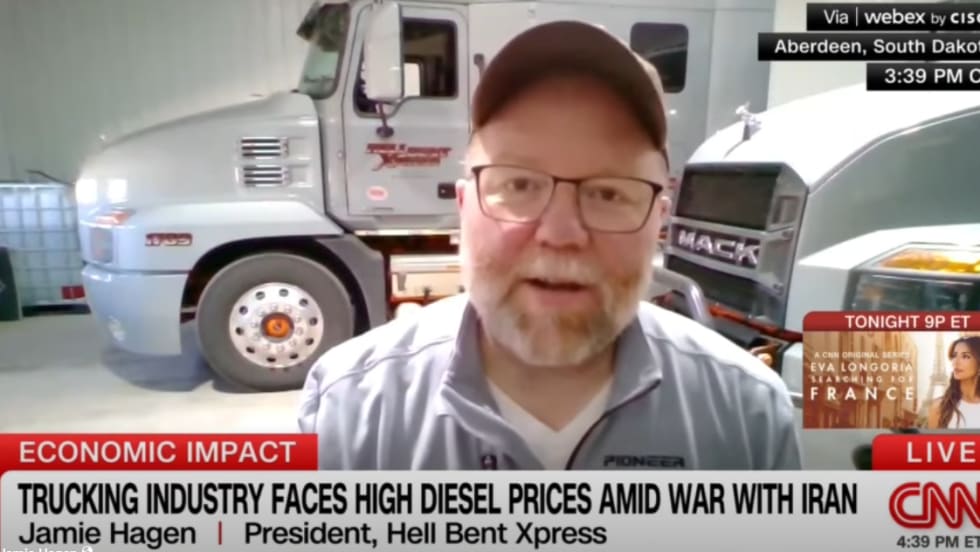
Jamie Hagen Gets Real About Running a Small Fleet in an Uncertain Economy
Small fleet owner Jamie Hagen says new legal risks, volatile fuel prices, and a changing freight market are forcing small carriers to rethink how they operate — and what they can afford.
Read More →
Jamie Hagen Gets Real About Freight, Fuel Prices, Safety, and Small-Fleet Survival
Running a small trucking fleet right now isn’t easy, especially right now. And Jamie Hagen doesn’t sugarcoat it.
Read More →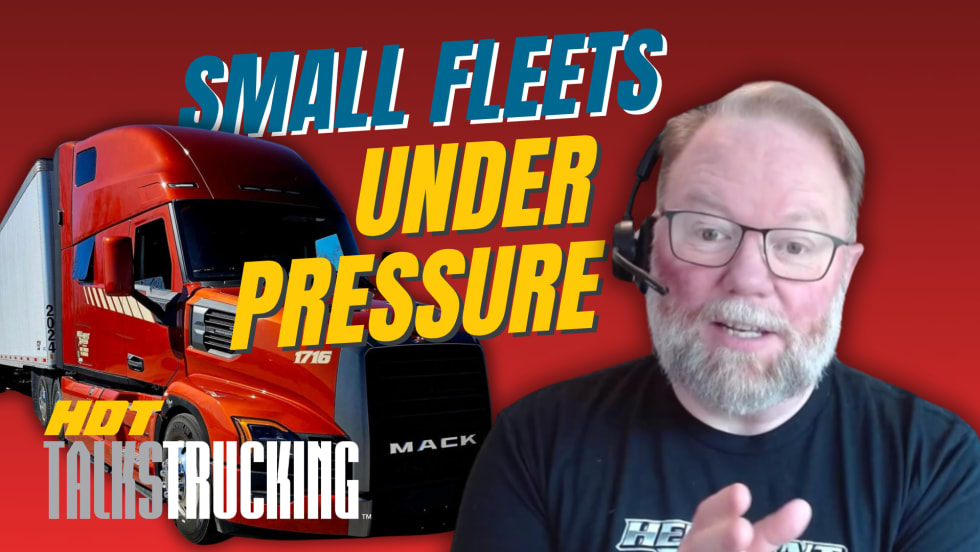
Jamie Hagen Gets Real About Freight, Fuel Prices, Safety, and Small-Fleet Survival
Running a small trucking fleet right now isn’t easy, especially right now. And Jamie Hagen doesn’t sugarcoat it.
Read More →
Data Lock‑In or Integration Lock‑Out?
Data fragmentation is costing dealerships, OEMs, fleets, and upfitters millions. Here’s why interoperability may be the fix the trucking industry needs.
Read More →