




Shippers Look for More Than Freight Rates: An Interview With NITL President Bruce Carlton
Bruce Carlton is president and CEO of the National Industrial Transportation League, which represents shipper interests in Washington, D.C. Here's an edited version of an interview with Carlto


HDT interviewed NIT League President Bruce Carlton.
Bruce Carlton is president and CEO of the National Industrial Transportation League, which represents shipper interests in Washington, D.C. Here's an edited version of an interview with Carlton
conducted prior to the League's annual meeting in Anaheim, Calif., in November.
Q: These exceptionally difficult economic times have placed great stress on the supply chain. Carriers and shippers alike are making a lot of adjustments just to get through. When we emerge from this period and look back on it, what are the big changes we'll see?
A: Carriers are going to look at their customer base find that some of those customers don't exist any longer. They will not have weathered this very deep recession. Shippers are going to look at their carrier selections over the last few years and see that some of them don't exist, that they have been acquired by others or that they have changed their business model.
I think everything is in play, including pricing, service levels and the players themselves. Sourcing patterns will be different, expectations will be different. When something as cataclysmic as this recession occurs, all of these things end up being questioned and reevaluated. It makes predicting the future very difficult and it also suggests that both carriers and shippers need to be nimble, open to new ways of doing things.
The more sophisticated shippers frame the situation as a short-run phenomenon. They may be earning some temporary value from reduced rates it makes them look good to their bosses but they know that in the mid- to long-term they need to have a partner to work with. They know that it does them absolutely no good to drive rates down to a point that they are non-compensatory. If we wake up a year or two from now and find that some significant percentage of carrier capacity has left the market, how do we handle the recovery?
So I don't think that most shippers are really working only for today. They know that they need to keep the carrier community viable. That's not to say that they want to pay a premium for service, but it also suggests to me that shippers are looking for more than freight rates.
If a carrier can work with a shipper and say, we know that you are changing your internal structures to maximize your operations, we will work with you because we want to be your carrier partner, that's a good arrangement. The big-thinking shipper is going to seize on an opportunity like that.
Q: Congress is now officially overdue on legislation to update the federal transportation program. How long will it take to get this done?
A: In the world of transportation, reauthorization is the big gorilla. But it turns out that there's a much, much bigger gorilla health care reform. That has apparently tied our Congress up in knots, and they're not multitasking.
I think we have witnessed a lost opportunity. I give [Rep. James Oberstar, D-Minn., Chairman of the House Transportation and Infrastructure Committee] a lot of credit for working the issue and producing a bill. It's on the shelf right now and my candid observation is that we'll kind of limp along with Continuing Resolutions.
I think it's unfortunate. The freight community has never been as united as it is right now in calling out for a new direction in national transportation policy, including freight transportation.
The public understands the necessity of it as well. No one has to explain what infrastructure means to the man on the street. Americans understand we are falling behind. We have a big job to get done; we ought to get around to doing it.
Q: The issue turns on the political will to pay for what's needed. Is Congress ready to tackle that decision?
A: The big issue is how to pay for it. NIT League members would support an increase in gas and diesel taxes provided the money does not get spun off and used for other purposes, but our members and transportation professionals recognize that this is probably a stopgap provision. Even if fuel taxes are indexed for inflation, which they should have been over these years, we're changing the bigger picture with smaller, more efficient cars and alternative fuels. That suggests we ought to take a very serious look at a vehicle mile tax. But until we can design a better mousetrap, the fuel tax one works. It's a user fee and the cost of administration is absolutely minimal.
But asking a member of Congress to vote yes on a tax increase is tough stuff. Somewhere in our recent history, the American public began to believe that we could always have tax reductions, and still have the public goods and services traditionally provided by government. Maybe we've reached the end of that road. When you fight wars halfway across the globe, have an economy turned upside down, unemployment at just about 10 percent on a national basis and much higher than that in certain regions, and a health care crisis in terms of spiraling costs, it may be time to recalibrate our picture of what it is we as citizens need to contribute to the solution of these problems.
When people complain about congestion, they have every right to: The roads are congested. A Highway Trust Fund that is designed to maintain what we have is not going to give us the new capacity that we need. Taxes are not the only means. We need to look at partnerships and private sector finance, which lend themselves to building new capacity.
Q: The administration and the Senate are talking about taking this up in 18 months, while Rep. Oberstar is pushing for quicker action. What's your take on the schedule?
A: I'm thinking that 18 months is more likely. It's easy to put this one on the back bench, partly because things are still working and partly because we tend to do things at the 11th hour. In the end it will take leadership. I'm still optimistic that leaders in the administration and Congress will step forward and say, OK, let's get this job done.
Q: A big issue in reauthorization will be truck sizes and weights.
A: The League is committed to responsible and safe increases in truck sizes and weights. That will require an additional axle and a willingness to pay for the privilege. League members willing to pay their fair share of the cost associated with the federal bridge formula.
Safety advocacy groups believe strongly that this would be unsafe. But I've never talked to a League member who does not believe that safety is job one. I've never talked to a League member who says, "I want a 98,000-pound weight limit and to the devil with the safety issues." They are very aware of it and they are seeking these increases in an environment that would be safe. It becomes very quickly an emotional issue and no one believes it would be easily won, because the camps are pretty far apart.
I know that within the trucking industry there are mixed views. For some companies it would make a lot of sense. Others have no interest and actively oppose it. We believe it adds productivity and efficiency in certain segments.
Q: League members do business with the railroads that oppose higher size and weight limits. Are you able to influence their position?
A: We try to influence each other and neither side has succeeded. The railroads see it as a market share issue, and they are pretty well dug in. I can say, candidly, that I have not been able to change their mind. But at the same time, they have not been able to change our mind, either.
Q: There's a rule pending at the Federal Motor Carrier Safety Administration that probably will require electronic onboard recorders for some trucking companies. What is the League's take on that issue?
A: We have no formal policy on them. But a core value of the League is to do transportation safely and fairly. If there is an outrider who is cheating, that gives him an unfair advantage over someone who is following the hours of service rules. That's no
More Fleet Management
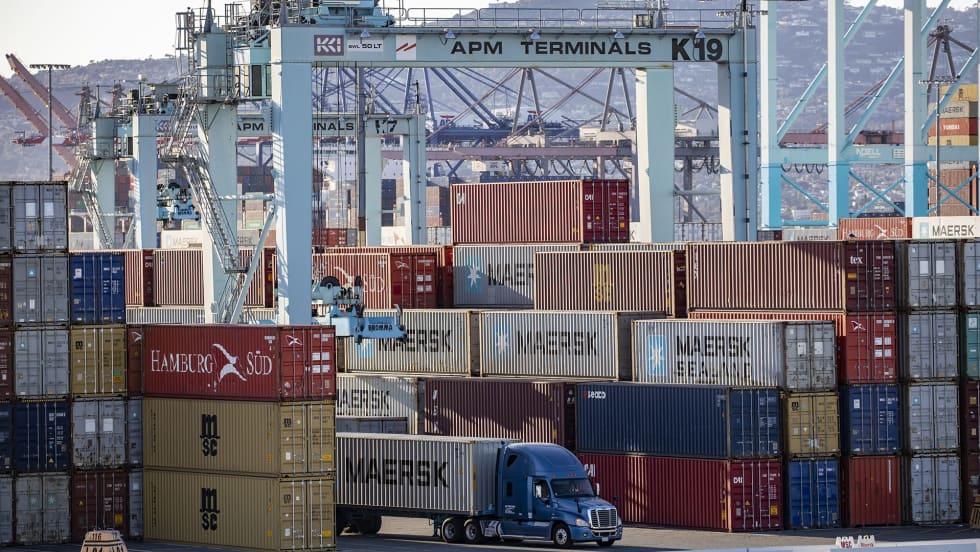
Import Cargo Volume to See Year-Over-Year Gain Again in June, Then Remain Below 2025 Levels Into Fall
After July, the report predicts a weakening in import volume as consumer uncertainty remains high and the impact of increasing inflation takes its toll.
Read More →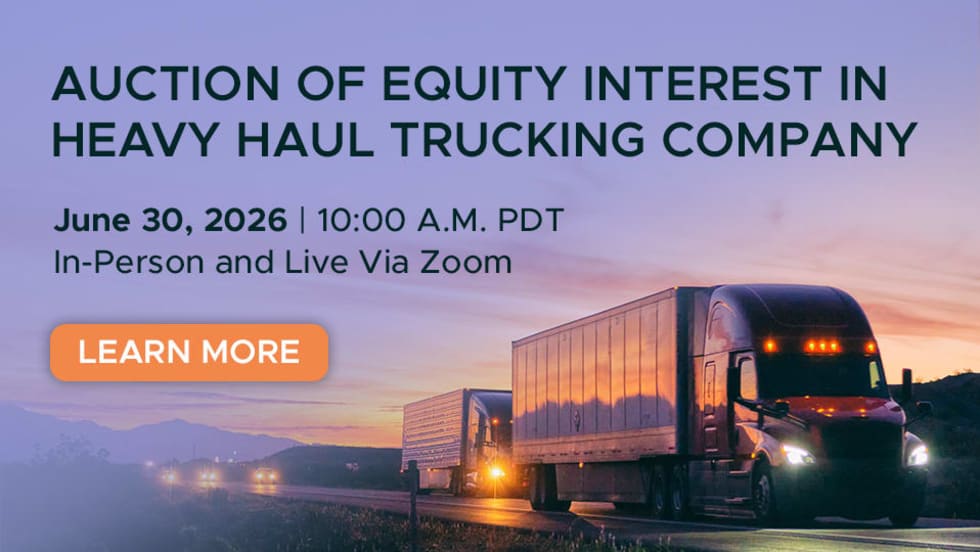
AUCTION OF EQUITY INTEREST IN HEAVY HAUL TRUCKING COMPANY!!
Mark your calendar: June 30, 2026 (10:00 a.m. PDT). MagnaTrans, LLC, a California limited liability company doing business as Magna Transportation Group is going to auction! Bid on a 37.5% ownership interest in this Rancho Cucamonga-based heavy haul and over-dimensional trucking company operating across California, Oregon, and Arizona. The equity interest will be sold to the highest bidder or bidders under Article 9 of the Uniform Commercial Code at 10:00 a.m. PDT.
Read More →
Volvo Trucks Adds Unattended Over-the-Air Software Update Capabilities
The latest evolution of Volvo’s over-the-air update technology allows software updates to run while trucks are parked, helping fleets keep vehicles current without disrupting operations.
Read More →
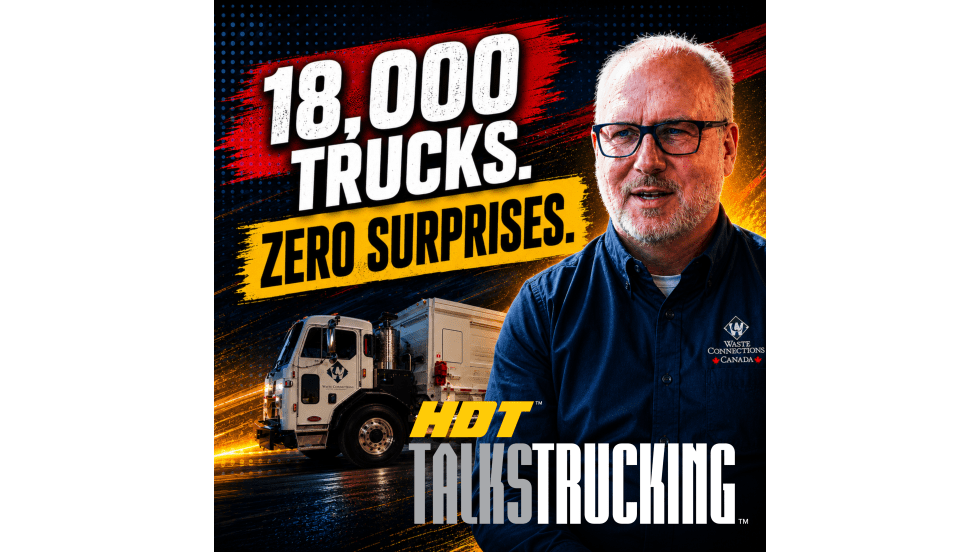
How Waste Connections is Using Data, Telematics, and AI
How do you manage and maintain more than 18,000 connected trucks? Data. Lots of it.
Read More →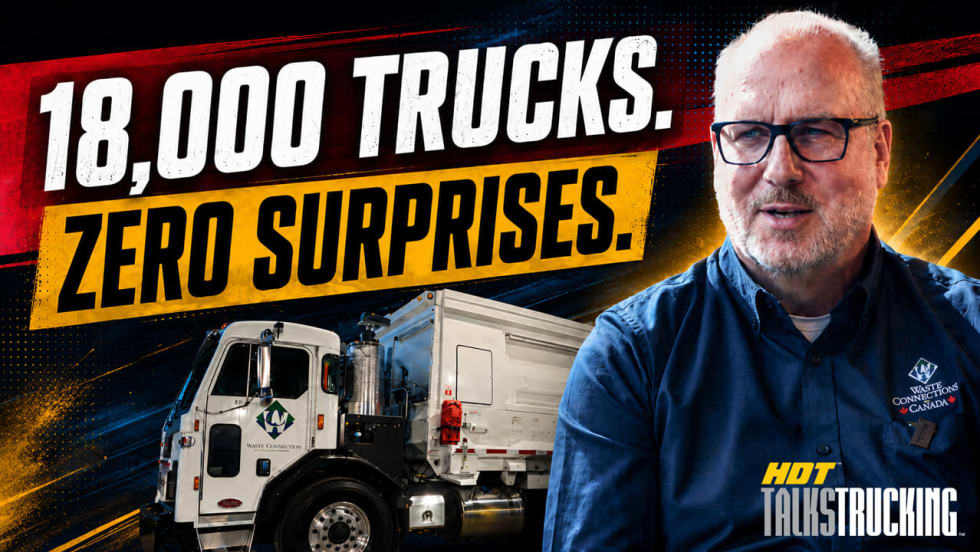
Why Fleet Data Matters More Than Ever at Waste Connections [Watch]
Waste Connections' Chuck Palmer explains how telematics, predictive maintenance, safety analytics, and AI help keep vehicles on the road and drivers safe in this episode of HDT Talks Trucking.
Read More →
NMFTA Launches Free, Anonymous Cybersecurity Threat Report Portal
Organizations are encouraged to anonymously report freight fraud, cargo crime, and cyber threats while gaining visibility into incidents reported across the transportation sector.
Read More →
AI Can Optimize a Fleet. Can It Replace Human Judgment?
Fleets fear falling behind if they don’t adopt AI quickly enough. They also fear what happens if the technology makes the wrong decision.
Read More →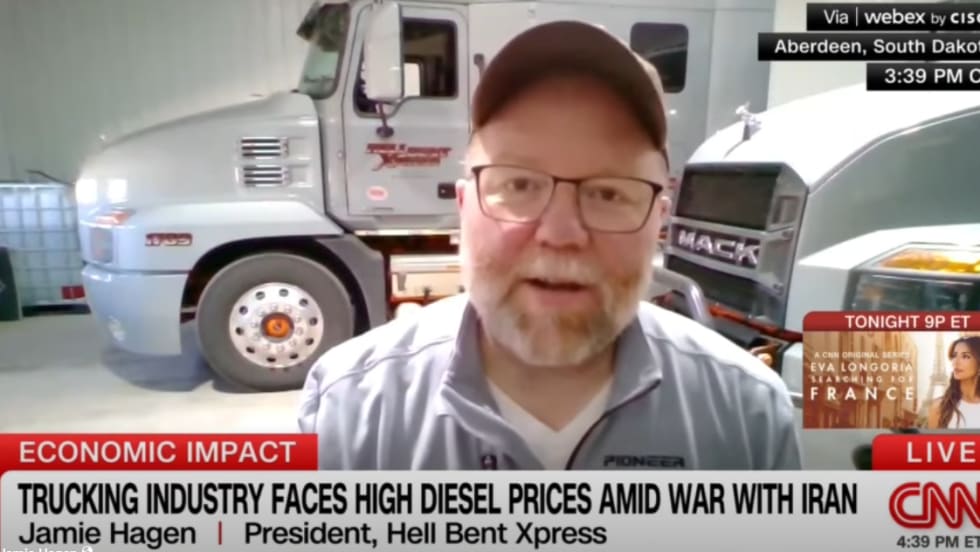
Jamie Hagen Gets Real About Running a Small Fleet in an Uncertain Economy
Small fleet owner Jamie Hagen says new legal risks, volatile fuel prices, and a changing freight market are forcing small carriers to rethink how they operate — and what they can afford.
Read More →
Jamie Hagen Gets Real About Freight, Fuel Prices, Safety, and Small-Fleet Survival
Running a small trucking fleet right now isn’t easy, especially right now. And Jamie Hagen doesn’t sugarcoat it.
Read More →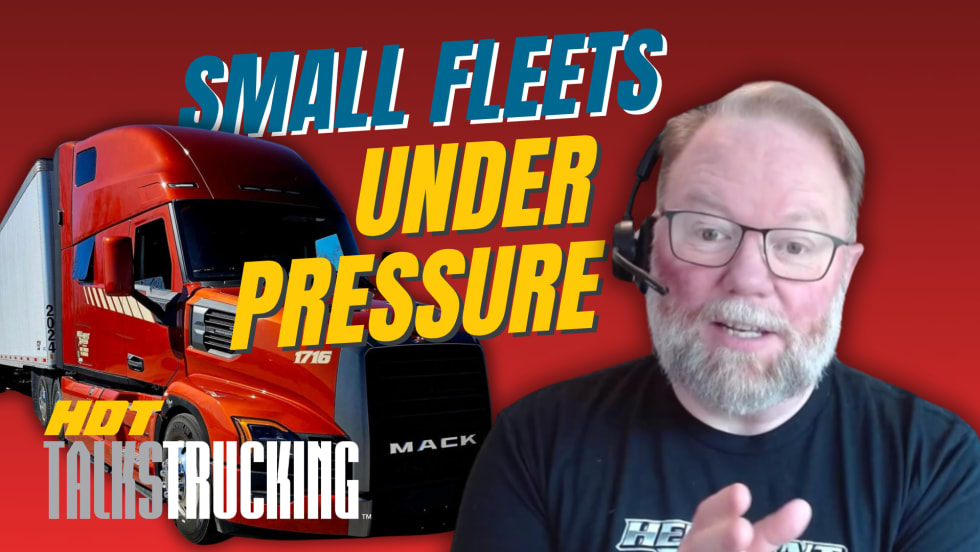
Jamie Hagen Gets Real About Freight, Fuel Prices, Safety, and Small-Fleet Survival
Running a small trucking fleet right now isn’t easy, especially right now. And Jamie Hagen doesn’t sugarcoat it.
Read More →