




Steelworkers Union Attacks ITC's Handling of Chinese Tire Tariffs
Attorneys for the United Steelworkers have laid out their case with the ways they believe the International Trade Commission erred in February when it didn’t order tariffs on truck and bus tires from China.

Photo: Jim Park

Photo: Jim Park
Attorneys for the United Steelworkers have laid out their case with the ways they believe the International Trade Commission erred in February when it didn’t order tariffs on truck and bus tires from China.
In its 52-page memo filed Sept. 1 in the U.S. Court of International Trade, the USW insists the vote not to impose tariffs is in contrast to the evidence presented to the commission. There are four broad issues:
The substitutability of domestic and imported tires
Price
Impact of imports
Threat to the domestic industry
In all four categories, the USW says the commission’s decision wasn’t based on the evidence presented.
The substitutability of tires: The union went back to questionnaire responses filed in the case to show how purchasers, importers and domestic producers measured Chinese tires against their domestically produced counterparts. About three out of four of these respondents said the tires “were always or frequently interchangeable.”
Tire prices: Tire buyers said price was an important factor in their purchasing decisions: 80% said it was “very important,” while the others said it was at least “somewhat important.” Fourteen purchasers, of 70% of those responding, said price was one of their top three factors to consider, second only to quality, which was cited by 15 purchasers.
“Despite this high degree of substitutability and the importance of price in purchasing decisions, the commission majority determined that purchasers would choose to buy higher-priced tires due to alleged differences in branding, quality, tiers and other factors.”
The USW also says even though the commission recognized that underselling by imports was “pervasive and significant,” the ITC says it was mitigated by other factors. The USW says the evidence of dropping raw material costs wasn’t enough to offset the price depression, which is what the ITC had concluded.
“It was not correct that raw material prices declined faster than (tire) prices by any metric observed,” the USW says. It says raw material costs fell by $35 per tire from 2013 to 2015. In the aftermarket, prices for the same products fell by $59.85 on average during the same timeframe.
Impact of imports: Here’s a look at the industry from 2013 to 2015. Demand for truck and bus tires in the U.S. increased by 21.3%. During the same period imports from China increased 41.9%. Market share for imported truck and bus tires increased by 4.9%, while domestic market share dropped 7.7%. Domestic shipments increased by “an anemic 3.9%.”
The USW says the commission “failed to analyze the modest improvements in certain industry indicators in light of the conditions of competition, particularly in the context of the rapid growth in demand that reached a cyclical peak in 2015.
“From 2013 to 2015, demand grew five times faster than domestic shipments, and subject imports grew 10 times faster than domestic shipments.”
The USW says domestic performance should have risen more during that peak.
The commission cited several factors in determining the domestic industry hadn’t been injured by imports, including the increase of production, shipments, wages, productivity and gross profits.
The USW points to language which cautions the USW from examining the health of an industry “in any abstract sense. An industry’s health should be determined in the context of the impact that imports are having on that industry.”
And previous courts have provided similar advice, according to the USW:
“The ITC should not be engaged in a determination of whether an industry is ‘healthy.’ A ‘healthy’ industry can be experiencing injury from importations and an ‘unhealthy’ industry can be unaffected by importations. The purpose of the ITC’s investigation is to determine whether imports are a cause of any effect on an industry which would amount to ‘material injury.’
Threat to the domestic industry: Among the factors the ITC is to consider when determining if an industry is threatened by material injury by imports is:
subsidies to the imported industry,
unused production capacity and increases in capacity,
the availability of other export markets for their products,
significant increases in volume or market penetration,
if the prices of imported products is likely to depress or suppress domestic prices.
Among the data on the record for truck and bus tires from China, the USW pointed to these factors:
The industry in China increased its capacity by almost 17 million tires, or 17%, from 2013 to 2015.
Excess capacity grew by 63%, and was nearly 19 million tires in 2015, “enough to more than triple 2015 exports to the United States and wipe out all of domestic producers’ U.S. shipments that year.”
There was evidence of 16 projects to further increase capacity in China in the near future “which would increase Chinese capacity by more than 40 million tires.”
The USW says the ITC was wrong in finding that the subsidy programs weren’t export subsidies.
The union also says the commission was wrong in ruling that the domestic industry couldn’t respond to the increase in demand for tires due to capacity constraints. “The commission’s determination ignores ample contradictory record evidence indicating that subject imports would increase significantly in the imminent future, and that such increases would not be commensurate with demand but would continue to come at the expense of the domestic industry.”
What the union wants
For all of these reasons, the USW says “the court should hold unlawful” the commission’s vote, and respond with a ruling that instructs the commission to issue “a determination consistent with the court’s decision.”
Editor's note: This story initially appeared on ModernTireDealer.com, a sister publication.
More Equipment

Kodiak Targets Dallas–Houston for Driverless Trucks
The company says its autonomous trucks are completing the I-45 run without a safety observer taking control. It plans to remove the observer by the end of 2026.
Read More →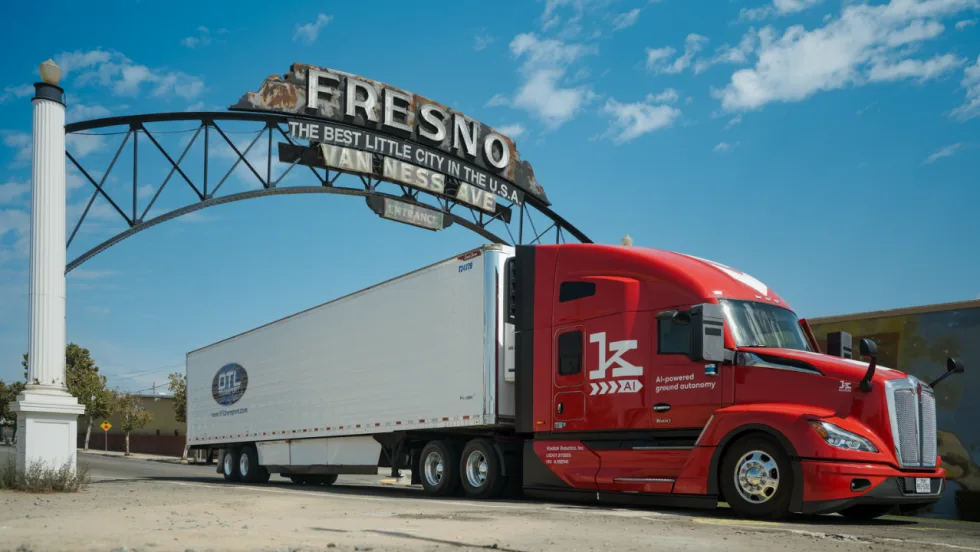
Kodiak Hauls Produce in California Autonomous Truck Pilot
Kodiak AI and DTL Transport have begun hauling produce between Fresno and Los Angeles under California’s new rules for testing heavy-duty autonomous trucks. A safety driver remains behind the wheel.
Read More →
Used-Truck Remarketing Math Is Changing
Used-truck value is no longer just a concern at trade-in. Decisions made throughout a truck’s first life can influence what it’s worth years later.
Read More →
How Volvo Updated Its D13 for EPA 2027 [Watch]
Volvo’s updated D13 promises lower emissions without sacrificing performance or fuel economy. Take a closer look at what changed inside the engine in this HDT Spotlight video.
Read More →
Michelin Tire Improves Efficiency and Durability for Regional Fleets
The Michelin X Multi Energy D2 is a regional haul drive tire engineered to help fleets improve fuel efficiency, durability and traction in demanding stop-and-go operations.
Read More →
ZF Expands Commercial Vehicle Push in North America
ZF is expanding its North American commercial-vehicle presence with new transmission applications, electrification, trailer technology and autonomous-driving systems.
Read More →
Tesla Wants a Self-Driving Semi. Are Cameras Enough?
Could Tesla’s camera-only autonomous driving technology work on an 80,000-pound Semi? In this commentary, HDT's Deborah Lockridge takes a look at Tesla, Cybercab, and how autonomous trucks see the road.
Read More →Kodiak: Driverless Long-Haul Truck Launch on Track for 2026
Kodiak AI says its driverless long-haul safety case is 93% complete and it remains on track to begin commercial operations by year-end 2026.
Read More →
What DOT’s Automated Vehicle Strategy Means for Trucking
The U.S. Department of Transportation issued a new automated-vehicle strategy that outlines plans for driverless-truck regulations, cross-state freight corridors, and federal safety standards.
Read More →
East Coast Port Launches $45M Electric Truck Push
The Port Authority of New York and New Jersey announced millions in incentives for zero-emission drayage trucks, yard tractors, and new charging hubs near the port.
Read More →