




International LT Launched Loudly, Described Enthusiastically
Navistar unveiled its new International LT series in Las Vegas on Sept. 30 with speeches, videos, hard rock music, and fire-and-smoke effects – a launch befitting a "Vegas" production and a vehicle range that will become the company’s flagship model and, executives hope, the most popular highway tractor on the market.

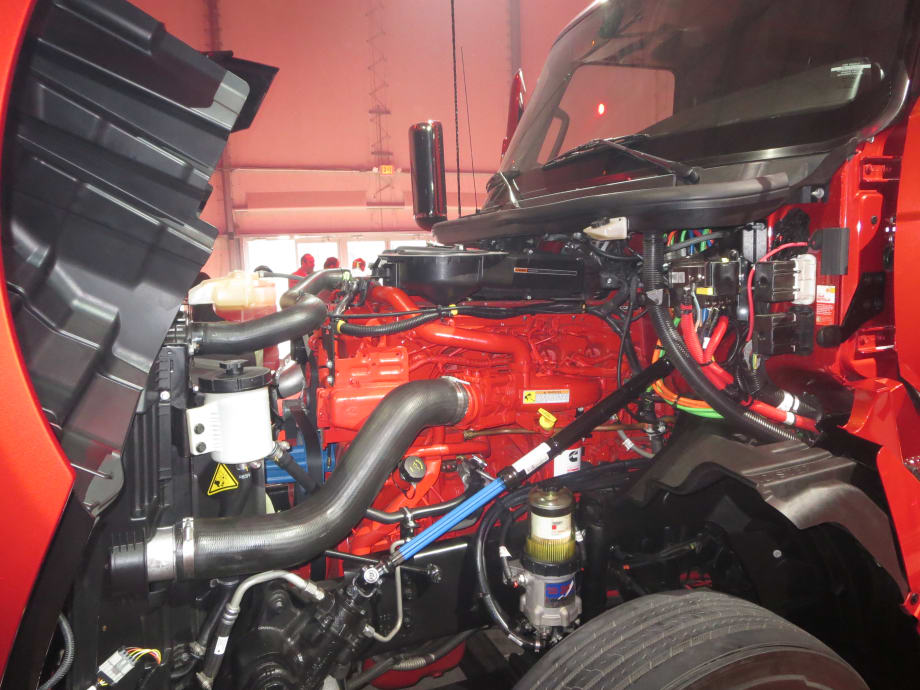
Popularity of Cummins ISX15 in ProStars led Navistar to choose the X15-powered LT625 as its initially introduced model. Cummins engines will be offered "as long as customers want them," a marketing exec said.
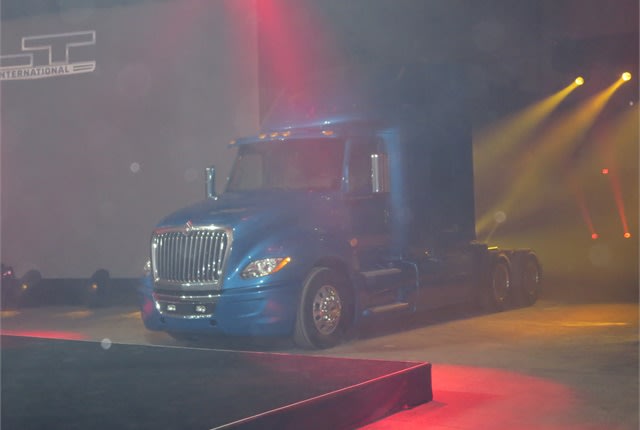
International LT625 sleeper-cab tractor appears amid clearing smoke at Navistar's 'Vegas-worthy launch event on Friday. Photos: Tom Berg
Navistar unveiled its new International LT series in Las Vegas on Sept. 30 with speeches, videos, hard rock music, and fire-and-smoke effects – a launch befitting a "Vegas" production and a vehicle range that will become the company’s flagship model and, executives hope, the most popular highway tractor on the market.
At the event at the World Market Center, dealers and customers applauded and some trade press reporters nodded approvingly as three tractors drove onto a platform from which top executives had previously spoken. All emphasized the customer research and meticulous design and engineering work that had gone into the new model. It will begin replacing the nine-year-old ProStar series when it enters production in November.
The initial version has Cummins power, and several Navistar execs remarked that their company's strong relationship with Cummins will continue, notwithstanding the recently announced alliance with Volkswagen Truck & Bus of Germany.
The Internationl LT (for Linehaul Transport) was publicly announced Friday morning. It is the first model that stems from Navistar’s Project Horizon, a three-year effort to update and improve the ProStar. Horizon affects steel-cab models, and the WorkStar and DuraStar trucks are now being worked on for introduction in 2017.
The HX premium vocational truck, introduced eight months ago and now in production, uses an aluminum cab, so was not part of Horizon.
During development, several Navistar executives rode with fleet drivers to learn what they want in a highway tractor. Drivers' comments and the execs' experiences were chronicled in a video. Those drivers -- Kenneth Stiltner of Cowan Systems, Jose Reyes of Mesilla Valley Transportation and David Spore of J.B. Hunt -- were present at the launch in Las Vegas.
The LT has many driver “delighter” features -- greater comfort and roominess, ergonomically laid out instruments and controls, measurable quietness, better ride, and easier handling, said Steve Gilligan, vice president, product marketing. He called the LT “driver-centric.”
Pleasing drivers to try to retain and recruit them will help fleets counteract the driver shortage, said Bill Kozak, president, Truck and Parts. “The driver shortage is the biggest barrier fleets have to uptime” because many trucks now are unmanned. So Navistar ran multiple clinics where designers and executives quizzed drivers and fleet owners on what they want in a truck and how the ProStar could be improved.
Other goals in designing the LT were improved fuel economy, accomplished through smoother aerodynamics and use of Cummins’ re-engineered X15 diesel and later, Navistar’s own improved N13 diesel; more uptime through easier servicing of carefully placed components; and improved safety.
Navistar is making Bendix’s Wingman Advanced collision mitigation system and electronic stability control standard on the LT to boost safety, said Denny Mooney, senior vice president, Global Product Development. Collision mitigation warns of slower objects ahead and will apply the brakes if the driver doesn’t; it has been proven effective in millions of miles of fleet use. Stability control will be mandated by federal rules in about a year, and standardizing on it now gets Navistar ahead of the rule.
Navistar’s "DriverFirst" slogan and the emphasis on driver-pleasing designs in the LT might seem superfluous in view of platooning tests and talk of “driverless trucks,” observed Troy Clarke, Navistars president and chief executive officer. Such developments might suggest that drivers might eventually become extinct.
But “platooning is like an airplane on autopilot,” he said. “The pilot is still needed for takeoffs, landings, and taxiing. Automation in trucks may be no different: A driver will still be needed for fueling at stations and truck stops, while on freeway ramps, for delivering freight to customers.”
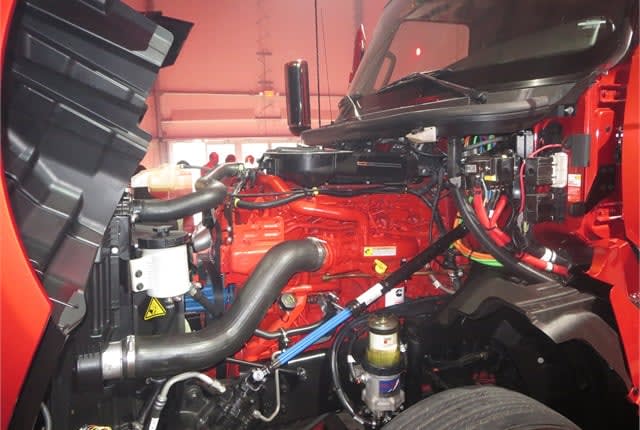
Popularity of Cummins ISX15 in ProStars led Navistar to choose the X15-powered LT625 as its initially introduced model. Cummins engines will be offered "as long as customers want them," a marketing exec said.
The first International Linehaul Transport, the LT625, comes with Cummins’ 2017 X15. Cummins power was chosen for the initial vehicle because the current ISX15 is more popular with customers than Navistar engines. The X15 will have ratings of up to 500 hp for its Economy series and 550 hp for the Performance versions.
The ’17-model Navistar N13 will be available with up to 475 hp and 1,750 lb-ft, Gilligan said. It will be used in the LT613 that will enter production in April. Equivalent ProStar models will phase out as the new LTs go on line. All will be built at Navistar’s plant in Escobedo, Mexico.
Navistar might offer the Cummins X12 when it becomes available in North America. “We're studying it, we’re testing it,” said Gilligan. “Most intriguing is the weight. It’s 2,000 pounds. Our N13 is 2,400 pounds. To weight-conscious customers, like bulk haulers, 400 pounds means a lot. So we’re evaluating it.”
Although a goal of the recently announced “strategic alliance” with VW Truck & Bus is to focus on communizing powertrain components among International, Scania and MAN trucks, Navistar will offer Cummins engines in general “for the foreseeable future,” Gilligan said. “In fact, we just introduced the Cummins L9 on some of our vocational models.”
“Cummins is a great partner,” said Jeff Sass, senior vice president of sales and marketing. “We’ll offer Cummins engines as long as customers want them.”
More Equipment
Continental Introduces New Regional Truck Tires
Continental says its new Generation 5 steer and drive tires for regional operations offer longer tread life, with estimated mileage gains of 22% and 19%, respectively.
Read More →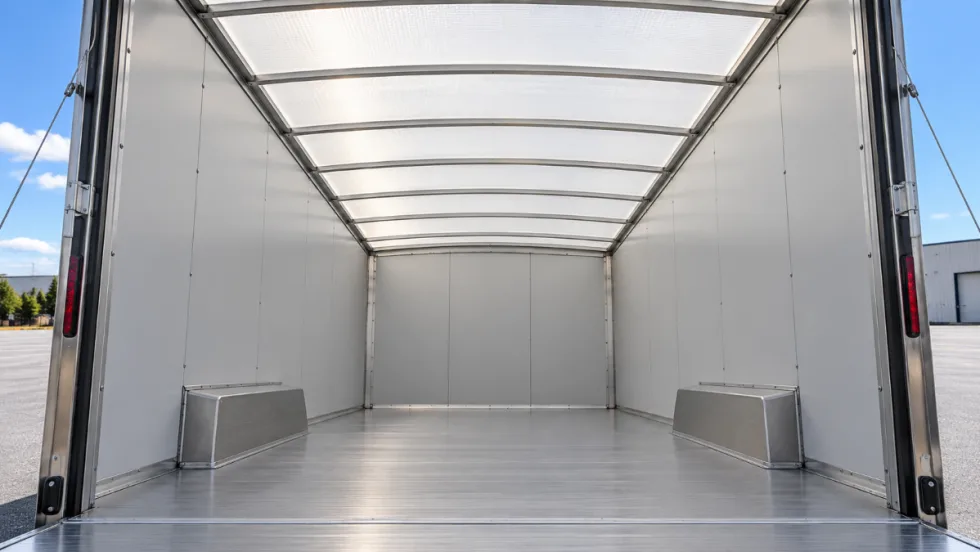
Tekmodo Introduces CargoBright Brand for Translucent Trailer Roofs
CargoBright is designed to diffuse daylight across the cargo area while performing as a working vehicle roof.
Read More →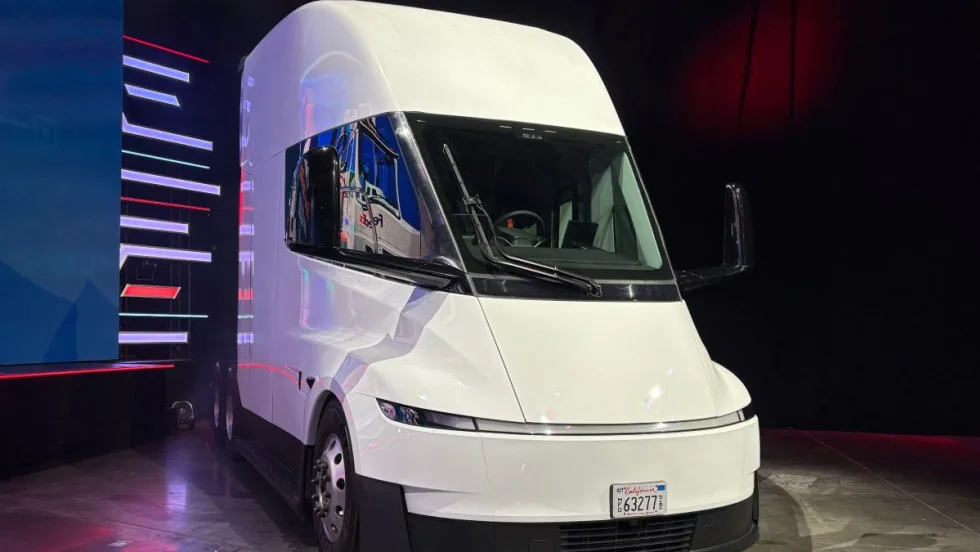
Fleet Economics Shape Electric Truck Outlook
ACT Research expects costs, charging infrastructure, and technology improvements to drive zero-emission commercial vehicle adoption as federal regulations and incentives retreat.
Read More →
Kodiak Targets Dallas–Houston for Driverless Trucks
The company says its autonomous trucks are completing the I-45 run without a safety observer taking control. It plans to remove the observer by the end of 2026.
Read More →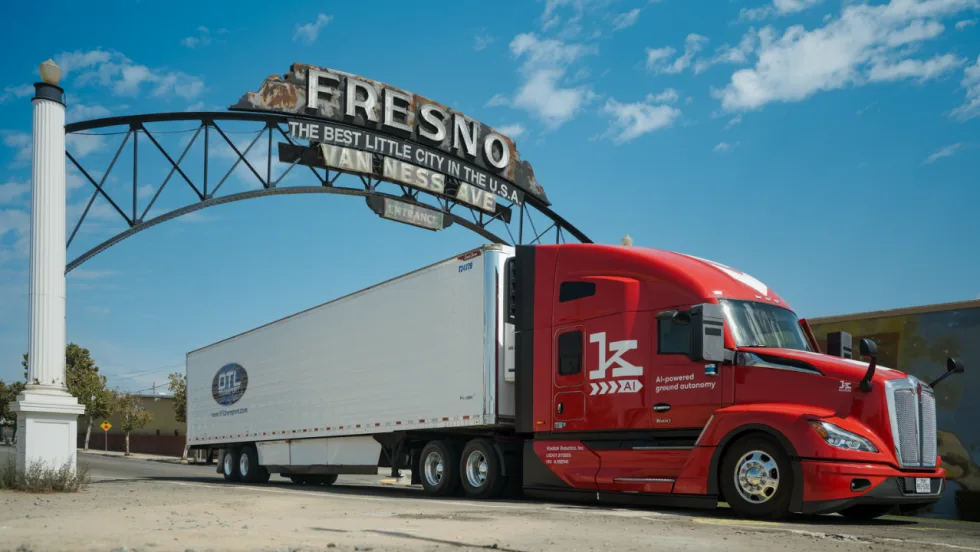
Kodiak Hauls Produce in California Autonomous Truck Pilot
Kodiak AI and DTL Transport have begun hauling produce between Fresno and Los Angeles under California’s new rules for testing heavy-duty autonomous trucks. A safety driver remains behind the wheel.
Read More →
Used-Truck Remarketing Math Is Changing
Used-truck value is no longer just a concern at trade-in. Decisions made throughout a truck’s first life can influence what it’s worth years later.
Read More →
How Volvo Updated Its D13 for EPA 2027 [Watch]
Volvo’s updated D13 promises lower emissions without sacrificing performance or fuel economy. Take a closer look at what changed inside the engine in this HDT Spotlight video.
Read More →
Michelin Tire Improves Efficiency and Durability for Regional Fleets
The Michelin X Multi Energy D2 is a regional haul drive tire engineered to help fleets improve fuel efficiency, durability and traction in demanding stop-and-go operations.
Read More →
ZF Expands Commercial Vehicle Push in North America
ZF is expanding its North American commercial-vehicle presence with new transmission applications, electrification, trailer technology and autonomous-driving systems.
Read More →
Tesla Wants a Self-Driving Semi. Are Cameras Enough?
Could Tesla’s camera-only autonomous driving technology work on an 80,000-pound Semi? In this commentary, HDT's Deborah Lockridge takes a look at Tesla, Cybercab, and how autonomous trucks see the road.
Read More →