




Commentary: Autonomous by Retrofit
A $30,000 self-driving kit available as an aftermarket retrofit for existing trucks... strikes me as something pretty remarkable.

Rolf Lockwood

Rolf Lockwood
Automation won’t go away, and now we have a San Francisco startup called Otto that’s only a few months old, yet has already retrofitted three Volvo tractors with automated-driving technology. That means the sensors and other bits that allow a tractor-trailer to drive itself — though only on Interstate highways where lane markings are especially well defined. Hence, the system’s name: Interstate Autopilot.
The company got its quick start because its founders have been working on vehicle automation for years. Led by former technical lead of Google’s autonomous car division Anthony Levandowski and former product lead of Google Maps Lior Ron, the company is sufficiently confident to say, “We’re a team of the sharpest minds in self-driving technology and robotics.” And it clearly is.
Another former Google employee, Don Burnette, and a robotics specialist, Claire Delaunay, are also part of Otto’s leadership. Because some of them made pretty big money at Google, Otto is completely self-funded.
“Long-haul transit is vital for nearly 70% of the things we buy, yet hundreds of thousands of preventable trucking accidents happen each year on American highways. We believe it’s our responsibility to bring safer, self-driving technology to the road,” says a statement on the company website.
Otto hardware and software is tuned for the consistent patterns and easy-to-predict road conditions of highway driving. Sensors are installed high atop the truck, which offers an unobstructed view of the road ahead. With highways making up only 5% of U.S. roads, Otto says this allows a tight testing focus on a specific set of trucking routes critical for the American economy.
The company says its self-driving kit was designed to “empower truck drivers to drive more safely and efficiently.”
The broad design imperative was to develop a “suite” of sensors, software, and truck enhancements that could be quickly fitted on existing trucks. Testing is actively underway with the Otto research fleet.
“We intend to enhance the capabilities of the Otto truck, collect safety data to demonstrate its benefits, and bring this technology to every corner of the U.S. highway system,” says Levandowski.
“This is a critical effort, with wide-reaching implications for all of us, that requires co-operation between government agencies, the private sector, truck fleets, drivers, manufacturers and the brightest engineers.”
It’s early days, with no ready-for-market date set, but I’ve read suggestions that the price tag will be in the $30,000 range.
I’ll be following this one closely – not so much the technology itself but the reaction by governments and the public to what’s possible. There are some who will embrace it readily, some who’ll fear it, and some will call it the devil’s work. For my part I’m mightily intrigued, not to mention astonished by how quickly all this is moving.
When I saw the autonomous Mercedes-Benz Actros demonstrated on a German highway in 2014, it was a very bright moment even though it didn’t surprise me. All the requisite technology had been there or almost there for quite a few years, after all. I’d seen much of it in action a decade earlier, also in Germany, via Wabco and ZF as well as Daimler, so the reality of an autonomous truck was almost an anti-climax. Cool as hell, definitely, yet evolutionary.
But a $30,000 self-driving kit nearly available as an aftermarket retrofit for existing trucks? That strikes me as something pretty remarkable.
More Equipment

Kodiak Lines Up Fleets for Driverless Trucking
An agreement for 75 trucks, a new Texas freight lane, and progress on safety validation move Kodiak closer to its planned driverless highway launch.
Read More →
How GP Transco Builds Fuel Savings a Fraction at a Time
Aerodynamic specs, solar panels, and driver incentives help GP Transco turn small efficiency gains into savings it can reinvest in its people.
Read More →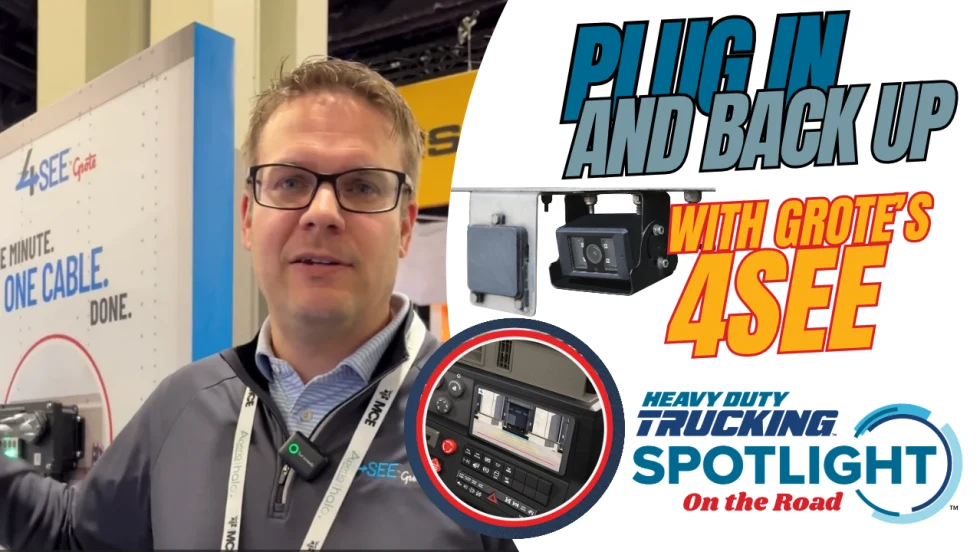
More Trailer Data Through the Same Seven-Way [Video]
Can trucking’s standard seven-way connector handle more cameras and trailer data? Grote’s Adam Slade shows HDT how the company is using new technology with its 4See trailer system, not only to add a new backup camera but also to expand other capabilities — without adding another connection.
Read More →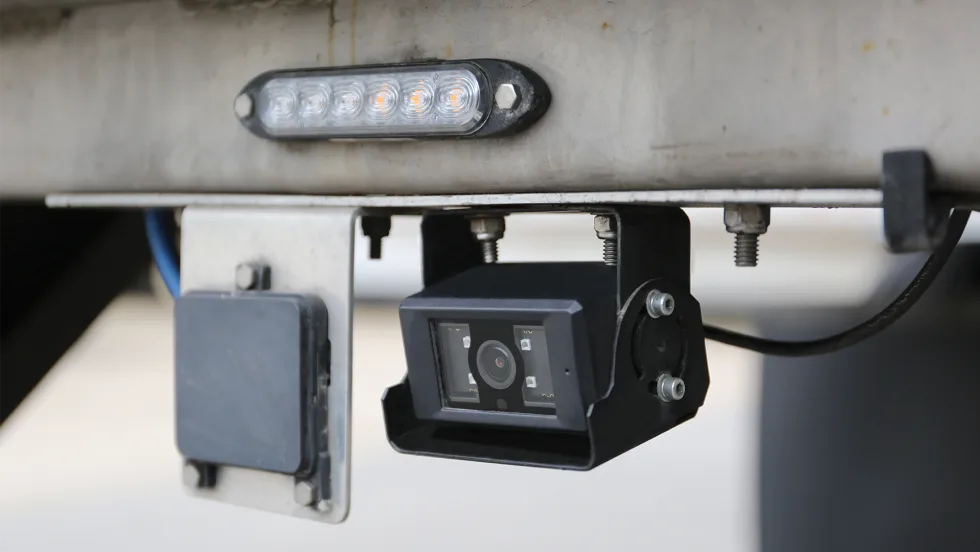
Grote: More Cameras, Same Seven-Way Connector
The next-generation 4See rear-view backup camera from Grote uses the standard seven-way connector and supports additional cameras and other trailer data.
Read More →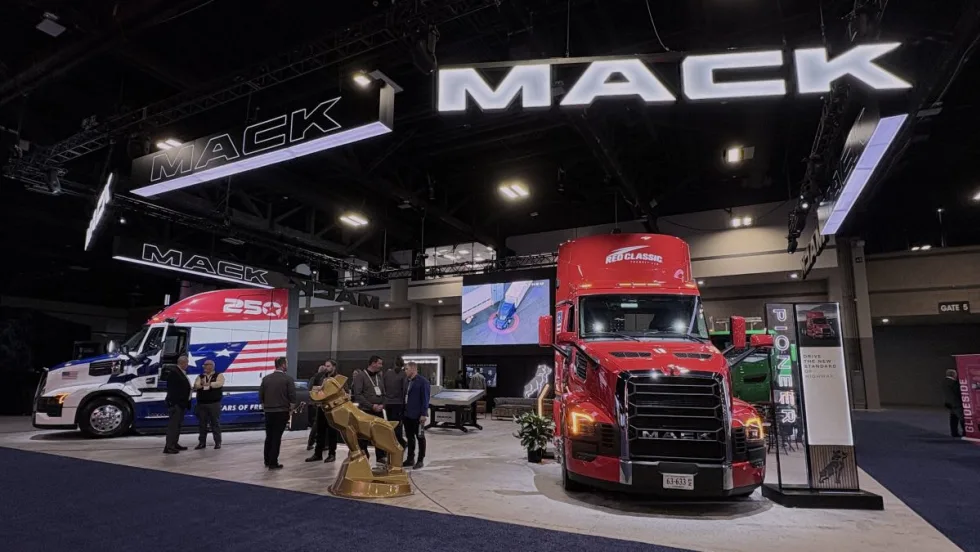
Trucks at ATA's 2026 MC&E in Charlotte, North Carolina [Photos]
From rigs decked out in patriotic America's 250 paint schemes to autonomous trucks and more, check out these photos from ATA's 2026 Management Conference & Exhibition.
Read More →
Help HDT Find Trucking’s Top Products
Have you come across a new product that could make a difference for trucking fleets? Nominate it for HDT’s 2027 Top 20 Products Awards by November 9.
Read More →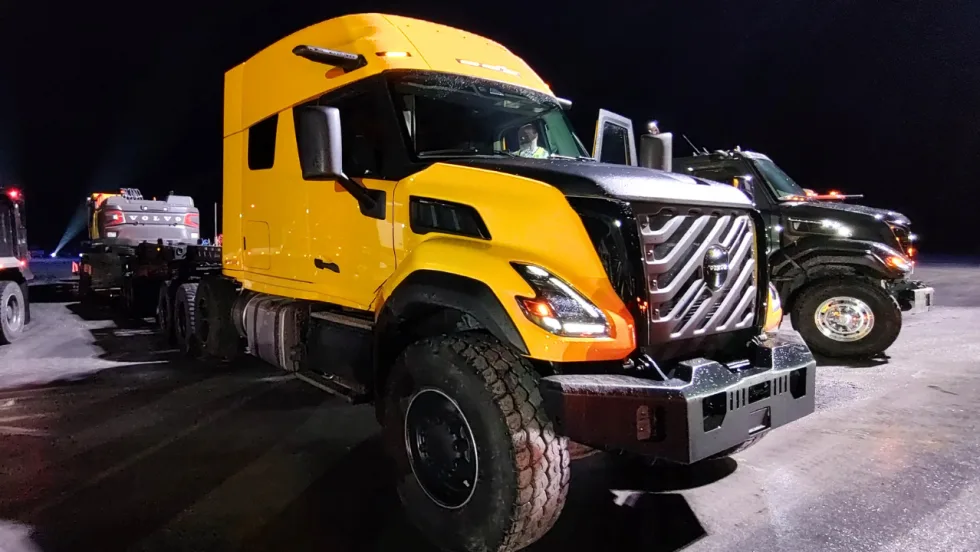
Volvo Unveils New VNX Heavy-Haul and Vocational Truck
Volvo Trucks has launched the VNX, a new vocational truck also available as a tractor in day cab and two sleeper configurations, with one heavy-haul model. The Volvo VNX is powered by Volvo's D13 platform, which delivers up to 540 horsepower and 1,950 pound-feet of torque and is EPA 2027-compliant.
Read More →
How GP Transco Cuts Trucking Fuel Costs, a Tenth of a Gallon at a Time
What’s another tenth of a mile per gallon worth? GP Transco shares how equipment upgrades and driver coaching turn small gains into meaningful fuel savings.
Read More →
Electric Yard Tractors Move Beyond Pilots
Operating-cost savings have overtaken sustainability goals as the leading reason surveyed fleets are adopting battery-electric terminal tractors, according to new NACFE research.
Read More →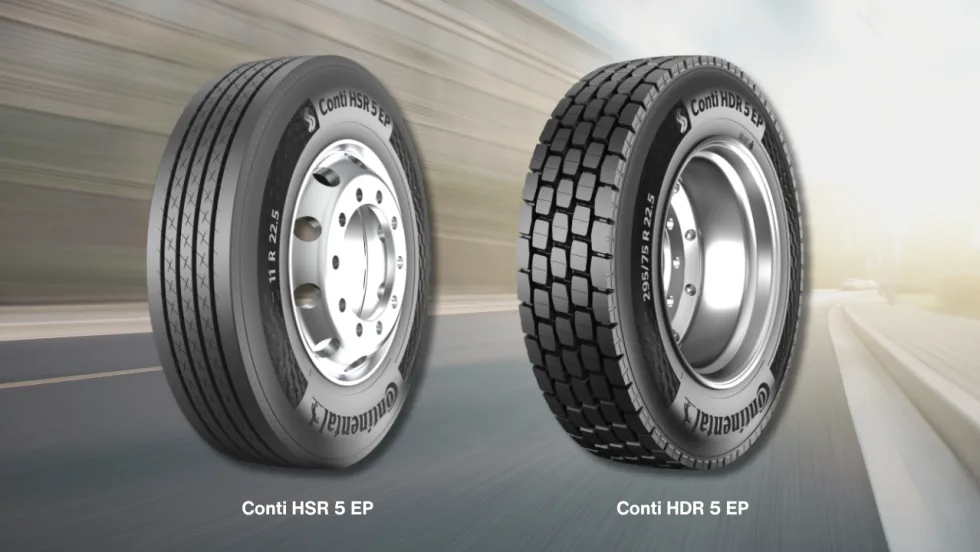
Continental Introduces New Regional Truck Tires
Continental says its new Generation 5 steer and drive tires for regional operations offer longer tread life, with estimated mileage gains of 22% and 19%, respectively.
Read More →