





Related: Dana Preparing ‘Dual Range Disconnect’ 6x4-6x2 Tandem
QuickSpin: Spicer Dual Range Disconnect
It’s easier to describe the performance of Dana’s Spicer AdvanTEK Dual Range Disconnect concept than to explain how it works.
October 23, 2015
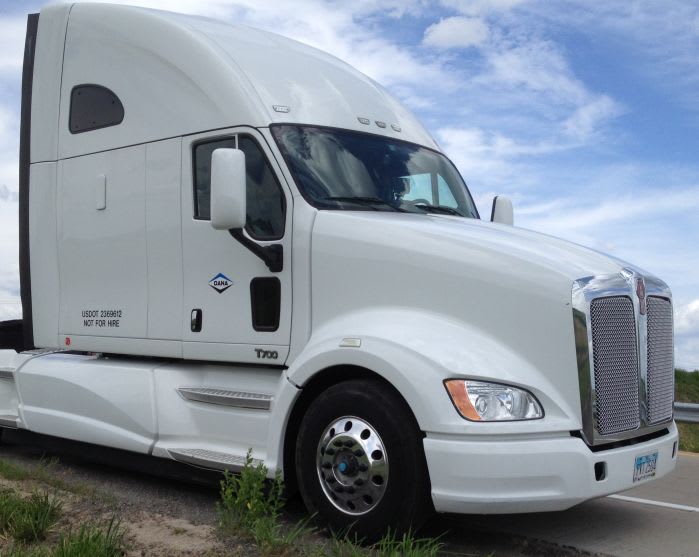
Dana’s Test & Evaluation truck, a Kenworth T700 with a Cummins ISX15 at 450 hp and 1,650 lb-ft, and an Eaton 10-speed UltraShift Plus transmission. Photos: Jim Park
3 min to read
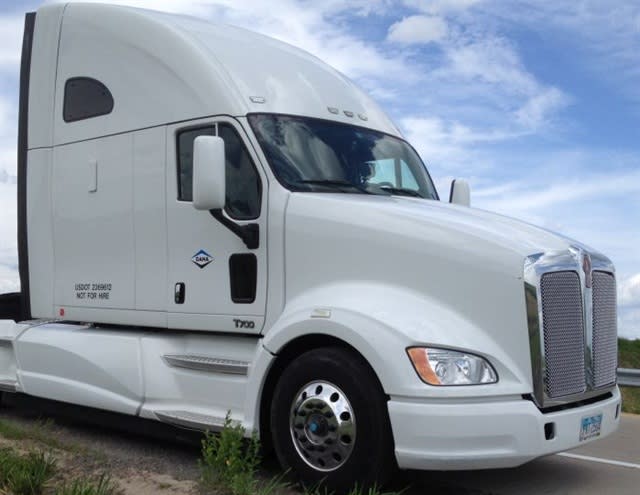
Dana’s Test & Evaluation truck, a Kenworth T700 with a Cummins ISX15 at 450 hp and 1,650 lb-ft, and an Eaton 10-speed UltraShift Plus transmission.Photos: Jim Park
Fortunately, it’s easier to describe the performance of Dana’s Spicer AdvanTEK Dual Range Disconnect concept than to explain how it works.
I had an advance test drive on a truck equipped with a DRD concept drive axle at Dana’s Maumee, Ohio, facility. It was one of three test trucks equipped with the system. Were it not for the little video screen on the dash used by the engineers to monitor the system, I wouldn’t have known it was there.
At this point in the development and testing phase, the DRD is designed to disengage the rear axle of the tandem at a predetermined speed, somewhere between 52 and 54 mph. Steven Wesolowski, the senior director of global advanced engineering at Dana Holding Corp., explains that’s the optimal speed for the powertrain/drivetrain they are working with now, but notes that the axle shifting strategy could change as engineers further refine the system.
At 54 mph, when a mechanical clutch disengages the numerically-higher-ratio rear axle, the “blending” effect of the planetary gears combining the two axle ratios (2.26:1 front; 4.88:1 rear; 3.10:1 combined) is uncoupled and numerically-lower-ratio front axle becomes the sole driving axle. This effectively puts the truck into 6x2 configuration with a 2.26:1 drive axle ratio.
Still with me?
Steve Slesinski, Dana’s director of global product planning, explains that the Dual Range Disconnect provides benefits of a numerically higher ratio 6x4, including full four-wheel traction, slightly livelier response from the engine and less torque-induced stress on the driveline while at lower speeds, and fuel-saving performance of a lower-ratio 6x2 at highway speed. There’s also a slight benefit from the reduction in mechanical drag with the inter-axle driveshaft and the rear-axle gearing being physically disconnected.
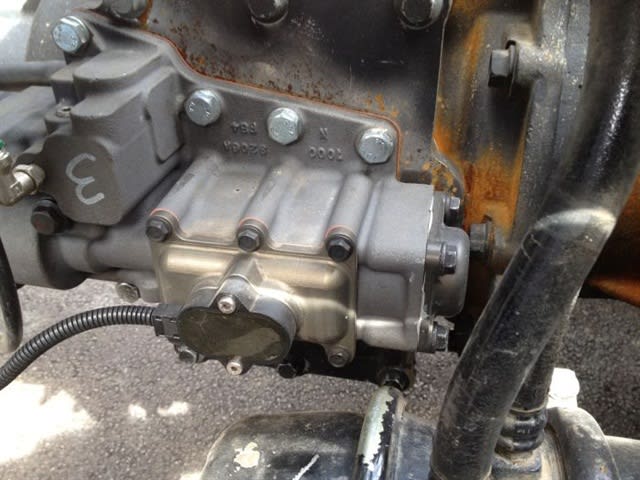
The forward drive axle sports an additional bit of hardware that facilitates the axle shift from 6x4 with all wheels driving to 6x2 with just the forward axle driving.
“Depending on your starting point, the DRD axle system can improve powertrain and driveline efficiency somewhere in the range of 2% to 5%,” he says. “You’ll also get the downsped 6x2 efficiency at highway speed, and better low-speed performance for startability or when backing a trailer into a dock. There, you can go one or two miles per hour rather than three or four with a low-ratio axle.”
Without getting too far into the mechanical details, for all intents and purposes, the Dual Range Disconnect feels like a modern-day 2-speed rear axle. When the axle-range shift occurs, automatically of course, the driver feels nothing different from a normal 9th to 10th gear shift. The engine decelerates to break the torque, the rear axle disconnects and the inter-axle stops rotating, and the engine rolls the power back on about 400 rpm slower than it was prior to the shift.
It feels the same during a downshift. At the predetermined speed, the engine revs up by about 400 rpm, the rear axles re-engage and the truck is now back in 6x4 configuration with combined axle ratios producing a final drive ratio of 3:10:1.
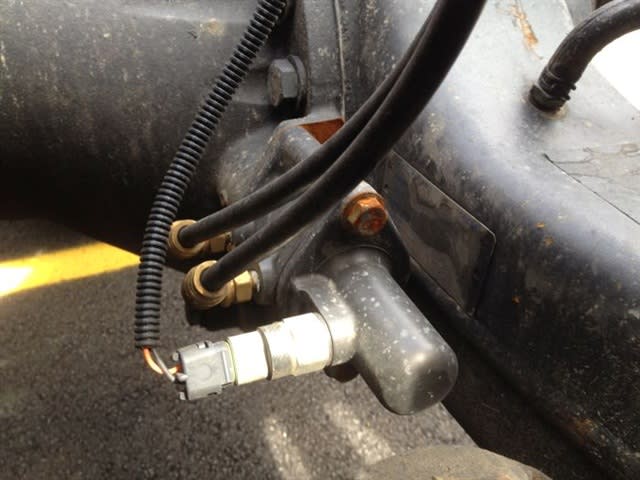
The inter-axle driveshaft engagement clutch is located on the left side of the diff housing on the rear axle.
We were bobtail for the test drive of the DRD system, so I couldn’t really compare the performance difference of the two configurations, but I did notice the drop in engine speed when the rear axle disconnected, and I also noticed the difference in creep speed in reverse between the two ratios while moving at idle.
Going strictly by the numbers, that 400 rpm reduction in engine speed provides a functional downspeed setup, which could produce fuel savings on the order of up to 4%, based on the assumption of 1% savings for every 100-rpm drop in engine speed.
That, along with the reduction in torque stress on the rest of the driveline, and the advantages of 6x4 traction when it’s required, suggests to me that Dana might be onto something here.
Topics:Equipment
Subscribe to Our Newsletter
More Equipment

How Volvo Updated Its D13 for EPA 2027 [Watch]
Volvo’s updated D13 promises lower emissions without sacrificing performance or fuel economy. Take a closer look at what changed inside the engine in this HDT Spotlight video.
Read More →
Michelin Tire Improves Efficiency and Durability for Regional Fleets
The Michelin X Multi Energy D2 is a regional haul drive tire engineered to help fleets improve fuel efficiency, durability and traction in demanding stop-and-go operations.
Read More →
ZF Expands Commercial Vehicle Push in North America
ZF is expanding its North American commercial-vehicle presence with new transmission applications, electrification, trailer technology and autonomous-driving systems.
Read More →
Tesla Wants a Self-Driving Semi. Are Cameras Enough?
Could Tesla’s camera-only autonomous driving technology work on an 80,000-pound Semi? In this commentary, HDT's Deborah Lockridge takes a look at Tesla, Cybercab, and how autonomous trucks see the road.
Read More →
Kodiak: Driverless Long-Haul Truck Launch on Track for 2026
Kodiak AI says its driverless long-haul safety case is 93% complete and it remains on track to begin commercial operations by year-end 2026.
Read More →
What DOT’s Automated Vehicle Strategy Means for Trucking
The U.S. Department of Transportation issued a new automated-vehicle strategy that outlines plans for driverless-truck regulations, cross-state freight corridors, and federal safety standards.
Read More →
East Coast Port Launches $45M Electric Truck Push
The Port Authority of New York and New Jersey announced millions in incentives for zero-emission drayage trucks, yard tractors, and new charging hubs near the port.
Read More →
PlusAI Going Public to Fund Autonomous Truck Launch
A SPAC deal could provide PlusAI with up to $300 million as it works toward a 2027 commercial launch of factory-built autonomous trucks.
Read More →
NHTSA Moves to Rewrite Truck Fuel-Economy Rules
The National Highway Traffic Safety Administration says it lacks authority to regulate medium- and heavy-duty truck engines separately from complete vehicles, but the existing standards have not yet been eliminated.
Read More →
Detroit Opens Orders for EPA 2027 Engines
Detroit isn’t starting from scratch to meet EPA 2027 diesel emissions standards. Its Gen 6 DD13 and DD15 engines keep much of today’s platform while updating the fuel and aftertreatment systems.
Read More →