




One Fleet's Experience in Dealing with Post-2007 Diesel Problems
Several years ago, Paul Wion, corporate fleet supervisor at Lewis Tree Service in upstate New York, got up during a Shop Talk session at a TMC meeting to describe a fix for diesel particulate filters that were plugging up in the field

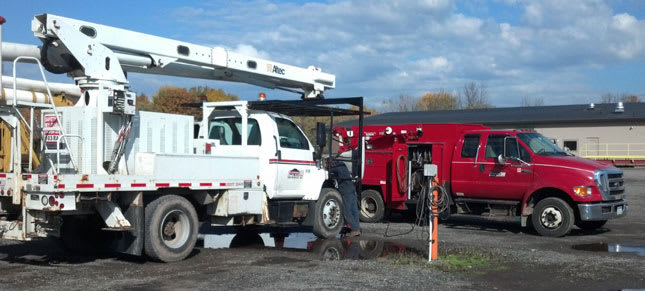
Much of Lewis Tree Service's maintenance is done by outside vendors, “which makes it interesting,†says the corporate fleet supervisor, Paul Wion.
Several years ago, Paul Wion, corporate fleet supervisor at Lewis Tree Service in upstate New York, got up during a Shop Talk session at a TMC meeting to describe a fix for diesel particulate filters that were plugging up in the field.
Many members of the ATA's Technology & Maintenance Council had similar problems relating to then-new emissions-control equipment, and they traded complaints and possible solutions at sessions like this.
Lewis's 2007 and later Ford F-750s had Caterpillar C7s whose DPFs would regenerate to burn off soot only when electronic controls told them to. Ford had decided that owners and drivers shouldn't be concerned with emissions matters, so didn't include a manual regen switch that many competitors had. This was okay in vehicles that saw a lot of highway time, but not at Lewis Tree Service, whose trucks sit still while their engines drive PTO pumps that run hydraulic man buckets.
Wion said that with the help of dealer people, Ford agreed to installation of switches on the dashboards. Frank Bailey of Midway Ford in Kansas City, Mo., interceded with the factory, while Tim McCoy, also from Midway, devised the wiring and programming for the switches. This way drivers could order a manual regen when warning lights came on.
That's normal procedure in other makes of midrange trucks, whose builders post instructions to that effect: Basically, pull over and stop, set the parking brake, hit the switch and let the regen begin. Most engines go into fast idle as extra fuel is sent down exhaust streams to cause their diesel oxidation catalysts (DOCs) to produce heat that went in the DPFs to burn off the soot. This takes about 30 minutes and burns varying amounts of fuel.
In a phone conversation last week, Wion recalled his talk at that TMC session and said that the switches helped. He also got into the genesis of his experiences with the Cat engines' emissions systems, and to a lesser extent, those on International DT and Cummins ISB diesels. His company has ISB6.7s in its latest Freightliner trucks, and these are generally working well.
Lewis's fleet includes 1,400 medium-duty diesel-powered trucks, 1,000 of them with man buckets run by hydraulic pumps driven by PTOs on their Allison automatic transmissions. They're used by hard-working tree-trimming crews in 24 states from Maine to Texas. It's a decentralized operation with trucks staying out in their assigned areas. Most maintenance is done by third party vendors - dealers, independent shops, mobile service providers - "which makes it interesting," he commented.
"Before the 2007 emissions, we had very few engine problems," Wion said. "We had injector failures (in DTs and Cat 3116s and 3126s) or liner O-rings leaking (in International DTs) once in a while. There were not that many EGR problems. Starting in 2007 we purchased 138 Fords with Caterpillar C7s and they worked well until it got cold. You need heat for the DPF and if it's hot outside, fine.
"We got into an ice storm here in New York, and basically the trucks would run for 16 hours and then quit because the DPFs would plug. There was no manual switch" to order a regen. That led to the switch installations. "It worked to a point, but we don't want it to regen in PTO mode because we work in brush and high grass.
"We also started a driver training program on the emissions system on that engine, and how the driver has to interact with it. That brought success because the drivers saw their responsibility with the warning light and operating the switch.
"Then it became a component issue. The Caterpillar CGI (clean-gas induction) cooler had a fairly high failure rate, which was interesting because that component had a very short warranty - 1,500 hours, which for a hard-running truck is nine months. But they have given us a lot of policy settlements, good-will adjustments on those."
CGI is a principal feature of the Acert emissions system, Cat's version of exhaust-gas recirculation, which it avoided with Clean Power engines built until '07. Acert's exhaust gas is cleansed by the DPF before small amounts are routed back to the induction system. At the time Cat marketing people bragged that they sent only clean air into the cylinders, "which was fine in theory, but in practice it became a problem" when the filter got plugged and air carrying soot and unburned fuel went through the charge-air cooler on its way to the cylinders, Wion said. This began showing up after about three years of service, while it wasn't a problem before CGI.
Acert also differs from other emissions systems in that it doesn't use a diesel oxidation catalyst, or DOC. It instead employs a unique aftreatment regeneration device, or ARD, with a fuel injector - the engine's "seventh injector" - plus an igniter. This sends flame into the DPF, producing heat to burn off the soot. This mechanical process, which detractors call a "flamethrower," is more complex than the chemical reaction from a DOC, and the ARD head with its injector frequently plugs up and has to be cleaned or replaced.
"Cat has a cleaner for them," Wion said. "We clean them more often than recommended because of our high idle operation" to run PTO-driven pumps. "They idle at 1,100 rpm to increase exhaust flow for more heat. On newer equipment, the upfitters are setting them at 1,300. We used to run at base idle, but now run at fast idle, which has increased our fuel consumption by 50%. They burn a whole lot of fuel to run cleaner."
Meanwhile, EGR valves have also been troublesome, especially on trucks which don't get a lot of road time. "Cummins has come up with an updated EGR valve that seems to be more robust," he said. "The valve is pretty easy to change, a couple of bolts and an electrical connection. On the ISB you open the hood and it's staring you in the face.
"But under warranty you typically have four or five days of downtime while you're waiting in line at the dealer, and that's more expensive than the component, which is less than $200. If service providers have the diagnostic tool to determine the problem, we'll let them do it" and not worry about a warranty claim.
Vendors in the field have to be carefully selected and "a lot of trust" is needed in dealing with them, and invoices have to be reviewed, he said. Also, a vendor might replace a failed turbocharger or clean a DPF, but not fix the cause of the problem. Most dealings with vendors are done by Lewis's local operations people, who are motivated to keep trucks running because without them, crews can't work and revenue stops.
Corporate people like Wion get involved with bigger matters, like the DPF plugging. Telematics capabilities via Teletrac cellular connections allow the headquarters in West Henrietta, N.Y., to see what each truck is doing if managers want to.
"The latest trucks appear to have emissions problems ironed out," he said. "There are fewer 2010, 2011 and 2012 trucks in the shop than we see with 2007s and '08s. And there were fewer '09s at first than with '07s and '08s. Plus we changed engines from Cat to Cummins.
"I will say our 2012 Cummins units have improved. They improved little by little, but the 2012s are best, and they're getting better fuel economy. And that's funny because those have the highest idle, at 1,300."
The latest trucks are 2012-model Freightliner M2s with ISB6.7s that feature selective catalytic reduction and urea injection. It's too soon to know how much diesel exhaust fluid, or DEF, the system uses, Wion said. He sees prices of about $15 for a 2.5-gallon jug, which is $6 per gallon. Due to its decentralized operations, Lewis will continue buying DEF that way just as it buys diesel fuel at retail pumps. But he expects DEF prices to fall as more modern equipment with SCR goes into use and supplies of the fluid increase.
"So we've had some success with the new equipment, but we still have the '07s and '08s that we have problems with." To cover some of the downtime, Lewis has some spare trucks that are 10 to 12 years old, and they are still more reliable than the 2007 and '08 trucks.
"I would sum up by saying you have to be more vigilant on your engine maintenance, which is costly maintenance," Wion said. "And part of pre-trip inspections for drivers is to look for warning lights and follow up on them."
More Equipment
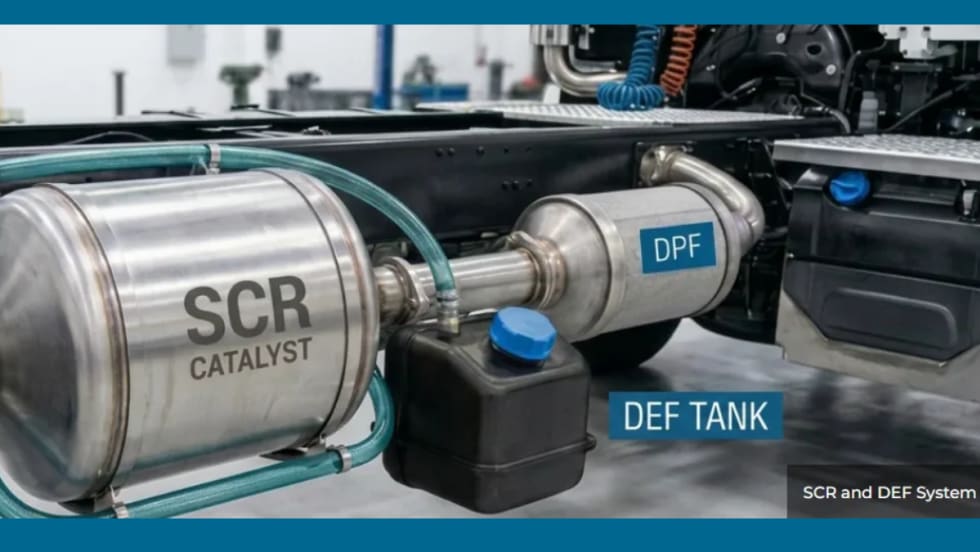
Engine Technology Forum Launches SCR, DEF Resource Center Amid Emissions Debate
The Engine Technology Forum’s new online hub aims to provide fleets, policymakers, and equipment owners with fact-based information about selective catalytic reduction technology, diesel exhaust fluid and emissions compliance.
Read More →
Prime Inc. to Open $7.9M Flagship Used-Truck Dealership
A new driver-focused facility to sell Prime Inc's used trucks and trailers will be the first purpose-built location in the company's history.
Read More →
Lessons Learned About Alternative Fuels: Start Small, Stay Flexible
Practical advice on adopting alternative fuels and ZEVs from HDT's 2026 Top Green Fleets, from renewable diesel and natural gas to electric trucks.
Read More →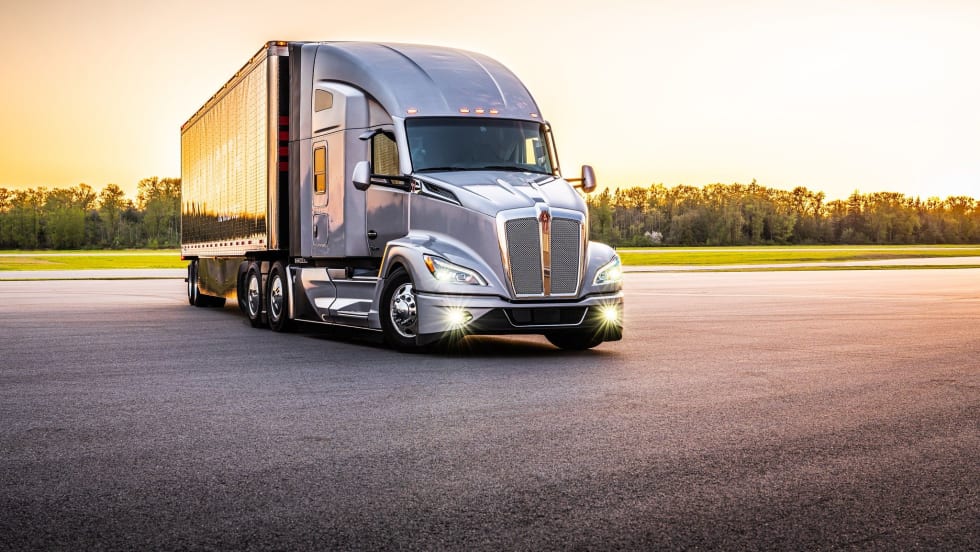
Kenworth Names Peter Ahrens General Manager
Leadership changes at Kenworth take effect July 1 as the OEM promotes two longtime Paccar executives to key management roles.
Read More →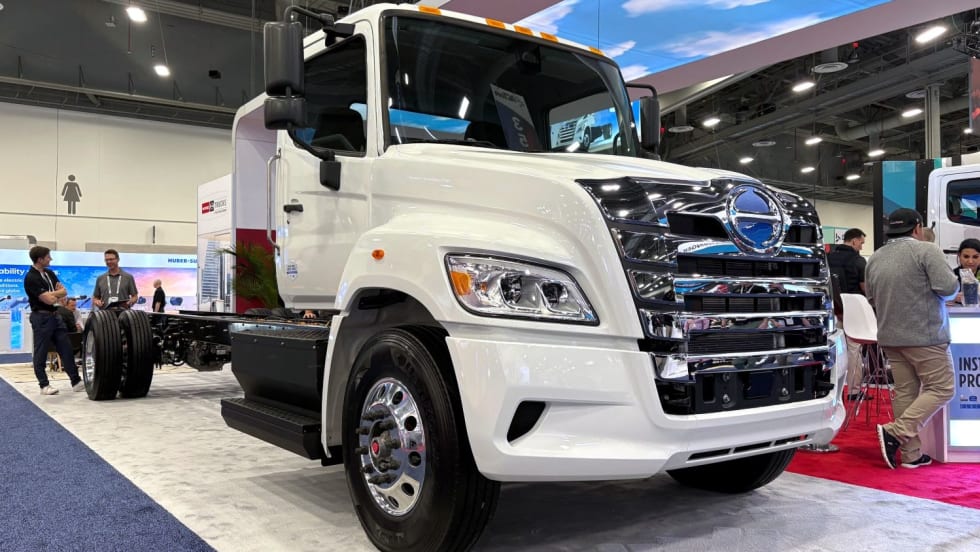
Hino Adds Electric Class 6/7 Truck
Hino says the Le Series is an important step in the company's efforts to reduce environmental impact and support its customers’ sustainability goals.
Read More →
ACT Expo 2026: Highlights in Photos
The 2026 Advanced Clean Transportation Expo featured a broad range of commercial vehicle technologies, from EVs to autonomous trucks to the latest diesel and alternative-fuel engines.
Read More →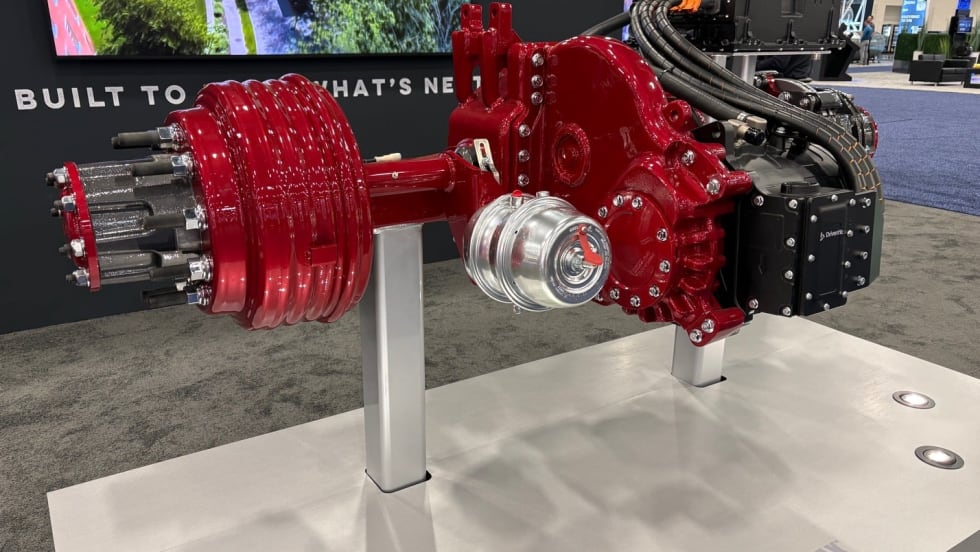
Hendrickson Debuts Electraax E-Axle for Medium-Duty Trucks
Developed with Driventic, Hendrickson's new integrated e-axle is designed to improve efficiency, reduce weight, and extend range in Class 6-7 EV applications.
Read More →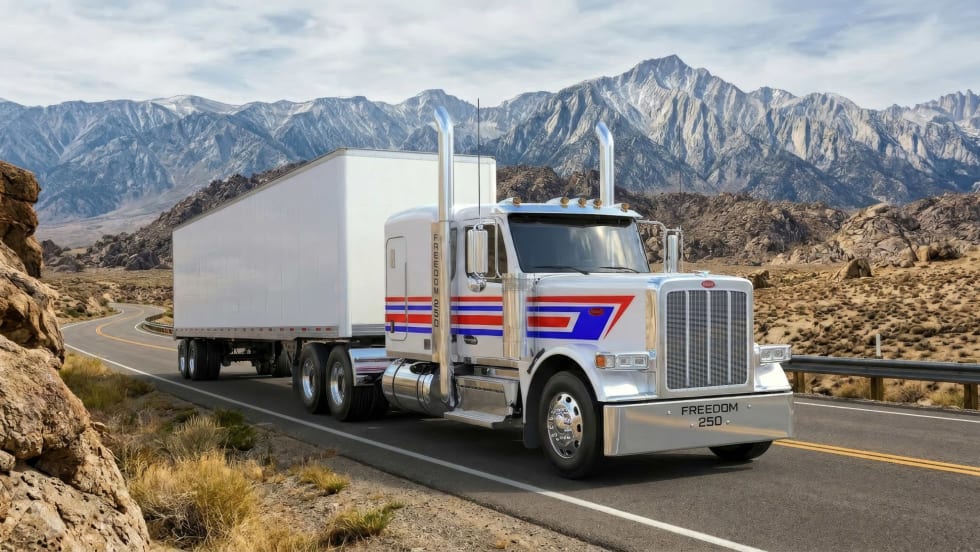
Peterbilt Unveils Freedom 250 Special Edition Model 589
Peterbilt’s just-announced limited-run patriotic Model 579 tractor celebrates America’s 250th birthday with custom styling and premium features.
Read More →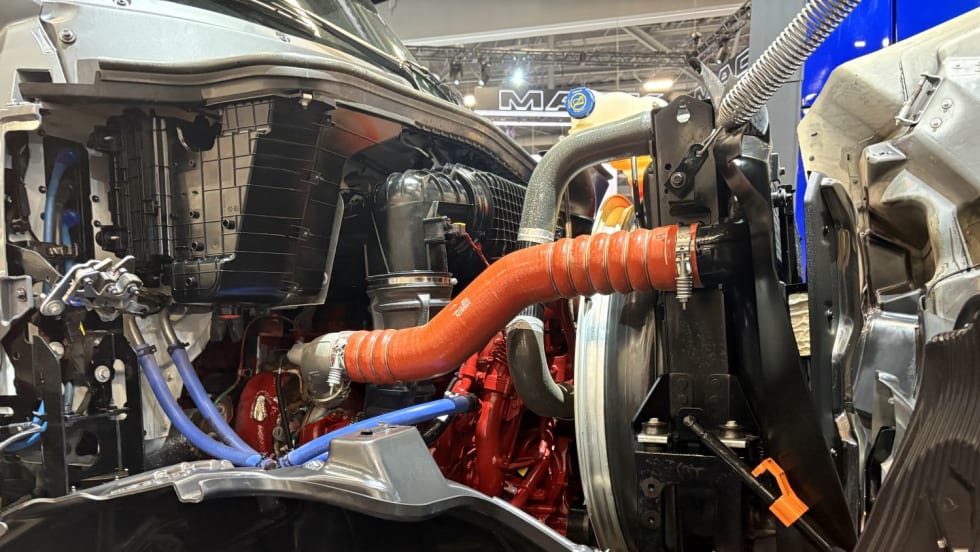
Mack Unveils EPA 2027-Compliant MP13 Engine With More Power, Better Fuel Economy
Along with unveiling its EPA 2027-compliant MP13 engine, Mack outlined powertrain changes across its Class 6-8 lineup, including new Cummins-based X10 engines.
Read More →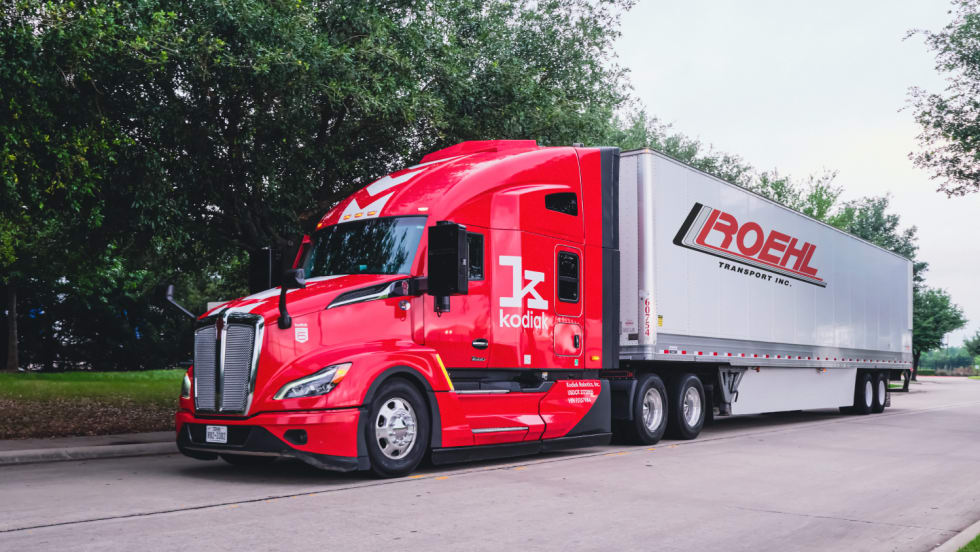
Kodiak and Roehl Transport Launch Autonomous Route Between Dallas and Houston
Kodiak AI and Roehl Transport have begun autonomous freight operations on a regular Dallas-Houston route, marking another step toward Kodiak’s planned driverless launch by the end of 2026.
Read More →