




Cargo Van Update: Alternatives Spark Interest, But Diesel's Not Dead
The recovering economy is resuscitating the business of building cargo vans, along with every other kind of commercial vehicle. Conversations with the major players in this business reveal trends in buyers' engine choices and in weight categories

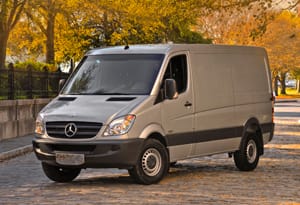
European Sprinters are now sold by a growing network of Mercedes-Benz and Freightliner dealers.
The recovering economy is resuscitating the business of building cargo vans, along with every other kind of commercial vehicle. Conversations with the major players in this business reveal trends in buyers' engine choices and in weight categories.
In general, gasoline power has become more popular, while heavier chassis are favored by some customers. These developments vary among builders, but the gasoline trend is a fortunate coincidence for Ford, which has ended the diesel option in its popular E-Series. The trend is causing Freightliner Custom Chassis to introduce a gasoline option. Low fuel prices and stiff upcharges for most 2010-spec diesel engines are reasons.
Exceptions to the rising 2010 diesel upcharges include Daimler Vans' Sprinter, whose list price was cut for 2010, even though its engine was fitted with the BlueTec selective catalytic reduction system. Daimler could lower the price because BlueTec has been used for several years in Europe and is shared among many car and truck vehicles, so costs are spread out, a spokesman said. And Ford's new PowerStroke diesel for SuperDuty pickups and chassis-cab models is priced the same as the '09-spec Navistar diesel it replaces.
General Motors is selling its 6-liter gasoline V-8 to two walk-in chassis builders, Workhorse and Freightliner Custom Chassis, as well as to Isuzu Commercial Trucks for its NPR Gas low-cab-forward model. Isuzu and Workhorse will also buy GM's 6-speed Hydra-Matic for use with the engine. The Vortec 6000 has become the standard engine for GM's own Heavy Duty pickups, and it's available in heavier G-series vans. For 2011 vans and cutaways, GM has also announced a natural gas option for this engine.
But is gasoline power enough for heavier applications, like ambulances, which have become mobile emergency rooms? General Motors doesn't think so and made sure it engineered its improved Duramax diesel into its G-series vans and cutaway chassis. Daimler's Sprinter is a diesel competitor, but its diesel is too small, GM asserts. GM's Duramax V-8 has 200 pounds-feet more torque than the Sprinter's V-6 diesel and 105 pounds-feet more than the gasoline V-10 that Ford uses in its ambulance package.
Van types
Domestic full-size cargo vans with short noses and integral steel bodies, mounted on ladder-type frames, have been best-sellers among commercial and personal-use customers for about 40 years. They began as the Big Three's compact vans in the early 1960s, then grew in size and power, with bigger bodies, heftier frames and V-8s replacing the early flat and inline six-cylinder engines. Full-size vans quickly replaced pickup-based longer-nose "panel trucks" that dated to the early days of the American automotive industry. Cutaway versions are chassis-cab products that can be fitted with high-cube van or specialty bodies.
Ford Motor's E-Series and General Motors' G vans sell in more than enough numbers to justify their separate chassis designs and production lines. They also account for the big bulk of sales in the cargo van business. Sales languished during the recession but are now recovering, the builders report. Chrysler left van building nine years ago when it took on the Sprinter from its German partner, Daimler, but Daimler cancelled that deal last December following Chrysler's bankruptcy and merger with Fiat of Italy.
Walk-in vans, with their characteristic side stairs into the cab and a door leading to large high-roof cargo sections, constitute a separate segment. These are also body-on-frame vehicles, and gross-weight ratings range from Class 3 to 6, so they can be medium-duty trucks. Users tend to keep them a long time - 10 to 15 years or more - so are willing to pay for ruggedness, including vendor-built aluminum bodies. Navistar's new eStar electric van is a cab-chassis truck fitted with a fiberglass walk-in body.
The European-designed Sprinter, made by Daimler's Mercedes-Benz arm in Germany, is a third type of cargo van. It has a short nose, a roomy cargo van-type driver and passenger compartment, and a large van body. It has two large sliding side doors and hinged rear doors, and comes in two stand-up roof heights, tall and taller. The Sprinter uses unibody construction, but adds a fabricated rear frame to make cab-chassis variants.
Aside from high cubic capacity, the Sprinter's main distinction is its small Euro-style powertrain - a 3-liter V-6 diesel running through a 5-speed automatic transmission - that's quick but gets exceptional fuel economy, often above 20 mpg. Sprinter vans are positioned as premium products that command a premium price over a Ford or GM full-size van, though the difference now is less due to lowered list prices for Sprinters.
Ford and GM both make similar large vans in Europe, but have not seen the need to import them. Nissan Commercial Vehicles' upcoming NV2000 van is in the Sprinter category; it will be built in the U.S. and will use American-style gasoline engines.
Ford Motor Co.
Still another van type is Ford's imported (from Turkey) compact Transit Connect, now a unique-in-America product that's gaining popularity since its introduction last fall. Ford says buyers are mostly small business people who see the logic of using a smaller, lighter truck than the full-size, big-engined vans they've been accustomed to. The regular TC with its 2-liter gasoline engine will soon be augmented by a Transit Connect Electric, to be produced by Azure Dynamics (watch for a Test Drive in an upcoming issue).
But what makes Ford grab more than half of the sales in the cargo vans segment is its ubiquitous E-Series van, produced with integral steel bodies in Class 1, 2 and 3 gross vehicle weight ratings, as windowed "wagons," and as cutaway and stripped chassis into Class 4. The E-Series' origins were in the compact Econoline van of the early 1960s, but soon grew to a full-size product and by the '90s shed the Econo name.
The E has been expanded and improved over the years. Its latest iteration got bold-nose styling from Ford's SuperDuty pickups, along with security and electronic infotainment options, for the 2008 model year. Designers constantly refine the vehicle to make it more usable and keep it ahead of the pack.
Going into the 2011 model year, the E-Series becomes a gasoline-only truck, at least from the factory, as the supplier agreement with Navistar International ended last December. The Ford-designed and -built 6.7-liter PowerStroke diesel, just introduced to the SuperDuty series, is too large to fit into E vans' noses, so they will be available only with gasoline engines.
They include the 4.6- and 5.4-liter Triton V-8s and the 6.8-liter V-10. (For now the new 6.2-liter gasoline V-8 will be only for the for SuperDuty pickups.) Early this year Ford announced a V-10-powered ambulance package for E chassis, and in October there will be a 5.4 V-8 ambulance package. The V-10 version has been well received so far because compared to a diesel, the gasoline-engine chassis weighs hundreds of pounds less and costs thousands of dollars less, says Len Deluca, head of commercial truck sales at Ford.
"Not a very high percentage of diesels went in cargo vans," he says. "And emissions requirements for 2010 diesels would've made them very expensive. Obviously there are some vocations that really need the torque of the diesel, but there are other customers who have reevaluated that and are switching back into the gasoline powertrain."
There's also the F-59 stripped chassis for walk-in vans, recently reintroduced with a V-10 engine, and the E-450 cutaway and stripped chassis that use the 5.4 V-8. The E-450 is available as a gasoline-electric hybrid through Azure Dynamics, which has sold some to FedEx Express for use in emissions-sensitive California. Special government grants make the hybrid worthwhile there, and gasoline prices are higher in the Golden State than much of the rest of
More Equipment
Engine Technology Forum Launches SCR, DEF Resource Center Amid Emissions Debate
The Engine Technology Forum’s new online hub aims to provide fleets, policymakers, and equipment owners with fact-based information about selective catalytic reduction technology, diesel exhaust fluid and emissions compliance.
Read More →
Prime Inc. to Open $7.9M Flagship Used-Truck Dealership
A new driver-focused facility to sell Prime Inc's used trucks and trailers will be the first purpose-built location in the company's history.
Read More →
Lessons Learned About Alternative Fuels: Start Small, Stay Flexible
Practical advice on adopting alternative fuels and ZEVs from HDT's 2026 Top Green Fleets, from renewable diesel and natural gas to electric trucks.
Read More →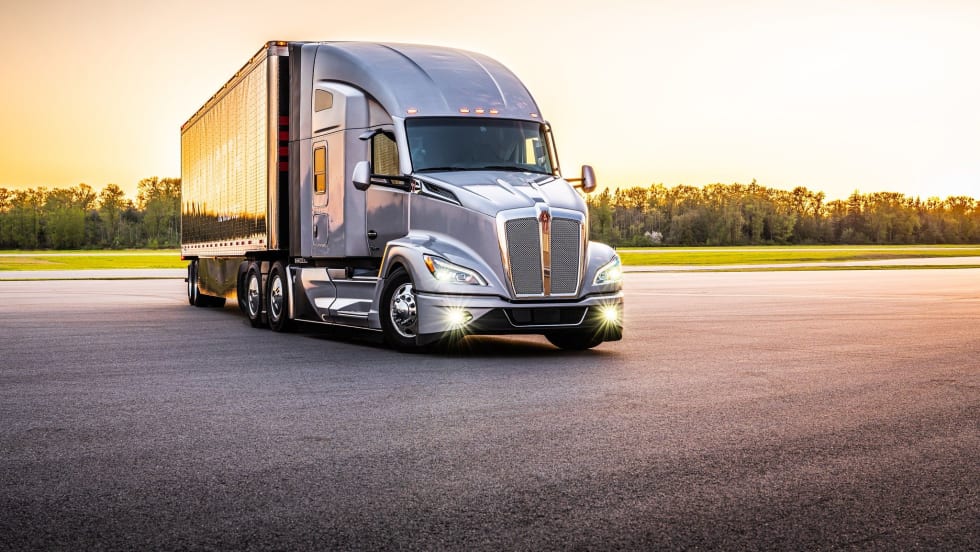
Kenworth Names Peter Ahrens General Manager
Leadership changes at Kenworth take effect July 1 as the OEM promotes two longtime Paccar executives to key management roles.
Read More →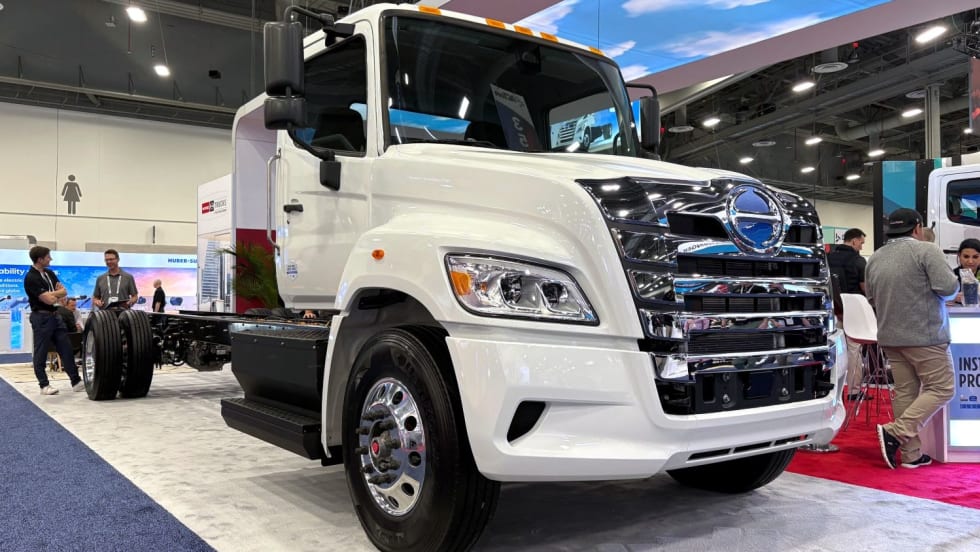
Hino Adds Electric Class 6/7 Truck
Hino says the Le Series is an important step in the company's efforts to reduce environmental impact and support its customers’ sustainability goals.
Read More →
ACT Expo 2026: Highlights in Photos
The 2026 Advanced Clean Transportation Expo featured a broad range of commercial vehicle technologies, from EVs to autonomous trucks to the latest diesel and alternative-fuel engines.
Read More →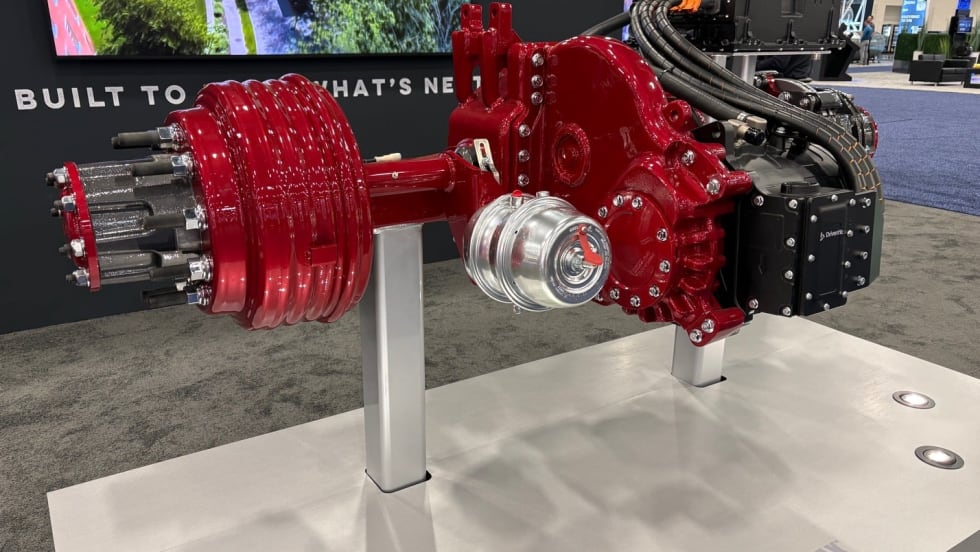
Hendrickson Debuts Electraax E-Axle for Medium-Duty Trucks
Developed with Driventic, Hendrickson's new integrated e-axle is designed to improve efficiency, reduce weight, and extend range in Class 6-7 EV applications.
Read More →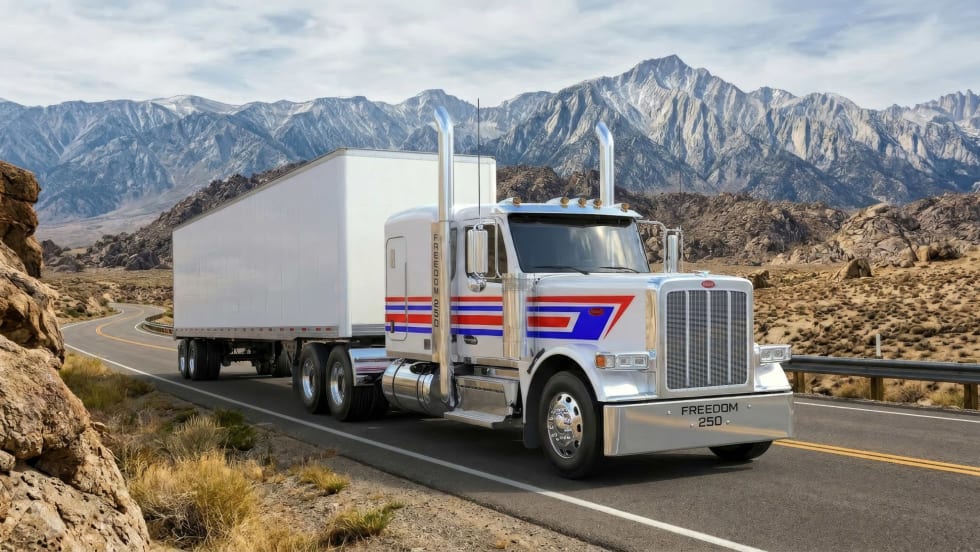
Peterbilt Unveils Freedom 250 Special Edition Model 589
Peterbilt’s just-announced limited-run patriotic Model 579 tractor celebrates America’s 250th birthday with custom styling and premium features.
Read More →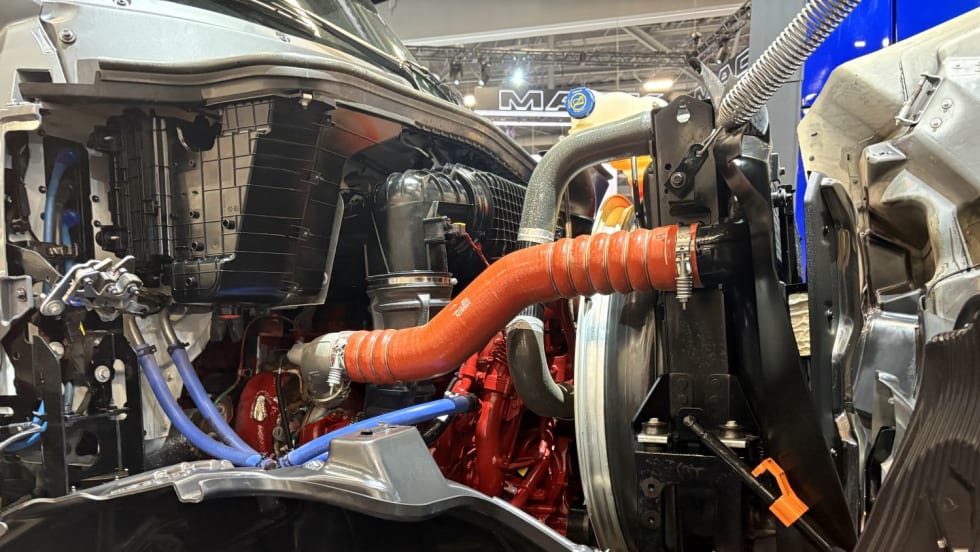
Mack Unveils EPA 2027-Compliant MP13 Engine With More Power, Better Fuel Economy
Along with unveiling its EPA 2027-compliant MP13 engine, Mack outlined powertrain changes across its Class 6-8 lineup, including new Cummins-based X10 engines.
Read More →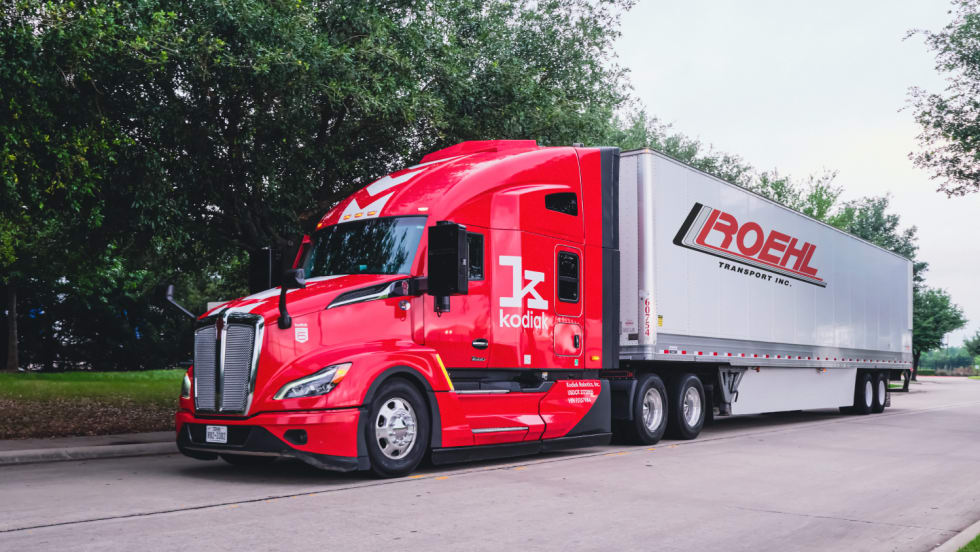
Kodiak and Roehl Transport Launch Autonomous Route Between Dallas and Houston
Kodiak AI and Roehl Transport have begun autonomous freight operations on a regular Dallas-Houston route, marking another step toward Kodiak’s planned driverless launch by the end of 2026.
Read More →