




Tire Makers Look for Alternatives to Natural Rubber
Although we're in no danger of running short of our primary source of natural rubber, prices have risen dramatically over the past 10 years, contributing to rising prices for tires. Several tire makers are researching other sources of rubber.

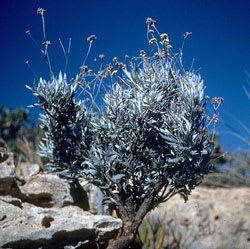
Guayule is a rubber-producing plant that could offer a domestic, and thus more stable, supply.
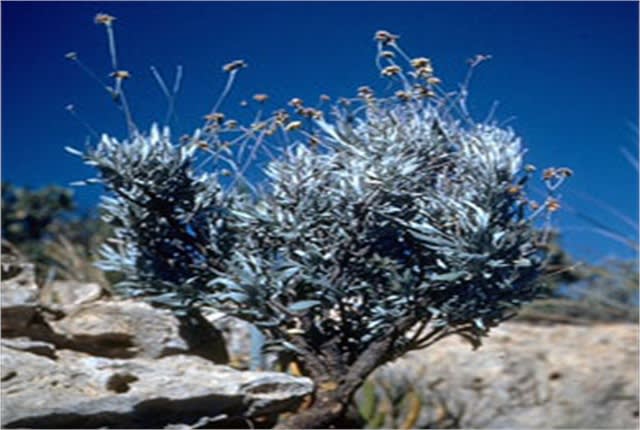
Guayule is a rubber-producing plant that could offer a domestic, and thus more stable, supply.
Although we're in no danger of running short of our primary source of natural rubber, prices have risen dramatically over the past 10 years, contributing to rising prices for tires.
The primary producers of natural rubber are in South and Southeast Asia in countries such as Malaya and Thailand, with some production in tropical West Africa. All those are places subject to damaging seasonal monsoons and other extreme weather conditions, like the one that struck Thailand in 2011. That makes supply a little unpredictable.
Rubber has also recently become a traded commodity, leading to speculative investment, which has driven up prices.
"It's not unlike petroleum markets," says Bill Niaura, Bridgestone Americas' director of new business development. "There are price points where it begins to make economic sense to explore and drill for oil in non-traditional areas. We're now at the point in the rubber industry where it makes sense to look for alternatives."
Enter guayule
There are about 2,000 plant species producing natural rubber, but the Hevea tree is the most productive. In the history of the rubber business, only one other species, guayule, has been used in actual rubber production.
In the 1920s, the Intercontinental Rubber Co. in California produced 1,400 tons of guayule rubber after leaf blight decimated the Brazilian rubber industry.
Guayule also become a replacement for Hevea tree-produced latex rubber during World War II when Japan cut off America's Malaysian latex supplies, says Dennis T. Ray of the School of Plant Sciences, University of Arizona at Tucson. "The war ended before large-scale farming of the guayule plant began, and the project was scrapped."
Unlike the hevea tree, which grows in tropical climates, guayule grows in the arid climates of the U.S. southwest – Arizona being particularly well-suited to the plant.
Hevea is essentially the sole source of natural rubber today, but active research and development programs are underway to domesticate and commercialize guayule – two are led by tire manufacturers Bridgestone and Cooper Tire & Rubber Co.
A consortium consisting of Cooper Tire & Rubber Co., Yulex Corp., Arizona State University and the Agricultural Research Service of the U.S. Department of Agriculture are working under a $6.9 million Biomass Research and Development Initiative grant from the USDA and the U.S. Department of Energy.
The BRDI is a joint effort between the USDA and the DOE to develop feedstocks for bio-fuels and bio-based products, including rubber from guayule.
The consortium members aim to harness biopolymers extracted from guayule as a replacement for petroleum-based synthetics and tropical-based natural rubber used in the manufacture of tires.
Meanwhile, Bridgestone has its own plans for a guayule research farm near Eloy, Ariz., and a research center in nearby Mesa, Ariz.
A 281-acre agricultural site in Eloy will serve as the base of its agricultural research operation, and will supply guayule for the company's process research center in nearby Mesa.
"Material-wise, guayule is the same polymer as hevea rubber, but it diversifies our supply," Niaura says. "In terms of plant biology and regionality, it's domestic to the Americas, but there are still challenges ahead. Guayule is not a commercial crop, so we have to develop the agricultural aspect as well as the process aspect."
The facility is expected to be fully operational in 2014, with trial rubber production starting in 2015.
More rubber alternatives
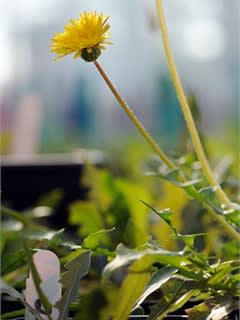
The Russian Dandelion produces more rubber than its common cousin.
Scientists from the Fraunhofer Society in Germany have discovered that the milky sap of the dandelion contains raw rubber of the same quality as that found in rubber trees.
While the commercial production of dandelion rubber is still only a vision for the future, Continental AG intends to pursue this alternative source of natural rubber for tire and technical rubber applications.
Continental has been pursuing the research into dandelion rubber since 2007, and is currently working in a research consortium to explore the capabilities of the Russian dandelion species, which provides a higher yield of natural rubber than the common dandelion.
Yokohama currently uses oil from orange peels in one model of passenger car tire, says Rick Phillips, director of commercial sales at Yokohama Tire Corp. "It's an oil substitute that improves traction. It displaces some oil in just those tires at the moment, but we're looking at ways to use it in commercial tires."
Goodyear is looking at soybean oil as a way to help reduce the amount of petroleum-based oil used in tires.
"Goodyear researchers have learned via testing that using soybean oil in tires can potentially boost tread life by 10%," says Mike Manges, Goodyear's Communications manager for commercial tires. "As well, Goodyear and DuPont Industrial Biosciences are working together to develop BioIsoprene, a revolutionary bio-based alternative for petroleum-derived isoprene (synthetic rubber)."
More Equipment

Help HDT Find Trucking’s Top Products
Have you come across a new product that could make a difference for trucking fleets? Nominate it for HDT’s 2027 Top 20 Products Awards by November 9.
Read More →
Volvo Unveils New VNX Heavy-Haul and Vocational Truck
Volvo Trucks has launched the VNX, a new vocational truck also available as a tractor in day cab and two sleeper configurations, with one heavy-haul model. The Volvo VNX is powered by Volvo's D13 platform, which delivers up to 540 horsepower and 1,950 pound-feet of torque and is EPA 2027-compliant.
Read More →
How GP Transco Cuts Trucking Fuel Costs, a Tenth of a Gallon at a Time
What’s another tenth of a mile per gallon worth? GP Transco shares how equipment upgrades and driver coaching turn small gains into meaningful fuel savings.
Read More →
Electric Yard Tractors Move Beyond Pilots
Operating-cost savings have overtaken sustainability goals as the leading reason surveyed fleets are adopting battery-electric terminal tractors, according to new NACFE research.
Read More →
Continental Introduces New Regional Truck Tires
Continental says its new Generation 5 steer and drive tires for regional operations offer longer tread life, with estimated mileage gains of 22% and 19%, respectively.
Read More →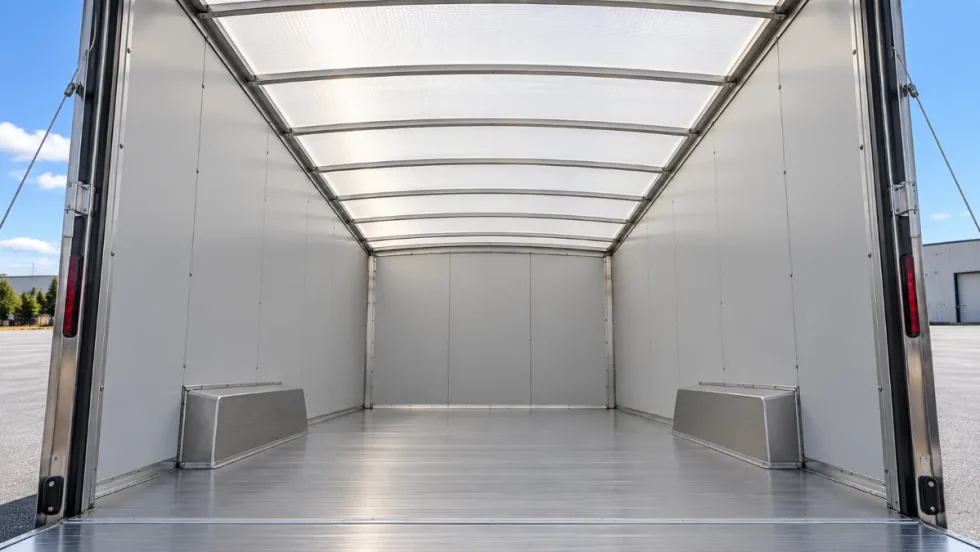
Tekmodo Introduces CargoBright Brand for Translucent Trailer Roofs
CargoBright is designed to diffuse daylight across the cargo area while performing as a working vehicle roof.
Read More →
Fleet Economics Shape Electric Truck Outlook
ACT Research expects costs, charging infrastructure, and technology improvements to drive zero-emission commercial vehicle adoption as federal regulations and incentives retreat.
Read More →
Kodiak Targets Dallas–Houston for Driverless Trucks
The company says its autonomous trucks are completing the I-45 run without a safety observer taking control. It plans to remove the observer by the end of 2026.
Read More →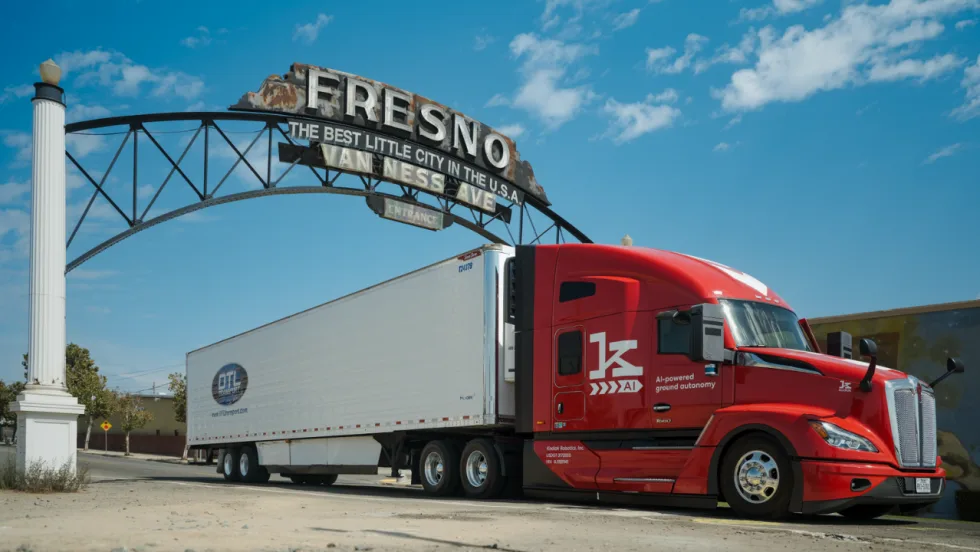
Kodiak Hauls Produce in California Autonomous Truck Pilot
Kodiak AI and DTL Transport have begun hauling produce between Fresno and Los Angeles under California’s new rules for testing heavy-duty autonomous trucks. A safety driver remains behind the wheel.
Read More →
Used-Truck Remarketing Math Is Changing
Used-truck value is no longer just a concern at trade-in. Decisions made throughout a truck’s first life can influence what it’s worth years later.
Read More →