




Inspector Detector
Required driver pre-trip inspections have garnered more attention under the Federal Motor Carrier Safety Administration’s new Compliance, Safety, Accountability enforcement program. And it’s not only the actual inspections you need to think about – it’s also the paperwork component.

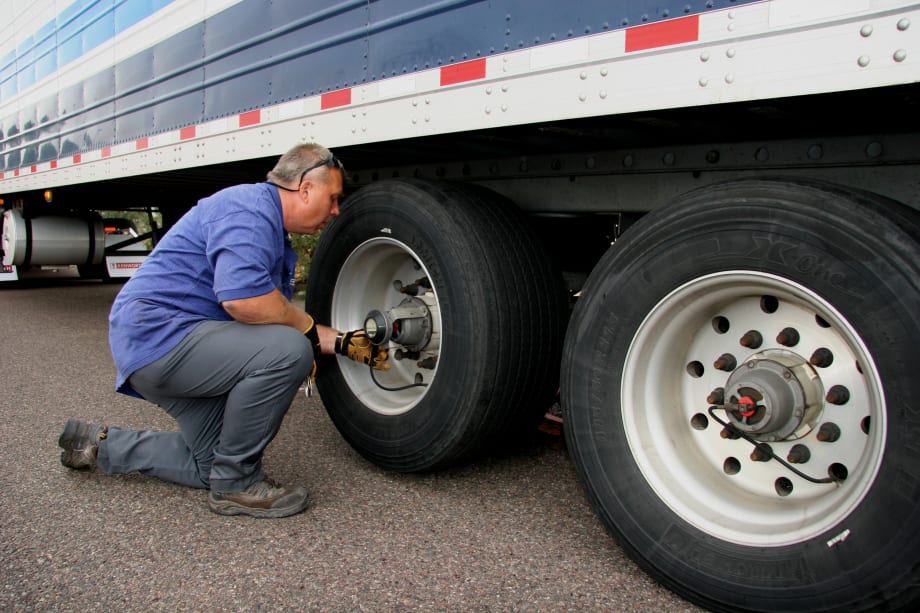

Required driver pre-trip inspections have garnered more attention under the Federal Motor Carrier Safety Administration’s new Compliance, Safety, Accountability enforcement program. And it’s not only the actual inspections you need to think about – it’s also the paperwork component.
Jeff Kaley, a truck lead advisor for GE Capital Fleet Services, works with fleet managers, many of them private fleets, to help them understand how they are affected by CSA. We talked with him particularly about driver vehicle inspection reports.
Q: Why have these pre-trip inspections gotten so much more attention under CSA?
A: With CSA in the driver’s seat measuring both the drivers and the fleets, fleet tolerance levels have been lowered substantially with the extra scrutiny the government has put on them.
The root issue comes down to the Maintenance BASIC as it is being enforced under CSA. Maintenance is one of the key BASICs. I think drivers performing vehicle inspections, no matter what size truck it is, is critical for fleets to identify maintenance issues and correct them before that fleet’s vehicles go out and conduct business.
It gives them a good window into possible maintenance issues they need to address that could potentially cost the company points or put that vehicle out of service at a roadside inspection or weigh station.
The extra scrutiny is driving more fleets to firm up their policy around DVIRs and make sure drivers are doing them.
Q: How do fleets make sure drivers are doing their inspections properly?
A: The biggest thing we push is making sure they get a strong fleet policy in place and strong enforcement to ensure that a driver is complying not only with DVIRs but all aspects of compliance.
Quite a few of the fleets that I’ve talked with have a policy in place. If drivers are not doing inspections there is a series of consequences that may lead to the driver not driving. A lot of times there are point systems or warning systems where they will work with the driver for the first couple of infractions.
Q: What about the paperwork itself?
A: Make sure you have a mechanism in place to guarentee that DVIR documentation is filled out correctly. Check to ensure the information that’s required is on that document, including a driver’s signature, and if there is a defect noted, that there is a mechanic or driver signature indicating that defect has been fixed before that vehicle goes out and conducts business.
There’s a retention period in place for DVIRs. They must be kept for 90 days from the date the document is dated, whether or not there were defects found.
Q: If keeping them for 90 days is good, isn’t keeping them for a year better?
A: No. Make sure you’re watching that 90 days and you’ve got a purging mechanism in place to get rid of those after those 90 days. If the DOT comes in on an audit, they’re going to audit as much information as they can find. If you are not up on your purging requirements and you have over a year’s worth of DVIRs, the DOT’s going to audit a year’s worth. The more information, the more they may audit, and the greater the potential to find errors with that document.
Q: What’s next in DVIRs?
A: There are a few companies that offer electronic DVIRs, usually a handheld device you’re going around the vehicle with. I think that’s going to become a very viable option for fleets. The majority of fleets can tie that to reporting for maintenance trends and other analysis.
The government is looking into electronic onboard recorders for driver logs and other possible uses. The days of a lot of the paper interfaces on these types of transactions are short-lived. One of the biggest challenges may be for the federal government to keep up with the technology and how they interpret that data.
More Safety & Compliance

How Waste Connections is Using Data, Telematics, and AI
How do you manage and maintain more than 18,000 connected trucks? Data. Lots of it.
Read More →
Fleet Advantage: Top Logistics Fleets Outperform National Safety Benchmarks
Fleet Advantage's latest TRUST Safety Index found leading logistics fleets maintained significantly lower out-of-service rates and stronger safety scores than national averages, while highlighting persistent challenges related to tires, brakes, and unsafe driving behaviors.
Read More →
Why Fleet Data Matters More Than Ever at Waste Connections [Watch]
Waste Connections' Chuck Palmer explains how telematics, predictive maintenance, safety analytics, and AI help keep vehicles on the road and drivers safe in this episode of HDT Talks Trucking.
Read More →
Short Takes: How K&B is Using AI
Fleets need to "get on board the train" with AI, says Lance Evans of K&B Transportation in this HDT Talks Trucking Short Takes episode.
Read More →
Short Takes: Inside K&B’s Truck Safety Tech
Listen to learn how K&B Transportation uses cellphone-blocking technology, speed management systems, weather geofencing, bridge avoidance tools, and more to improve driver safety.
Read More →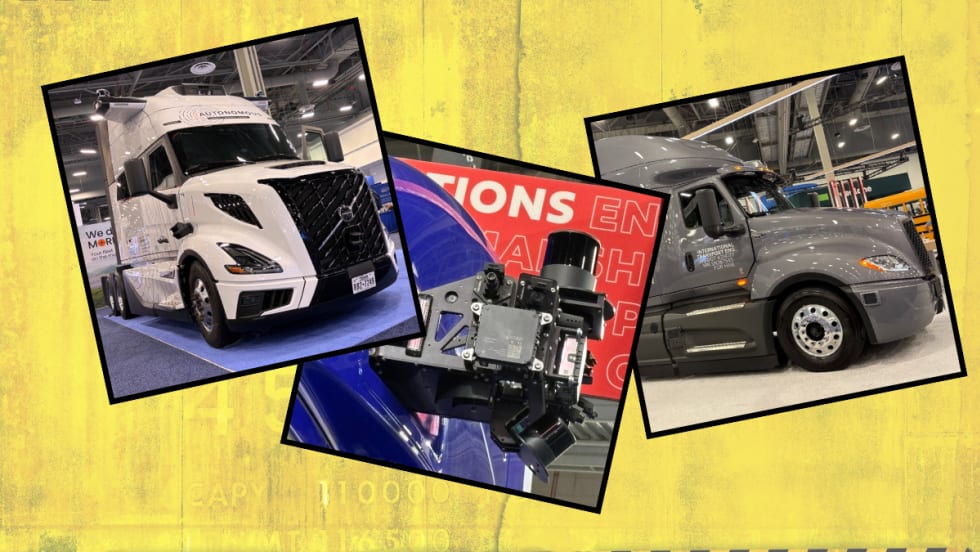
The Biggest Gap in Driverless Trucking Isn’t Tech. It’s Safety Validation
Nauto’s Stefan Heck says autonomous trucks are advancing quickly but proving they’re safe enough for large-scale deployment may be the industry’s hardest challenge.
Read More →
Truck Crash Rates Are Down. So Why Do Insurance Costs Keep Rising?
ATRI’s latest research points to litigation, social inflation, and soaring claims costs as key drivers behind record-high liability premiums for trucking fleets. But there are things motor carriers can do.
Read More →
FMCSA Removes More Than a Dozen ELDs from Registered List
The FMCSA continues its efforts to fight electronic logging devices that don't meet federal requirements, removing more than a dozen from the registered ELD list in May.
Read More →
How the Supreme Court Broker Liability Ruling Could Reshape Trucking’s Safety Landscape
The Supreme Court’s May 11 broker-liability ruling may not radically rewrite transportation law overnight. But industry experts say it will intensify pressure on brokers, carriers, and shippers to prove they are prioritizing safety.
Read More →
Recall of Fontaine Fusion Flatbeds Warns Owners Not to Use the Trailers
Some Fontaine Fusion flatbed trailer manufactured between February 2025, and March 2026 could have mainbeams weakened by hydrogen embrittlement because of a problem in the galvanizing process.
Read More →