




Sustainable transportation is no longer 
an option
What kind of a message is your fuel surcharge sending your customers? Perhaps what I should be asking is, what might your fuel surcharge be saying to your customers' customers?
What kind of a message is your fuel surcharge sending your customers? Perhaps what I should be asking is, what might your fuel surcharge be saying to your customers' customers?
A fuel surcharge does a couple things. It helps to normalize fluctuating fuel costs, and it helps overcome inefficiencies in the operation - namely trucks that aren't optimized for fuel efficiency or that aren't driven as efficiently as possible.
You calculate your surcharges based on the impact the fuel costs have on your fleet. Frankly, some part of that calculation is always testing what the market will bear. One carrier's surcharge can be a competitive advantage over another's, and traffic managers notice that kind of stuff.
Traffic managers will naturally balk at higher fuel surcharges. However, in recent times, the pressure on traffic managers might be coming not only from the accounting department but also from the public relations and the sustainability department.
"Sustainable shipping practices are vital to securing procurement contracts at the world's largest retailers," writes Scott Wicker, vice president of sustainability and vice president of corporate plant engineering for UPS, in Environmental & Energy News. "They also appeal to a key group of consumers who demand green behavior from businesses."
Wicker suggests that your customers' customers are questioning your customers' commitment to sustainable transportation. End users of products as diverse as coffee, vacuum cleaners and garden tools - soccer moms, young liberals, construction workers, eco-friendly citizens and others - want their vendors to be as green as they are, and they are sending those retailers a message. That means your customers may soon be coming to you with some questions.
Companies that have made very public commitments to reducing the carbon footprint of their entire supply chain don't want to be surprised by a YouTube video of a 1984 Fender Flapper idling at a loading dock with twin columns of black smoke rising from the exhaust stacks.
In his column, "How Greener Shipping Can Make You More Green," Wicker suggests that shippers scrutinize their transportation provider's operation by having them submit a Sustainability Report that provides an indication of whether the trucking firm is a credible business partner.
That fuel surcharge could be seen as an indicator of whether a carrier is simply billing away its inefficiencies or is actively managing fuel costs (and fuel consumption). The types of trucks you operate send a certain message, as does the way the trucks are equipped. Are they SmartWay spec'd from stem to stern, or are you using just the minimum of the low-hanging "green" fruit needed to get you into California?
Smart shippers know that a 2010-generation engine is more efficient than a 2006 model and that wide-base single tires are more efficient that deep-lug dual tires. They know trailer side skirts make a difference and that long-nose classic trucks aren't as fuel efficient as slope-hood aero models. Everything you do as a carrier sends a message to your customers, and more and more shippers are paying attention.
There are all sorts of ways to demonstrate your environmental commitment, from programs to reduce out-of-route miles to driver training for improved fuel economy. The "green" argument may even be a way to convince customers to load and unload freight at times of the day that minimize time spent on congested highways.
The upside here lies in the commitment you've made to more sustainable trucking practices and the investment in environmentally friendly equipment. Not only do you save fuel costs in the long run, but you also can justify a better rate because you are a transport provider that is going to make your customer look good.
From the June 2012 issue of HDT
More Fleet Management
AUCTION OF EQUITY INTEREST IN HEAVY HAUL TRUCKING COMPANY!!
Mark your calendar: June 30, 2026 (10:00 a.m. PDT). MagnaTrans, LLC, a California limited liability company doing business as Magna Transportation Group is going to auction! Bid on a 37.5% ownership interest in this Rancho Cucamonga-based heavy haul and over-dimensional trucking company operating across California, Oregon, and Arizona. The equity interest will be sold to the highest bidder or bidders under Article 9 of the Uniform Commercial Code at 10:00 a.m. PDT.
Read More →
Volvo Trucks Adds Unattended Over-the-Air Software Update Capabilities
The latest evolution of Volvo’s over-the-air update technology allows software updates to run while trucks are parked, helping fleets keep vehicles current without disrupting operations.
Read More →
How Waste Connections is Using Data, Telematics, and AI
How do you manage and maintain more than 18,000 connected trucks? Data. Lots of it.
Read More →
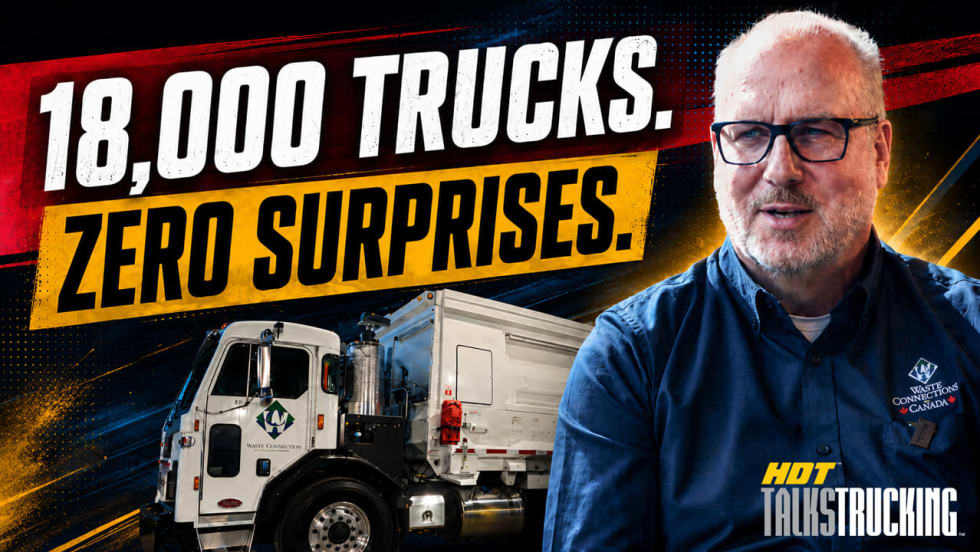
Why Fleet Data Matters More Than Ever at Waste Connections [Watch]
Waste Connections' Chuck Palmer explains how telematics, predictive maintenance, safety analytics, and AI help keep vehicles on the road and drivers safe in this episode of HDT Talks Trucking.
Read More →
NMFTA Launches Free, Anonymous Cybersecurity Threat Report Portal
Organizations are encouraged to anonymously report freight fraud, cargo crime, and cyber threats while gaining visibility into incidents reported across the transportation sector.
Read More →
AI Can Optimize a Fleet. Can It Replace Human Judgment?
Fleets fear falling behind if they don’t adopt AI quickly enough. They also fear what happens if the technology makes the wrong decision.
Read More →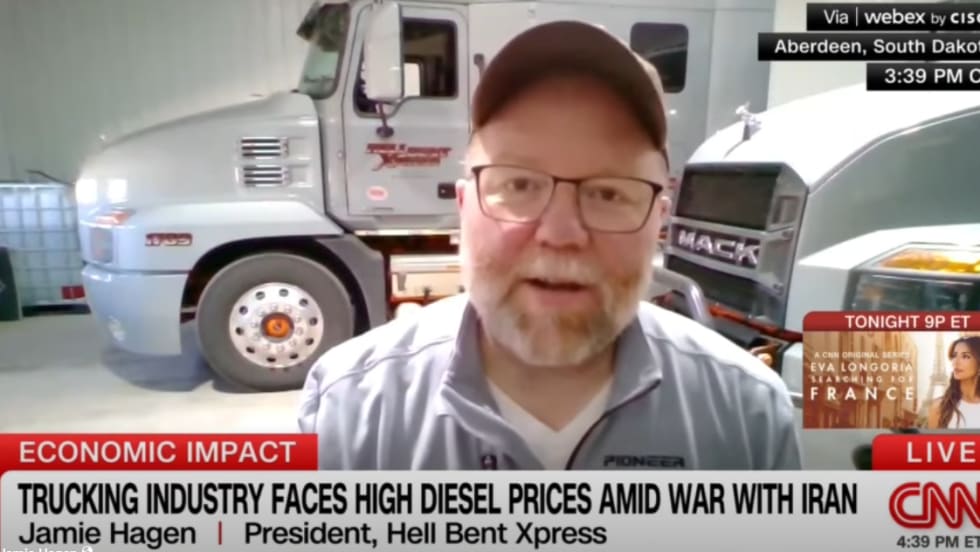
Jamie Hagen Gets Real About Running a Small Fleet in an Uncertain Economy
Small fleet owner Jamie Hagen says new legal risks, volatile fuel prices, and a changing freight market are forcing small carriers to rethink how they operate — and what they can afford.
Read More →
Jamie Hagen Gets Real About Freight, Fuel Prices, Safety, and Small-Fleet Survival
Running a small trucking fleet right now isn’t easy, especially right now. And Jamie Hagen doesn’t sugarcoat it.
Read More →
Jamie Hagen Gets Real About Freight, Fuel Prices, Safety, and Small-Fleet Survival
Running a small trucking fleet right now isn’t easy, especially right now. And Jamie Hagen doesn’t sugarcoat it.
Read More →
Data Lock‑In or Integration Lock‑Out?
Data fragmentation is costing dealerships, OEMs, fleets, and upfitters millions. Here’s why interoperability may be the fix the trucking industry needs.
Read More →