




Innovators talk about regulations, technology and drivers
At a time when industry analysts are predicting the worst driver shortage trucking has ever seen, thanks in large part due to the unprecedented shifting regulatory environment, some of trucking's most innovative leaders are embracing some of those changes but doing battle on other fronts

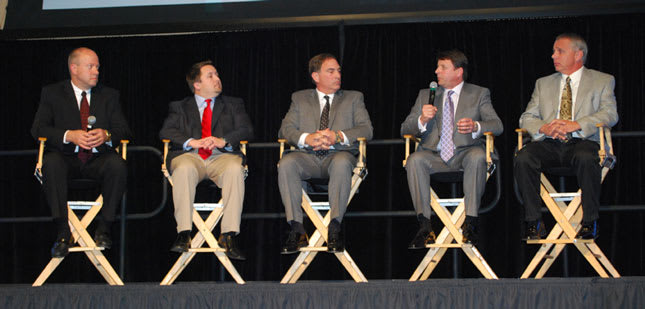
Innovators, from left, Clouser, England, Baumann, Burg and Johnson.
At a time when industry analysts are predicting the worst driver shortage trucking has ever seen, thanks in large part due to the unprecedented shifting regulatory environment, some of trucking's most innovative leaders are embracing some of those changes but doing battle on other fronts.
That was evident during a panel discussion at the 2011 Fleet Summit, presented by Heavy Duty Trucking and Heavy Duty Manufacturers Association the day before the Mid-America Trucking Show in Louisville, Ky., in late March.
Following a presentation where FTR Associates President Eric Starks predicted that government regulations could create a shortage of upwards of 300,000 drivers, a panel of HDT's Truck Fleet Innovators from 2010 and 2011 weighed in on issues related to drivers, regulations and technology.
Moderator Oliver Patton, HDT's Washington Editor, kicked off the discussion with a provocative question: "If the proposed rules go through as now written, they will upend business practices in the industry. What if these changes would finally bring to an end the cycle of litigation that has kept these rules in a state of turmoil for the past decade? What if, as bad as this change might be, it was the last change?"
The panel wasn't buying it. Jim Burg, president of James Burg Trucking and a 2010 Innovator, said not only does the proposal not do anything to improve safety, but would actually make the roads less safe. It would mean more trucks on the road, he said, particularly the increase in the morning rush hour because of the proposed changes to the 34-hour restart that would require midnight-to-6-a.m. breaks, and a lack of parking for all those trucks. "I think this if we fold on this issue, it's going to lead to further movements in other areas," he said.
Chad England, president at C.R. England and a 2011 Innovator, agreed. "Every year for many years in a row, we've had a lower fatal accident rate with the current hours of service," he said. "It just strikes me as odd that when we need the productivity for our economy, this change would be proposed." If the FMCSA cut the driving time to 10 hours, he said, "I think it would be so damaging, that I don't think that would be acceptable to our industry."
Kevin Johnson, there representing 2010 Innovator Jim Mickey, co-owner and president of Canadian fleet Coastal Pacific Express, pointed out that his fleet was an early adopter of electronic logs. "We see merit to a system that actually enforces the law as it stands today," he said.
EOBR pushback?
Although a number of large fleets and major trucking associations have come out in favor of mandatory electronic onboard recorders to track hours of service, there is still concern from drivers and owner-operators, and the Owner-Operator Independent Drivers Association is staunchly against the proposal currently under consideration at the DOT.
Ben Bauman, president/CEO of Bolt Express and a 2010 Innovator, runs mostly owner-operators in his primarily expedited operation. Yet the company requires electronic logs.
"There was a lot of pushback," he admitted. "We had to get a group of people first to put them in the truck and do it for 90 days, then we took a review of that and showed the other drivers. We still had a lot of drivers who didn't want to do it. So we said, 'Do for us for 60 days for us.' What we figured out was the people who still didn't want to do it after 60 days, we probably didn't want in our fleet."
England has had EOBRs in place since 2009 and also has a large percentage of independent contractors. "We found if we coupled some ideas on how to help them be more productive through some technology, load matching and optimization technology, we can use the technology to bring some of the drivers that weren't managing their hours well to be more productive," England explained. So instead of losing hours, miles and revenue, as many drivers fear, they actually were able to make more money under EOBRs.
Getting tighter
Another regulatory area affecting drivers is CSA (Compliance, Safety, Accountability), the new way the FMCSA is evaluating motor carrier safety and compliance.
Burg said when his company first looked at the company's CSA scores about a year ago, using a third-party provider, they were mildly above the "alert" level in three of the BASICs used to score carriers. The company implemented a bonus system for drivers that both rewarded them for clean inspections and penalized them for CSA points racked up. "Our previous safety bonus rewarded people for being lucky, for not being stopped," Burg said. "By November we had those BASICs back below alert level."
Terry Clouser, director of maintenance at AAA Cooper and a 2011 Innovator, said he believes CSA has been very good for the trucking industry. "I think it's going to bring everyone up to a new level of professionalism," he said. At his fleet, they have done extensive training on pretrip and post-trip inspections for the drivers, and have implemented a Monday-morning equipment check.
"It's tempting to lower your standards when things are tight with the labor force," England said, "But we've gone the other direction. We're getting tighter."
More Fleet Management
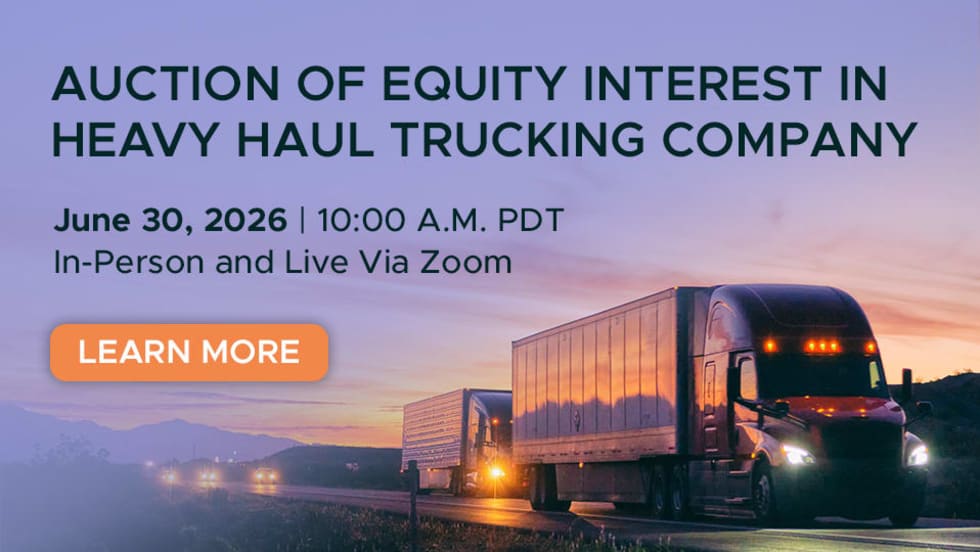
AUCTION OF EQUITY INTEREST IN HEAVY HAUL TRUCKING COMPANY!!
Mark your calendar: June 30, 2026 (10:00 a.m. PDT). MagnaTrans, LLC, a California limited liability company doing business as Magna Transportation Group is going to auction! Bid on a 37.5% ownership interest in this Rancho Cucamonga-based heavy haul and over-dimensional trucking company operating across California, Oregon, and Arizona. The equity interest will be sold to the highest bidder or bidders under Article 9 of the Uniform Commercial Code at 10:00 a.m. PDT.
Read More →
Volvo Trucks Adds Unattended Over-the-Air Software Update Capabilities
The latest evolution of Volvo’s over-the-air update technology allows software updates to run while trucks are parked, helping fleets keep vehicles current without disrupting operations.
Read More →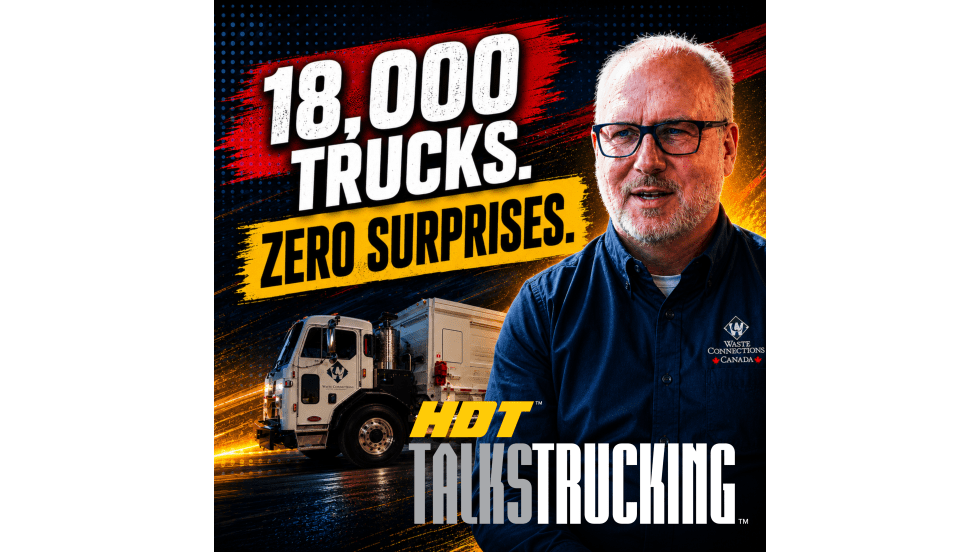
How Waste Connections is Using Data, Telematics, and AI
How do you manage and maintain more than 18,000 connected trucks? Data. Lots of it.
Read More →
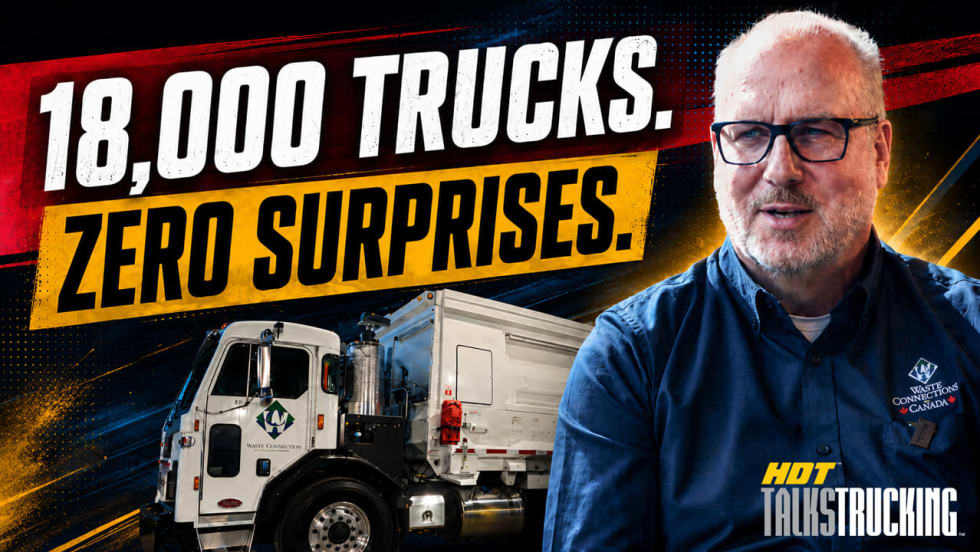
Why Fleet Data Matters More Than Ever at Waste Connections [Watch]
Waste Connections' Chuck Palmer explains how telematics, predictive maintenance, safety analytics, and AI help keep vehicles on the road and drivers safe in this episode of HDT Talks Trucking.
Read More →
NMFTA Launches Free, Anonymous Cybersecurity Threat Report Portal
Organizations are encouraged to anonymously report freight fraud, cargo crime, and cyber threats while gaining visibility into incidents reported across the transportation sector.
Read More →
AI Can Optimize a Fleet. Can It Replace Human Judgment?
Fleets fear falling behind if they don’t adopt AI quickly enough. They also fear what happens if the technology makes the wrong decision.
Read More →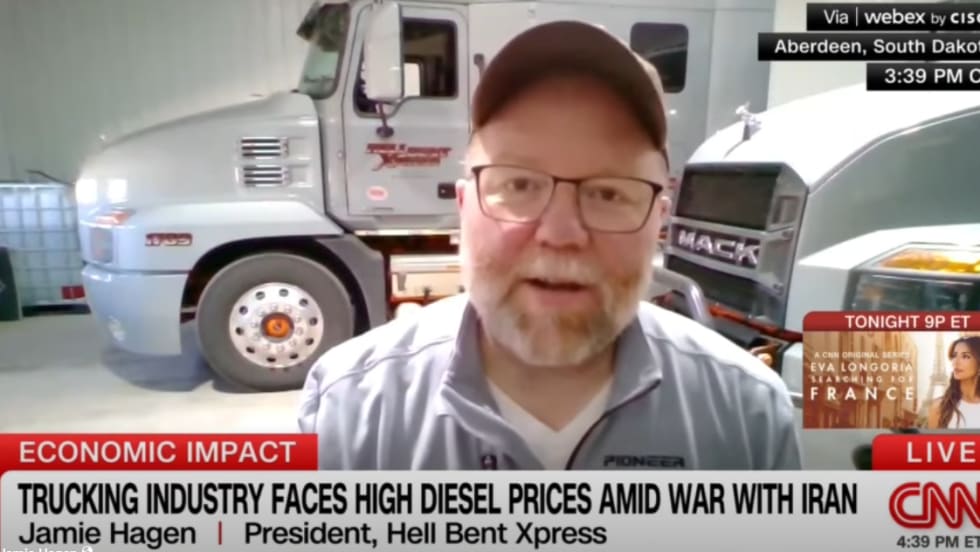
Jamie Hagen Gets Real About Running a Small Fleet in an Uncertain Economy
Small fleet owner Jamie Hagen says new legal risks, volatile fuel prices, and a changing freight market are forcing small carriers to rethink how they operate — and what they can afford.
Read More →
Jamie Hagen Gets Real About Freight, Fuel Prices, Safety, and Small-Fleet Survival
Running a small trucking fleet right now isn’t easy, especially right now. And Jamie Hagen doesn’t sugarcoat it.
Read More →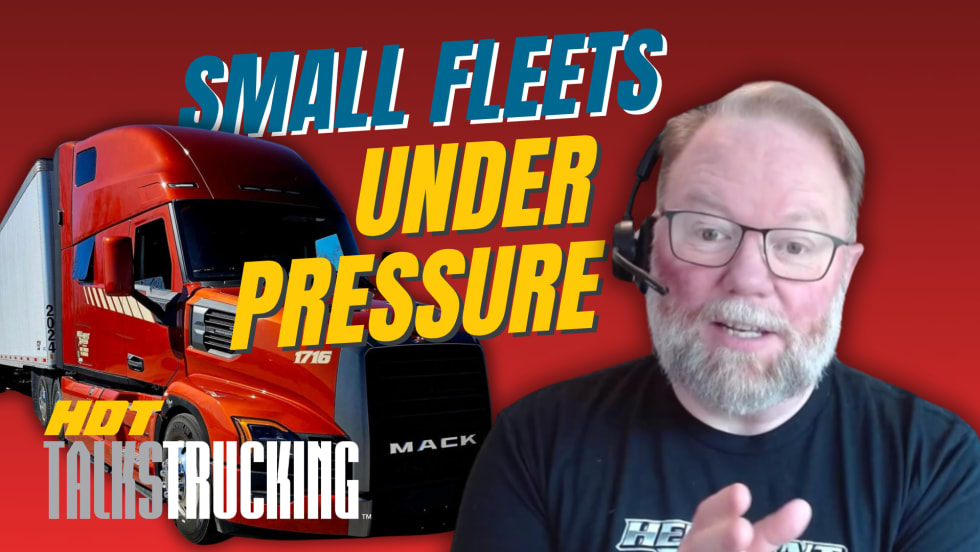
Jamie Hagen Gets Real About Freight, Fuel Prices, Safety, and Small-Fleet Survival
Running a small trucking fleet right now isn’t easy, especially right now. And Jamie Hagen doesn’t sugarcoat it.
Read More →
Data Lock‑In or Integration Lock‑Out?
Data fragmentation is costing dealerships, OEMs, fleets, and upfitters millions. Here’s why interoperability may be the fix the trucking industry needs.
Read More →