




Just Do It: Act Now to Cut Emissions
Government people tend to spend a lot of time thinking and planning when they should just get things done, contends David McCary, director of solid waste management for the City of San Antonio

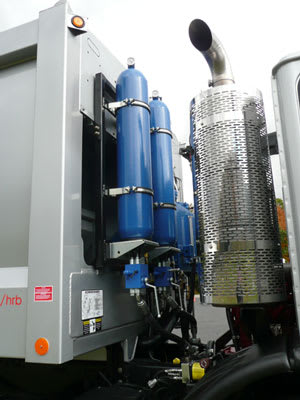
Bulky tanks for compressed natural gas consume room on a chassis, but there's usually room for them on trash collection trucks. Here the tanks are stacked vertically ahead of the packer body. (Photo by Tom Berg)
Government people tend to spend a lot of time thinking and planning when they should just get things done, contends David McCary, director of solid waste management for the City of San Antonio.
That's why the Texas municipality's managers and elected officials have stopped studying what to do about vehicle-generated air pollution and have begun converting their trash trucks to burn natural gas.
"Government has a responsibility to lead by example and create a sustainable city," McCary told an audience during the Alternative Fuel Vehicle Institute's recent annual conference. "We get to make policy, and we should follow it" without undue delay. San Antonio, with a population of 1.34 million and 344,000 homes and businesses, needs cleaner air, and cleansing the exhaust of trash collection trucks is one way to do it.
"A lot of my colleagues are traveling around the nation seeing how many (diesel-powered) trucks they can buy before 2010" so they can beat higher purchase prices, he said. "That's not the answer."
The answer, he said, is to operate even cleaner-burning engines that are now available. They cost a lot more than diesel, but state and federal grant money is available.
Choosing CNG
McCary, who has managed fleets in other cities in the U.S., said he concluded that compressed natural gas was the best way to tackle the problem. The gas burns cleanly, and it's readily available in Texas, which financially encourages its use. Also, CNG stations are far less costly to buy and install than cryogenic liquified stations, which meant a system could be put into operation faster. He convinced members of the city council to go along with a 10-year action plan.
Helping to get the CNG program moving was San Antonio's political system, in which city council members serve two-year terms. That means they must quickly fulfill any promises they made during campaigning or they won't be re-elected, McCary explained. Clean air has been a political issue.
"While others were meeting and planning, we took action," he boasted. With the help of $1 million in grant money, the city opened its first CNG fueling station in July 2008 and began acquiring gas-burning trucks. It hopes to have 30 trucks running by the end of this year.
The gas-fueled trucks are proving less costly to operate than diesel. Because gas is subsidized, the city is saving 15 cents per equivalent-gallon of diesel. The city will encourage private haulers to switch to natural gas by offering discounted permits.
"You don't have time to sit still any longer," McCary told attendees at the conference in Orlando. "We have to act now... There are many vendors out there. All you have to do is raise your hand," and they'll come forward with information.
AT&T's Story
Another organization acting now is AT&T, which operates 85,000 vehicles. It announced it will spend $565 million for 15,000 alternative-fuel vehicles over 10 years. Included are $350 million for 8,000 CNG-fueled service trucks and plans for as many as 40 refueling stations, said Jerome Weber, vice president for fleet operations, another presenter at the alternative fuels meeting.
The new, cleaner trucks will amount to a small percentage of the total fleet, Weber acknowledged, but they'll contribute to cleaner air. Last year AT&T's 105 alternative-fuel and hybrid vehicles cut carbon dioxide emissions by 30 percent.
AT&T chose CNG for California, where an infrastructure is in place and increasingly strict anti-pollution regulations demand using it. Generally, CNG costs 30 to 40 percent less than unleaded gasoline and also less than liquified natural gas. Most CNG comes from domestic wells and is reliably supplied via pipeline, Weber and other users said.
Experience with CNG will help when hydrogen fuel cells come into use, Weber said, as natural gas is the likely fuel for the cells, which are still under development.
Service life for an AT&T truck is 10 to 12 years, allowing time for return on investment. Higher vehicle purchasing costs are somewhat offset with real paybacks: CNG-powered vehicles get 22 to 30 percent better fuel economy, while new and converted hybrids save 44 to 56 percent in fuel, he said.
From the June 2009 issue of Heavy Duty Trucking.
More Fuel Smarts
Lessons Learned About Alternative Fuels: Start Small, Stay Flexible
Practical advice on adopting alternative fuels and ZEVs from HDT's 2026 Top Green Fleets, from renewable diesel and natural gas to electric trucks.
Read More →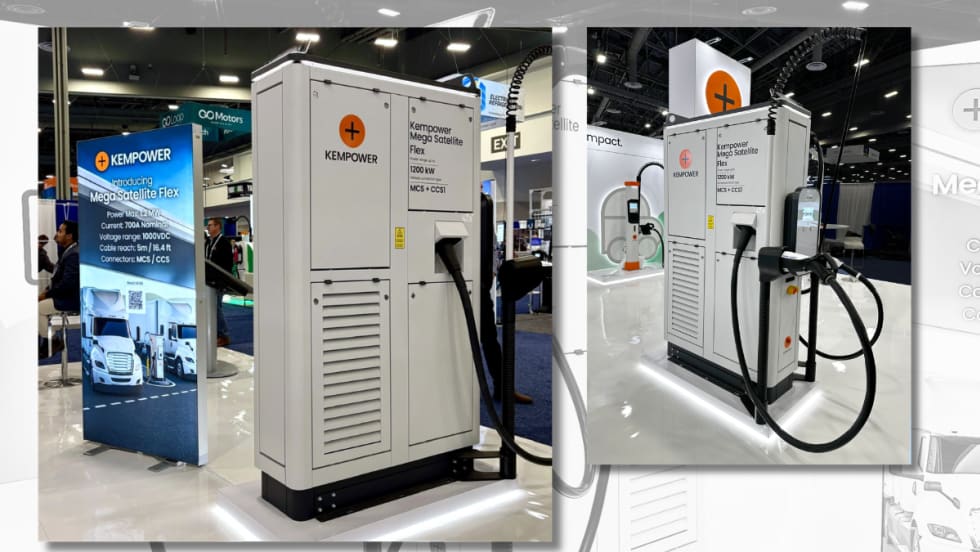
Kempower Adds Flex EV Charger to Help Support Transition to Megawatt Charging
The Kempower Mega Satellite Flex has both a CCS and MCS connector, allowing operators to serve both types of heavy-duty vehicles.
Read More →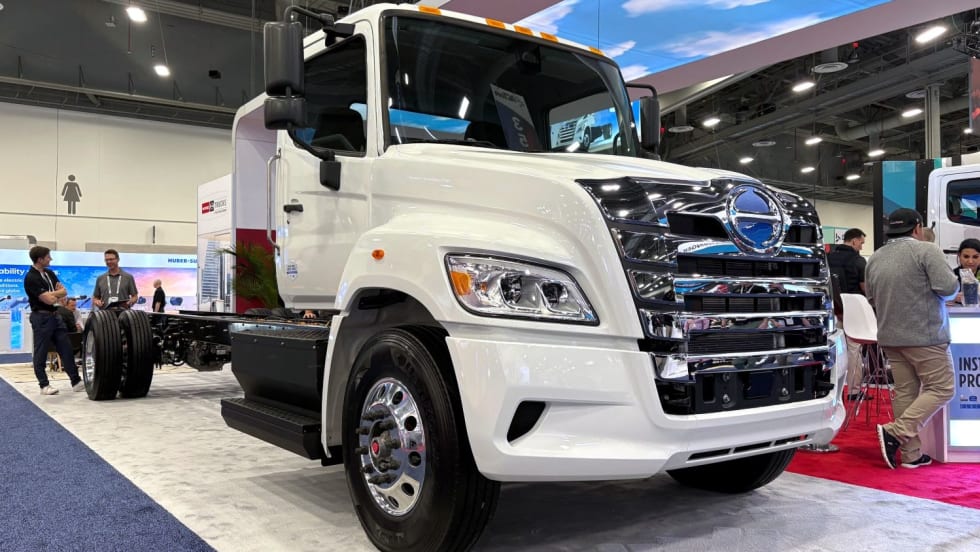
Hino Adds Electric Class 6/7 Truck
Hino says the Le Series is an important step in the company's efforts to reduce environmental impact and support its customers’ sustainability goals.
Read More →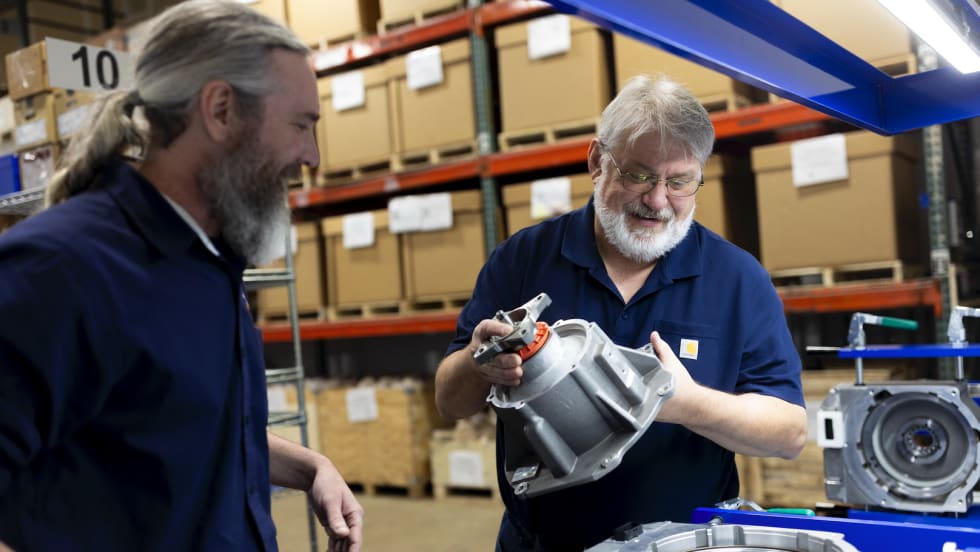
Can Multi-Speed EV Transmissions Solve Heavy Trucking’s Biggest Electric-Vehicle Problems?
A startup called Sigma Powertrain believes purpose-built multi-speed gearboxes can boost efficiency, reduce battery size and improve gradeability for heavy-duty battery-electric trucks.
Read More →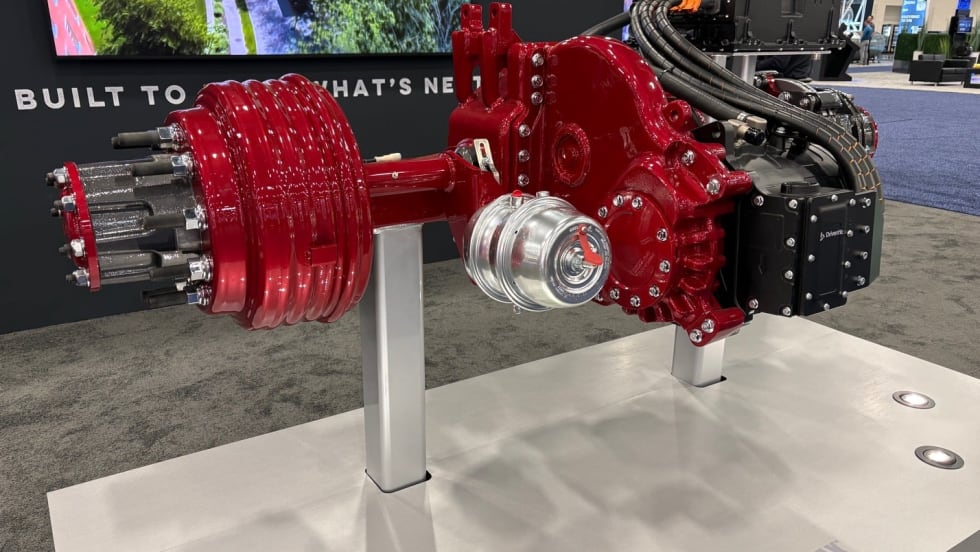
Hendrickson Debuts Electraax E-Axle for Medium-Duty Trucks
Developed with Driventic, Hendrickson's new integrated e-axle is designed to improve efficiency, reduce weight, and extend range in Class 6-7 EV applications.
Read More →
50 Ways Fleets Can Cut Fuel Costs Now — Without Buying New Trucks
Fuel savings don’t come from one big change. They come from dozens of small ones. Here’s how leading fleets are stacking gains across drivers, routing, maintenance, and more.
Read More →
Top Green Fleets 2026: How Fleets Are Reducing Emissions in the Real World
What works in sustainable trucking today? Heavy Duty Trucking's Top Green Fleets are finding practical ways to cut fuel use, reduce emissions, and keep freight moving.
Read More →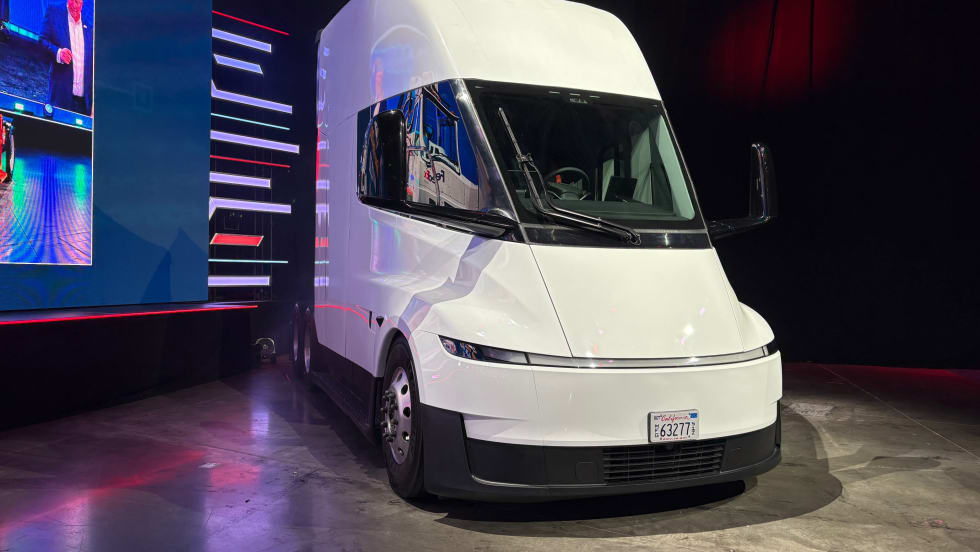
California Launching $1 Billion Electric Truck Rebate Program
CARB says the California Clean Fuel Reward program will begin offering point-of-sale rebates of up to $120,000 for electric commercial trucks starting June 26.
Read More →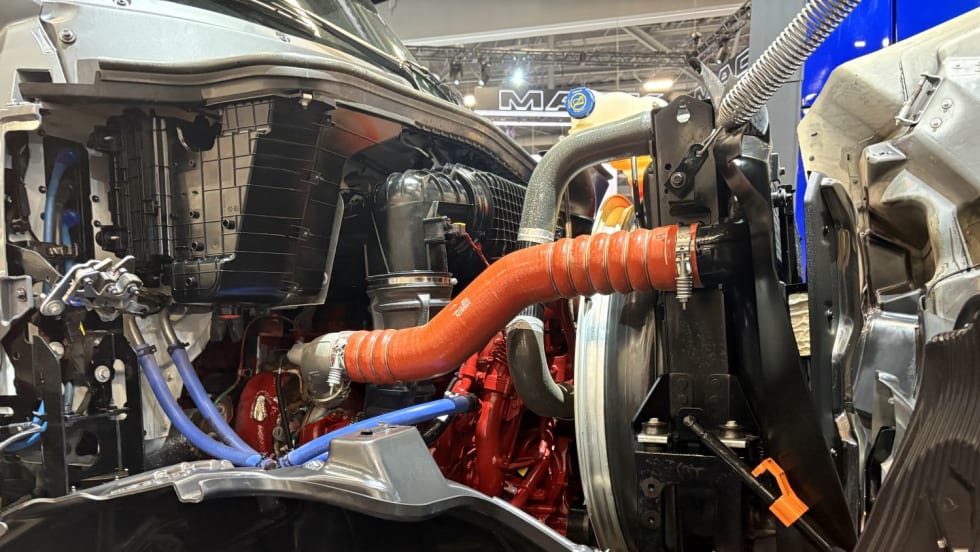
Mack Unveils EPA 2027-Compliant MP13 Engine With More Power, Better Fuel Economy
Along with unveiling its EPA 2027-compliant MP13 engine, Mack outlined powertrain changes across its Class 6-8 lineup, including new Cummins-based X10 engines.
Read More →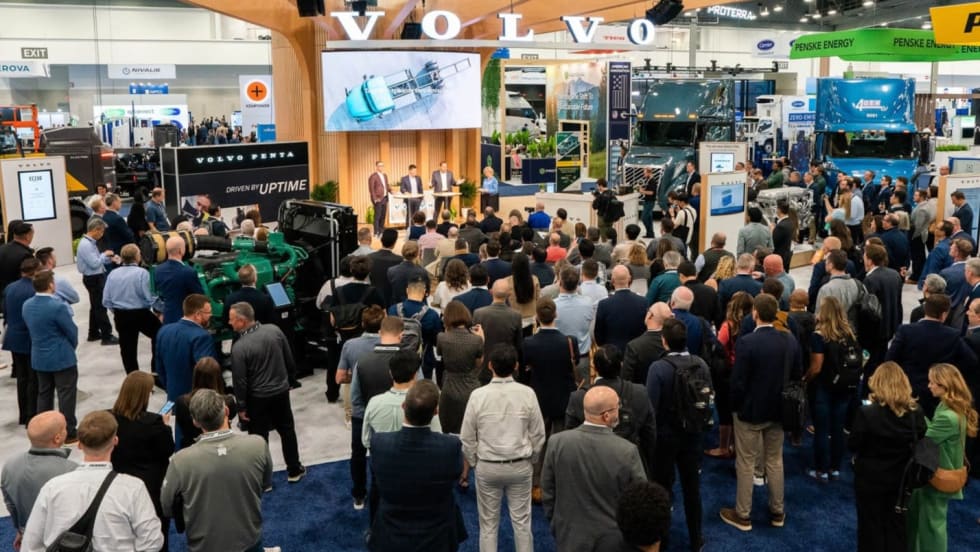
How Volvo’s New D13 Engine Meets EPA 2027 Emissions Without Sacrificing Power or Fuel Efficiency
Volvo says advances in combustion and aftertreatment helped its new EPA 2027 D13 engine avoid the fuel-economy penalties many once expected from tighter NOx emissions limits.
Read More →