




Port Drivers Strike Again Over Misclassification Issue
This week, truck drivers went on strike at the Ports of Los Angeles and Long Beach over employee misclassification and wage theft.

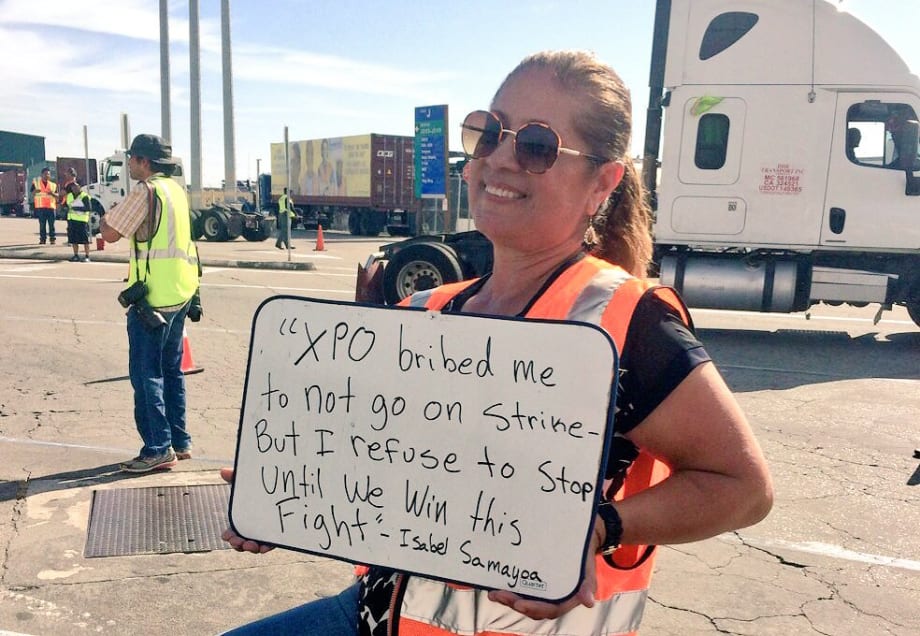
Photo: Justice for Port Truck Drivers
Photo: Justice for Port Truck Drivers
Truck drivers servicing the Ports of Los Angeles and Long Beach began a new “Unfair Labor Practice” strike on Oct. 26 over the issue of being "misclassified" as independent contractors.
Supported by the Teamsters Union, drivers from carriers including XPO Logistics and Pacific 9 Transportation are accusing their carriers of wage theft as a result of being misclassified as independent contractors instead of as full employees. They claim that this misclassification robs workers of certain employee rights such as health insurance, unemployment compensation, workers compensation and the right to form unions and collectively bargain things like wages.
This is not the first time the issue has come up at the Ports of Los Angeles and Long Beach and is part of a year there that has been defined by work stoppages. As the largest port complex in the United States, unrest and delays at these ports can have widespread effects.
Speaking at the demonstrations on Tuesday, Teamsters General President Jim Hoffa encouraged the striking drivers, telling them that they “have the support of 1.4 million Teamster members.”
During his visit, the union announced that drivers from the Chinese-owned trucking company Intermodal Bridge Transport were joining the strike. The Teamsters also rallied support for warehouse workers from Cal Cartage who intended to strike on Oct. 28.
"Wage theft isn't just about misclassification,” said Fred Potter, Teamsters vice president. “It's about workers who are supposed be paid a living wage – and they're not. And that is happening right here on port property.”
The Harbor Trucking Association, which represents the interests of trucking companies that service the ports, says it would like to see the demonstrations moved away from the port complex. The strikers, which started protesting at the truck yards of the individual trucking companies involved, threatened to move to the port if demands are not met.
“When they start to have demonstrations at the terminals it impacts the wider community,” said Weston LaBar, executive director of HTA. “When you engage in activities at somebody’s yard or facility it’s isolated and it’s not as widespread a problem.”
He also felt that the Teamsters were setting a bad precedent by targeting certain companies and holding demonstrations at the complex when there wasn’t enough police presence available to prevent it from disrupting normal activities. In some cases it could prevent other companies that aren’t being targeted from conducting business at the terminals.
“Basically, the Brotherhood of Teamsters are picking whatever companies they want to target, and who’s to say that they don’t pick five or 10 more companies next week,” said LaBar. “Are we going to have to lock out all of those companies as well?”
As for the job misclassification issue at the heart of the demonstrations, LaBar said at this point in time drivers have many opportunities to work in whatever capacity they choose, whether union or non-union employees or independent-contractors. The real problem, as the HTA sees it, is that the Labor Commission has mishandled the misclassification issue.
He stated that the Labor Commission rubber-stamps every case related to misclassification without properly examining it to see if it meets the criteria. In some cases, drivers who work as legitimate independent-contractors were filing misclassification claims against multiple companies they contract work from, claiming to be employees of those companies, he said.
“We have an issue with the process at this point in time, but the process is what it is,” said LaBar. “If they want to engage in activities, that’s their perogative, but we really feel like they should be doing that at the facilities of the companies that they have an issue with, not at the port complex affecting the entire supply chain.”
More Drivers

Why Hiring Truck Drivers Is Getting Harder
Higher recruiting costs, a shrinking driver pool, and renewed pay competition are raising the stakes for fleets heading into 2027.
Read More →
Roehl Offers Truck Drivers $10,000 Retention Incentive
Payments begin after the first load and continue in mileage-based installments for eligible experienced drivers joining the fleet.
Read More →
Platform Science Adds Dispatch and Safety Tools
Four additions to PS Fleet help fleets monitor loads, manage driver coaching, share truck locations and adjust video system settings.
Read More →
When Language Stops the Truck: The Return of ELP Out-of-Service Orders
English language proficiency rules for commercial drivers aren’t new, but renewed out-of-service enforcement has raised the stakes. Here’s what carriers need to know before a driver reaches a roadside inspection.
Read More →
Samsara Launches Custom AI Agent Builder
Agent Studio lets fleets create AI tools for hours-of-service monitoring, reporting and driver support, including agents that communicate by phone.
Read More →
Trucker Path Expands Reserved Parking Network
Trucker Path has added close to 6,000 more truck parking spaces to its Trucker Path Reserved Parking Network with the addition of Safe Truck Parking.
Read More →
EEOC Sues Texas Trucking Company Over Driver Age Limits
The agency says Trancasa USA rejected applicants over 65 and applied tougher driving-record standards to those over 60.
Read More →
Nussbaum, Roehl Announce Second Driver Pay Increase This Year
This year has seen a swath of major truck driver pay increases as freight capacity has tightened.
Read More →
From One Generation to the Next: How Mentorship Builds Safer Truck Drivers
After three decades in trucking, Harold Perry shares what he's learned about driver safety, mentorship, and helping the next generation build confidence behind the wheel.
Read More →
Truck Drivers Need More Than Another Alert
Fleets have more visibility into truck health, safety events, and driver activity than ever. The next challenge is turning all that information into useful guidance for the person who has to decide what to do next.
Read More →