




Group Effort Needed to Deal with Crash Accountability Question
The Federal Motor Carrier Safety Administration has delayed its promised changes to its Compliance, Safety and Accountability program, and the truck and bus industries are being vocal with their frustration
The Federal Motor Carrier Safety Administration has delayed its promised changes to its Compliance, Safety and Accountability program, and the truck and bus industries are being vocal with their frustration.
There's no wonder they're at odds: The FMCSA wants to ensure that its CSA program remains effective; the carrier industry wants its safety record to be portrayed accurately.
While there may be a number of potential divisions between the government and industry, few seem as difficult as the reporting of crash history. Crash history is one of three driver categories that are given added emphasis (unsafe and fatigued driving are the others) in the CSA's Safety Measurement System. An accident in which a truck is not at fault still - currently - counts in the crash history, as there is no consistently accurate way within the system of delineating responsibility.
The frustration on the part of industry is understandable. Why penalize companies for crashes that are not their fault? But to move forward, it's important that industry work alongside government and other stakeholders to get to the ultimate goal: making the roads safer.
This issue would benefit from a collaborative problem-solving approach so that high-risk motor carriers that are crash-prone are accurately identified and dealt with appropriately.
FMCSA's promise of a policy change that affects everyone -- carriers, safety advocates, drivers, brokers, law enforcement, attorneys, state data agencies, etc. -- is important enough to expect an ongoing dialogue with these groups as FMCSA moves forward to find a reasonable and acceptable resolution.
In a research report relied on by FMCSA in its design of CSA, the authors concluded that, even when not at fault in a specific crash, accidents involving motor carriers correlate highly with a risk of that motor carrier being involved in future accidents.
Despite that evidence, for many years the government has wanted to find a "better way" of establishing crash accountability and has explored a range of cost-effective and fair methods that will not overburden the agency's staff or its state counterparts.
Police accident reports are the source document for most truck and bus crashes, but data elements listed in these documents require that they be coded as "truck involved" any time a motor carrier is involved in a reportable incident. This means that unless the police report clearly delineates which driver was at fault, the truck is often considered culpable in the CSA system.
It's important to understand that, no matter what solution FMCSA and the industry agree upon, state and local governments would play a significant role since they are the ones that would need to make necessary changes in the current process. This is not an insignificant consideration, especially given the financial constraints on many state and local budgets.
Over-representation in crashes, normalized by mileage and size of carrier, reflects likely breakdowns in one or more of the other six BASICS. Intervening with companies with poor records on these measures is what the Safety Measurement System aims to do. By getting involved in bringing carriers into compliance with the other BASICS, the risk of crashes is reduced since the carrier's safety management deficiencies are ostensibly addressed.
Reducing crashes benefits society, the trucking and bus industry, and individual companies. That's why it is so important that any changes to CSA are done correctly and tested long enough before being finalized as policy so that the CRASH indicator calculation is, indeed, a valid representation of a carrier's safety condition.
Having a crash that is the legitimate fault of the carrier is the truest outcome measure that most correlates with risk. It's important that any changes appropriately deal with companies that have repeated safety violations while not unfairly punishing others that simply were the victim of someone else's driving error.
If there is any bright spot in this recent spat, it's this: Industries are clearly paying more attention to CSA and their scores.
When the carriers were first able to see the new measurement system and their own scores - a full eight months before public access -- fewer than 5% checked their records.
The agency was clearly perplexed about this low review rate. Even in the past few months, proposed changes to the cargo securement and vehicle maintenance BASICS were met with a similar low review rate by individual carriers, prompting FMCSA to extend the public comment period hoping more carriers will make input. Sometimes carriers rely on organized trucking/motorcoach groups to comment for them, but FMCSA has always urged all carriers to provide their points of view.
Until there are changes to CSA -- particularly in the crash BASIC -- it is important that the industry pay close attention to their scores to ensure that the data ascribed is accurate.
Companies should set up a review procedure any time a driver is involved in a crash. View the related reports, and involve the driver in that review. Train drivers to review the accident report while the police officer is still on the scene. He or she should check for minor errors, such as an incorrect CDL or DOT number. It's easy to fill in a long series of numbers incorrectly. This should be brought to the officer's attention while still on the scene.
If data is found to be inaccurate, pursue correction through the DOT DataQ's process to correct it. Also ensure that the company's MCS-150 number is correct, as this will ensure the company is placed in the correct peer group -- another important factor, because a company's performance is measured against others with similar characteristics.
I have every belief that FMCSA and the trucking and bus industries will come together to make fair changes to CSA. It's vital that both sides approach the matter with a collaborative spirit to enact the changes needed. It's just too important that we get this right.
Rose McMurray is former Assistant Administrator and Chief Safety Officer of the Federal Motor Carrier Safety Administration in the U.S. Department of Transportation where she oversaw implementation of CSA. She now leads FDRsafety's Transportation Safety practice along with Fred Rine, CEO of FDRsafety. In that role, she provides clients with insight into how to obtain good ratings in CSA measurements. Contact her at rmcmurray@fdrsafety or 1-888-755-8010.
RELATED STORIES:
7/24/2012 - Ferro Announces Crash Accountability Research Plans
3/22/2012 - Ferro Discusses CSA Changes at MATS
3/21/2012 - ATA: Common Sense Must Govern CSA Crash Accountability Decisions
3/12/2012 - FMCSA Stops Plan to Determine Accountability in CSA Crash Data
1/19/2012 - Schneider National Safety Guru Don Osterberg on CSA
More Safety & Compliance
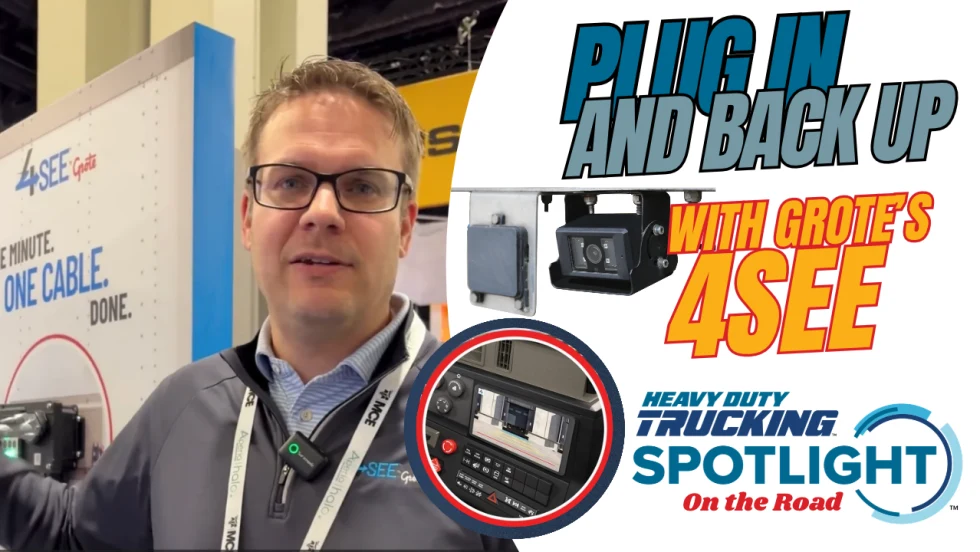
More Trailer Data Through the Same Seven-Way [Video]
Can trucking’s standard seven-way connector handle more cameras and trailer data? Grote’s Adam Slade shows HDT how the company is using new technology with its 4See trailer system, not only to add a new backup camera but also to expand other capabilities — without adding another connection.
Read More →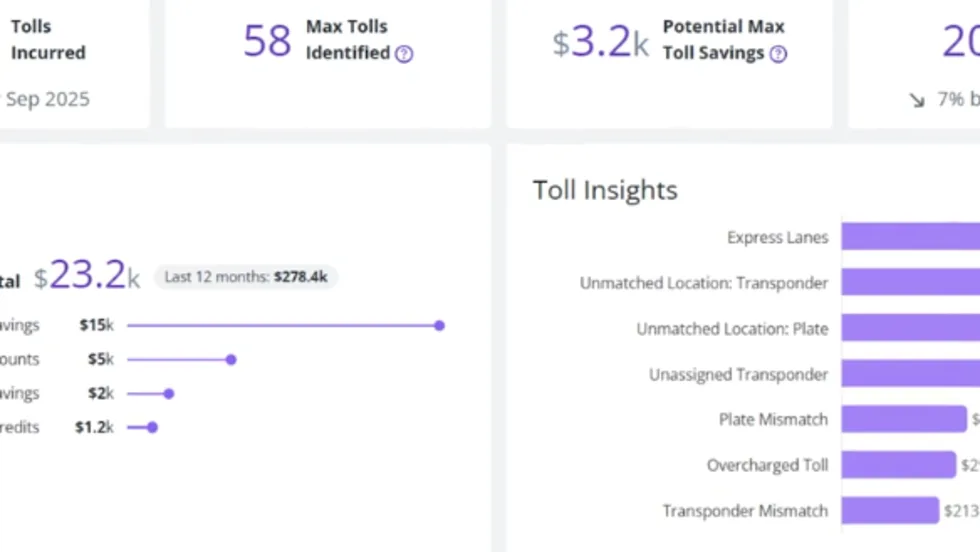
PrePass Intelligence Mines Fleet Bypass, Toll and Safety Data
PrePass Intelligence helps fleets measure bypass savings, flag potential toll overcharges, and spot suspicious transactions by combining data from separate systems.
Read More →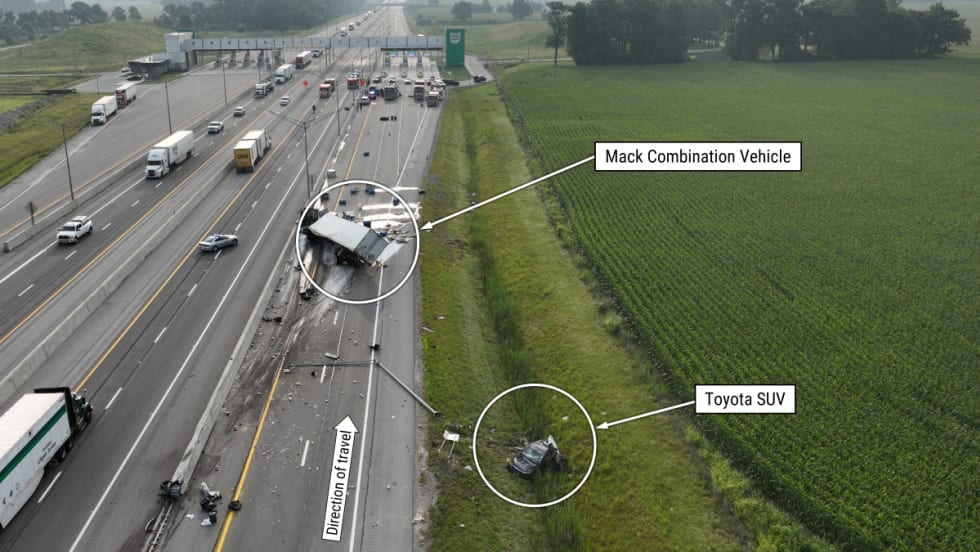
Fatal Crash Exposes Toll Plaza Risks
An NTSB investigation found that last-minute lane changes and large speed differences at an Ohio toll plaza created a hazard the truck driver couldn't avoid in time.
Read More →
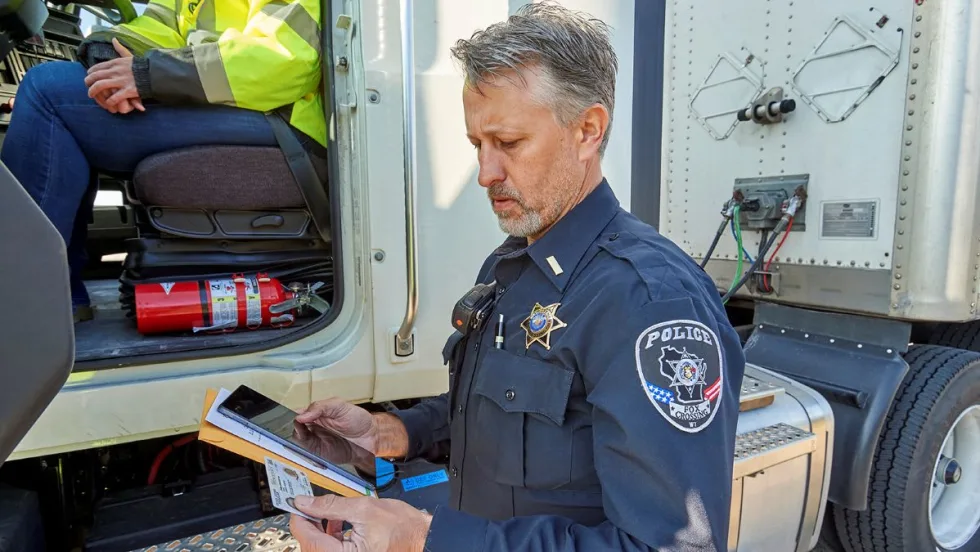
When Language Stops the Truck: The Return of ELP Out-of-Service Orders
English language proficiency rules for commercial drivers aren’t new, but renewed out-of-service enforcement has raised the stakes. Here’s what carriers need to know before a driver reaches a roadside inspection.
Read More →
A Camera Isn't a Safety Program. Here's What Brokers Are Screening for Now
Footage alone may not be enough to pass broker vetting processes. Here's what counts as a defensible safety program now.
Read More →
Marijuana and Trucking’s Drug-Testing Dilemma
Marijuana is getting stronger, laws are changing, and drug tests still can’t reliably establish impairment. What does that mean for truck drivers and the fleets that employ them?
Read More →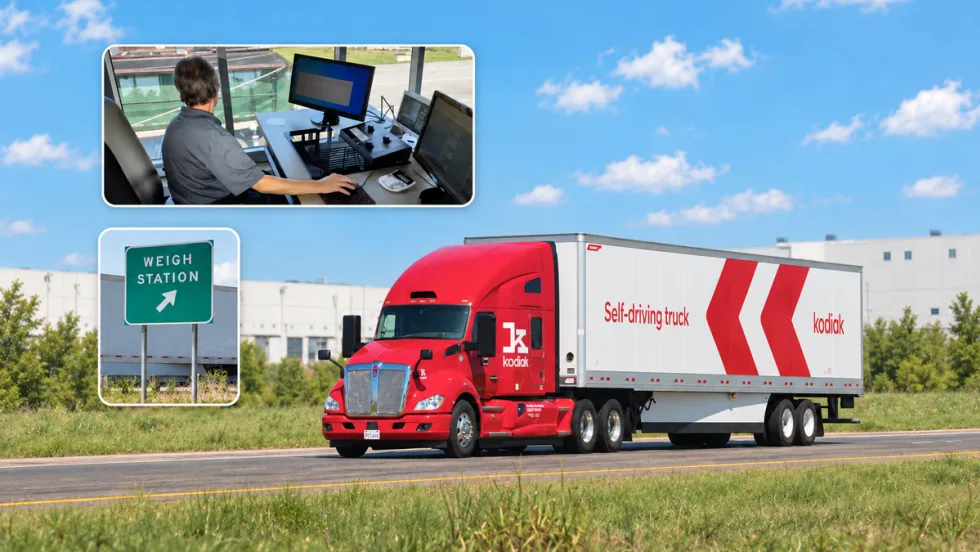
PrePass, Kodiak Connect Driverless Trucks to Roadside Enforcement
The system will allow enforcement agencies to verify Enhanced Inspection information and decide whether Kodiak’s autonomous trucks can bypass roadside screening sites.
Read More →
From One Generation to the Next: How Mentorship Builds Safer Truck Drivers
After three decades in trucking, Harold Perry shares what he's learned about driver safety, mentorship, and helping the next generation build confidence behind the wheel.
Read More →
FMCSA Pauses Biennial-Update Enforcement Amid Motus Transition
Carriers whose updates were due on or after June 1 have more time, while FMCSA works to stabilize its new registration system and warns of phishing sites impersonating its new carrier registration system, Motus.
Read More →
ZF Expands Commercial Vehicle Push in North America
ZF is expanding its North American commercial-vehicle presence with new transmission applications, electrification, trailer technology and autonomous-driving systems.
Read More →