




Could Tesla Solve EV Range Issues With Battery Swapping System?
Tesla filed for a patent on a high-speed battery replacement system for electric vehicles that would quickly swap out a spent battery with fully charged one. Could this be the key to solving charging time and EV range issues?

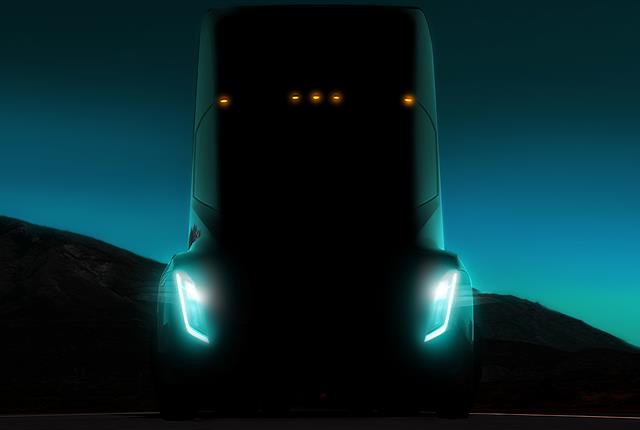
Tesla has filed a patent for a hoist system capable of swapping out electric vehicle battery packs in less than 15 minutes. Image via Tesla
Tesla has filed a patent for a hoist system capable of swapping out electric vehicle battery packs in less than 15 minutes.Image via Tesla
One of the major obstacles — or concerns, at least — regarding electric trucks has been the question of recharge times. Although advances have been made in fast-charge technology, returning a battery big enough to power a commercial truck to full capacity is still a time-consuming process that can take hours. As a result, most experts have theorized that any future electric trucks or vans will have in the commercial space will be limited to set, daily routes with fixed distances. Vehicles on these routes, conventional thinking goes, would return to their shops in the evening and recharge their batteries overnight.
Recently transportation analyst Rick Mihelic, in a study commissioned by the Stifel Transportation Equipment Equity Research Group, theorized that electric trucks could make a move into regional-haul applications if depleted batteries were swapped out for fresh ones at drop-and-hook terminals along the route.
It appears Mihelic is not the only one thinking along those lines. According to a report from Business Insider, Tesla is looking into a specialized hoist system that would make it easier, and faster, to replace batteries in an electric vehicle.
According to the report, Tesla filed a patent application in May for a system that can elevate a vehicle and replace a depleted battery pack with a fresh one. The patent says at least one technician would monitor the machine, which could be installed at remote locations along highways between cities and would be able to complete a battery swap job in under 15 minutes.
In other Tesla news, company founder and CEO Elon Musk said in a Tweet late last week that he hopes to unveil its much-anticipated electric truck in late October.
Tesla Semi truck unveil & test ride tentatively scheduled for Oct 26th in Hawthorne. Worth seeing this beast in person. It's unreal.
— Elon Musk (@elonmusk) September 13, 2017
More Fuel Smarts

Wex Adds Cardless Fuel Payments for Over-the-Road Customers
A new fuel card feature for Wex customers offers convenience and security.
Read More →
New California Law Could Shed Light on Electric Truck Prices
Why do battery-electric Class 8 trucks remain so expensive? A California bill signed by Gov. Gavin Newsom would give fleets and state agencies more visibility into what manufacturers charge.
Read More →
How Volvo Updated Its D13 for EPA 2027 [Watch]
Volvo’s updated D13 promises lower emissions without sacrificing performance or fuel economy. Take a closer look at what changed inside the engine in this HDT Spotlight video.
Read More →

Diesel Price Spike Shortens Payback for Natural Gas Trucks, Report Says
Energy Vision estimates fleets could recover the higher purchase price of an RNG-fueled Class 8 tractor in 1.3 to 2.8 years under current fuel-price scenarios.
Read More →
Calstart Becomes Catalyst Mobility, Reflecting Broader Focus
Calstart is now Catalyst Mobility, reflecting the nonprofit’s growing national role in clean transportation, including zero-emission trucks, infrastructure and incentive programs.
Read More →
Record Diesel Prices Squeeze Trucking Fleets
Average U.S. diesel prices have climbed to nearly $6 a gallon, surpassing the 2022 record as tight refinery capacity and Middle East disruptions keep fuel costs elevated.
Read More →
How Fuel Delivery Shapes Engine Performance
Fuel delivery depends on more than what happens at the injector. For fleet, maintenance and technical professionals, looking at the full path from pump to injector can provide useful context for understanding engine performance.
Read More →
East Coast Port Launches $45M Electric Truck Push
The Port Authority of New York and New Jersey announced millions in incentives for zero-emission drayage trucks, yard tractors, and new charging hubs near the port.
Read More →
Detroit Opens Orders for EPA 2027 Engines
Detroit isn’t starting from scratch to meet EPA 2027 diesel emissions standards. Its Gen 6 DD13 and DD15 engines keep much of today’s platform while updating the fuel and aftertreatment systems.
Read More →
Zero-Emission Truck Corridor Planned for West Coast
California, Oregon, Washington, British Columbia and Baja California are coordinating plans for truck charging and hydrogen fueling from Canada to Mexico.
Read More →