




Part 1: Where We've Been, Part 2: Changing the Focus, Part 3: Apples and Oranges
Emissions Yesterday, Today and Tomorrow: One Test or Two?
Allowing a manufacturer to focus on improving an entire vehicle - instead of just the engine - could reduce operating costs while still meeting efficiency standards.
by Rolf Lockwood
April 17, 2015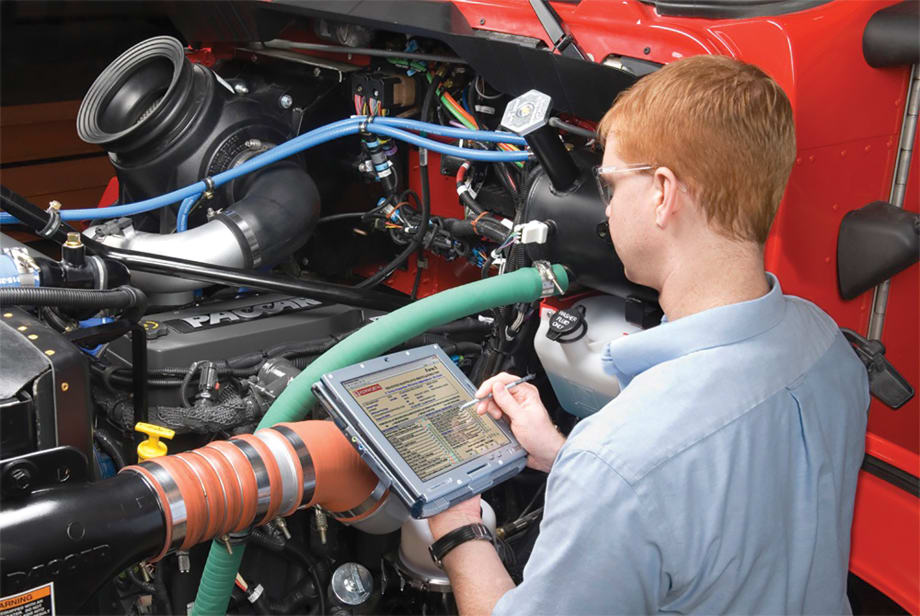
Testing the engine as a component rather than separate from a vehicle could be a better solution for meeting strict emissions standards. Photo courtesy of Today's Trucking
4 min to read
Testing the engine as a component rather than separate from a vehicle could be a better solution for meeting strict emissions standards. Photo courtesy of Today's Trucking
Phase 2 of the fuel-efficiency/greenhouse gas regulations will soon be unveiled, demanding even tougher, more stringent CO2 and fuel-consumption reductions of medium- and heavy-duty trucks.
Engines and vehicles are tested separately in Phase 1, but there are those who urge that just one test, with engines rolled into the whole truck like any other component, is the better approach.
As things stand now, engines are tested on a dynamometer as they have been all along, and Cummins thinks it should stay that way, according to Brian Mormino, executive director, worldwide environmental strategy and compliance at Cummins.
Among other reasons, Mormino told us in a lengthy interview, this would preserve spec'ing flexibility for truck buyers and ensure repeatability in the testing process.
Trucks, on the other hand, are tested by way of computer modelling in Phase 1, with some inputs coming from on-track trials using standard SAE protocols and that data then fed into the modelling software. Daimler and Volvo (including Mack), the only fully integrated OEMs, are arguing that a single all-inclusive test would be simpler and more cost-effective.
Mormino says the implementation of Phase 1 was pretty much seamless, and he attributes that success largely to the continued use of familiar regulatory tools and testing methods that had been in place for decades. For 30 years engine makers have tested NOx and particulates on the dyno, and it was easy to include CO2 as well.
"We just added CO2," Mormino says, "which means that we allowed all that diversity to continue in the marketplace because the engine is certified to operate in a wide range of vehicles and applications. So customers and end-users still have all the choice that is really, really important... in terms of all of their preferences and the types of work they have to do. The regulation didn't... limit their choices."
Perhaps a more compelling argument is the one he makes about the huge number of fuel-economy variables when a truck is put to use. Like driver skills, terrain, trailer type, highway or city, load, and countless others.
"That is a challenge for any type of regulation that tries to drive technology on vehicle aspects that are highly variable," Mormino says. "And the way that the regulation attempted to deal with that is that it separated out the most certain aspect, the engine, and provided a much brighter focus on something you can repeatably and accurately measure and do so in a way where it can be enforced."
On the other side of this argument sits DTNA's Sean Waters, as well as the Volvo Group's Tony Greszler.
"Our goal has always been to provide our customers with the lowest total operating costs to increase their revenues, and the most effective way to do that has been to provide better fuel efficiency," says Waters. "Regulations have interfered with this goal in the past where criteria-pollutant emissions control technology had a great negative impact on fuel economy.
"It's critical that regulations to reduce fuel consumption do not in actuality result in negative impacts on real-world fuel efficiency gains, and this is where the current separate engine standard program has failed. Engine test cycles are based on historical operating data and cannot reflect changes in engine size, powertrains, or vehicle power demand and do not accurately represent the fuel used in the real-world, nor were they ever designed to do so," Waters suggests.
"DTNA believes the best way to ensure that the Phase 2 regulation provides a total-cost-of-operation benefit to customers is to give manufacturers the ability to focus on improving the entire vehicle as it operates on the road and in the application for which its customers want to use the vehicle. Any regulation that doesn’t give manufacturers the flexibility to meet it in the manner that works best for our customers, results in vehicles that customers can’t afford, or doesn’t provide sufficient real-world payback and risks creating a pre-buy prior to the regulation becoming effective."
Waters goes further, saying that the tests for criteria pollutants -- NOx and PM -- are based on a test designed in 1990 or 1991 "when trucks had higher horsepower, more torque. It was just a different way of operating an engine. The test was never designed for CO2." Nor was it designed to measure fuel economy, he adds.
He figures the test was used for convenience in Phase 1 to get a rule done quickly.
At Volvo Group North America, Tony Greszler is vice president of government and industry relations, and he's the point man on Phase 2 rules.
"The bottom line here is that the engine test doesn't test the engine the way it runs in the truck," he says. "It's impossible for any engine test to do that. And it also doesn't account for the impact of the engine on the rest of the truck.
"The technology of most concern is what we call waste-heat recovery," Greszler goes on, and we'll explore than in the next installment of this series.
Subscribe to Our Newsletter
More Fuel Smarts
Trucking’s Diesel Squeeze Isn’t Letting Up
With diesel topping $6 a gallon nationally, ATA's Bob Costello explains why fleets should prepare for continued pressure at the pump.
Read More →
FlowBelow Redesigns Trailer AeroSlider to Cut Fuel Use
The lighter trailer aerodynamic system installs in less than 45 minutes, according to the company, with potential payback in under a year depending on fuel prices and trailer mileage.
Read More →
Why Diesel Price Relief Efforts May Fall Short
Diesel prices have eased from September’s record high, but doubts about additional Russian supply and limits on dyed-diesel tax relief mean trucking fleets still face expensive fuel. And prices could go higher.
Read More →
Why Small Fuel Savings Matter in Trucking
Can better fuel economy help pay for driver raises? In this podcast, GP Transco explains how small efficiency gains create room to reinvest in its people.
Read More →
How GP Transco Cuts Trucking Fuel Costs, a Tenth of a Gallon at a Time
What’s another tenth of a mile per gallon worth? GP Transco shares how equipment upgrades and driver coaching turn small gains into meaningful fuel savings.
Read More →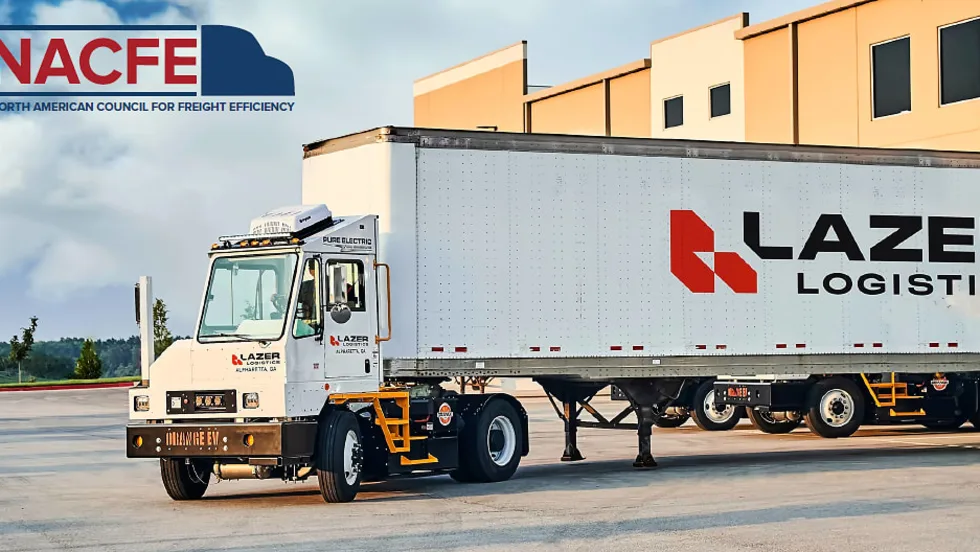
Electric Yard Tractors Move Beyond Pilots
Operating-cost savings have overtaken sustainability goals as the leading reason surveyed fleets are adopting battery-electric terminal tractors, according to new NACFE research.
Read More →
Geotab Links Fleet Card to Vehicle Data
The new card combines fuel discounts with telematics-based purchase controls. Geotab’s analysis also points to potential savings from choosing lower-priced fuel stops.
Read More →
Fleet Economics Shape Electric Truck Outlook
ACT Research expects costs, charging infrastructure, and technology improvements to drive zero-emission commercial vehicle adoption as federal regulations and incentives retreat.
Read More →
Wex Adds Cardless Fuel Payments for Over-the-Road Customers
A new fuel card feature for Wex customers offers convenience and security.
Read More →
New California Law Could Shed Light on Electric Truck Prices
Why do battery-electric Class 8 trucks remain so expensive? A California bill signed by Gov. Gavin Newsom would give fleets and state agencies more visibility into what manufacturers charge.
Read More →