




Related: Commentary: Good News Coming?
Emissions Yesterday, Today and Tomorrow: Where We've Been
An in-depth look at the emissions regimes that we have now and will see in the future. Part one of a WebXclusive series.
by Rolf Lockwood
April 13, 2015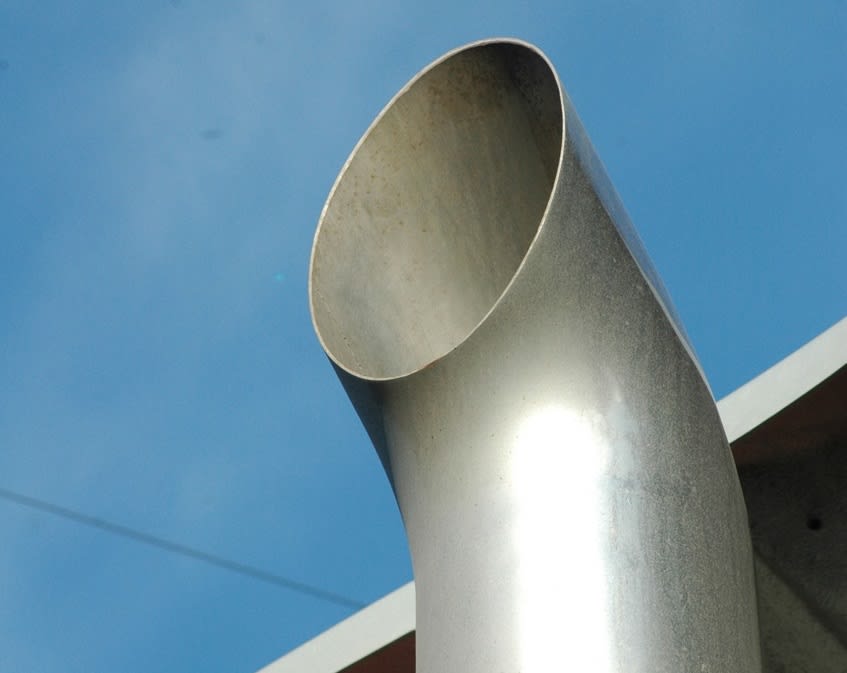
EPA 2010 emissions standards created exhaust gases so clean they no longer blacken the stacks. Photo: Jim Park
4 min to read
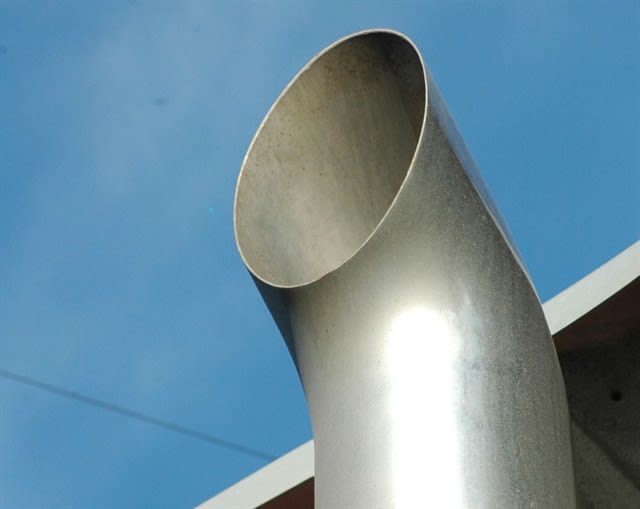
EPA 2010 emissions standards created exhaust gases so clean they no longer blacken the stacks.Photo: Jim Park
After well over a decade of endless wrangling over emission-control technologies and nonstop complaints on the user side about cost and reliability issues, things have gone quiet on the engine front. It hasn't been this way since the U.S. Environmental Protection Agency started tinkering with things back in the 1990s.
In fact, the EPA was at it as early as 1974, though the broad and heavy crunch came later. It really began in 1997 when the EPA set the standard for model years 2004-06.
But after all the trouble and woe brought on then and later with the 2007 emissions regime, which linger on for many of you, the 2010-spec heavy-duty diesel has proved to be a huge improvement in terms of both reliability and fuel economy.
Are we back to where we were a dozen-plus years ago? No, and there are still challenges in some quarters, but compared to EPA '07 we're way ahead.
A lot of folks probably haven't even noticed that we're already well into the next EPA era. Things changed with the 2014 model year, though the shift was a relatively small one in practical terms. It won't stay that way for long, as the focus is now on fuel economy and greenhouse gas emissions (GHGs). More on this later.
So how did we get here?
The Nightmare Begins
Remember the "consent decrees" of 1998? Agreements between the EPA, the California Air Resources Board, and most engine manufacturers, they were the end result of a battle in which the authorities claimed that NOx emissions had been misrepresented for several years.
The EPA claimed that Caterpillar, Cummins, Detroit Diesel, Volvo, Mack, and Navistar used engine control software that created a more fuel-efficient steady-state highway cruising mode -- but one that allowed higher NOx emissions. In the EPA's eyes, this was an illegal "emission defeat device."
The engine manufacturers reluctantly capitulated, and one of the results was that most of them had to comply with the already-established 2004 emission standards early, as of October 2002. There were also fines and requirements to allocate funds for pollution research. Of course they also had to switch their engine control strategies.
For model years 2004 through 2006, the EPA's new emission standards aimed primarily to reduce NOx emissions from highway engines to levels of approximately 2.0 g/bhp·hr. So most manufacturers introduced what we've come to know and love as exhaust gas recirculation (EGR). The fun had begun.
Changes in 2007
Move on to model year 2007 and later, with the focus now on both emissions and diesel fuel itself.
That's when we got low-sulfur diesel fuel, with the sulfur content in on-highway diesel fuel chopped to 15 ppm from the previous 500 ppm. The reason was that sulfur plays havoc with the catalytic diesel particulate filters and NOx catalysts that engine makers had to use for 2007-10 emission requirements.
We got new and stringent limits for particulate matter (PM), down from 0.10 to a tiny 0.01 g/bhp-hr, effective on Jan. 1, 2007. And NOx had to be cut back further, down to 0.20 g/bhp-hr, but manufacturers could phase that in between 2007 and 2010 on a percent-of-sales basis: 50% in 2007 through 2009 and 100% by 2010. Hardly any engine sold through the end of 2009 met the ultimate NOx standard, and it seems most engine makers certified their engines to a NOx value of about 1.2 g/bhp-hr on average.
And then came 2010, by which time NOx had to be down to that difficult 0.20 g/bhp-hr, which necessitated some big engine changes. There wasn't actually a new regulatory demand because the NOx requirement had been established as part of the 2007 regime. In theory, had the technology been available, engine makers could have dealt with the 0.20 NOx requirement back in 2007.
That brought us selective catalytic reduction (SCR) and diesel exhaust fluid (DEF) and that's where most folks are now, with significant fuel economy improvements compared to 2007. And after more than a decade of work refining things like sensor technology, strides have been made on the reliability front.
There was also a small but significant change in 2013 with the requirement for on-board diagnostics (OBD) for all on-highway diesel engines. It monitors the truck’s emission system to detect issues and recognize faults. When things go awry, the driver will know by way of a dash lamp known as the Malfunction Indicator Lamp (MIL). If it lights up the red 'Stop Engine' lamp, it means what it says. These diagnostics cover the engine at large too, meaning potentially expensive problems can be seen and dealt with early, before they absorb large amounts of cash in repairs or low fuel economy.
In Part 2, we'll look at the next phase of emissions regs: greenhouse gases.
Subscribe to Our Newsletter
More Fuel Smarts

New California Law Could Shed Light on Electric Truck Prices
Why do battery-electric Class 8 trucks remain so expensive? A California bill signed by Gov. Gavin Newsom would give fleets and state agencies more visibility into what manufacturers charge.
Read More →
How Volvo Updated Its D13 for EPA 2027 [Watch]
Volvo’s updated D13 promises lower emissions without sacrificing performance or fuel economy. Take a closer look at what changed inside the engine in this HDT Spotlight video.
Read More →
Diesel Price Spike Shortens Payback for Natural Gas Trucks, Report Says
Energy Vision estimates fleets could recover the higher purchase price of an RNG-fueled Class 8 tractor in 1.3 to 2.8 years under current fuel-price scenarios.
Read More →

Calstart Becomes Catalyst Mobility, Reflecting Broader Focus
Calstart is now Catalyst Mobility, reflecting the nonprofit’s growing national role in clean transportation, including zero-emission trucks, infrastructure and incentive programs.
Read More →
Record Diesel Prices Squeeze Trucking Fleets
Average U.S. diesel prices have climbed to nearly $6 a gallon, surpassing the 2022 record as tight refinery capacity and Middle East disruptions keep fuel costs elevated.
Read More →
Sponsored•September 9, 2026
How Fuel Delivery Shapes Engine Performance
Fuel delivery depends on more than what happens at the injector. For fleet, maintenance and technical professionals, looking at the full path from pump to injector can provide useful context for understanding engine performance.
Read More →
East Coast Port Launches $45M Electric Truck Push
The Port Authority of New York and New Jersey announced millions in incentives for zero-emission drayage trucks, yard tractors, and new charging hubs near the port.
Read More →
Detroit Opens Orders for EPA 2027 Engines
Detroit isn’t starting from scratch to meet EPA 2027 diesel emissions standards. Its Gen 6 DD13 and DD15 engines keep much of today’s platform while updating the fuel and aftertreatment systems.
Read More →
Zero-Emission Truck Corridor Planned for West Coast
California, Oregon, Washington, British Columbia and Baja California are coordinating plans for truck charging and hydrogen fueling from Canada to Mexico.
Read More →
A Closer Look at Kenworth’s Electric T880E Vocational Truck [Video]
Learn more about Kenworth's T880E battery-electric vocational truck at the Paccar Technical Center, including its range, applications, upfitting considerations, and PTO options, in this HDT Spotlight video.
Read More →