





“We have a vision of the future where... the connected truck is the main data node at the center of the logistics network.”
Daimler Blueprints the Connected Truck
Daimler Trucks sees connectivity as the means to leverage the data generated and shared by trucks to radically transform transportation logistics. Executive Editor David Cullen has more on the truck maker's connected vision, reporting from Dusseldorf, Germany.
March 22, 2016

Wolfgang Bernhard speaking on connected trucks. Photo: Daimler AG
4 min to read

Wolfgang Bernhard speaking on connected trucks. Photo: Daimler AG
DUSSELDORF, GERMANY – “If you asked me to blueprint the connected truck,” said Wolfgang Bernhard, head of Daimler Trucks and Buses, “I’d say ‘this truck will always be driving, it will always be fully loaded, never be stuck in a traffic jam, it will never fail, and it will be piloted by a happy driver.”
He added that with such a truck, there would be no paperwork, accidents or breakdowns – before admitting he is “well aware that we might never completely get there. But it’s the direction we’re taking. At full speed. And with a hot heart.”
The occasion was Monday's "Campus Connectivity" event, where the German truck maker unveiled what it said is the first semi-autonomous truck platooning system, Highway Pilot Connect.
Bernhard also conceded that connectivity is a fuzzy term. “Autonomous driving is easy to explain,” he said to a large audience that included journalists drawn from 36 countries. “The driver takes his hands off the wheel, his feet off the pedals — and that’s it. Connectivity is not so easy to explain.”
Indeed, a definition of connectivity offered by Daimler describes it as much more than integrating truck-generated data: “Connectivity is when everyone communicates with everyone and everything else, to the benefit of all parties involved… [it’s] when all those participating in this tight-knit communication network receive the correct information at the right time and in the right place.”
In this case, it’s all about connecting trucks to the Internet of Things (IoT). That’s techie shorthand for the vast and growing network of electronic devices that gather and exchange data.
For truck makers, connectivity is not just a buzzword.
Daimler, for one, sees connectivity as the means to leverage the data generated and shared by trucks to radically transform transportation logistics. Its reason for doing so is lofty as well: to benefit everyone from truckers to shippers to motorists and everything from the economy to the environment.
Pointing to ever-increasing freight volumes on the one hand and road networks that “will not triple,” Bernhard said the challenge ahead for logistics is huge.
On the other hand, he argued that “logistics takes place in a big network with the truck in its center… So far, the connections of this network are sketchy; sometimes they barely exist. [That’s] because the flow of information — of real-time information — is weak. The consequence is a waste of resources.”
By contrast, he said that now “a revolution” is taking place. “We have a vision of the future where the entire transportation process is completely seamless. Where the flow of goods on the road is mirrored by a flow of information from the Internet in real time. Where the connected truck is the main data node at the center of the logistics network.”
That’s the big picture. Bernhard predicted that over time, “connectivity will create a whole new universe of applications,” which will improve everything from fuel efficiency to load and route planning, loading/unloading times, empty miles, traffic congestion, border/customs clearance, insurance rates, and driver productivity and job satisfaction.
Daimler pointed out that connectivity will involve advancing both vehicle-to-vehicle (V2V) and vehicle-to-infrastructure (V2I) communications. The autonomous or “self-driving” truck is also part of the OEM’s picture, as it requires full-scale connectivity in the form of V2V communications to function.
The company started down the connectivity road 30 years ago when its Prometheus research project “laid the foundations for today's fully networked vehicle.” More recently, Daimler showcased its Highway Pilot autonomous vehicle technology in two trucks, the Mercedes Benz Actros cabover, for European and other markets, and its North American counterpart, the Freightliner Inspiration Truck.
The Freightliner Inspiration, based on the Cascadia production model, was the first autonomous truck to gain approval to operate on public roads, in 2015, thanks to the State of Nevada.
Shortly after, a standard Mercedes-Benz Actros equipped with Highway Pilot was approved to run on German public roads as a test vehicle. It’s permitted to drive on all Autobahns in semi-automated mode. That means that while the vehicle drives autonomously, the driver must constantly monitor the system and be able to take control at any time.
At its international media event in Dusseldorf on March 21, Daimler showed off its next advance in autonomous vehicles, the Highway Pilot Connect system,

One of three platoonable Mercedes Benz Actros with Highway Pilot Connect that took the stage. Photo: David Cullen
It enables several autonomously driving trucks — including the lead unit — to temporarily platoon as desired. A vehicle can pull out of the platoon at any time and equipped trucks can join the platoon at any time.
Daimler called the Highway Pilot Connect extension “a further step in the rapid progress towards the transport system of tomorrow.”
Related: Daimler Unveils Highway Pilot Connect Truck Platooning
More Fleet Management

How to Modernize Your TMS Without Replacing It [Podcast]
Before investing in a new transportation management system, take a closer look at what you've already got. AI, cloud technology and better integrations may offer ways to improve your trucking operations without starting over.
Read More →
Could Your Truck's Connected Devices Be a Cybersecurity Risk?
ELDs, telematics systems and driver tablets help fleets operate more efficiently. But every connected device needs protection against cyberattacks.
Read More →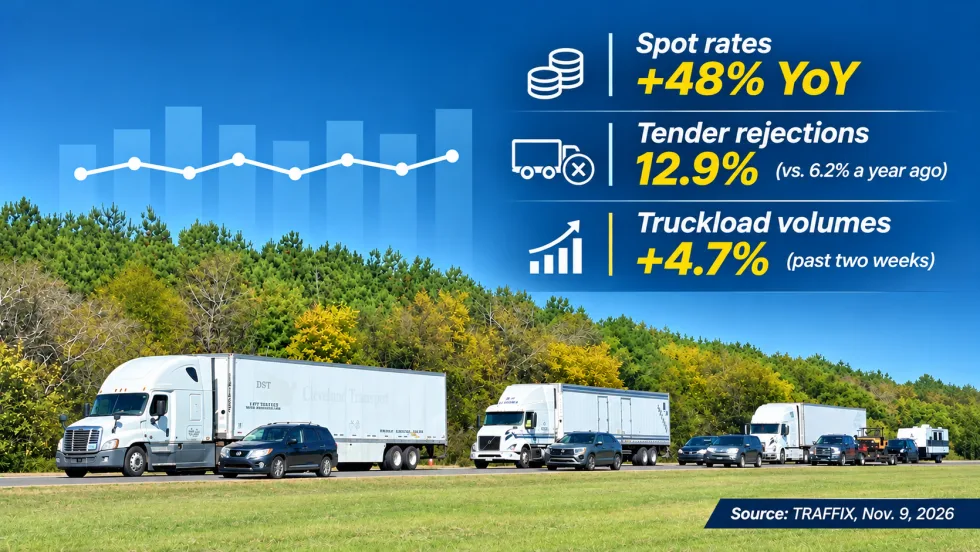
Holiday Freight Meets a Tight Trucking Market
There's no freight boom, but truckload carriers are finding themselves in a stronger position to negotiate rates. And holiday shipping demand could tighten the market further.
Read More →
What Trucking Events are Happening in 2027?
Looking for trucking-related conventions, expos, and other events? Heavy Duty Trucking has developed this list of national and larger regional trucking shows and events.
Read More →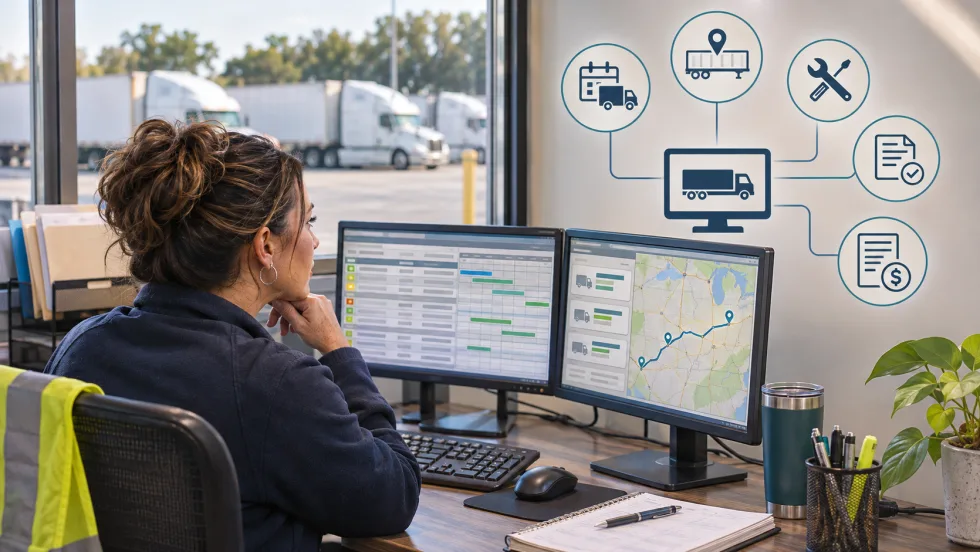
Does Your Trucking Fleet Need a New TMS?
Artificial intelligence and better integrations promise less busywork and more useful data. Can your TMS help your company solve problems? Do you need additional vendors or an upgrade? Or is it time to look for a new platform?
Read More →
Fleet Costs Shape ACT Expo 2027 Agenda
With diesel prices high and operating expenses under pressure, ACT Expo's 2027 agenda emphasizes fuel efficiency, AI, safety and the return on fleet technology investments.
Read More →
Does Your Trucking Fleet Need a New TMS? [Video]
Cloud technology, AI and new integrations are changing what transportation management systems can do. But does taking advantage of those advances mean replacing your existing TMS?
Read More →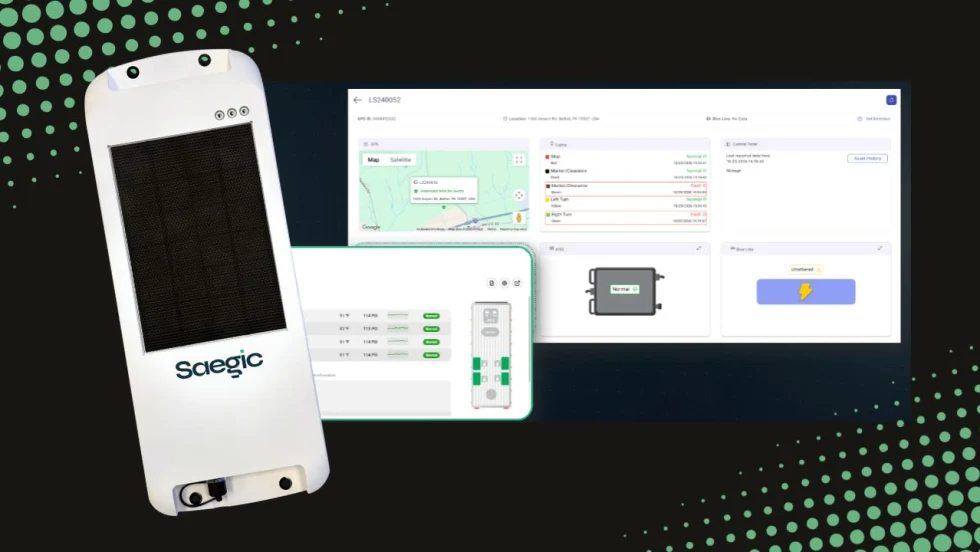
Road Ready Becomes Saegic, Launches New Trailer Telematics Gateway
Clarience Technologies is rolling out new hardware and expanding its plans for connecting trailer telematics, maintenance data, and video.
Read More →
Give Your Trucking Fleet a Cybersecurity Walkaround
Your fleet's cybersecurity policies may look good on paper. These seven checks can help you find out whether they’re working.
Read More →
Kodiak Lines Up Fleets for Driverless Trucking
An agreement for 75 trucks, a new Texas freight lane, and progress on safety validation move Kodiak closer to its planned driverless highway launch.
Read More →