




Related: New Group Lobbies for Blockchain Adoption by Trucking
3PL Study Finds Growing Potential in Blockchain, Automation
A global study stresses the importance of adapting to emerging technologies for third-party logistics companies and shippers, including blockchain and automation to provide better services to end customers.
by Staff
October 4, 2017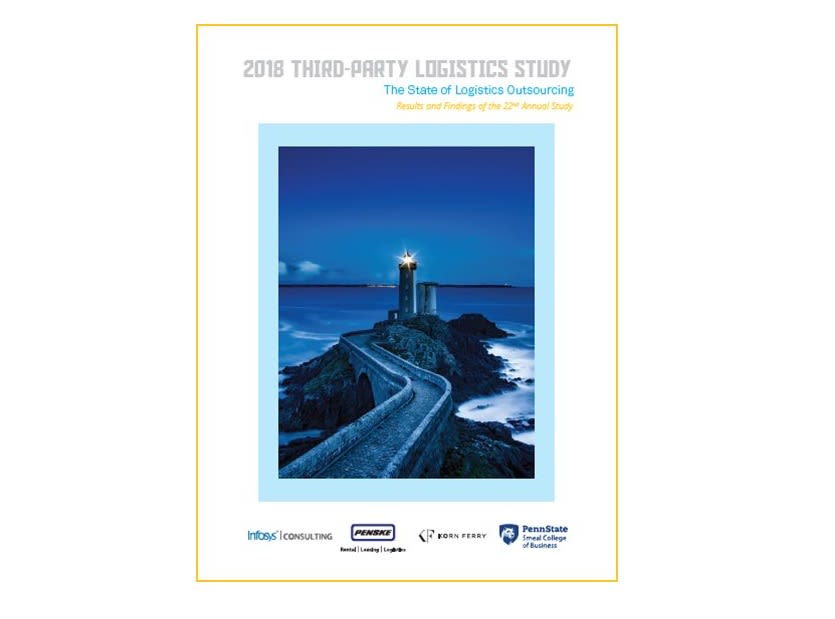
Image via Penske Logistics
3 min to read
Image via Penske Logistics
A global study stresses the importance of adapting to emerging technologies for third-party logistics companies and shippers, including blockchain and automation to provide better services to end customers.
The findings were part of the 22nd Annual Third-Party Logistics Study for 2018 that is a collaboration between Penske Logistics, Infosys Consulting, Penn State University, and Korn/Ferry. The specialized focus in this year’s report fell on blockchain, automation/ digitization, and he logistics talent revolution required for shippers and 3PLs to drive technology advancements as well as how shippers and 3PLs view their risk/resilience relationship.
It was the first time that the 3PL study investigated blockchain. Results showed that while 30% of 3PLs and 16% of shippers see blockchain as a potential application, they have yet to engage with the technology.
“Blockchain has the potential to make significant improvements in security, transparency, and governance, but only in supply chains where there is value in controlling consumer risk, valuable goods or complying with regulations,” said Ken Toombs, global head of Infosys Consulting. “Shippers and 3PLs will need to work together to drive value from blockchain, using lessons collectively learned from missteps with other emerging technologies, like Radio Frequency Identification (RFID).”
The potential of on-road automation, including driverless vehicles, was also examined in the study. The supply chain is already providing returns from increased automation, including digitalized load matching and warehouse robotics. While a majority of 3PLs and shippers want to invest in automation and digitization to stay competitive, a lack of in-house talent to develop, implement and monitor the technologies has prevented investment by some companies.
“Technology improvements in supply chain, especially in the area of fleet operations, have had positive impacts on the industry,” said Tom Scollard, Penske Logistics vice president of dedicated contract carriage. “It has allowed 3PLs to operate fleets that are safer and more efficient for the customer.”
Because of this focus on new technology and innovation, technology is reframing the demand on the workforce, according to the study, particularly within the supply chain where automation, digitization, and data collection capabilities are growing at a faster pace. Leaders and executives within the logistics and supply chain fields are more critical to companies as they move toward efficient and technologically advanced supply chains.
“To leverage the potential upside, organizations must now rethink their talent strategy from top to bottom,” said Neil Collins, regional managing partner for Korn Ferry’s North American industrial markets unit. “The supply chain/logistics leader must now be agile, a strategist, a visionary and a collaborator. The entire supply chain organization must now compete with technology, and the winners will be those that elevate their people using technology, rather than replacing them with it.”
Lastly, the relationship between 3PLs and shippers is still in need of improvement with 79% of 3PLs and 64% of shippers reporting that projects were directly impacted by a lack of complete, accurate, and consistent information provided by the shipper.
The study shows a large increase in the percentage of shippers seeking information technology services from 3PLs, with 27% indicating outsourcing of IT services in the 2018 study compared to 17% in the previous year.
However, the percentage of shippers indicating satisfaction dropped slightly this year from 65% to 56%, potentially due to higher expectations among shippers as technology has improved or because shippers are seeking enhanced analytical capabilities to help drive more effective supply chain decisions.
The full study is available for download here.
More Fleet Management

Sponsored•September 1, 2026
How Telematics Improves Visibility, Control, and Performance in Refrigerated Fleets
Explore how telematics help refrigerated fleets improve visibility, uptime, efficiency, compliance, and cargo protection across connected cold chain operations.
Read More →
What the U.S.-Canada Trade War Means for Trucking
Escalating U.S.-Canada tariffs could disrupt cross-border freight, reduce truck volumes, raise costs, and create new uncertainty for carriers on both sides of the border.
Read More →
What Are Trucking’s Top Concerns for 2026?
The American Transportation Research Institute wants to know what's worrying trucking fleet managers, drivers, and other stakeholders in its annual Industry Issues survey.
Read More →

American Trucking Associations Looks for a New Leader
ATA President and CEO Chris Spear abruptly left his job at the association on August 21, at a pivotal time for the trucking industry.
Read More →
Public Wi-Fi Cybersecurity Risks: How Truck Drivers and Fleets Can Protect Their Data
Public Wi-Fi can expose truck drivers and fleets to credential theft, malware, and other cyber threats. Here’s how to reduce the risk on the road.
Read More →
For Nicky Cupp, Fleet Innovation Starts With Frustration
HDT Truck Fleet Innovator Nicky Cupp turns everyday pain points at Fraley & Schilling into opportunities for better technology and smarter processes.
Read More →
Adam Buttgenbach’s Approach to Electric Trucks: Start With Where They Fit
HDT Truck Fleet Innovator Adam Buttgenbach helped PepsiCo build one of North America’s largest EV fleets by focusing on where electric trucks make operational sense.
Read More →
Deen Albert: Let Automation Do the Math, People Make the Decisions
HDT Truck Fleet Innovator Deen Albert makes sure people are still at the heart of operations at Grand Island Express, even while adopting artificial intelligence tools. AI-assisted dispatch helped boost revenue 25% with the same number of trucks.
Read More →
Trimble’s New AI Agent Takes Aim at Fleet Back-Office Busywork
Arc Agent works across Trimble TMS products to automate repetitive tasks such as freight orders, maintenance, invoices, fuel costs and more.
Read More →
How HDT’s 2026 Truck Fleet Innovators Are Rethinking Fleet Operations
Meet five trucking leaders who are challenging assumptions, solving operational problems, and putting innovative ideas to work.
Read More →