




Canadian Trucking Lobby Submits Wish List for NAFTA Talks
The Canadian Trucking Alliance has officially submitted comments on cross-border trade to Global Affairs Canada, as governments prepare to renegotiate aspects of the North American Free Trade Agreement.
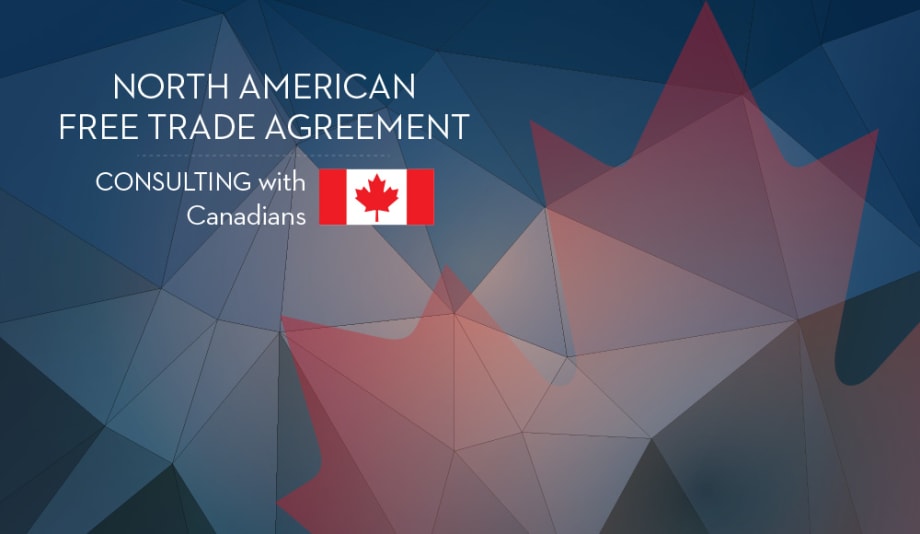
Image: Global Affairs Canada

The Canadian Trucking Alliance has officially submitted comments on cross-border trade to Global Affairs Canada, as governments prepare to renegotiate aspects of the North American Free Trade Agreement.
The association's submission covers 11 related areas of interest including: in-transit truck moves, cargo pre-clearance, government investment at ports of entry, harmonization of security programs, the trend in rising cross-border fees, the movement of food products and related inspections, and e-commerce, among other topics.
“Many of the comments by the carrier community contained in our submission are longstanding issues that have been impeding cross-border trade,” said CTA President Stephen Laskowski. “CTA is eager to work with Ottawa, Washington, and the business communities on both sides of the border to try and resolve these issues for the betterment of the economies in the U.S. and Canada.”
For its part, the U.S. has already indicated an interest in automating and streamlining customs and border procedures. Those were among negotiation objectives released on July 17 by the Office of the United States Trade Representative. That 18-page document asks for “automation of import, export, and transit processes” as well as “reduced import, export, and transit forms, documents, and formalities [and] enhanced harmonization of customs data requirements” for goods crossing the border.
Now, on to the wish list linked specifically to trucking:
Repositioning trailers
Existing cabotage rules govern how foreign motor carriers reposition trailers. “This is inconsistent with modern-day logistics practices,” the CTA brief reads, noting how shippers, receivers and freight forwarders control when freight is loaded and unloaded. “Motor carriers must therefore maintain larger trailer pools, allowing them to drop off a loaded trailer at the consignee so the driver and truck don’t need to wait.” Along with the American Trucking Association, it wants foreign drivers to be able to reposition empty foreign trailers as part of international commerce.
In-transit shipments
Meanwhile, in-transit shipments – the domestic freight that takes a shortcut through a foreign country – essentially came to an end when the Automated Commercial Environment (ACE) e-Manifests were introduced in 2006. Moves once allowed with no more than some manifest information now required full commercial information. But U.S. Customs and Border Protection has since 2016 been running a pilot project that allows nine qualifying carrier to run in-transit through the U.S. and selected ports. The CTA wants the program to become a permanent fixture.
Cargo pre-clearance vs. pre-inspection
And while Canada and U.S. government deemed a 2013 British Columbia pilot project testing pre-clearance systems to be a success, CTA says it delayed truck traffic and created longer lineups. A second test at the Peace Bridge in Fort Erie saw pre-inspected trucks processed 30 seconds faster per truck, when pre-inspection booths were limited to trucks with transponders.
“CTA has regularly cautioned against any initiative that would see trucks – particularly FAST-qualifying trucks – stopped twice … where currently there is only one stop,” the submission notes, stressing that the alliance supports a “true pre-clearance” where selected group of trucks are allowed to bypass a border stop altogether.
Other options
Other ways thought to improve cross-border trade include regional trade investments and port-of-entry staffing, harmonizing border security programs, transponders, border fees and penalties, APHIS fees, movement of food and meat, emerging trade areas and planning for e-commerce, and amendments to customs and operational procedures.
The need for staff
“Both US CBP and CBSA have seen their resources decrease significantly over the last several years, leading the agencies to search for efficiencies through automation, the use of advanced technology, and biometrics. This shift, although it’s the way of the future, must be reconciled with the need for frontline officers to process trade in the present day,” the alliance says.
It isn’t the only department to face limited resources. Consider the challenges that U.S. Department of Agriculture faces when clearing shipments of food and meat. At the crossing with Pembina, North Dakota, for example, only limited staff is available Saturdays, and there are no inspections on Sundays. In Blaine, Washington, the officers are closed for inspections between 11 pm Friday and 7 am Monday.
Harmonized programs
Requirements and processes for Customs Self-Assessment (CSA) and the Customs Trade Partnership Against Terrorism (C-TPAT) also overlap and could be streamlined, CTA says. And the alliance is calling for the Commercial Driver Registration Program (CDRP) to be wound down since it allows drivers access to FAST lanes without the same intense background check and security clearance needed to get a FAST card. There are about 1,745 CDRP card holders, and 1,330 also have FAST cards.
Rising fees
Rising fees referenced in the brief included U.S. Custom decals, off-load charges at the border, Administrative Monetary Penalties, and U.S. Customs and Border Protection penalties. Specifically, it calls for a review of the Animal Plant and Health Inspection Service (APHIS) fees, which have been proposed to increase to US $8 per crossing – a jump of 52%. Related transponder costs would more than double.
The APHIS fees contravene the existing trade deal, are a tax on all U.S.-Canada trade, and are being imposed on the wrong party, simply because it’s easier to go after the truck than the owner of the product, the brief observes. So too were they said to be a barrier to legitimate trade, lack the application of resources to assess risks, and exempts bus passengers, pedestrians and private aircraft just because there are no means to collect and remit fees.
“The abundance of fees and penalties are detrimental to carriers hauling goods across the border, which is being passed down to the consumer,” CTA concludes. “Administrative burdens as well as additional costs and risks can also deter some carriers from transporting cross-border goods.”
The e-commerce challenge
Emerging e-commerce shipments are introducing another challenge. Canada Border Services Agency computers have been overloaded by courier shipments, leading to system outages and related delays at the border.
In terms of procedures at the border, CTA is asking for Canada and the U.S. to use the same carrier codes, review the need for vehicle repair controls, have Canadian e-Manifests be accepted by the Customs and Border Protection as an export manifest, and a single bond that can be used across North America.
NAFTA renegotiations are set to begin as early as August 17.
This article by the staff of award-winning Canadian publication Today's Trucking appears here under a cooperative editorial-sharing agreement between HDT and TT.
More Fleet Management
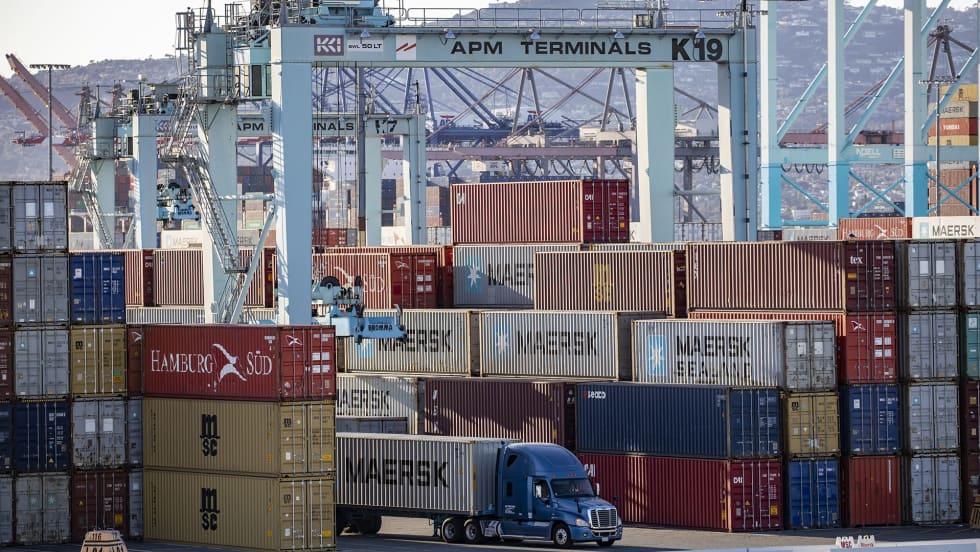
Import Cargo Volume to See Year-Over-Year Gain Again in June, Then Remain Below 2025 Levels Into Fall
After July, the report predicts a weakening in import volume as consumer uncertainty remains high and the impact of increasing inflation takes its toll.
Read More →
AUCTION OF EQUITY INTEREST IN HEAVY HAUL TRUCKING COMPANY!!
Mark your calendar: June 30, 2026 (10:00 a.m. PDT). MagnaTrans, LLC, a California limited liability company doing business as Magna Transportation Group is going to auction! Bid on a 37.5% ownership interest in this Rancho Cucamonga-based heavy haul and over-dimensional trucking company operating across California, Oregon, and Arizona. The equity interest will be sold to the highest bidder or bidders under Article 9 of the Uniform Commercial Code at 10:00 a.m. PDT.
Read More →
Volvo Trucks Adds Unattended Over-the-Air Software Update Capabilities
The latest evolution of Volvo’s over-the-air update technology allows software updates to run while trucks are parked, helping fleets keep vehicles current without disrupting operations.
Read More →

How Waste Connections is Using Data, Telematics, and AI
How do you manage and maintain more than 18,000 connected trucks? Data. Lots of it.
Read More →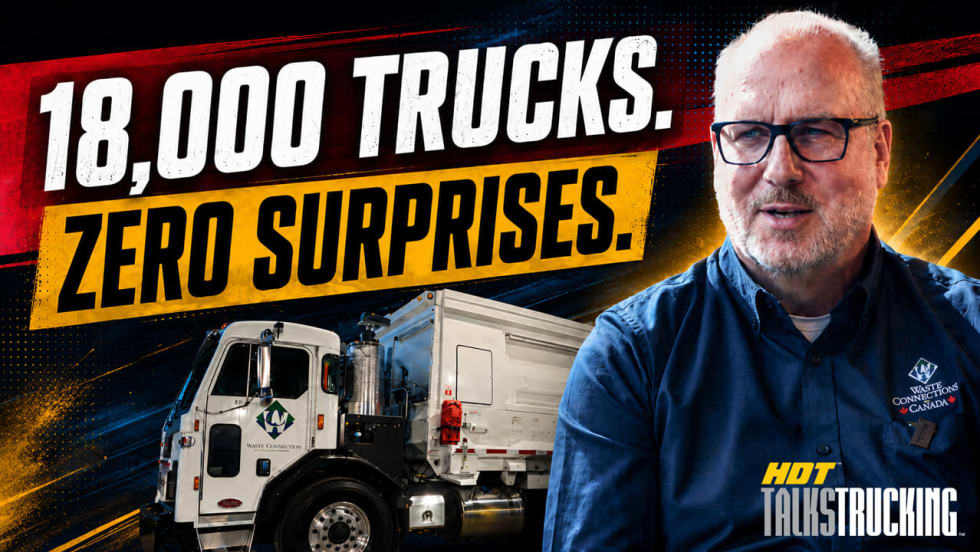
Why Fleet Data Matters More Than Ever at Waste Connections [Watch]
Waste Connections' Chuck Palmer explains how telematics, predictive maintenance, safety analytics, and AI help keep vehicles on the road and drivers safe in this episode of HDT Talks Trucking.
Read More →
NMFTA Launches Free, Anonymous Cybersecurity Threat Report Portal
Organizations are encouraged to anonymously report freight fraud, cargo crime, and cyber threats while gaining visibility into incidents reported across the transportation sector.
Read More →
AI Can Optimize a Fleet. Can It Replace Human Judgment?
Fleets fear falling behind if they don’t adopt AI quickly enough. They also fear what happens if the technology makes the wrong decision.
Read More →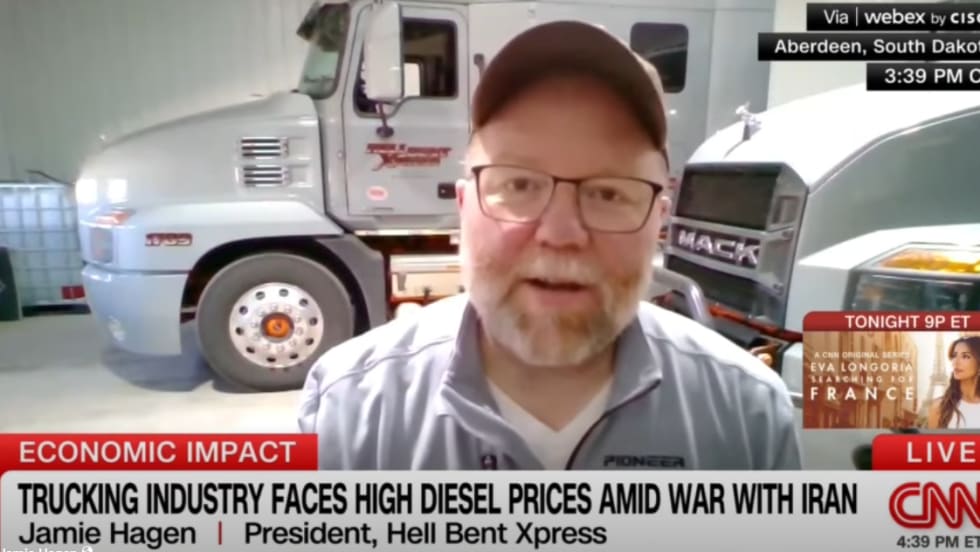
Jamie Hagen Gets Real About Running a Small Fleet in an Uncertain Economy
Small fleet owner Jamie Hagen says new legal risks, volatile fuel prices, and a changing freight market are forcing small carriers to rethink how they operate — and what they can afford.
Read More →
Jamie Hagen Gets Real About Freight, Fuel Prices, Safety, and Small-Fleet Survival
Running a small trucking fleet right now isn’t easy, especially right now. And Jamie Hagen doesn’t sugarcoat it.
Read More →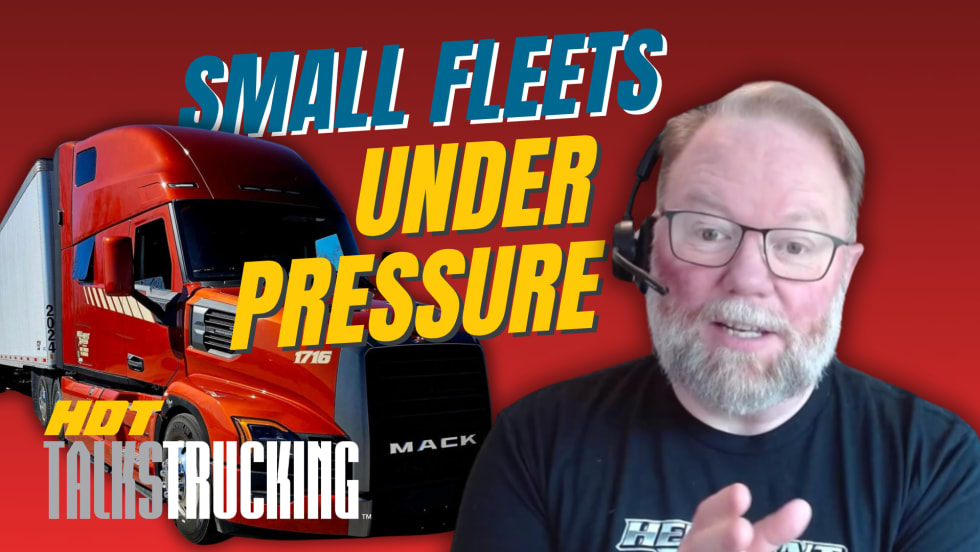
Jamie Hagen Gets Real About Freight, Fuel Prices, Safety, and Small-Fleet Survival
Running a small trucking fleet right now isn’t easy, especially right now. And Jamie Hagen doesn’t sugarcoat it.
Read More →