




TCA Implores Congress Not to Raise Truck Weights
The Truckload Carriers Association reiterated its support of the current five-axle, 80,000-pound federal gross vehicle weight limit for trucks.

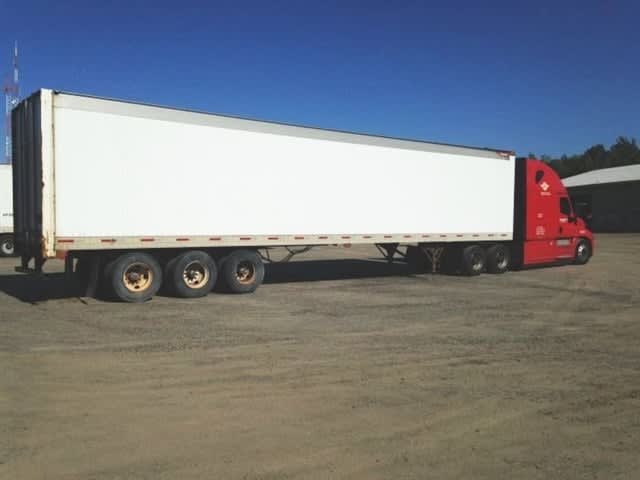
Hartt Transportation runs tri-axle vans, among other things, in Maine, where such rigs may gross 100,000 pounds. Photo: Hartt Transportation
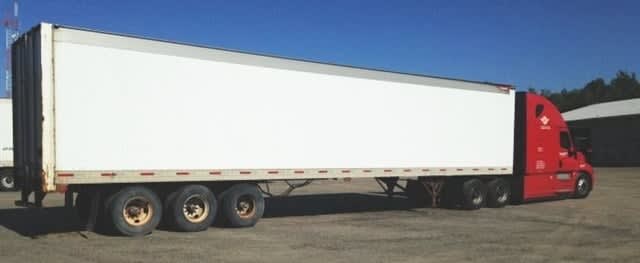
Hartt Transportation runs tri-axle vans, among other things, in Maine, where such rigs may gross 100,000 pounds.Photo: Hartt Transportation
The Truckload Carriers Association reiterated its support of the current five-axle, 80,000-pound federal gross vehicle weight limit for trucks in an April 5 letter to the leaders of both the Senate Committee on Appropriations and the House Committee on Appropriations.
TCA President John Lyboldt wrote the lawmakers that the association and its trucking company members are “concerned about allowing freight-shipping trucks to carry a maximum of 91,000 pounds with the addition of a 6th axle, up from the current 80,000 pounds standard.”
While conceding that this idea is an attempt to improve trucking productivity, he contended that “it clearly would only benefit a minority of carriers, while forcing the rest of the industry either to divert critical resources into these new configurations or risk becoming obsolete.”
Interestingly, that is often the strongest argument put up by truckload carriers that oppose liberalizing federal rules to allow 33-foot-long “turnpike” double trailers to operate on Interstate and other highways— regardless of state laws. T
TCA was among the groups that lobbied Congress successfully to keep a measure allowing twin 33s from being passed in 2015.
As to whether carriers should be allowed to run heavier when rigs are equipped with a 6th axle, about a year ago TCA did opt to ditch a two-policy position it had held since 2011 that called for increasing truck weight limits either by allowing a five-axle, 88,000-pound weight limit or six-axle, 91,000-pound limit.
In the letter, Lyboldt detailed TCA’s concern that changing the weight limit via a 6th axles would drive up both capital and operating costs for truckload carriers while not allowing them to recoup those costs through rate adjustments.
“Truckload’s shift from 48’ trailers to 53’ trailers was exactly this issue, only in reverse,” he pointed out, offering a history lesson. “Shippers who filled trailers by volume before maximizing the allowable weight put pressure on industry to move to 53’ trailers. Like the proposal today, there were pilot programs prior to it being legalized across the nation. Only half of the loads cubed out before they weighed out, yet the entire industry was forced to move.”
Lyboldt said that while “the market demands ultimate flexibility from general freight haulers, those who cannot provide the service simply disappear. As has happened before, maximum capacities become the norm. Carriers are forced to adjust their equipment to accommodate 91,000/6, despite the fact that they will likely never recoup the costs of the adjustment or haul loads requiring the 6th axle.”
He added that truckload carriers “simply cannot afford” a rule that would allow 91,000 pounds on 6 axles.
“TCA supports a policy of no increase in truck weight,” Lyboldt stated flatly in the letter. “As an association, we will continue to examine components of increasing productivity as they arise.”
Making his message crystal-clear, he added that “TCA reiterates that we are opposed to the stand-alone concept of 91,000 pounds on 6 axles; however, TCA is open to any and all discussions with key stakeholders in regards to improving overall transportation efficiency and productivity on our nation’s highways.”
More Fleet Management

How Telematics Improves Visibility, Control, and Performance in Refrigerated Fleets
Explore how telematics help refrigerated fleets improve visibility, uptime, efficiency, compliance, and cargo protection across connected cold chain operations.
Read More →
What the U.S.-Canada Trade War Means for Trucking
Escalating U.S.-Canada tariffs could disrupt cross-border freight, reduce truck volumes, raise costs, and create new uncertainty for carriers on both sides of the border.
Read More →
What Are Trucking’s Top Concerns for 2026?
The American Transportation Research Institute wants to know what's worrying trucking fleet managers, drivers, and other stakeholders in its annual Industry Issues survey.
Read More →

American Trucking Associations Looks for a New Leader
ATA President and CEO Chris Spear abruptly left his job at the association on August 21, at a pivotal time for the trucking industry.
Read More →
Public Wi-Fi Cybersecurity Risks: How Truck Drivers and Fleets Can Protect Their Data
Public Wi-Fi can expose truck drivers and fleets to credential theft, malware, and other cyber threats. Here’s how to reduce the risk on the road.
Read More →
For Nicky Cupp, Fleet Innovation Starts With Frustration
HDT Truck Fleet Innovator Nicky Cupp turns everyday pain points at Fraley & Schilling into opportunities for better technology and smarter processes.
Read More →
Adam Buttgenbach’s Approach to Electric Trucks: Start With Where They Fit
HDT Truck Fleet Innovator Adam Buttgenbach helped PepsiCo build one of North America’s largest EV fleets by focusing on where electric trucks make operational sense.
Read More →
Deen Albert: Let Automation Do the Math, People Make the Decisions
HDT Truck Fleet Innovator Deen Albert makes sure people are still at the heart of operations at Grand Island Express, even while adopting artificial intelligence tools. AI-assisted dispatch helped boost revenue 25% with the same number of trucks.
Read More →
Trimble’s New AI Agent Takes Aim at Fleet Back-Office Busywork
Arc Agent works across Trimble TMS products to automate repetitive tasks such as freight orders, maintenance, invoices, fuel costs and more.
Read More →
How HDT’s 2026 Truck Fleet Innovators Are Rethinking Fleet Operations
Meet five trucking leaders who are challenging assumptions, solving operational problems, and putting innovative ideas to work.
Read More →