




Trucker Sleep-Apnea Study Launched by ATRI
The American Transportation Research Institute on April 15 launched an online survey of truck drivers on issues related to sleep apnea

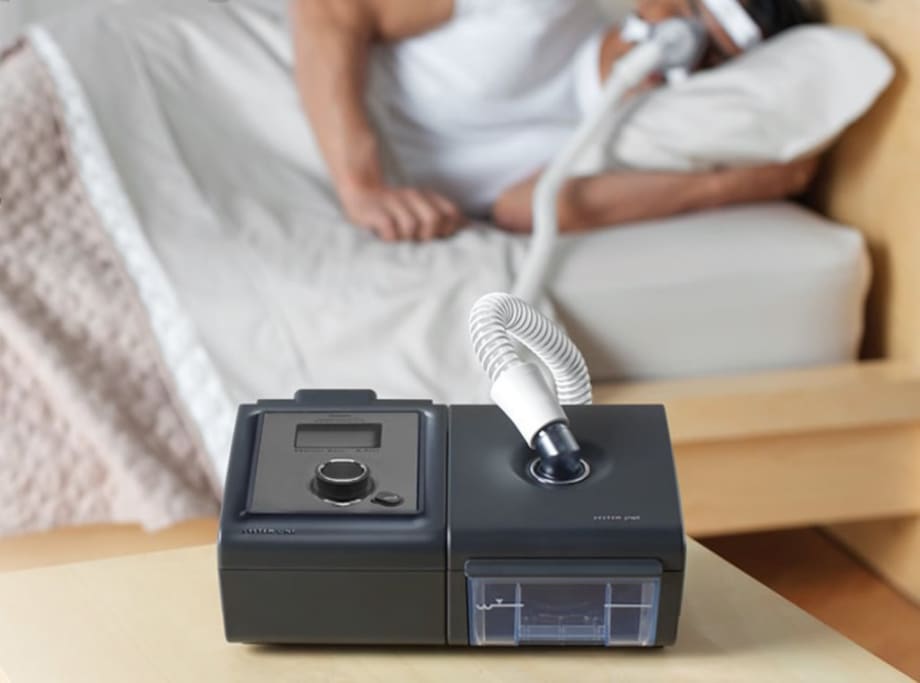
CPAP machine for treating sleep apnea Image: Safety First Sleep Solutions
CPAP machine for treating sleep apnea Image:Safety First Sleep Solutions
The American Transportation Research Institute on April 15 launched an online survey of truck drivers on issues related to sleep apnea.
ATRI said the survey results will be combined with other sleep apnea and driver fatigue research and then analyzed by several leading sleep apnea experts.
The survey aims to query drivers “on their perspectives, personal experiences, and knowledge of sleep apnea,” including soliciting information on apnea assessments and treatments that drivers may have received and the “perceived effectiveness” of those treatments.
The research group is encouraging all commercial drivers, including those with no personal experience with apnea diagnoses, to participate in the confidential survey.
The survey was first distributed at the Mid-America Trucking Show, in late March, where over 100 drivers participated in the research. The online version of the survey at ATRI's website will be available through mid-May.
"This is the first large-scale data collection effort that seeks to find out what professional drivers know about sleep apnea and for those who have been through a sleep test, to better understand what the impacts, especially costs, of testing and treatment are on drivers,” said Bob Stanton, a professional driver who was diagnosed with sleep apnea in 2002 and is Co-Coordinator of Truckers for a Cause, a patient support groups for drivers with sleep apnea. “I strongly encourage my fellow drivers to take a few minutes to complete ATRI's confidential online survey," he added.
Tom Weakley, Director of Operations for the OOIDA Foundation and a member of ATRI's Research Advisory Committee, said the costs associated with apnea screening are “a big concern for our members.” He said the ATRI survey is “an opportunity to expand the existing data on this very critical issue.”
ATRI’s research, titled "Understanding the Impacts of Sleep Apnea on Commercial Drivers," was selected by the group’s Research Advisory Committee as one of its top priorities for 2016. ATRI is the nonprofit research arm of the American Trucking Associations Federation.
Last month it was revealed in a study co-authored by the Virginia Tech Transportation Institute that drivers with sleep apnea have a five times greater risk of a severe crash when they do not adhere to a mandated treatment program.
Also in March, the Federal Motor Carrier Safety Administration and the Federal Railroad Administration jointly announced that the agencies are seeking public comment during the next 90 days on the impacts of screening, evaluating, and treating CMV drivers and rail workers for obstructive sleep apnea.
The agencies said their Advance Notice of Proposed Rulemaking, a.k.a. a “pre-rule,” is “the first step” in considering whether to propose specific requirements around OSA.
The pre-rule (RIN 2126-AB88 and 2130-AC52), titled “Evaluation of Safety Sensitive Personnel for OSA,” specifically seeks “data and information concerning the prevalence of moderate-to-severe obstructive sleep apnea among individuals occupying safety sensitive positions in rail and highway transportation.”
The agencies are also requesting information about the potential economic impact and safety benefits associated with “regulatory actions that would result in transportation workers in these positions, who exhibit multiple risk factors for OSA, undergoing evaluation by a healthcare professional with expertise in sleep disorders, and subsequent treatment.”
More Drivers
Platform Science Adds Dispatch and Safety Tools
Four additions to PS Fleet help fleets monitor loads, manage driver coaching, share truck locations and adjust video system settings.
Read More →
When Language Stops the Truck: The Return of ELP Out-of-Service Orders
English language proficiency rules for commercial drivers aren’t new, but renewed out-of-service enforcement has raised the stakes. Here’s what carriers need to know before a driver reaches a roadside inspection.
Read More →
Samsara Launches Custom AI Agent Builder
Agent Studio lets fleets create AI tools for hours-of-service monitoring, reporting and driver support, including agents that communicate by phone.
Read More →
Trucker Path Expands Reserved Parking Network
Trucker Path has added close to 6,000 more truck parking spaces to its Trucker Path Reserved Parking Network with the addition of Safe Truck Parking.
Read More →
EEOC Sues Texas Trucking Company Over Driver Age Limits
The agency says Trancasa USA rejected applicants over 65 and applied tougher driving-record standards to those over 60.
Read More →
Nussbaum, Roehl Announce Second Driver Pay Increase This Year
This year has seen a swath of major truck driver pay increases as freight capacity has tightened.
Read More →
From One Generation to the Next: How Mentorship Builds Safer Truck Drivers
After three decades in trucking, Harold Perry shares what he's learned about driver safety, mentorship, and helping the next generation build confidence behind the wheel.
Read More →
Truck Drivers Need More Than Another Alert
Fleets have more visibility into truck health, safety events, and driver activity than ever. The next challenge is turning all that information into useful guidance for the person who has to decide what to do next.
Read More →
FMCSA Removes 110 Truck Driver Training Schools from Certified ELDT List
Federal regulators also are targeting more than 160 additional training providers and launching a nationwide audit of third-party CDL skills testers as part of a broader crackdown on trucking fraud.
Read More →
Hours of Service Pilot Programs: FMCSA Readies for 2027 Rollout
Two pilot programs could eventually reshape hours-of-service rules, giving truck drivers options to pause their 14-hour clock or use longer split sleeper rest periods.
Read More →