




Related: Companies Moving Forward with Hybrid Truck Technologies
Cummins-Led Team to Build Plug-in Hybrid Class 6 Truck
Cummins has been awarded a $4.5 million grant from the U.S. Department of Energy to develop a Class 6 commercial plug-in hybrid electric vehicle.
by Staff
April 7, 2016
1 min to read
Cummins says it has been awarded a $4.5 million grant from the U.S. Department of Energy to develop a Class 6 commercial plug-in hybrid electric vehicle.
The truck must reduce fuel consumption by at least 50% compared to conventional Class 6 vehicles. Cummins is partnering with Paccar on the project as well as representatives from Ohio State University, National Renewable Energy Laboratory and Argonne National Laboratory, a Cummins statement said.
Cummins researchers will choose the best engine for use as a range extender integrated with the electrified powertrain.
Cummins intends to achieve fuel savings that will meet or exceed expectations in a wide range of drive cycles in order to meet a variety of fleet needs. In addition to the electrification of the powertrain, Cummins will also optimize the internal combustion engine and use other technologies such as intelligent transportation systems and electronic braking.
"The close integration and control of the electrified powertrain with an appropriately selected engine is critically important to developing a plug-in hybrid electric vehicle system," said Wayne Eckerle, vice president of research and technology at Cummins.
"We believe that through the team’s efforts we can soon make these innovations commercially available, which has the potential to translate into substantial savings annually per vehicle, helping our customers and the environment."
More Fuel Smarts

Electric Yard Tractors Move Beyond Pilots
Operating-cost savings have overtaken sustainability goals as the leading reason surveyed fleets are adopting battery-electric terminal tractors, according to new NACFE research.
Read More →
Geotab Links Fleet Card to Vehicle Data
The new card combines fuel discounts with telematics-based purchase controls. Geotab’s analysis also points to potential savings from choosing lower-priced fuel stops.
Read More →
Fleet Economics Shape Electric Truck Outlook
ACT Research expects costs, charging infrastructure, and technology improvements to drive zero-emission commercial vehicle adoption as federal regulations and incentives retreat.
Read More →
Wex Adds Cardless Fuel Payments for Over-the-Road Customers
A new fuel card feature for Wex customers offers convenience and security.
Read More →
New California Law Could Shed Light on Electric Truck Prices
Why do battery-electric Class 8 trucks remain so expensive? A California bill signed by Gov. Gavin Newsom would give fleets and state agencies more visibility into what manufacturers charge.
Read More →
How Volvo Updated Its D13 for EPA 2027 [Watch]
Volvo’s updated D13 promises lower emissions without sacrificing performance or fuel economy. Take a closer look at what changed inside the engine in this HDT Spotlight video.
Read More →
Diesel Price Spike Shortens Payback for Natural Gas Trucks, Report Says
Energy Vision estimates fleets could recover the higher purchase price of an RNG-fueled Class 8 tractor in 1.3 to 2.8 years under current fuel-price scenarios.
Read More →
Calstart Becomes Catalyst Mobility, Reflecting Broader Focus
Calstart is now Catalyst Mobility, reflecting the nonprofit’s growing national role in clean transportation, including zero-emission trucks, infrastructure and incentive programs.
Read More →
Record Diesel Prices Squeeze Trucking Fleets
Average U.S. diesel prices have climbed to nearly $6 a gallon, surpassing the 2022 record as tight refinery capacity and Middle East disruptions keep fuel costs elevated.
Read More →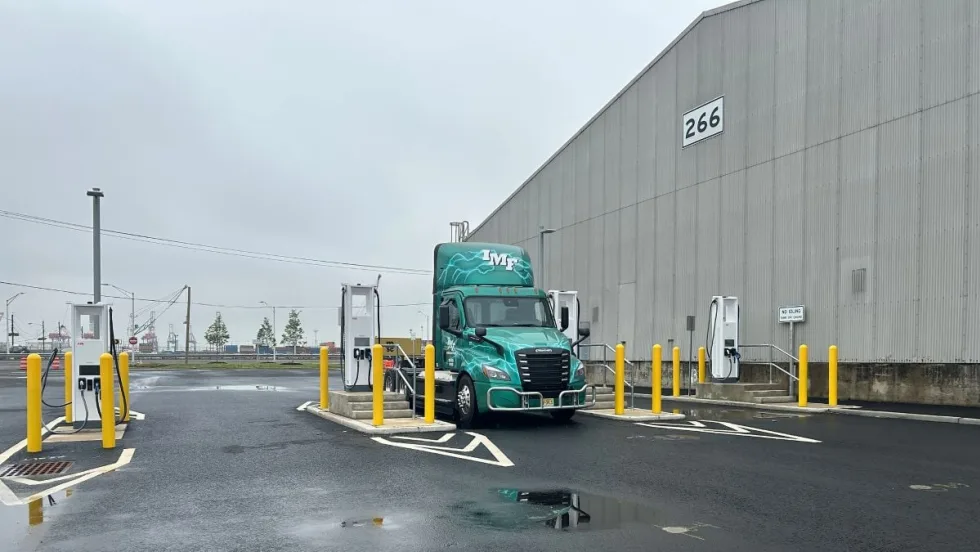
East Coast Port Launches $45M Electric Truck Push
The Port Authority of New York and New Jersey announced millions in incentives for zero-emission drayage trucks, yard tractors, and new charging hubs near the port.
Read More →