



Was 2014 a great year for U.S. economy or not? What were the biggest influences on it and how did it affect trucking? It’s all a matter of the perspective of who you ask.
 MENU
MENU SEARCH
Was 2014 a great year for U.S. economy or not? What were the biggest influences on it and how did it affect trucking? It’s all a matter of the perspective of who you ask. HDT's Evan Lockridge offers his year-end take on the subject.


Was 2014 a great year for U.S. economy or not? What were the biggest influences on it and how did it affect trucking? It’s all a matter of the perspective of who you ask.
Economists, and Lord knows we have plenty of them, would likely say the economy is doing well (though some more enthusiastically than others). And there is good evidence supporting that. The broadest measure of the economy’s health, the nation’s gross domestic product, increased at the annual rate of 5% in the third quarter of the year, the strongest showing since 2003.
The most recent numbers from a slew of economic reports that are released each month add fuel to the argument the economy is on sound footing. For instance, various readings on consumer confidence in the third quarter showed it was the best since before the Great Recession, despite slipping a bit in the final quarter of the year. Making this even more important is that consumers help drive retail sales, which account for around two-thirds of the nation’s overall economic activity.
There are plenty of other such numbers, ranging from fleet reports of record quarterly revenue and/or profits to increases in U.S. manufacturing. But let’s turn to what two highly respected economists that specialize in transportation had to say about the economy, and its biggest influences on the trucking industry in 2014.
“The bad weather in the first quarter was probably the most important event for trucking outside of the industry,” says American Trucking Associations Chief Economist Bob Costello. “It was a catalyst to a surge in freight after the weather, tighter capacity, and also difficulty finding drivers.”
The most recent tonnage index numbers from ATA back up his point, hitting its highest level on record in November, and one recent survey shows the driver shortage remains the top challenge for the nation’s heavy-duty fleets.
According to Costello, the driver shortage (or what some argue is a shortage of qualified drivers willing to accept current pay levels and working conditions), remains acute and even got worse this year.
“That is reflected in significant pay rate increases, as well as other pay trends like more fleets going to guaranteed daily minimums,” he says. “The shortage got worse because the economy improved, freight improved along with it, and the demand for drivers increased.”
Noel Perry, transportation economist with the freight transportation forecasting firm FTR, says outside of trucking the biggest influence has been the 50% decline in oil prices this year and consequently lower fuel prices. This has not only been good for fleets buying fuel, but also has had a major role in stimulating the economy.
Also, as positive developments in the overall economy often translate into the same for the trucking economy, Perry notes a “strengthening economy sustains good freight growth and pushes back the possibility of recession two to three years.”
Perry agreed with Costello on the economic influences of the driver shortage, saying bad winter weather, which the nation saw plenty of in the third quarter, too, makes the “driver shortage go critical.” Perry added that with capacity utilization above 100% for much of 2014, this gives us a good preview of conditions in two years when the next wave of regulatory drag hits.
While the views of two economists don’t make a scientific survey, the numbers appear to indicate that the economy and trucking are in good shape.
But there’s one number that some economists say is still troubling.
Sterne Agee Chief Economist Lindsey Piegza offered a more sobering view of the economy in a note to investors just before Christmas, commenting on the effect of new home sales on the economy, which fell 1.6% in November.
“Despite noticeable improvements in the labor market, consumers are still struggling with minimal income growth, dilapidated savings, and in some cases, limited access to credit, all restraining home purchases,” she said.
“While consumers may be out spending the extra cash savings from low gas prices, there isn't enough savings, however, to accommodate large-ticket purchases such as homes.”
A article on U.S. News calling 2014 “The U.S. Economy's Breakout Year” sounded a similar cautionary note: “If you don’t see wages picking up over the coming year, it means there's something fundamentally wrong with the recovery,” Gennadiy Goldberg, U.S. strategist at TD Securities, told the reporter.
The bottom line is that if you are in trucking, or heavily involved in the stock market, which saw an 8.5% annual gain for the Dow and its sixth annual gain, plus even bigger gains for the NASDAQ and S&P, then 2014 was likely a good to very good year.
However, it's fair to say this is not felt by a big portion of U.S. households, where you find Joe Six-Pack and the rest of his family, who endured the brunt of the Great Recession.
Piegza’s and Goldberg’s comments should give us pause as we look into the New Year and beyond. It’s no secret that consumers hold the keys to the health of the economy, but if wages are indeed barely improving (and some argue they are moving backward overall for the average American family), this boom we are seeing now may be only short-lived, and the party hats and noise makers may get left in the drawers when we say goodbye to 2015 and ring in 2016.
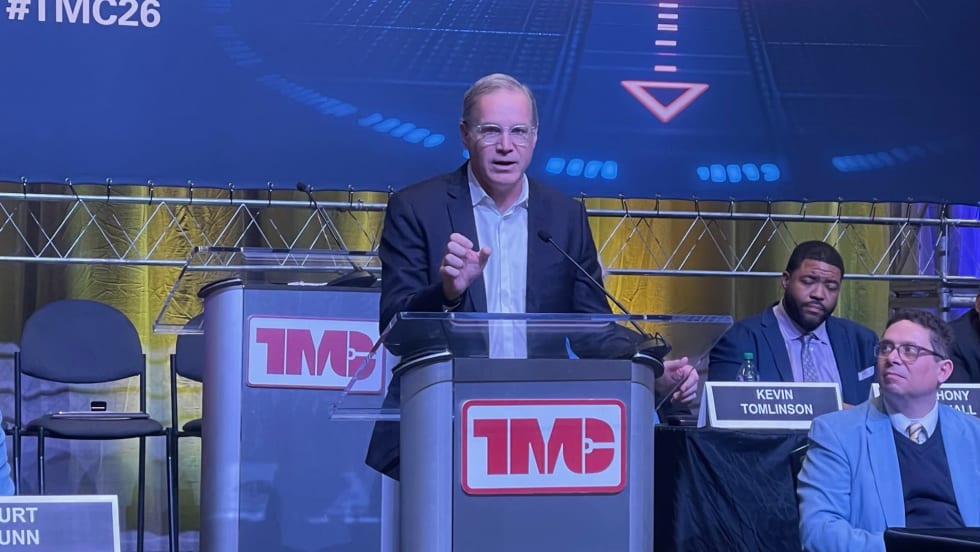
Speaking at the TMC Annual Meeting in Nashville, ATA President Chris Spear said trucking faces mounting pressure from rising fuel prices, geopolitical instability, and uncertainty around trade policy.
Read More →
More than 100,000 new trucking companies enter the industry each year, but regulators manage to audit only a fraction of them. That churn creates opportunities for inexperienced startups — and for “chameleon carriers” that shut down after safety violations and reappear under new identities. Read more from Deborah Lockridge in this commentary.
Read More →
HDTX is an intimate event that connects heavy-duty trucking fleet managers with industry suppliers through small-group discussions, educational sessions, and structured one-on-one meetings.
Read More →
New DAT One feature shows top-paying loads directly on an iPhone’s home screen, helping carriers react faster to spot-market opportunities.
Read More →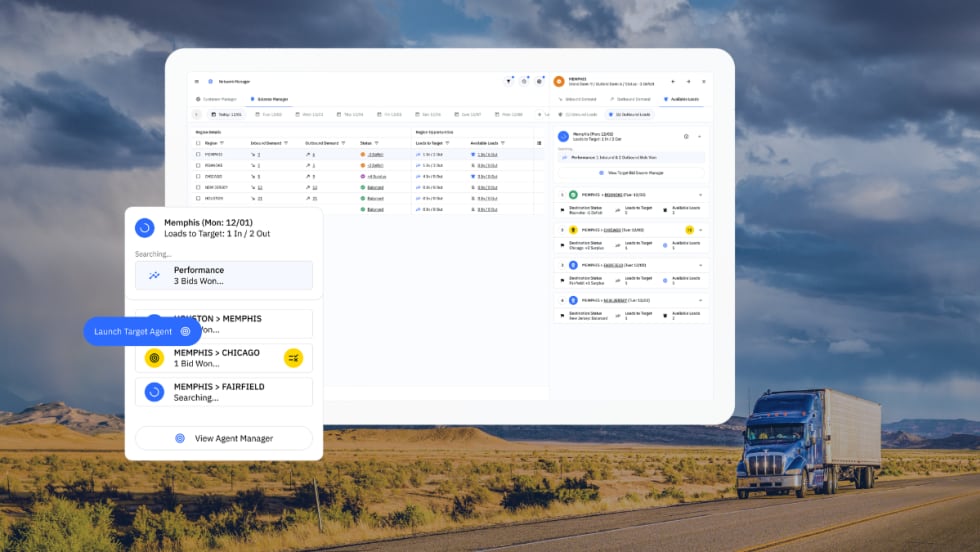
Optimal Dynamics says its new Scale platform uses AI agents and optimization to help carriers find and secure freight that improves network balance and profitability.
Read More →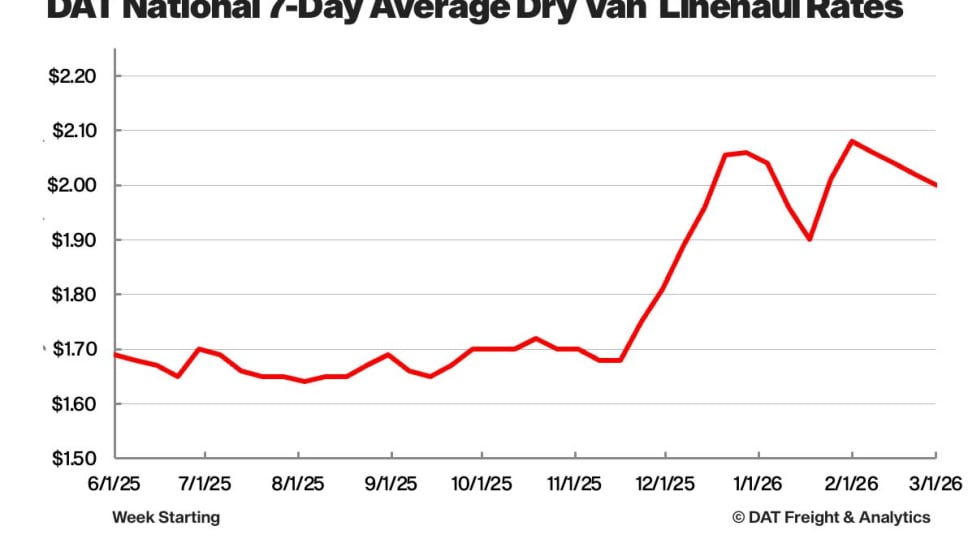
DAT Freight & Analytics data shows tightening flatbed capacity, easing produce markets, and softening van and reefer rates.
Read More →
NACFE's Run on Less - Messy Middle project demonstrates the power of data in helping to guide the future of alternative fuels and powertrains for heavy-duty trucks.
Read More →
A federal court ruling allows New York City’s congestion pricing program to continue, leaving truck tolls in place for fleets delivering into Manhattan.
Read More →
Fontaine Modification has introduced a new customer portal designed to give fleets real-time visibility into the truck modification process, addressing one of the most common questions fleet managers face: “Where’s my truck?”
Read More →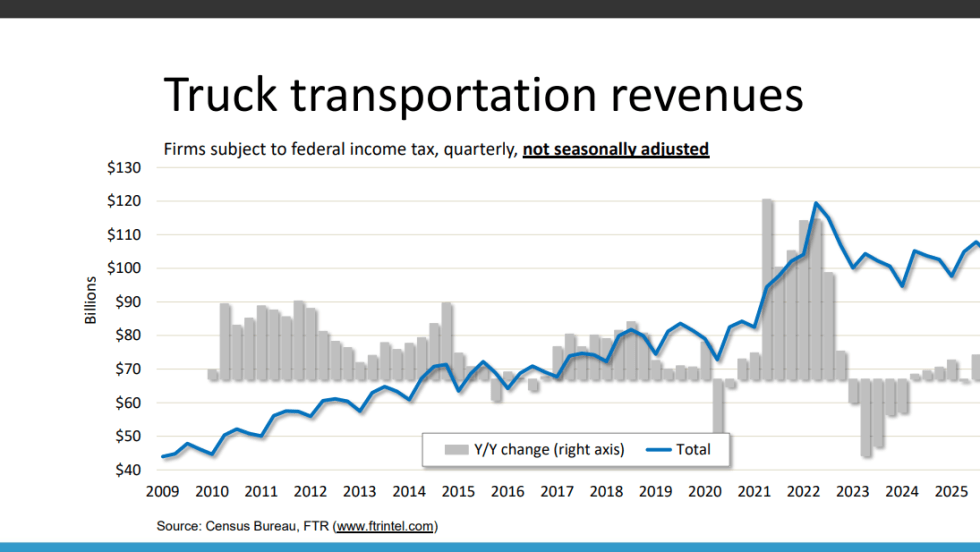
Strong freight rates, rising volumes and tighter capacity push trucking conditions higher, though diesel prices could temper gains in the near term, FTR cautions.
Read More →