




Economic Watch: Durables Surge, Consumer Confidence Best Since 2007
UPDATED -- Shipments and new orders for manufactured durable goods continue moving higher, with both hitting record levels -- but the numbers may not be as bright as they seem.

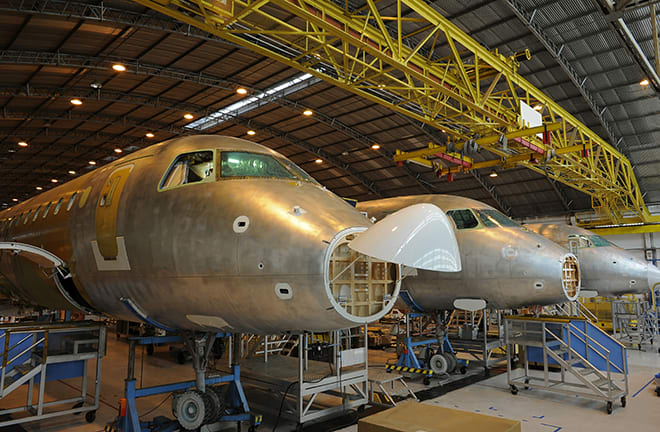
Aircraft bumped up orders and shipments of durable goods.
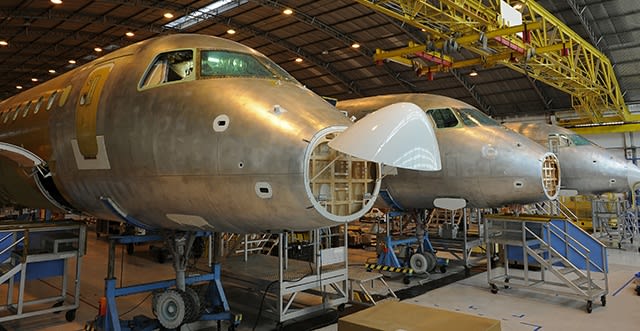
Aircraft bumped up orders and shipments of durable goods.
UPDATED -- Shipments and new orders for manufactured durable goods continue moving higher, with both hitting record levels, according to the U.S. Commerce Department – but the numbers may not be as bright as they seem, due to a high number of orders in one sector.
Shipments of these items designed to last three years or more increased 3.3% in July from the month before, the fifth gain out of the last six months. It follows a 1.2% increase in June. The numbers were led by a 7.9% gain in transportation equipment. Excluding transportation, shipments increased 1.4%.
New orders also posted the fifth increase out of the past six months in July, gaining a whopping 22.6% from the month before. That follows a 2.7% June increase. Like shipments, the orders number also was driven higher by transportation equipment, which skyrocketed 74.2% above June’s level due to a high number of aircraft orders.
Excluding transportation, new orders in July fell 0.8%. Excluding defense, new orders moved 24.9% higher.
Through the first seven months of the year, shipments of manufactured durable goods are 4.8% higher than during the first seven months of 2013, while new orders are 8.2% higher.
The headline strength masking underlying weakness, according to Sterne Agee Chief Economist Lindsey Piegza.
“The whopping headline increase will no doubt grab the market and media's attention but the underlying details of this morning's orders report tell a very different story. Aside from a surge in aircraft orders accounting entirely for the headline gain, business investment and all other sub-categories of orders showed weakness at the start of the third quarter, suggesting waning momentum in investment,” she said. “While aircraft and transportation orders in general tend to be volatile month-to-month, the underlying trend in business investment is much less choppy and appears to be simply holding steady, certainly not indicative of the upward trajectory expected by many who forecasted 3% to 4% growth in the economy as far as the eye can see.
Piegza said business are clearly still hesitant to invest in new equipment, structures and full-time employees.
Meantime, a separate report shows The Conference Board’s Consumer Confidence Index, which had increased in July, improved further in August, hitting its highest level since October 2007.
The index now stands at 92.4, up from 90.3 in July. The Present Situation Index increased to 94.6 from 87.9, while the Expectations Index edged down to 90.9 from 91.9 in July.
“Consumer confidence increased for the fourth consecutive month as improving business conditions and robust job growth helped boost consumers’ spirits,” said Lynn Franco, director of economic indicators at The Conference Board. “Looking ahead, consumers were marginally less optimistic about the short-term outlook compared to July, primarily due to concerns about their earnings. Overall, however, they remain quite positive about the short-term outlooks for the economy and labor market.”
The Conference Board found consumers’ appraisal of current conditions continued to improve through August. Those saying business conditions are “good” edged up to 23.9% from 23.3%, while those claiming business conditions are “bad” declined to 21.5% from 22.8%. Consumers’ assessment of the job market was also more positive but they were slightly less optimistic in August about the short-term outlook.
Update adds consumer confidence report and Piegza comments.
More Fleet Management

How Telematics Improves Visibility, Control, and Performance in Refrigerated Fleets
Explore how telematics help refrigerated fleets improve visibility, uptime, efficiency, compliance, and cargo protection across connected cold chain operations.
Read More →
What the U.S.-Canada Trade War Means for Trucking
Escalating U.S.-Canada tariffs could disrupt cross-border freight, reduce truck volumes, raise costs, and create new uncertainty for carriers on both sides of the border.
Read More →
What Are Trucking’s Top Concerns for 2026?
The American Transportation Research Institute wants to know what's worrying trucking fleet managers, drivers, and other stakeholders in its annual Industry Issues survey.
Read More →

American Trucking Associations Looks for a New Leader
ATA President and CEO Chris Spear abruptly left his job at the association on August 21, at a pivotal time for the trucking industry.
Read More →
Public Wi-Fi Cybersecurity Risks: How Truck Drivers and Fleets Can Protect Their Data
Public Wi-Fi can expose truck drivers and fleets to credential theft, malware, and other cyber threats. Here’s how to reduce the risk on the road.
Read More →
For Nicky Cupp, Fleet Innovation Starts With Frustration
HDT Truck Fleet Innovator Nicky Cupp turns everyday pain points at Fraley & Schilling into opportunities for better technology and smarter processes.
Read More →
Adam Buttgenbach’s Approach to Electric Trucks: Start With Where They Fit
HDT Truck Fleet Innovator Adam Buttgenbach helped PepsiCo build one of North America’s largest EV fleets by focusing on where electric trucks make operational sense.
Read More →
Deen Albert: Let Automation Do the Math, People Make the Decisions
HDT Truck Fleet Innovator Deen Albert makes sure people are still at the heart of operations at Grand Island Express, even while adopting artificial intelligence tools. AI-assisted dispatch helped boost revenue 25% with the same number of trucks.
Read More →
Trimble’s New AI Agent Takes Aim at Fleet Back-Office Busywork
Arc Agent works across Trimble TMS products to automate repetitive tasks such as freight orders, maintenance, invoices, fuel costs and more.
Read More →
How HDT’s 2026 Truck Fleet Innovators Are Rethinking Fleet Operations
Meet five trucking leaders who are challenging assumptions, solving operational problems, and putting innovative ideas to work.
Read More →