




Ferro Farewell Focuses on Need to Spread Safety Burden
Anne Ferro’s departing message is that the cost of truck and bus safety needs to be distributed more evenly through the supply chain. Too much of the burden falls on drivers who are not paid for all the time they work, said Ferro in an exit interview Thursday with a number of reporters.


Photo: Oliver Patton
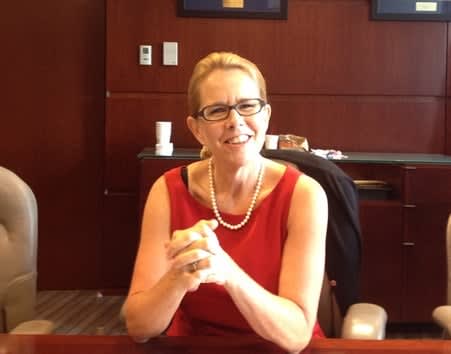
Photo: Oliver Patton
Corrected -- Anne Ferro’s departing message is that the cost of truck and bus safety needs to be distributed more evenly through the supply chain.
Too much of the burden falls on drivers who are not paid for all the time they work, said Ferro in an exit interview Thursday with a number of reporters.
Ferro will step down August 25 after five years as chief of the Federal Motor Carrier Safety Administration. She will become president and CEO of the American Association of Motor Vehicle Administrators when she leaves FMCSA.
She said that her experience late last year in a ride-along with owner-operator Leo Wilkins showed her how much safety responsibility falls on drivers and law enforcement while compliant carriers must bid against low-end competitors in a market dedicated to squeezing out costs.
“We need to move that safety calculus back into the supply chain and move the costs earlier among those influencing it,” she said.
It was a theme she returned to repeatedly.
“It is essential to recognize that professional drivers should be compensated for all time on duty. That’s integral to achieving the overall safety mission.”
This was in in reference to a provision in the pending Obama administration highway bill that would require carriers to pay drivers at least the federal minimum wage for time spent waiting to be loaded or unloaded. Ferro has been working on this issue since her Senate confirmation hearing in 2009.
Asked how she would measure the agency’s success when looking back five years from now, she started with the obvious metric – fewer fatal crashes – and then added, “vastly improved compensation for professional drivers, a higher bar for safety for those in the supply chain and incorporating safety into logistics management algorithms.”
The tension between the commercial pressure to deliver freight at the lowest possible cost and the imperative to do so safely is at the heart of the perpetual struggle over hours of service, Ferro said.
The agency is obliged by law to set constraints on carriers’ ability to meet their customers’ demands.
“In an economic system that continues to try to drive the last penny out of the supply chain, transportation and trucking in particular gets squeezed the hardest because it has the least leverage,” she said.
The trucking industry is fragmented and highly competitive, with a large group of small business operators – “A David facing the Goliath of supply chain shippers.”
“That tension will always bump up against an hours of service rule.”
She added that not everyone in the industry opposes the provisions of the rule that have sparked controversy in Congress.
American Trucking Associations has been pushing legislation that would suspend the 34-hour restart provision pending completion of a study of its impact.
The agency opposes this approach, preferring to keep the provision in place while the study proceeds.
“There are large numbers of drivers who would vastly prefer to see an hours of service structure that recognized their personal demands as professionals to get proper rest, and to work within a more manageable system,” Ferro said.
As the legislative fight over the restart continues, the agency is working on several studies of the issue, she said.
It has a contract with the National Academy of Sciences for a study that’s now under way, and it recently began the process of polling stakeholders for the questions they want answered in a second study. Another effort is targeting the impact of driver fatigue on small businesses.
The hours rule and others implemented during Ferro’s tenure have prompted some in the industry to blame Ferro for excessive regulation, even though others in the industry would like to see more regulation.
Ferro said she does not take the criticism personally.
“It’s not about me. It’s about the position and it’s about the agency’s role,” she said.
The FMCSA administrator “is not here to make friends,” she said. “The administrator is here to fulfill the letter of the law.”
Looking back, she would not have done anything differently, she said.
She added that she is not leaving the agency in response to a call from the board of the Owner-Operator Independent Drivers Association that she resign.
The opportunity from the American Association of Motor Vehicle Administrators came before “OOIDA called for my head,” she said.
One pending rule at the agency, a proposal to ban coercion of drivers by employers, shippers, receivers or brokers, is the first clear expansion of the FMCSA’s mandate deeper into the supply chain, Ferro said.
But the rule will not be a silver bullet, she added.
She encouraged carriers to use today’s market conditions, in which demand exceeds supply, to get better treatment for drivers.
“Shippers that are abusive should frankly be shut out,” she said. “I applaud any owner-operator or carrier who says to a shipper, ‘if you’re not going to pay detention time and tighten up on respect, we’re not taking your contract.'”
Ferro also said that the Department of Transportation and White House still are vetting the long-awaiting study of crash accountability in the CSA safety enforcement system. The final report is a few months away, she said.
Corrected 8/15/2014 9:45 a.m. EDT: The actual offer at AAMVA did not come before OOIDA's letter, although the opportunity did. The official offer came afterward.
More Fleet Management
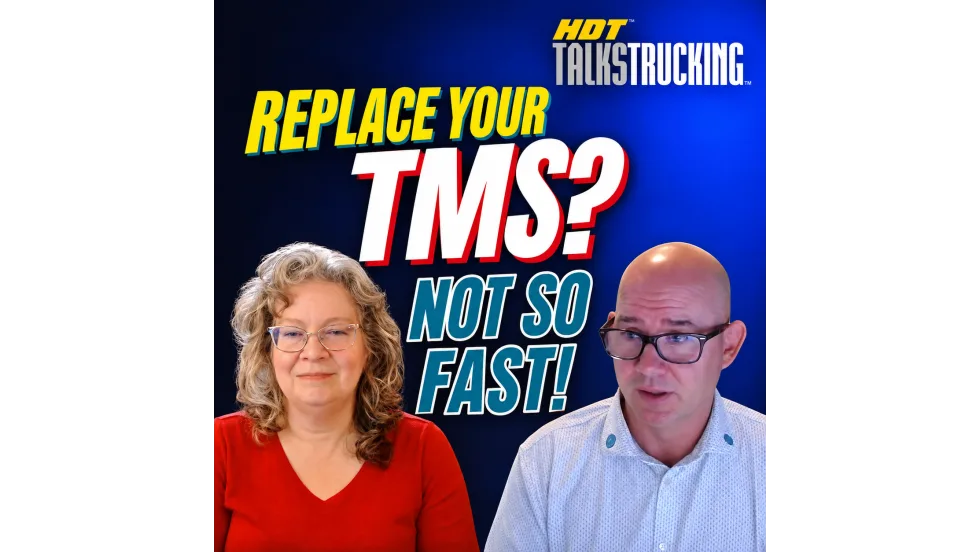
How to Modernize Your TMS Without Replacing It [Podcast]
Before investing in a new transportation management system, take a closer look at what you've already got. AI, cloud technology and better integrations may offer ways to improve your trucking operations without starting over.
Read More →
Could Your Truck's Connected Devices Be a Cybersecurity Risk?
ELDs, telematics systems and driver tablets help fleets operate more efficiently. But every connected device needs protection against cyberattacks.
Read More →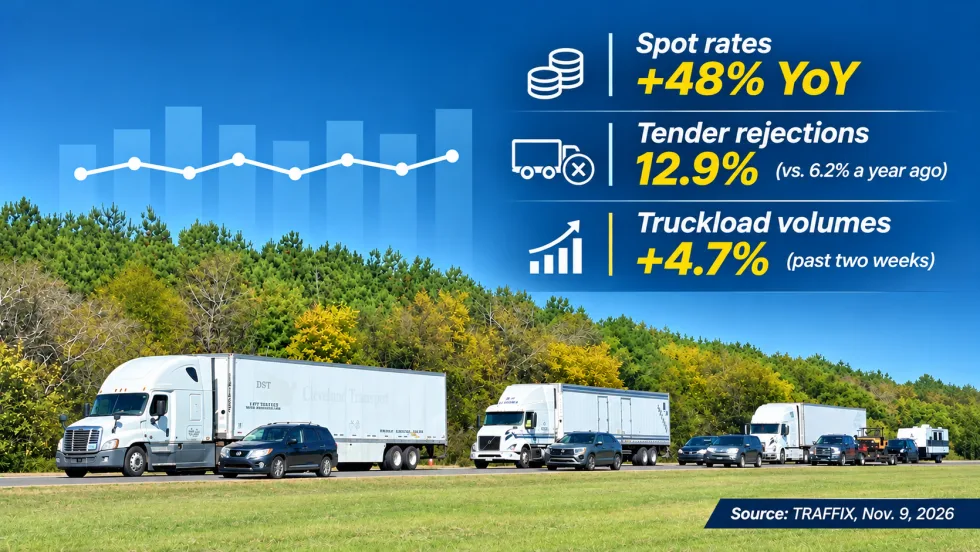
Holiday Freight Meets a Tight Trucking Market
There's no freight boom, but truckload carriers are finding themselves in a stronger position to negotiate rates. And holiday shipping demand could tighten the market further.
Read More →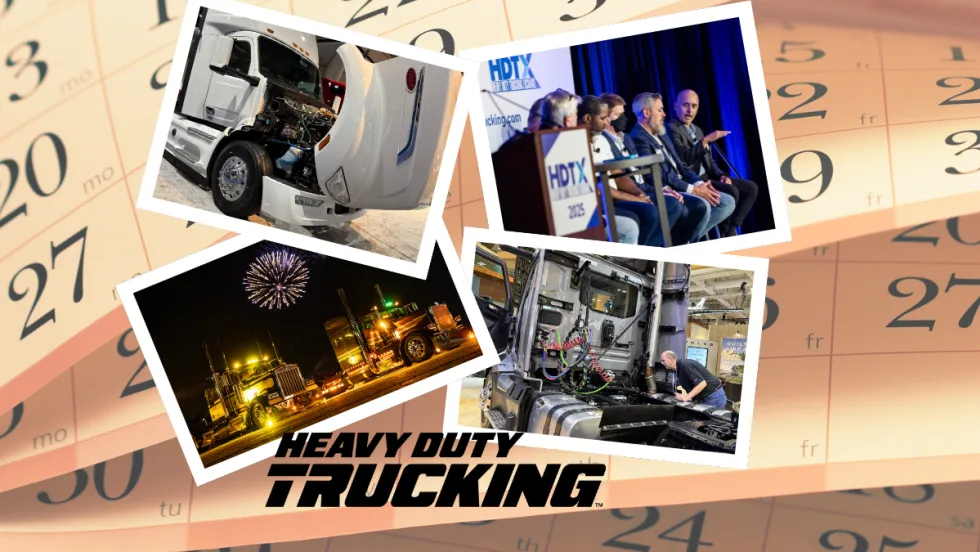
What Trucking Events are Happening in 2027?
Looking for trucking-related conventions, expos, and other events? Heavy Duty Trucking has developed this list of national and larger regional trucking shows and events.
Read More →
Does Your Trucking Fleet Need a New TMS?
Artificial intelligence and better integrations promise less busywork and more useful data. Can your TMS help your company solve problems? Do you need additional vendors or an upgrade? Or is it time to look for a new platform?
Read More →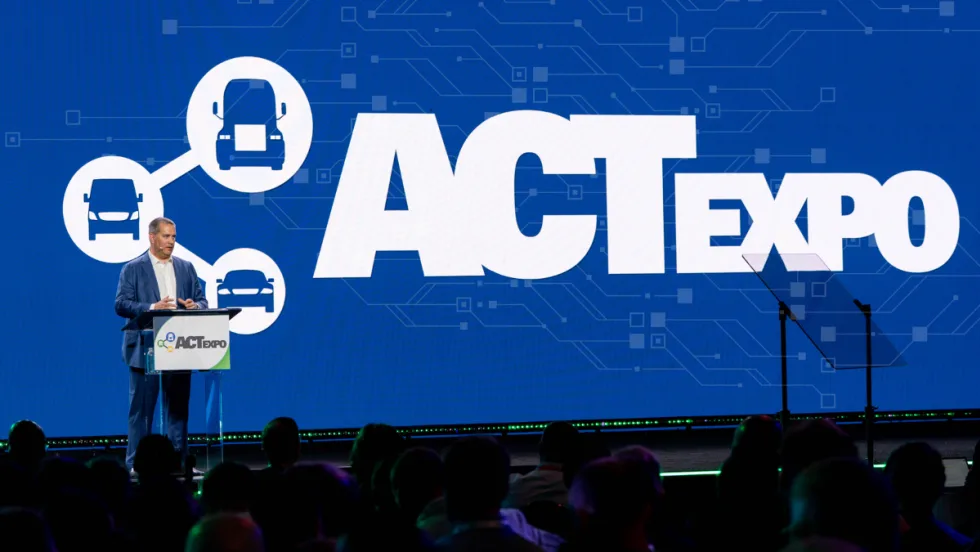
Fleet Costs Shape ACT Expo 2027 Agenda
With diesel prices high and operating expenses under pressure, ACT Expo's 2027 agenda emphasizes fuel efficiency, AI, safety and the return on fleet technology investments.
Read More →
Does Your Trucking Fleet Need a New TMS? [Video]
Cloud technology, AI and new integrations are changing what transportation management systems can do. But does taking advantage of those advances mean replacing your existing TMS?
Read More →
Road Ready Becomes Saegic, Launches New Trailer Telematics Gateway
Clarience Technologies is rolling out new hardware and expanding its plans for connecting trailer telematics, maintenance data, and video.
Read More →
Give Your Trucking Fleet a Cybersecurity Walkaround
Your fleet's cybersecurity policies may look good on paper. These seven checks can help you find out whether they’re working.
Read More →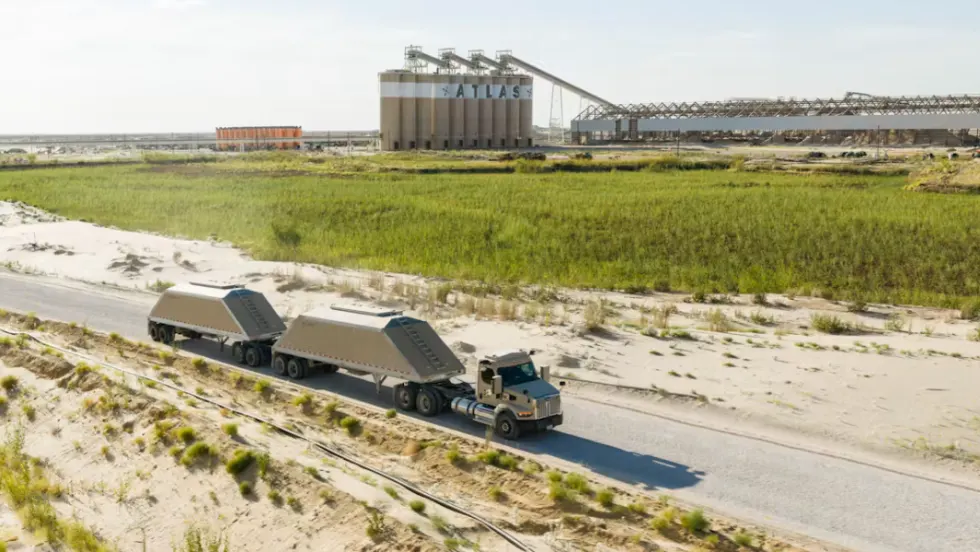
Kodiak Lines Up Fleets for Driverless Trucking
An agreement for 75 trucks, a new Texas freight lane, and progress on safety validation move Kodiak closer to its planned driverless highway launch.
Read More →