




FMCSA Medical Board to Review Comments on Sleep Apnea Pre-Rule
With the extended comment period on the impact a sleep-apnea rule might have on CMV drivers closed for several weeks, the Federal Motor Carrier Safety Administration has announced its Medical Review Board will meet on August 22 and 23 in a public session to make recommendations on comments submitted.



With the extended comment period on the impact a sleep-apnea rule might have on CMV drivers closed for several weeks, the Federal Motor Carrier Safety Administration has announced its Medical Review Board will meet on August 22 and 23 in a public session to make recommendations on comments submitted regarding its Advance Notice of Proposed Rulemaking “on safety-sensitive rail and commercial motor vehicle drivers with moderate to severe Obstructive Sleep Apnea.”
That APRN— also known as a “pre rule”—was issued jointly with the Federal Railroad Administration back in March. At that time, the agencies described the pre rule as “the first step” in considering whether to propose specific requirements around OSA.”
The pre-rule (RIN 2126-AB88) is titled “Evaluation of Safety Sensitive Personnel for OSA.” It specifically sought “data and information concerning the prevalence of moderate-to-severe obstructive sleep apnea among individuals occupying safety sensitive positions in rail and highway transportation.”
Since March, almost 600 comments were filed in the APRN’s docket and three “listening sessions” were held at several locations across the country to further elicit public comments on moving forward with such a rulemaking.
The current pre-rule activity is in line with legislation passed by Congress in 2013 that instructs FMCSA on the regulatory approach it must take regarding OSA. That law does not require the agency to issue any sleep-apnea policy or regulation. Rather, the bill states that no policy can be issued without the agency first conducting a thorough analysis of the prevalence of OSA among commercial drivers; the range of possible actions to address the problem; and the costs and benefits that may result.
In its August 9 Federal Register notice of the upcoming meeting, FMCSA said that the MRB will also review its previously issued report on OSA from 2012 to determine whether the report should be updated based on any changes to medical standards and practice or on any pre-rule comments placed in the docket or received at the listening sessions.
The MRB is composed of five medical experts who each serve 2-year terms. The board is charged with establishing, reviewing and revising “medical standards for operators of commercial motor vehicles that will ensure that the physical condition of operators of commercial motor vehicles is adequate to enable them to operate the vehicles safely.”
The MRB will meet on Monday and Tuesday, August 22-23, 2016, from 9 a.m. to 4:30 p.m. EDT, at the FMCSA National Training Center, 1310 N. Courthouse Road, Arlington, Vir., 6th floor. Copies of the task statement and a meeting agenda will be made available online in advance.
Oral comments from the public will be heard during the meeting, subject to the discretion of the chairman, FMCSA noted. Members of the public may also submit written comments on the topics to be considered during the meeting. Those are due by Wednesday, August 17, and should be directed to the Federal Docket Management System Docket Number FMCSA-2008-0362 and FMCSA-2015-0419 for the MRB using any of the following methods:
Federal eRulemaking Portal. Go to http://www.regulations.gov and follow the instructions for submitting comments
Fax. 202-493-2251
Mail. Docket Management Facility; U.S. Department of Transportation, 1200 New Jersey Avenue SE., West Building, Room W12-140, Washington, DC 20590
Hand Delivery. U.S. Department of Transportation, 1200 New Jersey Avenue SE., Room W12-140, Washington, DC, between 9 a.m. and 5 p.m., Monday through Friday, except Federal holidays
More Safety & Compliance

More Trailer Data Through the Same Seven-Way [Video]
Can trucking’s standard seven-way connector handle more cameras and trailer data? Grote’s Adam Slade shows HDT how the company is using new technology with its 4See trailer system, not only to add a new backup camera but also to expand other capabilities — without adding another connection.
Read More →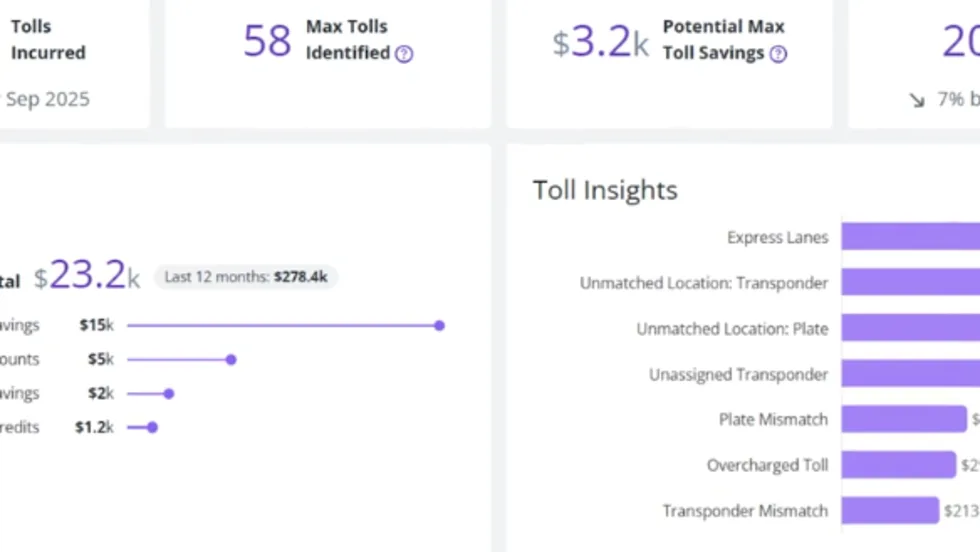
PrePass Intelligence Mines Fleet Bypass, Toll and Safety Data
PrePass Intelligence helps fleets measure bypass savings, flag potential toll overcharges, and spot suspicious transactions by combining data from separate systems.
Read More →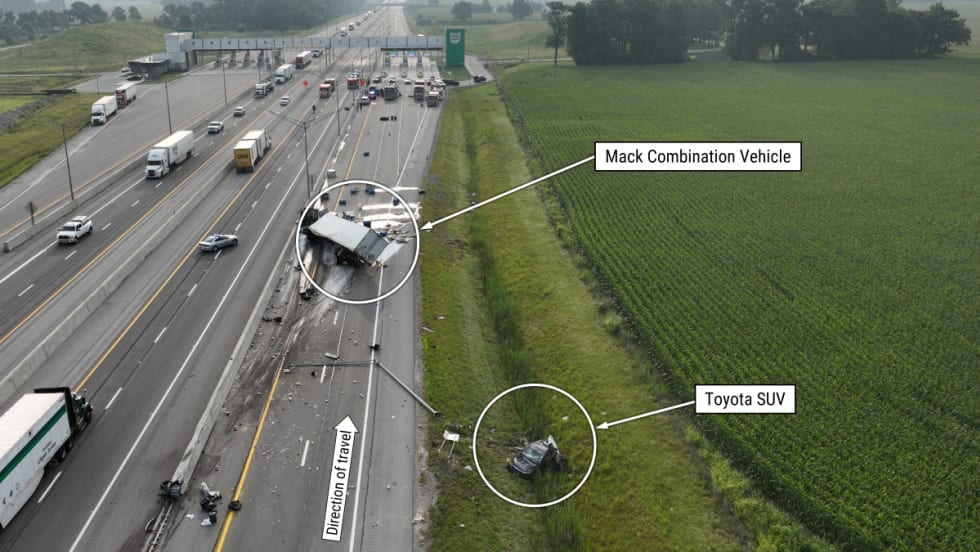
Fatal Crash Exposes Toll Plaza Risks
An NTSB investigation found that last-minute lane changes and large speed differences at an Ohio toll plaza created a hazard the truck driver couldn't avoid in time.
Read More →

When Language Stops the Truck: The Return of ELP Out-of-Service Orders
English language proficiency rules for commercial drivers aren’t new, but renewed out-of-service enforcement has raised the stakes. Here’s what carriers need to know before a driver reaches a roadside inspection.
Read More →
A Camera Isn't a Safety Program. Here's What Brokers Are Screening for Now
Footage alone may not be enough to pass broker vetting processes. Here's what counts as a defensible safety program now.
Read More →
Marijuana and Trucking’s Drug-Testing Dilemma
Marijuana is getting stronger, laws are changing, and drug tests still can’t reliably establish impairment. What does that mean for truck drivers and the fleets that employ them?
Read More →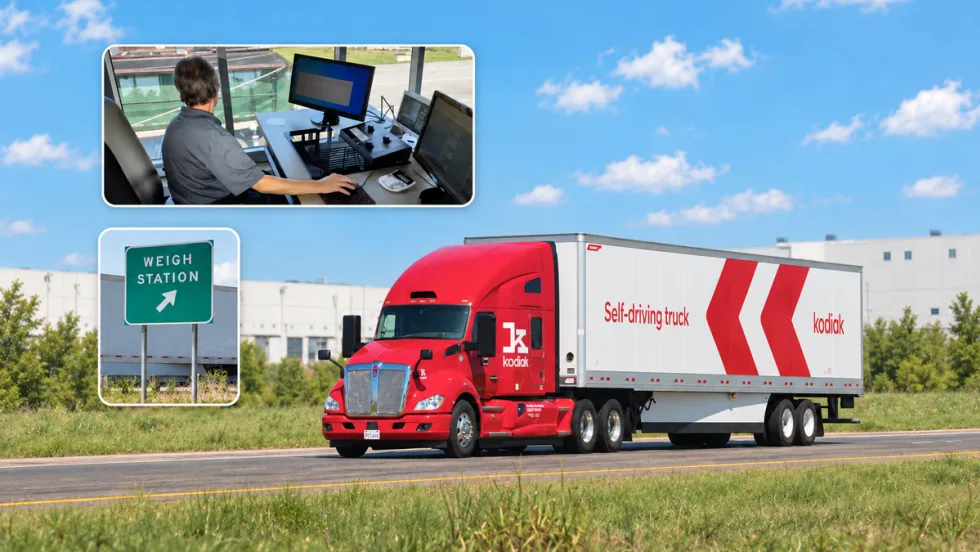
PrePass, Kodiak Connect Driverless Trucks to Roadside Enforcement
The system will allow enforcement agencies to verify Enhanced Inspection information and decide whether Kodiak’s autonomous trucks can bypass roadside screening sites.
Read More →
From One Generation to the Next: How Mentorship Builds Safer Truck Drivers
After three decades in trucking, Harold Perry shares what he's learned about driver safety, mentorship, and helping the next generation build confidence behind the wheel.
Read More →
FMCSA Pauses Biennial-Update Enforcement Amid Motus Transition
Carriers whose updates were due on or after June 1 have more time, while FMCSA works to stabilize its new registration system and warns of phishing sites impersonating its new carrier registration system, Motus.
Read More →
ZF Expands Commercial Vehicle Push in North America
ZF is expanding its North American commercial-vehicle presence with new transmission applications, electrification, trailer technology and autonomous-driving systems.
Read More →